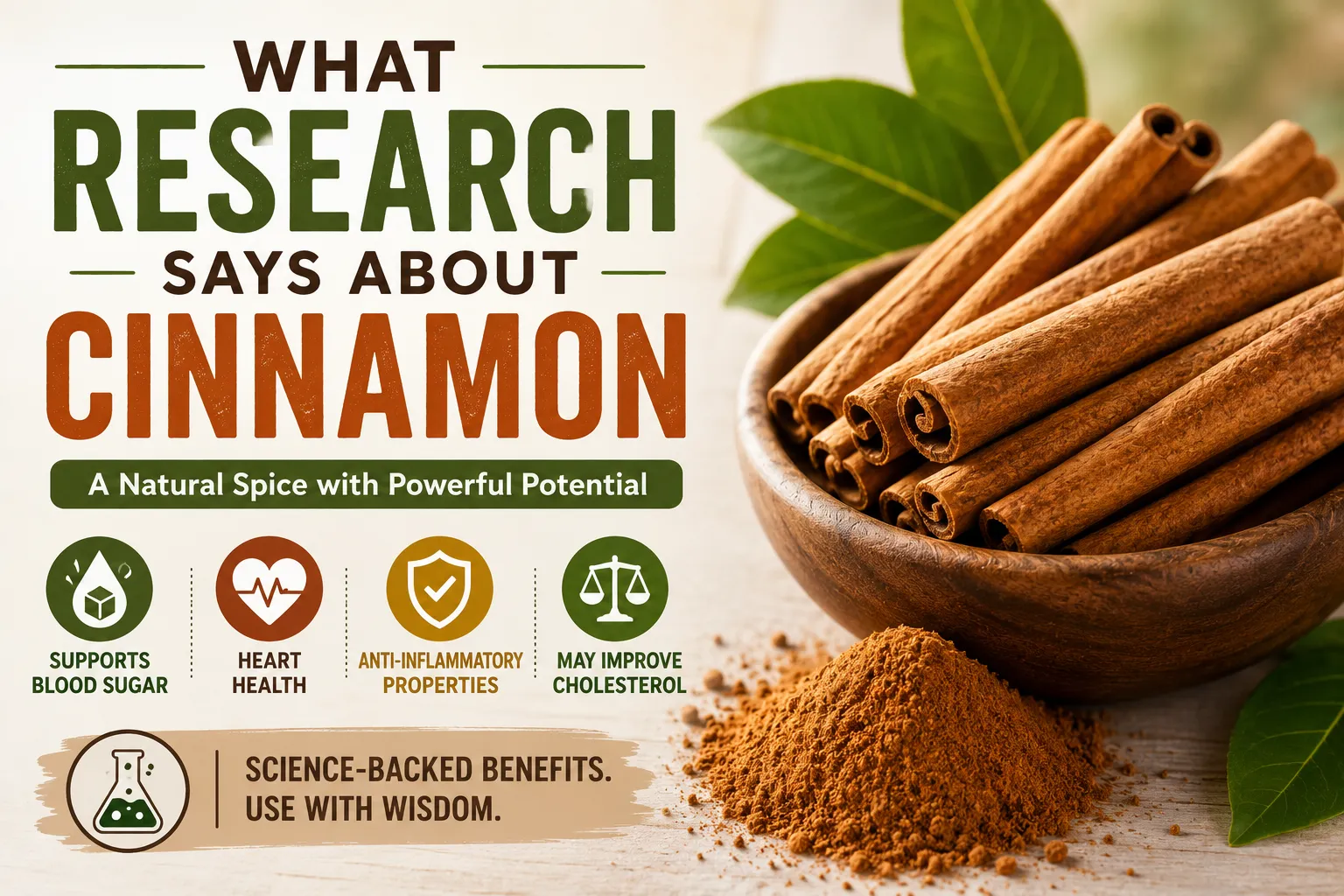

What Research Says About Cinnamon
Cinnamon has been used for centuries as a culinary spice and traditional remedy. Today, it is also marketed as a natural supplement that may help regulate blood sugar, improve cholesterol, reduce inflammation and support overall metabolic health.
Some of those claims have scientific evidence behind them. Others are based mainly on laboratory research, small clinical studies or conclusions that go beyond what the available evidence can actually show.
Recent systematic reviews and meta-analyses provide a more useful picture. They suggest that cinnamon may have modest effects on some metabolic measures, particularly blood glucose, but the results are not consistent enough to consider cinnamon a replacement for established medical treatment or a cure for any disease.
Understanding where the evidence is strong—and where it remains uncertain—is important before treating cinnamon as a health remedy. This evidence-based approach is part of the broader framework covered in the complete guide to natural remedies evidence.
What Is Cinnamon?
Cinnamon comes from the inner bark of trees belonging to the Cinnamomum genus.
Two broad types commonly appear in food and supplements:
- Cassia cinnamon, which includes several closely related varieties
- Ceylon cinnamon, sometimes called “true cinnamon”
They have different chemical compositions, which is particularly important when considering long-term or concentrated supplementation. Cassia cinnamon generally contains considerably more coumarin, a naturally occurring compound that can be harmful to the liver at sufficiently high exposures.
The cinnamon used in ordinary cooking is quite different from taking concentrated extracts or large amounts of powdered cinnamon every day.
That distinction matters throughout the research.
Why Scientists Are Interested in Cinnamon
Cinnamon contains numerous plant compounds, including polyphenols and aromatic compounds that have demonstrated biological activity in laboratory research.
Scientists have investigated whether these compounds might influence processes involved in:
- Blood glucose regulation
- Insulin sensitivity
- Cholesterol metabolism
- Oxidative stress
- Inflammation
- Blood pressure
- Body weight
Laboratory findings can help researchers understand potential mechanisms, but they do not automatically translate into meaningful benefits for people.
Human clinical trials are therefore particularly important.
Cinnamon is one example of the many plants and botanical products studied as potential natural remedies. Understanding the distinction between traditional use, laboratory findings and human clinical evidence is essential when evaluating herbal medicine and how it is studied.
Cinnamon and Blood Sugar
Blood glucose is probably the area that has received the most attention.
Some clinical trials have reported lower blood glucose among people taking cinnamon supplements, while others have found little or no meaningful effect.
A 2024 systematic review evaluating 45 studies found that 62% reported a statistically significant positive effect on at least one measure of blood-glucose control. However, when the researchers accounted for study quality and risk of bias, the proportion fell closer to 50%. The authors concluded that cinnamon supplementation likely has a modest positive effect on blood glucose.
That is a much more cautious conclusion than saying cinnamon “lowers blood sugar” outright.
What Meta-Analyses Have Found
A 2024 updated systematic review and dose-response meta-analysis included 24 randomized controlled trials involving people with type 2 diabetes.
The researchers found statistically significant reductions in fasting blood sugar, insulin resistance and HbA1c among participants receiving cinnamon compared with controls.
A larger 2025 systematic review and meta-analysis examined 28 randomized controlled trials involving 3,054 people with type 2 diabetes. It reported reductions in fasting glucose, post-meal glucose, HbA1c and insulin resistance among people consuming cinnamon. However, the studies varied substantially, with considerable statistical heterogeneity for several outcomes.
This is an important limitation.
When studies differ considerably in their participants, cinnamon preparations, doses, treatment duration and measurement methods, it becomes harder to determine exactly how much benefit an average person should expect.
Cinnamon Is Not a Diabetes Treatment by Itself
Even if cinnamon produces a modest improvement in glucose measurements, that does not mean it can replace diabetes medication, dietary changes, exercise or medical care.
People with diabetes should not stop prescribed treatment because they begin using cinnamon.
The research generally examines cinnamon as a potential adjunct, meaning something that might be used alongside established treatment—not as a substitute for it.
That distinction is particularly important because uncontrolled blood glucose can lead to serious long-term complications.
What About Insulin Sensitivity?
Insulin resistance occurs when cells respond less effectively to insulin, making it harder for the body to regulate blood glucose.
Some studies suggest cinnamon may influence insulin sensitivity.
The 2025 meta-analysis of people with type 2 diabetes found a significant improvement in HOMA-IR, a commonly used measure related to insulin resistance.
However, HOMA-IR is a surrogate measurement rather than a direct measure of every aspect of insulin action.
So while the finding is scientifically interesting, it should not be interpreted as proof that cinnamon can prevent or reverse insulin resistance in everyone.
Could Cinnamon Improve Cholesterol?
Researchers have also investigated cinnamon’s potential effects on blood lipids.
A 2024 systematic review and meta-analysis of randomized controlled trials found that cinnamon supplementation had no significant overall effect on LDL cholesterol or total cholesterol, although triglycerides were significantly reduced. The researchers also noted substantial variation between studies.
Earlier umbrella-level research has reported small improvements in some cholesterol measures, but the evidence has remained inconsistent.
The most reasonable interpretation is that cinnamon may influence certain lipid measurements in some circumstances, but it should not be considered a reliable cholesterol-lowering treatment.
Cinnamon and Inflammation
Inflammation and oxidative stress have also been investigated in cinnamon research.
Because cinnamon contains antioxidant compounds, researchers have explored whether supplementation changes biomarkers associated with inflammation and oxidative stress.
Some studies report improvements in selected biomarkers, but laboratory measurements do not necessarily translate into noticeable health benefits.
For consumers, the important distinction is between:
“This compound changes a biomarker.”
and
“This product prevents disease.”
Those are very different claims.
Does Cinnamon Help With Weight Loss?
Cinnamon is sometimes promoted as a natural weight-loss aid.
The evidence does not justify treating it as a standalone weight-loss solution.
Some clinical studies have reported small changes in body weight or body mass index, particularly in people with metabolic conditions. A 2024 meta-analysis involving women with polycystic ovary syndrome found a small reduction in body weight and improvements in insulin resistance and fasting blood glucose, but the researchers also noted substantial variation between studies for some outcomes.
These findings are interesting but do not demonstrate that adding cinnamon to a diet will produce meaningful weight loss for the general population.
There is no substitute for the fundamentals of weight management: overall dietary pattern, physical activity, sleep, energy balance and sustainable habits.
The Type of Cinnamon Matters
One of the less obvious issues in cinnamon research is that “cinnamon” does not always mean the same thing.
Different species contain different amounts of active compounds.
Cassia cinnamon, for example, can contain significantly more coumarin than Ceylon cinnamon. Products may also differ in whether they use bark, extracts or other parts of the plant.
This makes it difficult to compare studies that use different cinnamon preparations.
A trial involving a standardized extract cannot necessarily be translated directly into advice about how much ordinary ground cinnamon someone should sprinkle on food.
What Is Coumarin?
Coumarin is a naturally occurring chemical compound found in several plants.
It is especially relevant to cinnamon because some varieties of cassia cinnamon contain relatively high amounts.
Large or prolonged exposure can be a concern for the liver. Cassia cinnamon products can contain high levels of coumarin and prolonged use may be problematic for susceptible people, including those with liver disease.
Ceylon cinnamon generally contains only trace amounts.
This does not mean everyone should avoid cassia cinnamon. It means that regular, high-dose supplementation deserves more caution than normal culinary use.
Is Cinnamon Safe?
For most people, cinnamon used in ordinary food amounts is generally considered safe.
The safety picture changes when people consume larger amounts or use concentrated products for extended periods.
Reported problems can include:
- Gastrointestinal symptoms
- Allergic reactions
- Skin irritation from topical cinnamon products
- Potential liver concerns related to coumarin exposure
Cinnamon powder should never be inhaled or consumed in the dangerous “cinnamon challenge,” which has been associated with serious harm.
More is not necessarily better when it comes to natural products.
For broader guidance on evaluating risks, interactions and appropriate use of botanical products, see the natural remedies safety guide.
What About Cinnamon Supplements?
Cinnamon capsules and extracts can provide much higher amounts than people would normally consume through food.
That changes the risk-benefit calculation.
Supplement products can also vary considerably in:
- Cinnamon species
- Extract concentration
- Dose
- Purity
- Standardization
- Additional ingredients
A label that simply says “cinnamon” may not provide enough information to understand exactly what is being consumed.
Anyone considering regular high-dose supplementation should discuss it with a healthcare professional, particularly if they have an existing medical condition or take medication.
Could Cinnamon Interact With Medication?
Potential interactions are another reason to be cautious with concentrated cinnamon products.
Some components of cinnamon may theoretically interact with medicines, and people using medications should discuss cinnamon and other herbal products with a healthcare provider.
This is especially relevant when someone is using cinnamon specifically to influence blood glucose.
If cinnamon has a glucose-lowering effect in a particular individual, combining it with glucose-lowering medication could potentially affect blood sugar management.
That does not mean cinnamon necessarily causes a dangerous interaction. It means supplement use should be considered in the context of the person’s overall treatment.
Food Cinnamon and Medicinal Cinnamon Are Different Conversations
Adding cinnamon to oatmeal, fruit, yogurt or another meal is not the same as taking a concentrated supplement.
Culinary use typically involves relatively small amounts.
Supplement studies may involve standardized doses administered every day for weeks or months.
This difference is often lost when research findings are turned into online health advice.
A study showing that a particular cinnamon extract affected a biomarker should not automatically lead to the recommendation that everyone consume large quantities of cinnamon powder.
Why Research Results Sometimes Conflict
Health research rarely produces perfectly consistent results.
Different cinnamon studies may use:
- Different species
- Different doses
- Different preparations
- Different treatment durations
- Different populations
- Different baseline health conditions
- Different outcome measurements
One study might measure fasting glucose, while another focuses on HbA1c or post-meal glucose.
Even when studies investigate the same outcome, methodological differences can produce different results.
This is why systematic reviews and meta-analyses are useful—but they also need to be interpreted carefully.
The Importance of Study Quality
A study showing a statistically significant result is not automatically a high-quality study.
Researchers also consider factors such as:
- Sample size
- Randomization
- Blinding
- Control groups
- Dropout rates
- Duration
- Measurement methods
- Risk of bias
The 2024 systematic review specifically demonstrated why this matters: a substantial proportion of studies reported positive glucose findings, but the apparent benefit became less convincing after study quality and risk of bias were considered.
Good health reporting should therefore look beyond headlines about individual studies.
What Research Does Not Yet Prove
Current evidence does not establish that cinnamon:
- Cures diabetes
- Replaces diabetes medication
- Guarantees lower blood sugar
- Produces substantial weight loss
- Prevents heart disease
- Prevents cancer
- Treats every inflammatory condition
Some of these claims may have originated from laboratory experiments, traditional medicine or preliminary human research.
But promising biological activity is not the same as proven clinical benefit.
How Cinnamon Can Fit Into a Healthy Diet
For most people, the simplest way to enjoy cinnamon is as a spice.
It can add flavor to foods without requiring large amounts of sugar or other calorie-dense ingredients.
It can be used in:
- Oatmeal
- Plain yogurt
- Fruit
- Smoothies
- Whole-grain dishes
- Tea
- Homemade baked foods
- Some savory recipes
Used this way, cinnamon can be part of a varied diet.
The important point is not to turn a flavorful spice into a supposed miracle treatment.
Natural Does Not Automatically Mean Safe
The popularity of cinnamon reflects a broader interest in natural remedies.
But “natural” is not a synonym for “risk-free.”
Plants contain biologically active chemicals. Those compounds can potentially have beneficial effects, unwanted effects or interactions with medications.
The same principle applies to many other herbs and supplements.
A natural remedy deserves the same basic questions as any other health intervention:
Does it work? At what dose? For whom? For how long? And what are the risks?
What the Evidence Really Suggests
The research on cinnamon is more promising than dismissive, but less definitive than many health claims suggest.
Human trials and recent reviews provide evidence that cinnamon supplementation may modestly improve certain measures of glucose control, particularly in people with type 2 diabetes. Some research also suggests possible effects on triglycerides, cholesterol, insulin resistance and other metabolic markers.
At the same time, studies vary considerably, and some of the strongest-looking findings become less convincing when researchers account for study quality and methodological differences.
That leaves cinnamon in an interesting middle ground: a promising food ingredient and potential adjunct—not a proven cure or replacement for medical treatment.
For most people, using cinnamon in normal culinary amounts is a straightforward way to enjoy its flavor. Those considering concentrated or long-term supplementation should pay attention to the type of cinnamon being used, potential coumarin exposure and possible medication interactions.
The most useful lesson from the research may be that natural remedies deserve neither blind enthusiasm nor automatic skepticism. They should be judged by the quality of the evidence, the size of the actual benefit and the potential risks—not simply by the fact that they come from nature.
Continue Reading
Similar Posts
How Traditional African Herbal Medicine Works
Understanding how these remedies work requires looking at both traditional knowledge and modern scientific research. Some medicinal plants contain compounds with biological effects that researchers can study, while evidence for other traditional uses remains limited or uncertain.
Read article
How Placebo Effects Affect Remedy Research
For natural remedies, this distinction can be particularly important. Many remedies have long histories of traditional use, and people may have strong expectations about their effectiveness. Carefully designed research is therefore needed to determine whether improvements are caused by the remedy, the context surrounding its use, natural changes in symptoms or some combination of factors
Read article
Are Natural Remedies Safe During Pregnancy
The safest approach is not to assume that a remedy is harmless simply because it is natural. Instead, its ingredients, dose, purpose, evidence, and potential risks should all be considered.
Read article

Join 10,000+ Readers Building Healthier Habits
Get actionable wellness tips every week plus our newest articles delivered straight to your inbox.