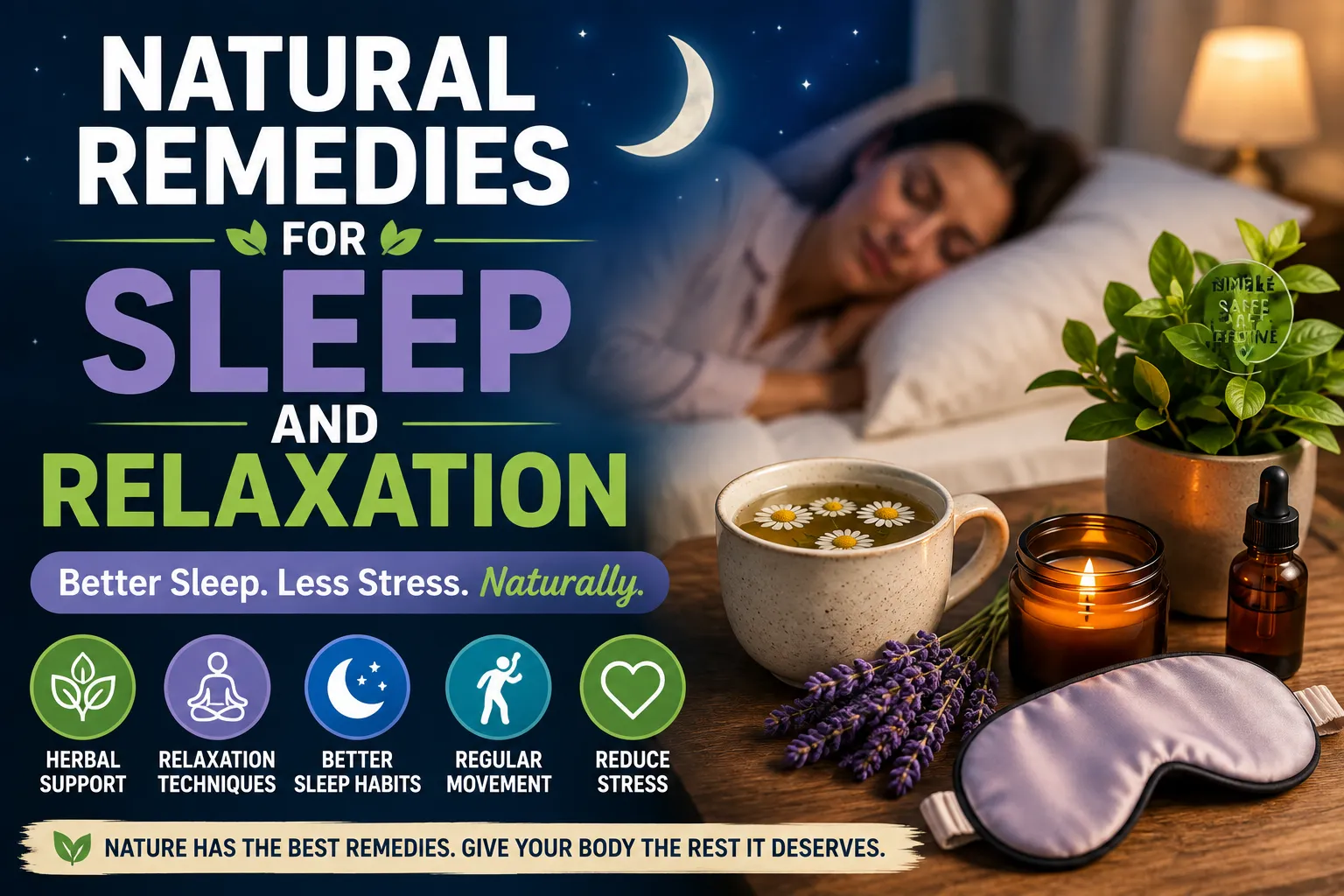

Natural Remedies for Sleep and Relaxation
A busy day can leave the body tired while the mind remains active. Stress, irregular schedules, excessive screen use and everyday responsibilities can make it difficult to slow down when bedtime arrives.
That has led many people to explore natural remedies for sleep and relaxation, from breathing exercises and meditation to calming bedtime routines, gentle movement and herbal products.
But “natural” does not automatically mean effective or risk-free. Some approaches have reasonable evidence behind them, while others remain poorly studied. Supplements can also interact with medicines or cause side effects.
The most useful approach is to start with low-risk habits that support the body’s natural sleep rhythm and treat supplements with the same caution you would give any other health product.
For a broader evidence-based framework for understanding natural remedies, including their potential benefits and limitations, see the complete guide to natural remedies evidence.
What Are Natural Remedies for Sleep?
Natural sleep remedies generally refer to nonprescription approaches intended to promote relaxation or support better sleep.
They can include:
- Relaxation and breathing exercises
- Meditation and mindfulness
- Progressive muscle relaxation
- Gentle yoga or stretching
- Regular physical activity
- A consistent bedtime routine
- Limiting caffeine and nicotine
- Creating a cool, dark and quiet bedroom
- Herbal teas and plant-based products
- Supplements such as melatonin or magnesium
The evidence varies considerably between these approaches.
For example, relaxation techniques are generally considered safe, while evidence for many herbal supplements is limited or inconsistent.
Start With a Consistent Sleep Schedule
One of the simplest approaches to improving sleep does not require buying anything.
Try going to bed and waking up at approximately the same times each day, including weekends.
A consistent schedule helps reinforce the body’s sleep-wake rhythm.
If your schedule is currently irregular, make gradual adjustments rather than trying to completely change your sleep pattern overnight.
Consistency is usually more important than creating a complicated bedtime routine.
Create a Relaxing Bedroom
Your bedroom environment can have a significant influence on how easily you settle down.
Aim for a space that is:
- Cool
- Quiet
- Dark
- Comfortable
- Free from unnecessary distractions
Making the bedroom sleep-friendly and limiting exposure to televisions and electronic devices around bedtime can support better sleep.
Blackout curtains, an eye mask, earplugs or a fan providing gentle background noise may be useful depending on your environment.
The goal is to make the bedroom associated primarily with sleep and relaxation.
Try Deep Breathing Before Bed
Deep breathing is one of the simplest relaxation techniques.
A basic exercise involves slowing your breathing and paying attention to each inhale and exhale.
For example:
- Sit or lie comfortably.
- Relax your shoulders.
- Breathe in slowly through your nose.
- Allow your abdomen to expand naturally.
- Exhale slowly.
- Repeat for several minutes.
The purpose is not to force yourself to fall asleep.
Instead, it gives your attention something calm and repetitive to focus on while helping you move away from the day’s mental activity.
Deep breathing is one of several relaxation techniques intended to produce the body’s natural relaxation response.
Progressive Muscle Relaxation
Progressive muscle relaxation involves deliberately tightening and then relaxing different muscle groups.
You might start with your feet and gradually move upward through your legs, abdomen, shoulders, arms and face.
The technique encourages awareness of physical tension and gives the body an opportunity to release it.
Research on relaxation techniques for insomnia is limited, but relaxation therapy can be one possible component of treatment for chronic insomnia.
It is also relatively easy to learn and does not require specialized equipment.
Meditation and Mindfulness
Meditation can help some people create a calmer transition into bedtime.
Mindfulness involves paying attention to the present moment rather than becoming caught up in thoughts about the past or future.
A simple bedtime practice might involve sitting quietly for a few minutes and observing your breathing without trying to control every thought.
The evidence for mindfulness specifically treating insomnia is mixed and limited, so it should not be presented as a guaranteed treatment.
Still, some people find it useful as part of a broader relaxation routine.
Gentle Yoga Can Help You Wind Down
Gentle yoga combines movement, breathing and focused attention.
A short evening session can provide a transition between an active day and bedtime.
Choose slow, comfortable movements rather than an intense workout immediately before sleeping.
Research suggests yoga may improve some aspects of sleep quality in certain groups, although evidence is not strong enough to establish it as a treatment for insomnia in everyone.
If a particular movement causes pain or discomfort, stop and choose a gentler alternative.
Consider Tai Chi for Relaxation
Tai chi involves slow, controlled movements combined with breathing and concentration.
It can be particularly appealing to people who dislike conventional gym workouts but want to incorporate gentle physical activity into their routines.
Research suggests tai chi may improve sleep quality, particularly in some older adults, although evidence for treating insomnia specifically remains limited.
Like other relaxation practices, its greatest value may come from regular use rather than a single session.
Take a Break From Screens Before Bed
Phones, tablets, computers and televisions can make it harder to establish a relaxing bedtime routine.
Beyond the light emitted by some screens, the content itself can keep the brain engaged.
Messages, social media, news, games and work emails can all encourage continued mental stimulation.
Consider using the period before bed for quieter activities such as:
- Reading a physical book
- Gentle stretching
- Listening to calm music
- Taking a warm shower
- Journaling
- Practicing breathing exercises
Using the hour before bedtime for quiet time and avoiding bright artificial light and stimulating activities can help create a calmer transition to sleep.
Limit Caffeine in the Evening
Caffeine can remain active in the body for hours.
Coffee is the obvious source, but caffeine can also be found in tea, energy drinks, chocolate, some soft drinks and certain medications.
People vary in their sensitivity.
If you have trouble sleeping, consider moving your final caffeinated drink earlier in the day and observing whether your sleep improves.
Avoiding caffeine close to bedtime is a sensible part of healthy sleep habits.
Be Careful With Alcohol as a “Sleep Aid”
Alcohol can make some people feel sleepy initially, but that does not necessarily mean it produces restorative sleep.
Although alcohol can make it easier to fall asleep, it can lead to lighter sleep and make nighttime awakenings more likely.
Using alcohol regularly as a sleep remedy can therefore become counterproductive.
If the goal is better sleep, building a calming routine is a safer long-term strategy than relying on alcohol to become drowsy.
Regular Daytime Exercise Can Support Better Sleep
Physical activity is another natural tool that can support healthy sleep.
Walking, cycling, swimming, strength training and other forms of exercise can help support overall health and may make it easier to establish a healthy sleep routine.
Timing matters for some people.
Regular physical activity during the day can be beneficial, while exercising close to bedtime may make it harder for some people to fall asleep.
If evening exercise does not interfere with your sleep, there may be no need to eliminate it. Pay attention to how your own body responds.
Try a Warm Pre-Bed Routine
A warm shower or bath can become a useful signal that the day is winding down.
The activity itself may be relaxing, while establishing the same routine each evening can help create a predictable transition toward sleep.
You can combine it with other calming habits, such as dimming the lights, putting your phone away and reading quietly afterward.
The effectiveness may come as much from the routine and environmental cues as from the warmth itself.
Herbal Teas Are Popular, but Evidence Varies
Herbal teas are often associated with relaxation.
Chamomile, peppermint, lemon balm and other caffeine-free teas are commonly used as evening beverages.
For people interested in incorporating herbal beverages into a bedtime routine, the complete guide to herbal teas and infusions provides broader information about these preparations.
However, popularity should not be confused with strong clinical evidence.
Herbs such as valerian, chamomile and kava have not been established as effective treatments for insomnia, and some herbal products have important safety concerns.
A caffeine-free herbal drink can certainly become part of a relaxing routine, but it should not be presented as a guaranteed treatment for a sleep disorder.
What About Chamomile?
Chamomile is one of the best-known traditional bedtime remedies.
Many people enjoy it as a caffeine-free evening tea.
However, evidence that chamomile treats insomnia is limited. It is better viewed as a potentially soothing part of a bedtime ritual rather than a proven sleep medication.
People with allergies to plants in the daisy family should also be cautious about chamomile products.
Be Cautious With Valerian
Valerian root has traditionally been promoted as a natural sleep aid.
Despite its popularity, evidence regarding its effectiveness for insomnia remains inconsistent.
Valerian has not been shown to be an established treatment for insomnia.
If you are considering valerian, particularly alongside prescription or over-the-counter medications, discuss it with a healthcare professional first.
Passionflower Is Not a Guaranteed Stress Remedy
Passionflower is another plant commonly marketed for relaxation and sleep.
However, there are relatively few clinical trials involving people, leaving insufficient evidence to determine whether it is effective for these purposes.
This illustrates a broader lesson with natural remedies:
Traditional use and scientific evidence are not always the same thing.
What About Magnesium for Sleep?
Magnesium has become increasingly popular as a sleep supplement.
It is an essential mineral involved in numerous bodily processes, but that does not automatically mean taking extra magnesium will improve sleep.
There is relatively little rigorous research on magnesium supplements for insomnia and other sleep disorders, meaning there is currently insufficient evidence to determine whether they are effective.
People should therefore avoid assuming that magnesium supplements are necessary simply because sleep problems occur.
Melatonin Requires a More Careful Approach
Melatonin is different from many herbal remedies because it is a hormone involved in regulating the body’s sleep-wake cycle.
It is widely sold as a supplement in some countries and can be useful in certain circumstances, including some problems involving circadian timing and jet lag.
However, it is not a universal solution for insomnia.
Clinical guidance has not established melatonin as a broadly recommended treatment for chronic insomnia because the evidence has not been sufficient for that purpose. Short-term use appears relatively safe for many people, but long-term safety remains uncertain.
Melatonin can also interact with medicines and may not be appropriate for everyone.
If you take medication, are pregnant or breastfeeding, are older, or have an ongoing health condition, ask a healthcare professional before using it.
Avoid Assuming “Natural” Means Safe
This is one of the most important points when considering natural remedies.
Plants and supplements contain biologically active substances.
Some can interact with medications, affect existing health conditions or cause side effects.
Kava, for example, has been linked to severe liver damage. Some other natural products can also interact with medicines or affect biological processes in ways that may not be obvious from their labels.
Supplements can also vary in quality and accuracy of labeling.
That makes professional advice particularly important when using concentrated extracts, capsules, powders or combinations of supplements.
For more detailed information about risks, interactions and precautions, see the natural remedies safety guide.
A Simple Natural Bedtime Routine
Instead of searching for one powerful sleep remedy, consider combining several low-risk habits.
For example:
Two hours before bed: Finish demanding work and begin reducing unnecessary stimulation.
One hour before bed: Dim the lights, reduce screen use and prepare your bedroom.
30 minutes before bed: Take a warm shower, read or practice gentle stretching.
10 minutes before bed: Try slow breathing or progressive muscle relaxation.
At bedtime: Keep the bedroom dark, quiet and comfortable.
The exact routine does not matter as much as finding something you can repeat consistently.
What If You Wake Up During the Night?
Waking briefly during the night can happen even when you generally sleep well.
If you wake up, try not to immediately check the clock or reach for your phone.
Instead, keep the environment dark and return attention to slow breathing or another quiet relaxation technique.
If you remain awake for a prolonged period, a quiet activity under dim lighting may be preferable to lying in bed becoming increasingly frustrated.
The objective is to avoid turning a brief awakening into a long period of mental stimulation.
When Natural Remedies Are Not Enough
Natural approaches can be useful for supporting healthy sleep, but persistent sleep problems deserve proper attention.
Insomnia involves difficulty falling asleep, staying asleep or getting good-quality sleep despite having enough opportunity to sleep. Chronic insomnia is generally defined as symptoms occurring at least three nights a week for more than three months.
Long-lasting sleep problems can affect concentration, memory, daytime functioning and overall health.
For chronic insomnia, cognitive behavioral therapy for insomnia (CBT-I) has much stronger evidence than many popular natural remedies. Multicomponent CBT-I is strongly recommended for adults with chronic insomnia.
If sleep problems persist, talking with a healthcare professional is more appropriate than continually adding supplements.
When to Seek Medical Advice
Consider discussing sleep difficulties with a healthcare professional if you:
- Regularly struggle to fall or stay asleep
- Remain exhausted during the day
- Frequently wake up gasping or choking
- Snore loudly or have witnessed pauses in breathing
- Experience persistent restless sensations in your legs
- Rely on alcohol or sleep products to fall asleep
- Have sleep problems that interfere with work or daily activities
- Have persistent anxiety, low mood or other concerning symptoms
Some sleep problems are caused by underlying medical conditions and cannot be solved simply by changing a bedtime routine.
Creating a Calmer Night Without Chasing Quick Fixes
Natural remedies for sleep and relaxation are most useful when they are treated as supportive habits rather than miracle cures.
A consistent sleep schedule, comfortable bedroom, reduced evening stimulation, regular daytime activity, breathing exercises, gentle relaxation and stress-management practices are sensible places to start. Evidence for supplements and herbal products is much more variable, and some can carry meaningful risks.
The goal is not to find the strongest natural sleep aid.
It is to create conditions in which your body and mind can naturally transition from the demands of the day toward rest—and to seek professional help when persistent sleep problems require more than lifestyle changes.
Continue Reading
Similar Posts

How Traditional African Herbal Medicine Works
Understanding how these remedies work requires looking at both traditional knowledge and modern scientific research. Some medicinal plants contain compounds with biological effects that researchers can study, while evidence for other traditional uses remains limited or uncertain.
Read article
How Placebo Effects Affect Remedy Research
For natural remedies, this distinction can be particularly important. Many remedies have long histories of traditional use, and people may have strong expectations about their effectiveness. Carefully designed research is therefore needed to determine whether improvements are caused by the remedy, the context surrounding its use, natural changes in symptoms or some combination of factors
Read article
Are Natural Remedies Safe During Pregnancy
The safest approach is not to assume that a remedy is harmless simply because it is natural. Instead, its ingredients, dose, purpose, evidence, and potential risks should all be considered.
Read article

Join 10,000+ Readers Building Healthier Habits
Get actionable wellness tips every week plus our newest articles delivered straight to your inbox.