

Natural Approaches to Headache Relief and What Evidence Supports Them
Headaches are among the most common health complaints, but treating them is not always as simple as reaching for a painkiller.
Some people experience occasional tension headaches after a stressful day, while others live with recurring migraine attacks that can involve severe pain, nausea, and sensitivity to light or sound. Because headache disorders can have different causes, an approach that helps one person may do little for another.
That has fueled interest in natural and complementary approaches, including relaxation techniques, acupuncture, massage, exercise, dietary changes, magnesium, riboflavin and other supplements.
Some of these approaches have encouraging evidence behind them. Others have only limited or inconsistent research. A few popular “natural remedies” can even carry meaningful risks.
The key is to separate reasonable, evidence-supported strategies from claims that sound natural but have not been adequately tested.
For a broader framework for evaluating these approaches, including the quality of evidence, potential benefits, and safety considerations, see the complete guide to natural remedies evidence.
First, Identify What Kind of Headache You Have
“Headache” is a broad description rather than a single condition.
Tension-type headaches often feel like pressure or tightening around the head and can be associated with stress or muscle tension.
Migraine can involve throbbing or moderate-to-severe pain and may also cause nausea, vomiting, and sensitivity to light or sound.
Other headaches, including cluster headaches and headaches caused by underlying medical conditions, require different approaches.
That distinction matters because research on natural therapies often focuses specifically on migraine or tension-type headaches rather than all headaches collectively.
Relaxation Techniques May Help Some People
Stress is a common contributor to headache problems, making relaxation techniques an appealing non-drug option.
Approaches can include:
- Progressive muscle relaxation
- Slow breathing exercises
- Guided imagery
- Autogenic training
- Meditation
- Self-hypnosis
Research suggests that some relaxation-based approaches may reduce headache pain or frequency, particularly when incorporated into broader behavioral treatment. However, the evidence is not uniformly strong, and several reviews have found methodological limitations in the available studies.
That means relaxation techniques are reasonable to try, but they should not be presented as a guaranteed cure.
One advantage is their relatively low risk and the fact that they can be practiced without specialized equipment.
Biofeedback Has Some Supporting Evidence
Biofeedback takes relaxation a step further.
During biofeedback, a person receives information about a physiological process—such as muscle tension—and learns techniques to influence that response.
For headache sufferers, the idea is that recognizing and reducing physical tension may help prevent or lessen attacks.
Research suggests biofeedback may be useful for tension headaches, while evidence for migraine prevention is less certain. Studies have reported reductions in migraine frequency, but it remains unclear whether biofeedback performs better than placebo for that purpose.
Because biofeedback is generally considered low risk, it can be an option worth discussing with a healthcare professional, particularly for people with frequent tension-type headaches.
Acupuncture Has More Evidence Than Many “Natural Cures”
Acupuncture is one of the better-studied complementary approaches for headaches.
Research summarized by the National Center for Complementary and Integrative Health suggests that acupuncture can help relieve headache pain and may reduce migraine frequency. However, some of its benefit may come from nonspecific effects such as expectations and placebo responses rather than the specific action of needle placement itself.
The evidence is therefore encouraging but nuanced.
Acupuncture should also be performed by a qualified practitioner using sterile equipment. Improperly performed acupuncture can cause serious complications, although significant adverse events are considered uncommon when the practice is performed appropriately.
Massage May Be Useful for Tension-Related Headaches
Massage is frequently recommended for headaches associated with neck or muscle tension.
The theory is straightforward: reducing muscle tension and promoting relaxation may reduce some of the physical factors associated with tension-type headaches.
The evidence, however, is mixed.
Research on massage for headaches remains limited and inconsistent, although some studies and reviews suggest that manual therapy may help people with tension-type headaches.
Massage may therefore be reasonable as a complementary strategy, but it should not be treated as a proven treatment for every type of headache.
People considering massage alongside other natural approaches should also understand the broader precautions described in the natural remedies safety guide.
Exercise Can Be Part of Migraine Prevention
Exercise may seem unrelated to headache treatment, but regular physical activity can play a role in managing recurring migraine.
Regular exercise, consistent sleep and balanced eating patterns are lifestyle measures that may help reduce migraine frequency and intensity.
The important distinction is between regular moderate activity as part of a routine and suddenly performing strenuous exercise during a headache.
A sustainable routine might include:
- Walking
- Cycling
- Swimming
- Light jogging
- Strength training
- Other enjoyable aerobic activities
People who notice that strenuous exercise consistently triggers headaches should discuss that pattern with a healthcare professional rather than simply pushing through it.
Regular Sleep May Be More Important Than a Special Remedy
Sleep is one of the most practical lifestyle factors to address.
Irregular sleep schedules can contribute to headaches for some people, particularly those prone to migraine.
Instead of focusing only on how many hours you sleep, consider consistency.
Try to maintain reasonably regular:
- Bedtimes
- Wake times
- Meal schedules
- Exercise times
Consistent sleep is an important part of lifestyle modification for migraine.
A regular routine may be more useful than searching for a single “miracle” food or supplement.
People interested in the relationship between natural approaches, relaxation, and better sleep can also explore natural remedies for sleep and relaxation.
Don’t Skip Meals
Going too long without eating can be associated with headaches in some people.
Not eating regular meals is a common headache trigger, and avoiding skipped meals can be a practical part of headache management.
That does not mean there is one universally correct headache diet.
Instead, people who experience recurring headaches can pay attention to whether attacks occur after:
- Skipping breakfast
- Delaying lunch
- Long periods without food
- Significant changes in eating patterns
A headache diary can help reveal whether there is a consistent relationship.
Staying Hydrated Is a Simple Step
Dehydration can contribute to headaches, making adequate fluid intake a reasonable basic measure.
The practical goal is simply to avoid becoming dehydrated, particularly during hot weather, illness or periods of increased physical activity.
This does not mean drinking excessive amounts of water will prevent every headache.
A Dark, Quiet Environment Can Help During Migraine
When a migraine is already underway, some people become extremely sensitive to light and noise.
Reducing sensory stimulation can make the experience more manageable.
A quiet, dimly lit room may be helpful for people whose migraine symptoms are aggravated by light or sound. Rest can also be useful when illness, fatigue or other triggers are involved.
This is a symptom-management strategy rather than a treatment for the underlying cause.
Cold Packs May Provide Temporary Comfort
Applying something cold to the head or neck is another commonly used self-care strategy.
The cooling sensation may temporarily reduce discomfort for some people.
A wrapped cold pack is a safer approach than applying ice directly to the skin.
Cold therapy is also one of the simple non-drug measures discussed in broader evidence-based natural pain relief approaches.
Peppermint Oil Has Limited Evidence
Peppermint oil is frequently promoted as a natural headache remedy.
There is some evidence that topically applied peppermint oil may relieve tension headaches, but the evidence remains limited.
That makes peppermint oil an interesting but relatively uncertain option.
Essential oils should also be used carefully. Concentrated oils can irritate the skin, and products intended for topical use should not automatically be assumed to be safe for ingestion.
For a broader discussion of essential oils, their uses, and their safety considerations, see the essential oils guide.
“Natural” does not mean “risk-free.”
Magnesium May Help Prevent Some Migraines
Magnesium is one of the dietary supplements with relatively more research behind it.
Studies suggest magnesium may help reduce migraine frequency in some people, particularly those with migraine with aura or menstrual-related migraine. However, the overall evidence remains limited, and the doses used for migraine prevention can exceed the usual upper intake level for supplemental magnesium.
High supplemental doses can cause diarrhea, nausea and abdominal cramping, while excessive intake can be dangerous in certain circumstances.
Magnesium can also interact with some medications.
For those reasons, anyone considering magnesium specifically for migraine prevention should discuss the appropriate product and dose with a healthcare professional rather than assuming that more is better.
Riboflavin Shows Promise for Migraine Prevention
Riboflavin, also known as vitamin B2, is another supplement that has been studied for migraine prevention.
Some—but not all—studies have found benefit, with research suggesting that riboflavin may reduce migraine frequency in some adults.
The evidence is more promising for prevention than for immediately stopping an attack that has already begun.
Because supplements can interact with medical conditions and treatments, it is still sensible to discuss long-term supplementation with a healthcare professional.
CoQ10 Is Another Potential Option
Coenzyme Q10, commonly known as CoQ10, is naturally produced by the body and is also available as a supplement.
Research has suggested that CoQ10 may reduce the frequency or duration of migraines in some people, although the evidence base remains relatively small.
As with other supplements, promising research does not mean that everyone will benefit.
It is best considered a possible preventive option rather than a guaranteed headache treatment.
What About Feverfew?
Feverfew is an herbal product that has been studied primarily for migraine prevention.
Some studies suggest it may reduce migraine frequency, but results have been mixed. The evidence remains limited and additional rigorous research is needed.
People taking medications should also discuss feverfew with a healthcare professional because herbal products can have interactions and may not be appropriate for everyone.
Butterbur Is a Natural Remedy to Avoid
Butterbur illustrates why “natural” should never be treated as synonymous with “safe.”
Some studies found that butterbur could reduce migraine frequency.
However, butterbur naturally contains pyrrolizidine alkaloids, compounds that can cause serious liver damage. Because of this safety concern, the American Academy of Neurology stopped recommending butterbur in 2015.
Some products have been processed to remove these compounds, but consumers should not assume that every butterbur product is safe.
For most people looking for natural migraine prevention, there are better-studied and safer options to discuss with a healthcare professional.
A Headache Diary Can Be Surprisingly Useful
One of the simplest non-drug tools is also one of the most practical: keeping track of your headaches.
Record things such as:
- Date and time
- Duration
- Pain intensity
- Location
- Food and drinks
- Sleep
- Stress
- Physical activity
- Menstrual cycle, when relevant
- Medications or supplements
- Other symptoms
- Possible triggers
The goal is not to identify a trigger after one headache.
Patterns become more useful when they appear repeatedly.
A headache diary can also give a healthcare professional better information when evaluating recurring headaches.
Be Careful About Blaming Food for Every Headache
The internet contains long lists of supposed migraine-triggering foods.
Some people do have specific dietary triggers, but eliminating large numbers of foods without evidence can unnecessarily restrict an otherwise healthy diet.
Instead of assuming that every headache is caused by a particular ingredient, look for a consistent personal pattern.
If a food repeatedly appears before attacks, record it and discuss the pattern with a healthcare professional.
Otherwise, broad dietary restriction may create more problems than it solves.
A Balanced Diet Makes More Sense Than a “Headache Diet”
There is no universally proven diet that eliminates headaches.
A sensible eating pattern can instead focus on:
- Regular meals
- Adequate fluids
- Fruits and vegetables
- Whole grains
- Protein sources
- Healthy fats
- Foods rich in nutrients such as magnesium and riboflavin
A balanced diet and consistent eating can form part of lifestyle management for migraine.
The emphasis should be on sustainable nutrition rather than extreme elimination diets.
Omega-3-Rich Foods Are Being Studied
Research has also examined omega-3 fatty acids and migraine.
Some evidence suggests that diets higher in omega-3 fatty acids may help reduce migraine symptoms in some circumstances, but omega-3 supplements have not consistently been shown to reduce migraine frequency or severity.
That distinction is important.
Evidence that a dietary pattern may help does not automatically mean that taking a concentrated supplement will produce the same effect.
Foods containing omega-3s can include fatty fish such as salmon, sardines and mackerel, as well as certain plant foods.
Yoga May Be Helpful, but the Evidence Is Still Developing
Yoga combines physical movement, breathing and relaxation, making it an appealing option for people interested in a non-drug approach.
Some research suggests yoga may reduce headache frequency, duration or intensity, particularly among people with tension-type headaches. However, the evidence remains preliminary.
Yoga may therefore be worthwhile as part of an overall healthy lifestyle, but it should not replace established treatment when headaches are frequent or disabling.
Mindfulness and Meditation Are Worth Considering Carefully
Mindfulness and meditation are often recommended for stress management.
Because stress can contribute to some headache patterns, reducing stress may indirectly help some people.
However, evidence for headache-specific benefits varies depending on the technique and study.
The most reasonable expectation is not that meditation will immediately stop a severe migraine.
Instead, it can be viewed as one possible component of a broader strategy that includes sleep, exercise, stress management and appropriate medical care.
What the Evidence Really Says About “Natural”
The research paints a more complicated picture than social media headlines often suggest.
Better-supported complementary options
- Acupuncture
- Some forms of biofeedback
- Certain relaxation and behavioral techniques
- Regular exercise as part of migraine lifestyle management
Potentially helpful but requiring more evidence
- Magnesium
- Riboflavin
- CoQ10
- Feverfew
- Yoga
- Massage
- Peppermint oil
Approaches requiring particular caution
- Butterbur
- High-dose supplements
- Unregulated herbal combinations
- Essential oils taken internally
- Treatments marketed as replacements for medical care
Evidence and safety vary substantially between complementary approaches.
Natural Remedies Should Complement, Not Automatically Replace, Medical Care
There is nothing wrong with wanting non-drug approaches.
In fact, behavioral and complementary strategies can be useful additions to a headache-management plan.
The problem comes when “natural” becomes a reason to reject effective medical treatment.
Someone with frequent migraine attacks may benefit from both lifestyle changes and evidence-based medical treatment.
Likewise, a person with recurring headaches may need evaluation to determine whether the headaches are actually migraine, tension-type headaches or something else.
Complementary approaches should therefore generally be viewed as additional tools rather than universal substitutes for medical care.
When Headaches Need Medical Attention
Most headaches are not caused by a dangerous condition, but certain patterns require urgent evaluation.
Seek emergency medical attention for a headache that:
- Starts suddenly and becomes extremely severe
- Is the worst headache you have ever experienced
- Occurs with weakness or numbness
- Causes difficulty speaking or understanding speech
- Causes confusion or loss of consciousness
- Occurs with a seizure
- Comes with a high fever and stiff neck
- Causes new vision problems
- Occurs after a significant head injury
These symptoms can sometimes indicate serious conditions requiring immediate treatment.
A headache that is becoming more frequent, more severe, or substantially different from your usual pattern also deserves medical evaluation.
A Practical Natural Headache-Management Routine
For someone dealing with ordinary, recurring headaches and looking for low-risk lifestyle strategies, a practical routine might look like this:
Every day
- Drink enough fluids.
- Eat meals at reasonably consistent times.
- Maintain a regular sleep schedule.
- Get some physical activity.
- Take breaks from prolonged screen use.
- Pay attention to stress and muscle tension.
During a mild, familiar headache
- Rest somewhere comfortable.
- Reduce bright light and noise if they worsen symptoms.
- Drink fluids.
- Consider gentle relaxation or breathing exercises.
- Use a cold pack if it provides relief.
- Avoid known personal triggers.
For recurring headaches
- Keep a headache diary.
- Look for patterns rather than assuming triggers.
- Discuss persistent headaches with a healthcare professional.
- Ask before starting supplements.
This approach does not promise that every headache will disappear.
It creates a sensible foundation for understanding and managing recurring symptoms.
The Most Useful Natural Strategy May Be Consistency
There is no single natural remedy that works for every headache.
The evidence instead points toward a collection of potentially useful strategies: maintaining regular sleep and meals, staying hydrated, exercising consistently, managing stress, using relaxation techniques, and considering selected complementary therapies or supplements when appropriate.
Some options—particularly acupuncture and certain behavioral approaches—have a meaningful research base. Others remain promising but uncertain.
The safest approach is therefore to avoid dramatic claims and focus on what the evidence can actually support.
Natural headache relief is less about finding one miracle ingredient and more about building a sustainable routine that reduces triggers, supports overall health and uses complementary treatments appropriately.
And when a headache is sudden, unusually severe, accompanied by neurological symptoms, follows a head injury, or represents a significant change from your usual pattern, the priority should shift from home remedies to medical evaluation.
Continue Reading
Similar Posts

How Traditional African Herbal Medicine Works
Understanding how these remedies work requires looking at both traditional knowledge and modern scientific research. Some medicinal plants contain compounds with biological effects that researchers can study, while evidence for other traditional uses remains limited or uncertain.
Read article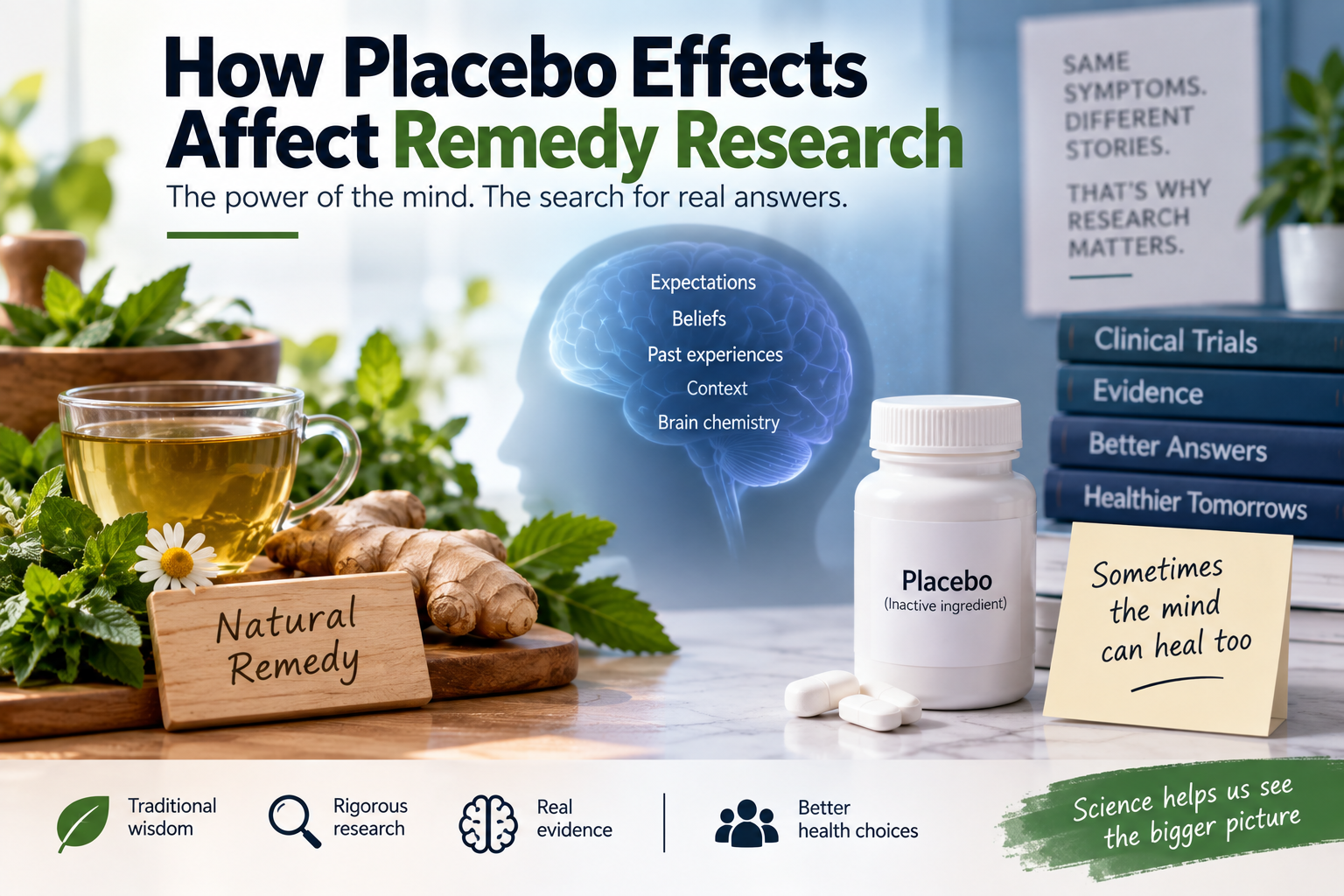
How Placebo Effects Affect Remedy Research
For natural remedies, this distinction can be particularly important. Many remedies have long histories of traditional use, and people may have strong expectations about their effectiveness. Carefully designed research is therefore needed to determine whether improvements are caused by the remedy, the context surrounding its use, natural changes in symptoms or some combination of factors
Read article
Are Natural Remedies Safe During Pregnancy
The safest approach is not to assume that a remedy is harmless simply because it is natural. Instead, its ingredients, dose, purpose, evidence, and potential risks should all be considered.
Read article

Join 10,000+ Readers Building Healthier Habits
Get actionable wellness tips every week plus our newest articles delivered straight to your inbox.