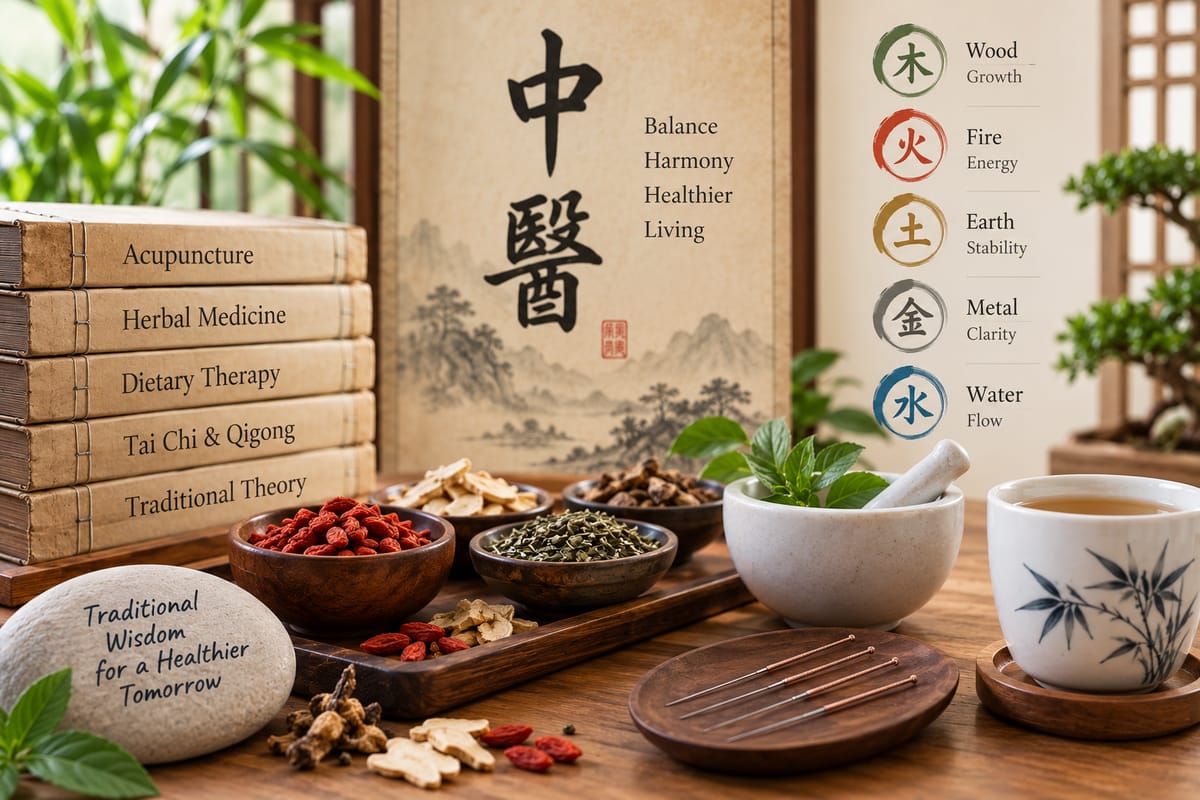
**How Traditional Chinese Medicine Is Structured
Traditional Chinese Medicine (TCM) is a broad medical tradition that has developed over centuries and includes several interconnected approaches to understanding health and treating illness. Rather than being a single therapy, TCM is a system that brings together ideas about the body, diagnostic methods, herbal preparations, acupuncture, dietary practices, movement and other forms of care.
Understanding how TCM is structured helps explain why its practitioners may approach the same health concern differently from practitioners trained in conventional Western medicine. TCM has its own terminology, diagnostic framework and theories about how health is maintained.
At the same time, the traditional framework and the evidence used to evaluate individual TCM practices are not the same thing. Some practices have been studied extensively, while evidence for others remains limited or mixed. Understanding that distinction is important when exploring traditional medicine.
What Is Traditional Chinese Medicine?
Traditional Chinese Medicine is a system of health practices that originated in China and developed through different historical periods.
TCM commonly includes:
- Acupuncture
- Chinese herbal medicine
- Dietary approaches
- Massage and bodywork, including tui na
- Tai chi and related movement practices
- Qigong
- Traditional diagnostic methods
These practices are connected by a traditional framework that views the body as an interconnected system rather than treating symptoms as completely independent problems.
Modern TCM practice can vary considerably depending on the practitioner, country and clinical setting.
The Traditional Framework Behind TCM
One of the central features of TCM is its traditional explanation of health and disease.
Traditional theory describes the body in terms of concepts such as qi, yin and yang, and the five phases, sometimes called the five elements.
These concepts form part of the theoretical language used to organize observations about a person’s condition.
They should not automatically be interpreted as equivalent to concepts in modern anatomy, physiology or biomedicine. They belong to a different historical medical framework.
This distinction is particularly important when discussing TCM alongside modern scientific research.
Qi and the Traditional Understanding of Vital Activity
Qi is commonly translated using terms such as “vital energy,” although translations vary and no single English phrase captures every traditional use of the term.
Within TCM theory, qi is associated with the functions and activities of the body and is described as moving through pathways traditionally known as meridians.
Different forms or functions of qi are described in traditional texts and clinical systems.
From the perspective of modern biomedical science, however, qi and meridians should not simply be assumed to correspond to a specific measurable substance or anatomical structure.
The concept is primarily part of the traditional explanatory framework of TCM.
Yin and Yang
Yin and yang are another major organizing principle in traditional Chinese medicine.
They describe complementary aspects of a system rather than representing simple opposites such as good and bad.
Traditional TCM theory uses yin-yang relationships to describe patterns involving qualities such as activity and rest, warmth and coldness, or relative excess and deficiency.
Practitioners may use these concepts when interpreting symptoms and developing a traditional diagnosis.
The objective within the traditional framework is generally described in terms of maintaining or restoring an appropriate balance between these complementary aspects.
The Five Phases
The five phases are traditionally known as wood, fire, earth, metal and water.
They provide another framework for describing relationships and patterns within TCM theory.
Rather than functioning simply as five physical substances, the phases are used symbolically and systematically to organize relationships between different processes and aspects of health.
They can be incorporated into traditional diagnostic reasoning, including interpretations involving organs, emotions, seasons and other categories.
Different TCM schools may place different emphasis on particular elements of this framework.
TCM Organ Systems
TCM uses concepts known as the zang-fu organ systems.
These categories use familiar anatomical names such as the liver, heart, spleen, lung and kidney, but the traditional meanings do not correspond exactly to modern anatomical organs.
For example, the traditional TCM concept of the “spleen” includes functions and relationships that extend beyond what modern medicine attributes to the anatomical spleen.
This is why descriptions of TCM should distinguish between a traditional organ system and a biomedical organ.
The traditional categories help practitioners organize symptoms and patterns according to TCM theory.
Diagnosis in Traditional Chinese Medicine
Diagnosis is a central part of TCM.
Instead of focusing solely on a named disease, a practitioner may attempt to identify a pattern describing the person’s condition according to traditional theory.
The process can involve several forms of observation and questioning.
A practitioner may ask about:
- Sleep
- Appetite
- Digestion
- Energy
- Pain
- Temperature preferences
- Emotional experiences
- Menstrual patterns
- Bowel movements
- Urination
- Other symptoms and changes
The practitioner may also observe the tongue and examine the pulse using traditional diagnostic methods.
Tongue Diagnosis
Tongue examination is one of the recognizable features of TCM diagnosis.
A practitioner may consider characteristics such as:
- Tongue color
- Shape
- Moisture
- Surface coating
- Cracks
- Changes in different areas of the tongue
Within traditional TCM theory, these observations are interpreted as clues to particular patterns.
Modern medical diagnosis does not generally use tongue appearance in the same theoretical manner. Changes in the tongue can nevertheless have conventional medical explanations, which means unusual or persistent changes should not automatically be attributed to a TCM pattern.
Pulse Diagnosis
Pulse examination is another traditional diagnostic technique.
TCM practitioners may assess the pulse at different positions and depths and describe qualities using a specialized vocabulary.
Traditional pulse diagnosis is considerably more elaborate than simply measuring a person’s heart rate.
The practitioner interprets these observations within the broader TCM diagnostic framework rather than treating the pulse reading as an isolated measurement.
Pattern Identification
Pattern identification helps explain how TCM can approach two people with similar symptoms differently.
For example, two people may both report fatigue, but a practitioner may identify different traditional patterns based on accompanying symptoms and observations.
The resulting treatment plan could therefore differ between individuals.
This individualized approach is one of the defining structural characteristics of traditional Chinese medicine.
It also means that a description of TCM treatment cannot always be reduced to a simple formula such as “one symptom equals one remedy.”
Acupuncture Within TCM
Acupuncture is one of the best-known components of TCM.
Traditional acupuncture involves inserting thin needles into selected points on the body. Traditional practitioners may choose points according to the person’s symptoms and identified pattern.
Acupuncture has also been studied independently of the complete traditional TCM framework. Research has investigated its potential effects for various conditions, with evidence differing depending on the condition, comparison treatment and study design.
Consequently, the traditional explanation for acupuncture and the scientific evidence regarding its effects are separate questions.
Herbal Medicine
Chinese herbal medicine is another major component of TCM.
Practitioners may prescribe combinations of plant-derived materials and, depending on the preparation and tradition, other substances. Formulas can contain multiple ingredients selected according to the practitioner’s assessment.
This differs from the idea of taking a single herb for a single symptom.
People interested in this area can explore Herbal Medicine Explained for a broader look at how herbal approaches are structured and understood.
Chinese herbal products can be prepared as decoctions, powders, capsules, tablets, extracts and other formulations.
The composition and quality of commercially available products can vary, making sourcing and appropriate professional guidance important.
Diet and Food in TCM
Food is also incorporated into the traditional TCM framework.
Traditional dietary approaches may classify foods according to characteristics such as warming or cooling qualities and their relationships within the broader system.
A TCM practitioner may recommend particular foods or eating patterns based on a person’s traditional pattern.
These recommendations should be distinguished from modern nutritional science. A traditional classification does not necessarily correspond to the nutrient composition or physiological effects of a food as understood through contemporary nutrition research.
Movement Practices
TCM is also associated with movement and breathing practices such as tai chi and qigong.
These practices generally involve controlled movements, posture, breathing and focused attention.
They are sometimes practiced for general well-being, physical activity, balance, relaxation or other purposes.
Unlike some herbal products, movement-based practices do not involve ingesting substances, although they can still have physical considerations for people with particular limitations or injuries.
How TCM Treatments Are Selected
Treatment selection traditionally follows the diagnostic process.
A practitioner may consider the person’s identified pattern before selecting one or more interventions.
A treatment plan might involve:
- Acupuncture
- An herbal formula
- Dietary recommendations
- Movement exercises
- Massage or bodywork
- Lifestyle recommendations
- A combination of approaches
The combination depends on the practitioner’s training and interpretation of the individual’s condition.
This pattern-based structure is one reason why TCM does not always operate like a standardized treatment protocol.
Traditional Medicine and Modern Evidence
A traditional explanation for why a therapy is believed to work is not the same as scientific evidence demonstrating whether a therapy produces a particular effect.
Modern research can investigate individual TCM practices using clinical trials, observational studies, laboratory research and other methods.
Some interventions may have evidence supporting particular uses, while evidence for other applications may be uncertain.
The broader relationship between traditional practices and scientific investigation is discussed in Traditional Remedies Versus Modern Research.
People exploring these therapies should therefore look at evidence for the specific treatment and specific health condition, rather than assuming that evidence for one TCM practice applies to every component of the system.
Understanding the Evidence Behind Natural Remedies
Evaluating traditional Chinese medicine also fits into the broader question of how natural and traditional remedies are studied.
A remedy’s historical use can provide context, but historical popularity alone does not establish that a treatment is effective or safe for a particular medical condition.
Research quality, dosage, preparation, comparison groups, potential adverse effects and consistency of results all matter when evaluating evidence.
The Complete Guide to Natural Remedies and Evidence provides a broader framework for understanding these questions.
Safety Is Part of the Structure
Natural or traditional does not automatically mean risk-free.
Herbal products can contain biologically active compounds and may interact with prescription medicines or other supplements. Product contamination, incorrect identification of ingredients and differences in preparation can also create concerns.
Acupuncture and other physical techniques have their own safety considerations, particularly when performed incorrectly or in inappropriate circumstances.
Anyone considering TCM for a significant medical problem should also consider whether conventional diagnosis or treatment is needed.
A useful resource for understanding these issues is the Natural Remedies Safety Guide: Risks, Interactions and More.
TCM in Modern Healthcare
Traditional Chinese medicine is practiced in different forms around the world.
In some settings, it operates largely within traditional systems. In others, particular practices such as acupuncture or selected herbal products are incorporated into complementary healthcare.
The way TCM is regulated, taught and practiced can differ substantially between countries.
This makes it important to understand exactly what a practitioner means by “TCM” and what treatment is being offered.
A clinic using acupuncture, for example, may not necessarily provide the complete traditional TCM system.
How the Different Components Fit Together
The structure of TCM can be viewed as a connected framework:
Traditional theory → Observation and diagnosis → Pattern identification → Treatment selection → Ongoing assessment
Traditional concepts such as yin and yang, qi, five phases and zang-fu systems provide the theoretical foundation.
Diagnostic methods are then used to identify a traditional pattern.
The practitioner selects interventions based on that interpretation and may adjust the treatment as the person’s reported symptoms and observed characteristics change.
This structure helps explain why TCM is better understood as a system of related practices rather than a single treatment.
What Makes TCM Different From Conventional Medicine?
Conventional medicine and TCM can differ in their underlying theories, terminology and diagnostic approaches.
Modern biomedical medicine generally bases diagnosis on anatomy, physiology, pathology and evidence from clinical research, supported by tools such as laboratory tests and medical imaging.
TCM traditionally uses concepts such as patterns, qi, yin and yang, meridians and zang-fu systems.
These frameworks should not be treated as interchangeable descriptions of the same biological processes.
At the same time, individual TCM practices can be studied using modern research methods regardless of the traditional explanation associated with them.
This distinction allows people to examine both the historical structure of TCM and the evidence surrounding specific treatments without confusing the two.
Why Understanding the Framework Matters
Learning how TCM is structured makes it easier to understand why its practitioners use particular terminology and why treatment can be highly individualized.
It also provides useful context when evaluating claims about traditional therapies.
A person can recognize that TCM has a coherent historical and theoretical structure while still asking important modern questions about evidence, effectiveness, quality control and safety.
That balanced perspective is particularly useful because TCM includes many different practices, and evidence cannot be generalized from one intervention to every part of the system.
A Traditional System With Many Moving Parts
Traditional Chinese Medicine is structured around a network of theories, diagnostic methods and therapeutic practices rather than a single treatment or standardized procedure. Concepts such as qi, yin and yang, the five phases and traditional organ systems provide the framework through which practitioners interpret health and identify patterns.
Acupuncture, herbal medicine, dietary practices, bodywork and movement-based approaches can then be incorporated into individualized treatment plans.
Understanding this structure provides a clearer starting point for evaluating TCM today. Its historical framework explains how practitioners organize their approach, while modern research can be used to examine the safety and effectiveness of individual practices and products. Keeping those two perspectives distinct allows the subject to be explored with both respect for its history and attention to the evidence surrounding its modern use.
Continue Reading
Similar Posts

What Foods Are Considered Anti-Inflammatory?
Certain foods are commonly described as **anti-inflammatory foods** because they contain nutrients and plant compounds associated with healthier inflammatory responses.
Read article
When Natural Self Care Is Not Appropriate
Knowing when to stop relying on self-care and seek appropriate medical attention is an important part of using natural approaches responsibly.
Read article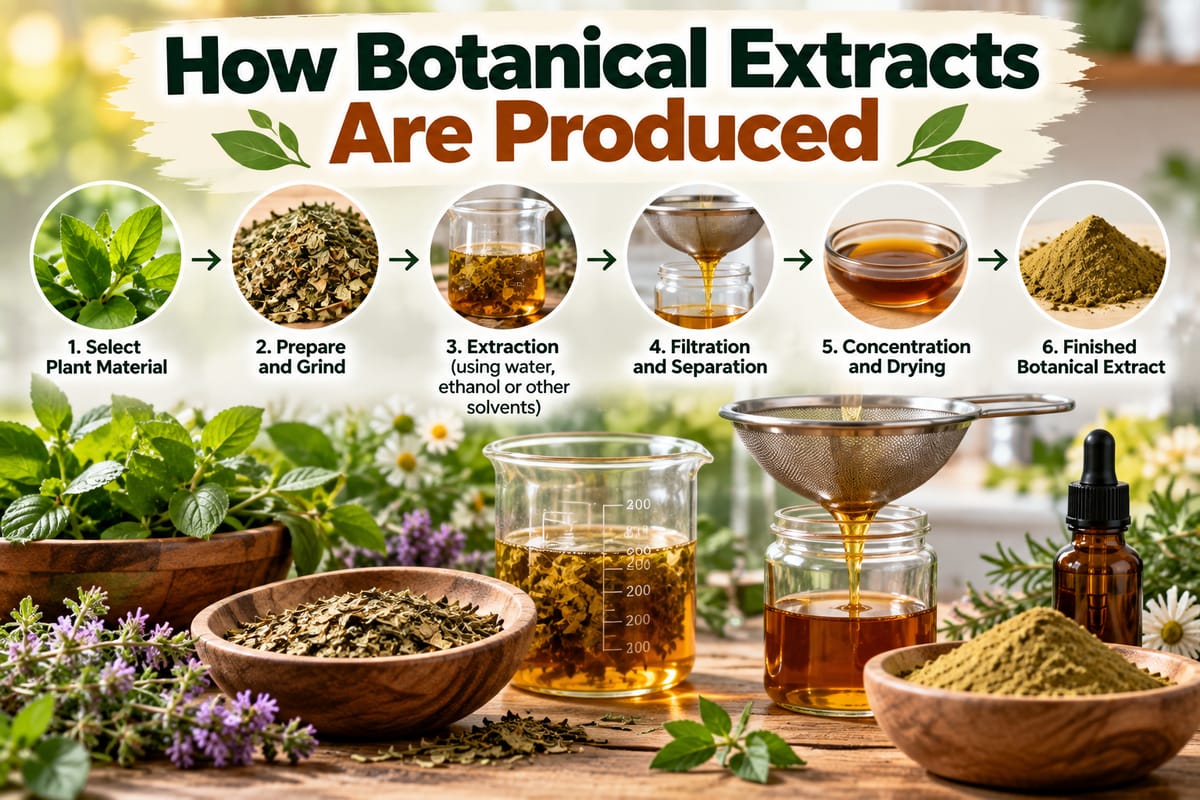
How Botanical Extracts Are Produced
Understanding how botanical extracts are produced also helps explain why an extract is not necessarily equivalent to simply consuming the original plant.
Read article
Join 10,000+ Readers Building Healthier Habits
Get actionable wellness tips every week plus our newest articles delivered straight to your inbox.