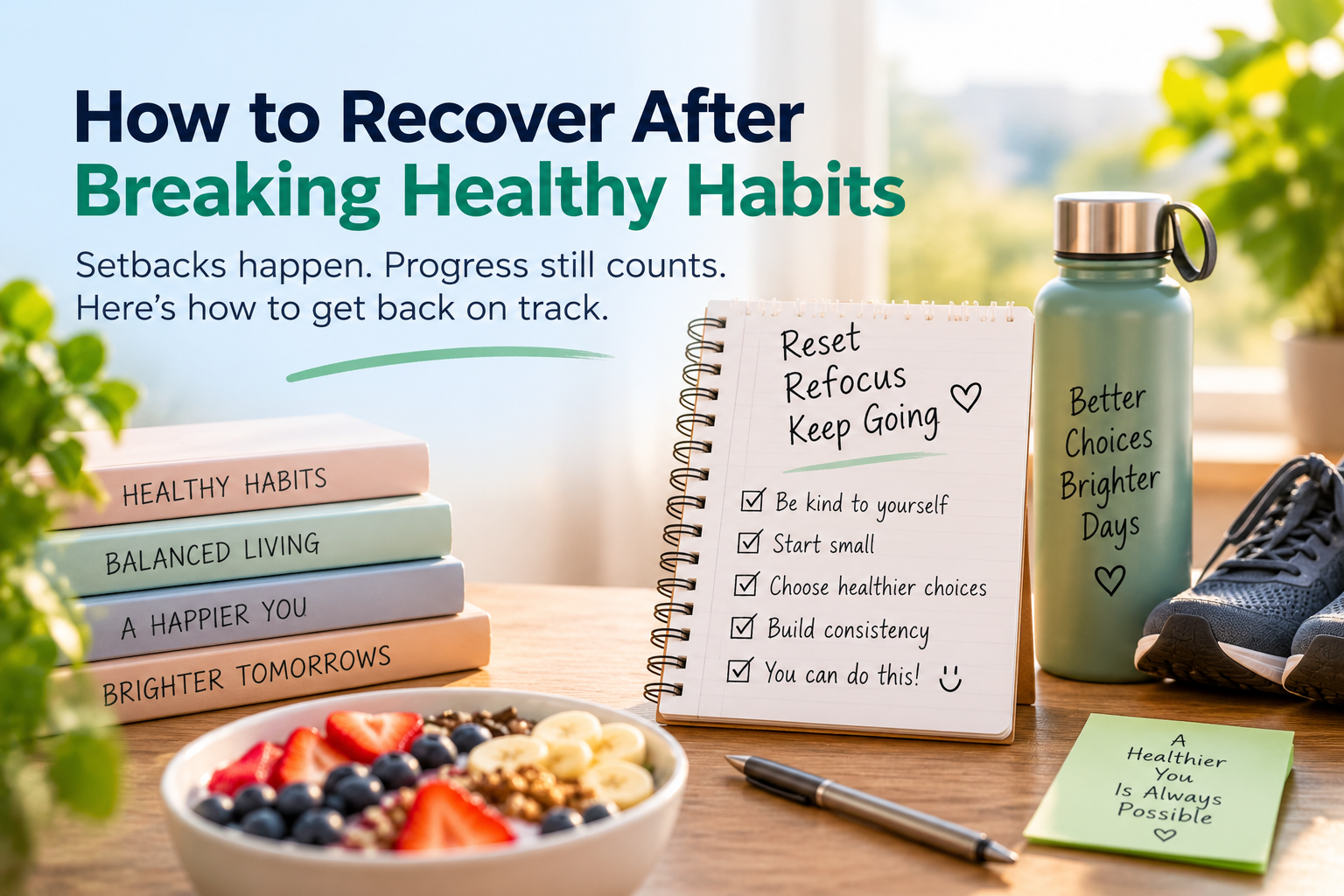

**How to Recover After Breaking Healthy Habits
Building healthy habits can feel rewarding when everything is going according to plan. Regular exercise, balanced meals, consistent sleep, adequate hydration, and time for relaxation can gradually become part of everyday life.
But routines rarely remain perfect forever.
Travel, demanding work schedules, family responsibilities, illness, stress, celebrations, or simple changes in motivation can disrupt even well-established habits. A few missed workouts or several days of less nutritious meals can sometimes create the feeling that all previous progress has been lost.
It has not.
Breaking a healthy routine is usually a temporary interruption rather than a permanent failure. The important part is learning how to return to healthier behaviors without turning a short setback into a long-term pattern.
Why Healthy Habits Get Disrupted
Healthy habits depend on circumstances as well as motivation. A person may genuinely want to maintain a routine but encounter situations that make it harder to do so.
Common disruptions include:
- Busy periods at work or school
- Travel and changes in daily schedules
- Family or social commitments
- Stress and emotional pressure
- Poor sleep
- Illness or injury
- Changes in finances or access to healthy foods
- Loss of motivation
- Major life transitions
- Holidays and special occasions
Recognizing these influences can make it easier to respond constructively. Instead of asking why a routine was abandoned, it can be more useful to identify what changed and what would make returning to the routine easier.
A Setback Does Not Erase Previous Progress
One of the most important principles of habit recovery is avoiding all-or-nothing thinking.
Missing a week of exercise does not erase months of physical activity. Eating several less-balanced meals does not cancel every healthy food choice made previously. Going to bed late for several nights does not mean a consistent sleep routine can never return.
Healthy behavior is built over time. Individual days matter, but long-term patterns generally matter more than isolated deviations.
This perspective can reduce the temptation to respond to a setback with extreme restrictions or unrealistic expectations.
Start With One Habit
Trying to repair every part of a routine simultaneously can become overwhelming.
Someone who has stopped exercising, started sleeping poorly, eaten irregularly, and neglected relaxation may decide to fix everything on Monday. That approach can create an ambitious schedule that becomes difficult to maintain.
A simpler strategy is to choose one behavior that can serve as a starting point.
For example, someone might begin with:
- Taking a short daily walk
- Returning to a regular bedtime
- Drinking water regularly
- Preparing one nutritious meal each day
- Spending a few minutes stretching
- Reestablishing a morning routine
Once the behavior becomes more consistent, another habit can gradually be added.
Return to a Routine That Is Realistic
The routine that worked previously may not fit current circumstances.
A person who once exercised for an hour every day may currently have only 20 minutes available. Someone who regularly cooked elaborate meals may now need simpler options because of a busier schedule.
Rather than trying to recreate an old routine exactly, adjust it to the present situation.
The goal is not to prove that the previous routine can be maintained under completely different circumstances. The goal is to create a routine that works now.
For additional guidance, How to Build Healthy Daily Habits That Last Long-Term explores ways to establish everyday behaviors that can remain practical over time.
Make the First Step Small
When motivation is low, reducing the size of the first action can make restarting easier.
Instead of committing to a long workout, begin with a short walk. Instead of completely reorganizing a diet, prepare one balanced meal. Instead of attempting a dramatic sleep schedule change, start by moving bedtime closer to the desired time.
Small actions can reduce the psychological barrier associated with getting started.
The purpose is not to remain at the smallest possible step forever. It is to rebuild momentum and gradually increase the behavior when it feels manageable.
Avoid Trying to “Make Up” for Lost Time
A common reaction to breaking healthy habits is trying to compensate immediately.
Someone might attempt an excessively difficult workout after several inactive weeks or severely restrict food after several days of overeating. These responses can create physical discomfort and make healthy behaviors feel like punishment.
A more sustainable approach is to resume normal healthy behaviors without attempting to compensate for every missed day.
There is no need to repay a week of missed workouts with an exhausting session. There is no requirement to make a single meal exceptionally restrictive because previous meals were less balanced.
Returning to a reasonable routine is usually more practical than swinging between extremes.
Identify the Reason Behind the Break
Understanding why a habit stopped can reveal what needs to change.
Consider asking:
- What interrupted the routine?
- Was the schedule unrealistic?
- Did stress make the behavior difficult?
- Was there a change in work or family responsibilities?
- Was the habit becoming repetitive or unpleasant?
- Were the goals too ambitious?
- Was there no backup plan for difficult days?
The answers can help distinguish between a motivation problem and a system problem.
If the schedule itself is unrealistic, simply demanding more motivation may not solve the issue. Adjusting the routine could be more useful.
Build Habits Around Existing Routines
Connecting a new behavior to something that already happens every day can make it easier to remember.
For example:
- Stretch after brushing your teeth.
- Walk after lunch.
- Prepare tomorrow’s breakfast while cleaning up dinner.
- Drink water when beginning work.
- Read or relax for a few minutes before preparing for bed.
These connections create cues that can help reinforce the behavior.
People who want to develop more durable routines can also explore How to Build Healthy Habits That Become Sustainable Long-Term Behaviors.
Prepare for Imperfect Days
A resilient routine needs flexibility.
There will be days when a full workout is impossible, a homemade meal cannot be prepared, or bedtime is later than planned. Instead of treating these situations as complete failures, create smaller alternatives.
A full exercise session might become a 10-minute walk. A complicated meal might become a simple combination of nutritious foods. A disrupted morning routine might be replaced with one small habit that keeps the day connected to the broader routine.
This creates a distinction between doing less and giving up entirely.
A flexible routine can continue even when circumstances are less than ideal.
Use Healthy Coping Skills During Stressful Periods
Stress is one of the most common reasons healthy routines become difficult to maintain.
When pressure increases, people may rely on behaviors that provide immediate comfort but do not necessarily support long-term wellbeing. Eating for emotional comfort, withdrawing from activity, staying up late, or spending excessive time online can sometimes become default responses to stress.
Developing alternative responses can make habit recovery easier. The Complete Guide to Building Resilience offers a broader look at developing the capacity to adapt to challenges and recover from difficult experiences.
Similarly, learning practical healthy coping skills can provide alternatives when stress threatens to disrupt established routines.
Focus on the Next Decision
After breaking a healthy habit, it is easy to spend too much time thinking about what already happened.
Instead, focus on the next decision.
If breakfast was less nutritious than planned, the next meal can still be balanced. If today’s workout was missed, tomorrow provides another opportunity to move. If sleep was poor last night, tonight can still be used to reestablish a better routine.
This approach keeps attention on actions that can still be influenced.
Track Progress Without Becoming Obsessed
Tracking can help some people recognize patterns and maintain accountability.
A simple calendar, checklist, journal, or habit-tracking application can show whether a behavior is becoming more consistent.
However, tracking should support healthy behavior rather than create unnecessary pressure.
A missed day does not need to break a streak mentally. The useful question is whether the behavior is generally moving in the desired direction.
For some people, measuring weekly consistency rather than demanding a perfect daily record can provide a more realistic picture.
Celebrate Returning, Not Just Being Perfect
People often reward themselves mentally for maintaining an uninterrupted routine but overlook the importance of returning after a setback.
Restarting is itself a useful skill.
Someone who repeatedly learns how to return to healthy behaviors after disruptions may develop a routine that is more adaptable than one that works only under perfect circumstances.
The ability to recover can therefore become part of the habit itself.
Give Your Routine Room to Change
Healthy habits may need to evolve as life changes.
A routine that works during university may not work during full-time employment. A fitness schedule may need to change after an injury. Meal preparation may look different after moving to a new location or taking on additional responsibilities.
Changing a routine does not necessarily mean abandoning healthy goals.
Instead, it can mean finding a different way to support those goals under new conditions.
When Professional Support May Help
Sometimes difficulty maintaining healthy behaviors is connected to issues that require more than habit-building strategies.
Persistent problems with sleep, eating, substance use, mood, stress, pain, or physical functioning may warrant discussion with a qualified healthcare professional.
Professional guidance can help identify underlying issues and develop an approach appropriate to an individual’s circumstances.
Healthy habits should support wellbeing rather than become a source of excessive guilt, fear, or self-punishment.
Getting Back on Track Without Starting Over
Recovering after breaking healthy habits is less about returning to a perfect version of the past and more about rebuilding a workable routine for the present.
Start small, understand what disrupted the behavior, remove unnecessary pressure, and create alternatives for difficult days. Most importantly, treat a setback as information rather than proof that healthy change has failed.
The strongest routines are not necessarily those that are never interrupted. They are the ones that leave enough room for real life—and make it possible to begin again when circumstances change.
Continue Reading
Similar Posts

What Nutrient Density Means and How to Choose Nutrient-Dense Foods
Understanding nutrient density can make everyday food choices easier without requiring complicated diets or strict rules. Instead of focusing only on calories, nutrient density encourages people to consider what nutrients a food contributes to the overall diet.
Read article
How Your Environment Affects Everyday Health
Understanding these connections can help people make practical changes that support healthier daily living.
Read article
How Aerobic Exercise Supports Cardiovascular Health
Understanding how aerobic exercise affects cardiovascular health can make it easier to choose activities that are enjoyable, sustainable, and appropriate for your fitness level.
Read article

Join 10,000+ Readers Building Healthier Habits
Get actionable wellness tips every week plus our newest articles delivered straight to your inbox.