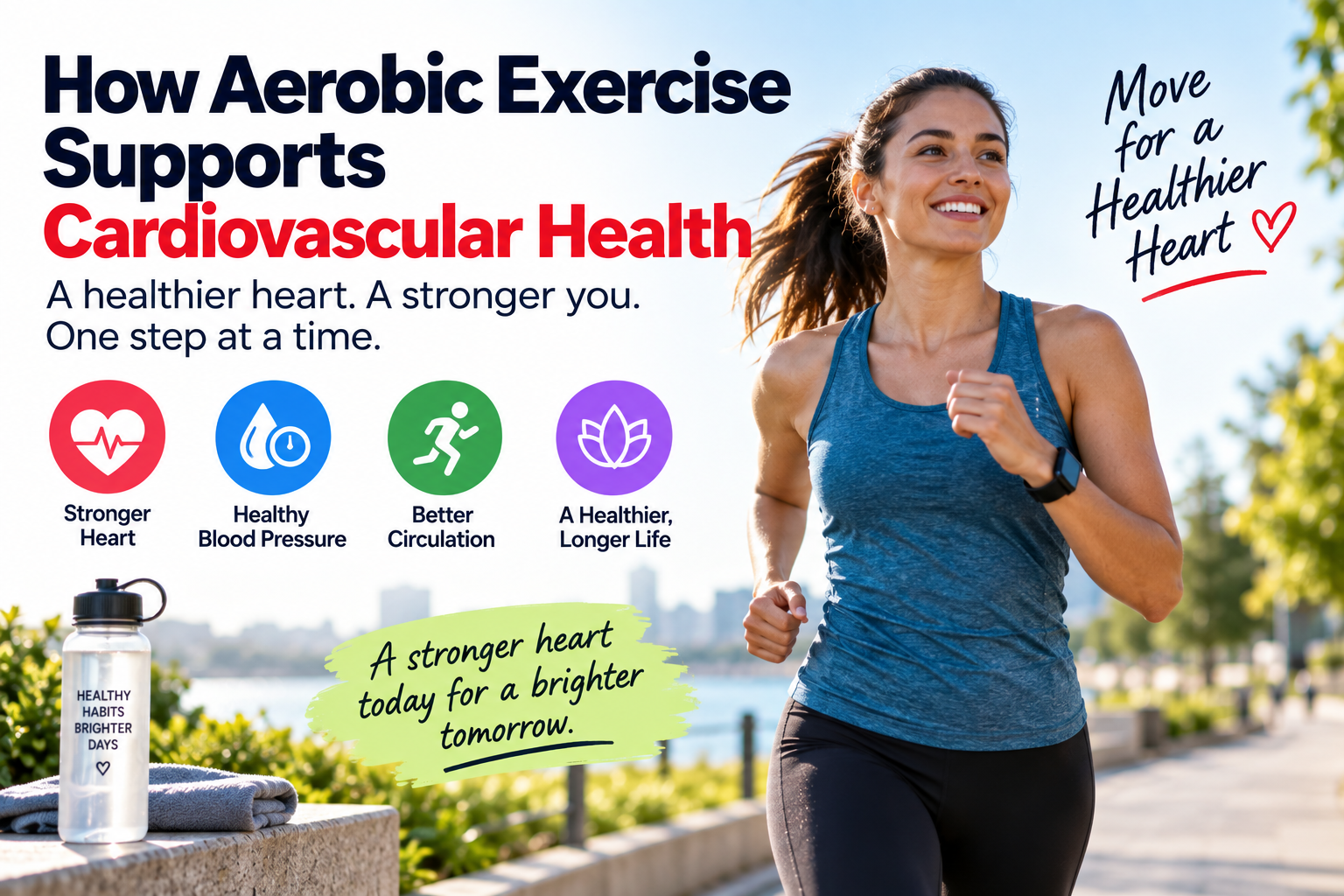

How Aerobic Exercise Supports Cardiovascular Health
Aerobic exercise is one of the most effective ways to support a healthy heart and circulatory system. From brisk walking and cycling to swimming, jogging, dancing, and other activities that raise the heart rate, regular aerobic movement can improve how efficiently the heart works while supporting healthier blood vessels, blood pressure, cholesterol levels, and overall physical fitness.
The benefits do not require extreme workouts or athletic ability. Consistent, moderate activity can make an important difference, particularly when exercise becomes part of a broader healthy lifestyle.
Understanding how aerobic exercise affects cardiovascular health can make it easier to choose activities that are enjoyable, sustainable, and appropriate for your fitness level.
What Is Aerobic Exercise?
Aerobic exercise is physical activity that uses large muscle groups continuously for an extended period and increases the body’s demand for oxygen.
During aerobic activity, the heart beats faster to deliver oxygen-rich blood to working muscles. Breathing also becomes deeper and more frequent as the body works to supply the oxygen needed to produce energy.
Common forms of aerobic exercise include:
- Brisk walking
- Jogging and running
- Cycling
- Swimming
- Dancing
- Hiking
- Rowing
- Aerobic fitness classes
- Elliptical training
- Recreational activities such as active games and sports
Aerobic exercise can range from relatively gentle movement to vigorous training. What matters is that the activity challenges the cardiovascular system at an appropriate level.
For a broader look at different types of movement, training approaches, and exercise principles, see The Complete Guide to Physical Activity and Exercise.
Why the Heart Responds to Aerobic Exercise
The heart is a muscle that constantly works to circulate blood throughout the body. Regular aerobic activity gives it repeated opportunities to work harder and adapt.
Over time, consistent aerobic exercise can improve cardiovascular efficiency. A healthier, better-conditioned cardiovascular system can deliver oxygen and nutrients to tissues more effectively during physical activity.
Exercise also encourages adaptations throughout the circulatory system. Blood vessels can become better able to respond to changes in blood flow, while regular movement supports overall vascular function.
This does not mean that exercise makes the heart immune to disease. Rather, it is one of several important lifestyle factors that can help reduce cardiovascular risk and maintain heart health over the long term.
Aerobic Exercise Can Help Lower Blood Pressure
Blood pressure measures the force of blood pushing against the walls of the arteries. Persistently elevated blood pressure can place additional strain on the heart and blood vessels.
Regular aerobic activity can contribute to healthier blood pressure levels in many people. Exercise encourages the cardiovascular system to become more efficient and can support healthier blood-vessel function.
This is particularly important because high blood pressure may develop without obvious symptoms. Understanding the issue in greater depth can help explain why lifestyle habits matter, as discussed in Why Blood Pressure Matters for Long-Term Health.
People who already have elevated blood pressure should not assume exercise alone will replace medical treatment. Depending on the individual situation, medication, dietary changes, weight management, sleep, stress management, and other interventions may also be necessary.
For a more detailed explanation of the condition itself, see High Blood Pressure Explained.
It Supports Better Circulation
Aerobic exercise repeatedly increases blood flow throughout the body. This increased demand challenges the circulatory system to transport oxygen efficiently.
Regular physical activity can support healthy blood-vessel function and circulation. Healthy arteries need to be able to expand and contract appropriately as the body’s demands change.
This is one reason physical activity is closely associated with cardiovascular health. The benefits extend beyond the heart itself to the network of arteries and smaller blood vessels responsible for delivering blood throughout the body.
Aerobic Exercise Can Improve Cholesterol Health
Cholesterol is a waxy substance that the body needs, but the balance between different types of cholesterol and other blood fats can influence cardiovascular risk.
Regular physical activity can contribute to a healthier cholesterol profile, particularly when combined with a nutritious eating pattern and other healthy habits.
Exercise is not a substitute for medical evaluation when cholesterol levels are elevated, but it can be an important part of an overall strategy for managing cardiovascular risk.
This becomes especially valuable when exercise is combined with other approaches to heart disease prevention.
It Helps the Body Use Oxygen More Efficiently
One of the clearest effects of aerobic training is improved cardiorespiratory fitness.
The cardiovascular and respiratory systems work together to supply oxygen to muscles and remove carbon dioxide. As aerobic fitness improves, the body generally becomes better at handling sustained physical activity.
Someone who begins with regular walking, for example, may eventually find that the same route feels easier. They may be able to walk farther, maintain a faster pace, or recover more quickly after activity.
These changes are signs that the body is adapting to the demands placed on it.
Aerobic Exercise Supports Healthy Weight Management
Body weight is influenced by many factors, including food intake, physical activity, sleep, genetics, medications, environment, and metabolism.
Aerobic exercise increases energy expenditure and can therefore play a useful role in weight management. Maintaining a healthy weight can, in turn, support cardiovascular health by reducing or helping manage several risk factors associated with heart disease.
However, exercise does not need to be viewed solely as a tool for burning calories.
Regular movement can improve fitness, strength, endurance, mood, sleep, and metabolic health even when body weight changes very little.
That broader perspective can make exercise more sustainable and enjoyable.
It Can Help Improve Blood Sugar Regulation
Physical activity also affects how the body handles glucose.
Working muscles require energy, and regular physical activity can improve the body’s ability to use glucose. Over time, maintaining an active lifestyle may support healthier blood sugar regulation and metabolic health.
This matters for cardiovascular health because metabolic conditions and cardiovascular disease can share several risk factors.
Aerobic exercise is therefore useful not only because it directly challenges the heart and circulatory system but also because it can positively influence several systems connected to cardiovascular risk.
Exercise Can Help Manage Stress
The relationship between stress and cardiovascular health is complex. Occasional stress is a normal part of life, but persistent psychological stress can influence behaviors, sleep, blood pressure, and other factors relevant to long-term health.
Aerobic exercise can provide a healthy outlet for physical and emotional tension. Many people also experience improvements in mood and overall well-being when they remain physically active.
A walk outdoors, a bike ride, a swim, or a favorite dance session may provide both physical activity and a mental break from everyday demands.
The psychological benefits can make it easier to maintain an active lifestyle over time.
Aerobic Activity Can Support Better Sleep
Sleep and cardiovascular health are closely connected. Poor sleep can affect energy, mood, appetite, stress, and other aspects of health.
For many people, regular physical activity can support better sleep quality and make it easier to establish a consistent sleep routine.
Timing and intensity matter, however. Some people may find vigorous exercise close to bedtime disruptive, while others have no difficulty exercising later in the day.
Finding a schedule that supports both exercise and restorative sleep is often more useful than following a rigid workout timetable.
How Much Aerobic Exercise Is Needed?
The ideal amount of aerobic activity depends on a person’s age, fitness level, health status, goals, and current activity habits.
For generally healthy adults, widely used physical-activity recommendations emphasize getting regular moderate-intensity aerobic activity throughout the week, or a smaller amount of vigorous-intensity activity, with additional benefits possible from combining aerobic exercise with muscle-strengthening activities.
Moderate-intensity exercise generally makes breathing and heart rate noticeably faster while still allowing a person to speak in short sentences.
Examples include:
- Brisk walking
- Easy cycling
- Water exercise
- Recreational dancing
- Moderate hiking
Vigorous activity requires substantially more effort and makes conversation more difficult. Examples can include running, fast cycling, swimming laps, and other demanding activities.
People do not have to begin at the recommended target immediately. Someone who is currently inactive can start with short periods of movement and gradually increase duration and intensity.
You Do Not Have to Exercise All at Once
A common misconception is that cardiovascular exercise only counts when it happens during a long, uninterrupted workout.
In practice, physical activity can be accumulated throughout the day.
For example, someone might:
- Take a short walk in the morning
- Walk during a lunch break
- Use stairs instead of an elevator
- Take an evening walk
- Cycle for transportation
- Spend time doing an active household task
Breaking movement into manageable periods can make regular exercise more realistic for people with demanding schedules.
The most important change for someone who is inactive may simply be moving more consistently.
Moderate Exercise Can Be Enough
Aerobic exercise does not have to be exhausting to provide cardiovascular benefits.
Moderate-intensity activity can be highly valuable, particularly for beginners, older adults, and people who have not exercised regularly.
Walking is a good example. A sufficiently brisk walk can elevate heart rate and breathing while remaining accessible to many people.
As fitness improves, a person can gradually increase distance, pace, duration, terrain, or frequency.
This gradual approach is generally more sustainable than suddenly adopting an extremely demanding workout routine.
How to Make Aerobic Exercise a Habit
The best exercise program is often the one a person can continue doing.
Instead of choosing an activity solely because it is considered effective, consider whether it fits naturally into everyday life.
Helpful strategies include:
Choose activities you enjoy
Walking with a friend, cycling outdoors, dancing to music, swimming, or playing a recreational sport may feel more enjoyable than forcing yourself through workouts you dislike.
Start gradually
If you have been inactive, begin with manageable sessions. Increasing activity progressively gives the body time to adapt.
Build exercise into your routine
A consistent time of day can make physical activity easier to remember.
Make movement convenient
Keep comfortable walking shoes available, choose activities close to home, or use equipment that makes exercise accessible.
Track progress without obsessing over numbers
Recording walks, workout sessions, distance, or time can provide motivation, but cardiovascular health does not depend on achieving perfect statistics every day.
Mix different activities
Combining walking, cycling, swimming, dancing, and other forms of aerobic activity can reduce boredom and work the body in different ways.
Aerobic Exercise and Heart Disease Prevention
Heart disease develops through a combination of factors rather than a single cause. Genetics, age, smoking, blood pressure, cholesterol, diabetes, diet, physical inactivity, body composition, sleep, and other factors can all contribute to risk.
That means exercise should be viewed as one component of a larger prevention strategy.
Regular aerobic activity can complement other healthy behaviors such as eating a balanced diet, avoiding tobacco, managing blood pressure, getting adequate sleep, maintaining healthy cholesterol levels, and attending recommended health screenings.
For a broader look at these strategies, the Heart Disease Prevention Guide provides a useful foundation.
When Exercise Requires Extra Caution
Exercise is beneficial for most people, but the appropriate level of activity is not identical for everyone.
People with known heart disease, significant cardiovascular risk factors, serious chronic conditions, or a long period of inactivity may benefit from discussing an exercise plan with a healthcare professional.
Anyone experiencing symptoms such as chest pressure or pain, unexplained fainting, severe shortness of breath, or unusual symptoms during exercise should stop exercising and seek appropriate medical evaluation.
The goal is not simply to exercise harder. It is to exercise at a level that is appropriate for the individual.
The Long-Term Advantage of Consistency
Cardiovascular health is influenced by habits accumulated over months and years.
A single workout can temporarily increase heart rate and circulation, but the larger benefits of aerobic exercise come from repeated activity and the adaptations that develop over time.
Someone who walks regularly for years may gain more meaningful health benefits than someone who occasionally performs extremely intense workouts and then remains inactive for long periods.
Consistency also makes exercise part of normal life rather than a short-term challenge.
Making Movement Part of Everyday Life
Aerobic exercise does not have to look like a traditional workout. Walking to nearby destinations, cycling, hiking on weekends, dancing at home, swimming, playing active games, or taking regular movement breaks can all contribute to a more active lifestyle.
The heart responds to movement, and the cardiovascular system benefits when that movement becomes a regular part of life.
For many people, the most practical starting point is simple: choose an activity that feels manageable, do it consistently, and gradually build from there. Over time, those ordinary sessions can become an important part of protecting cardiovascular health and maintaining a stronger, more capable body.
Continue Reading
Similar Posts

How Your Environment Affects Everyday Health
Understanding these connections can help people make practical changes that support healthier daily living.
Read article
What Is the Gut Microbiome and Why Does It Matter
Understanding how this ecosystem works can make it easier to understand why diet, lifestyle, medications, and other factors can influence digestive health.
Read article
Why Does the Body Need Protein Every Day?
Unlike some nutrients that the body can store for long periods, protein is continuously being broken down and rebuilt. That is one reason getting enough protein regularly matters, rather than treating it as something needed only after exercise or during periods of intense physical activity.
Read article

Join 10,000+ Readers Building Healthier Habits
Get actionable wellness tips every week plus our newest articles delivered straight to your inbox.