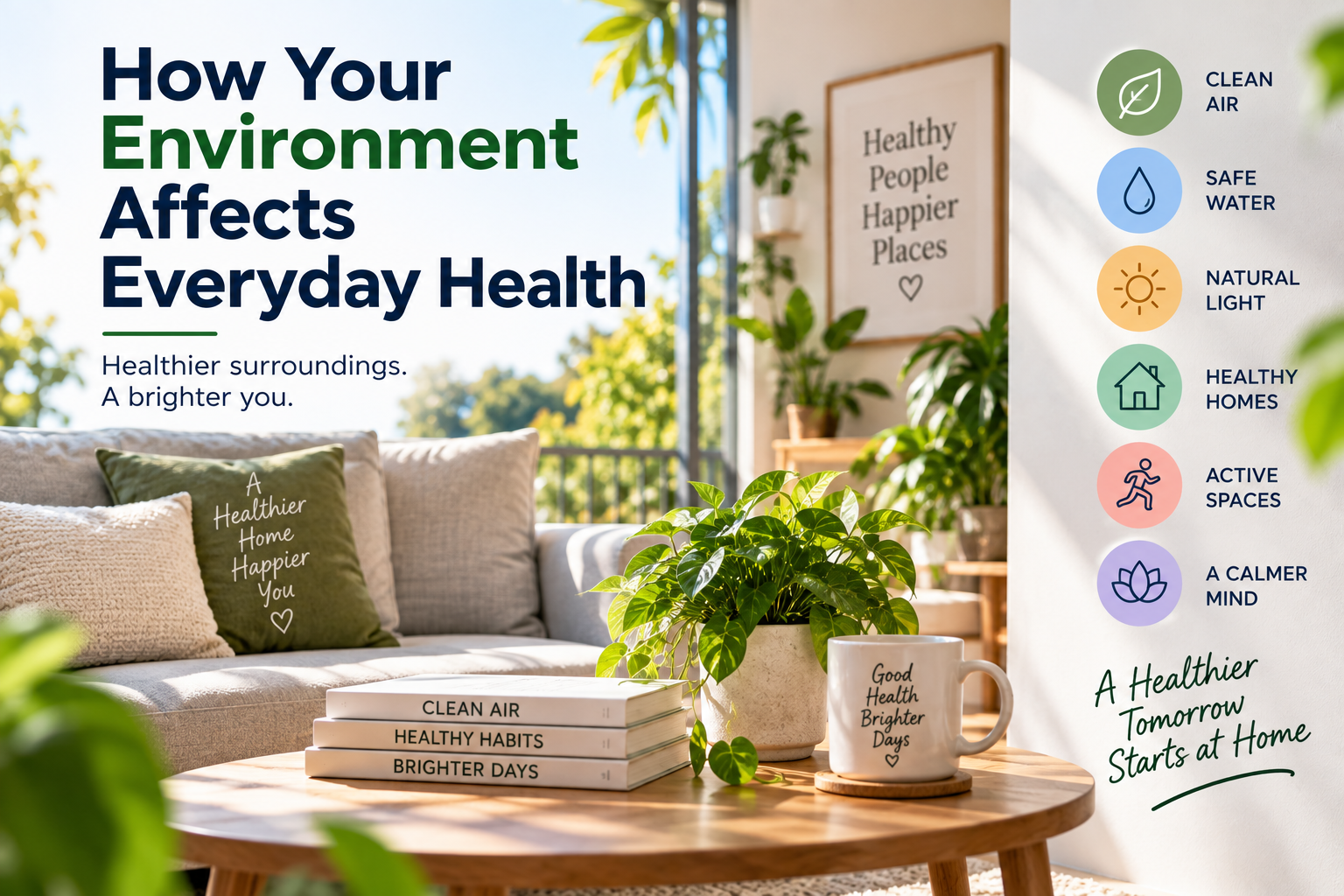

**How Your Environment Affects Everyday Health
Health is often associated with food, exercise, sleep, and medical care, but the environment around us also plays an important role in everyday well-being. The air people breathe, the water they drink, the homes they live in, the noise they experience, and the spaces where they work and relax can all influence how they feel and function.
Some environmental influences are obvious, such as exposure to extreme temperatures or polluted air. Others are less noticeable. Poor lighting can make certain tasks more difficult, persistent noise can interfere with rest, and a cluttered or poorly maintained living space can make everyday routines more stressful.
Understanding these connections can help people make practical changes that support healthier daily living.
What Is the Environment?
The environment includes the physical surroundings in which people live, work, travel, and spend their time.
This can include:
- Indoor air quality
- Outdoor air pollution
- Drinking water
- Housing conditions
- Temperature and humidity
- Natural surroundings
- Noise levels
- Lighting
- Workplace conditions
- Sanitation
- Access to safe recreational spaces
- Exposure to chemicals and other pollutants
Environmental health is therefore much broader than avoiding pollution. It involves creating surroundings that support physical comfort, safety, mental well-being, and healthy routines.
A person’s environment can also change throughout the day. Someone may live in one neighborhood, work in another location, commute through busy areas, and spend leisure time somewhere else. Each setting can introduce different environmental influences.
Why Your Surroundings Matter for Health
The body constantly interacts with its surroundings.
Breathing exposes the respiratory system to whatever is present in the surrounding air. Temperature affects how the body regulates heat. Light influences daily rhythms and visual function. Noise affects the nervous system and can influence concentration and relaxation.
Over time, repeated environmental exposures can become more important than a single short-term experience.
This is why maintaining healthy surroundings should be considered part of a broader approach to wellness. What healthy living includes goes beyond individual lifestyle choices and includes the conditions that make healthy habits easier to maintain.
Indoor Air Quality and Everyday Health
People spend a significant amount of time indoors, making indoor air quality particularly important.
Indoor air can contain dust, smoke, allergens, particles, chemical vapors, and other pollutants. Sources can include cooking, cleaning products, building materials, tobacco smoke, poorly maintained equipment, and outdoor pollution entering through doors and windows.
Poor ventilation can allow pollutants to accumulate.
Simple measures can help improve indoor air quality. Regular ventilation, appropriate maintenance of heating and cooling systems, controlling indoor smoke, reducing unnecessary chemical exposure, and keeping living spaces clean can all contribute to a healthier indoor environment.
Moisture also matters because excessive dampness can contribute to conditions that encourage mold growth.
The Importance of Clean Water
Safe water is fundamental to everyday health.
People depend on water for drinking, cooking, washing, and cleaning. Contaminated water can expose people to microorganisms or chemicals that may cause illness.
Water quality can be influenced by the source, treatment systems, plumbing, storage practices, and environmental contamination.
Households should follow local guidance concerning drinking water safety and use appropriate treatment methods when necessary. Water containers and storage systems should also be kept clean to prevent contamination after water has been collected or treated.
Temperature and Humidity
Indoor temperature can affect physical comfort and the ability to sleep, work, and relax.
Extremely hot conditions can place additional demands on the body, while excessively cold environments can make everyday activities uncomfortable. Humidity also influences how temperature is perceived and can affect indoor conditions.
Excessive moisture can contribute to dampness and mold, while very dry conditions may cause discomfort for some people.
Maintaining reasonable temperature and humidity levels is therefore part of creating a healthy and comfortable home environment.
Hygiene and Sanitation
The cleanliness of the environment can influence exposure to infectious microorganisms.
Regular cleaning of frequently touched surfaces, proper waste disposal, safe food handling, and appropriate sanitation can reduce opportunities for harmful organisms to spread.
Personal habits matter too. How personal hygiene helps prevent illness explains why everyday practices such as handwashing, bathing, oral care, and appropriate hygiene routines are important components of illness prevention.
Environmental cleanliness and personal hygiene work together. Keeping a home clean cannot replace good personal hygiene, and personal hygiene alone cannot compensate for seriously unsanitary surroundings.
Noise and Health
Noise is another environmental factor that can be easy to overlook.
Traffic, construction, machinery, loud music, crowded environments, and persistent household noise can interfere with concentration and relaxation. Repeated exposure to disruptive noise can also make it harder to get adequate rest.
Reducing unnecessary noise can make homes and workplaces more comfortable.
Practical approaches might include closing windows during periods of heavy traffic, using quieter equipment where possible, improving insulation, creating designated quiet areas, or rearranging rooms to separate sleeping spaces from major noise sources.
Lighting and Daily Well-Being
Lighting affects both comfort and how people interact with their surroundings.
Natural daylight can make indoor spaces feel more pleasant and can help people maintain regular daily routines. Poor lighting, on the other hand, can make reading, working, cooking, and other activities more difficult.
Artificial lighting should be appropriate for the task. Work areas may require brighter, focused lighting, while relaxation spaces may benefit from softer illumination.
Reducing glare is also important, especially when using computers, televisions, or other screens for extended periods.
Nature and Green Spaces
Access to natural environments can provide opportunities for movement, relaxation, and recreation.
Parks, gardens, walking paths, trees, and other green spaces can encourage people to spend time outdoors and incorporate physical activity into their routines.
Natural surroundings can also provide a change from highly built environments. A short walk outdoors, time spent gardening, or simply sitting in a pleasant outdoor space can become part of a balanced daily routine.
The benefits of nature are not limited to large national parks or remote wilderness. Small neighborhood green spaces can also provide opportunities for people to spend time outside.
Housing Conditions and Health
The quality of housing can have a direct relationship with health and comfort.
Problems such as persistent dampness, inadequate ventilation, extreme indoor temperatures, pests, structural defects, and overcrowding can create challenges for occupants.
Safe housing provides more than shelter. It creates an environment where people can sleep, prepare food, maintain hygiene, and carry out daily activities without unnecessary environmental risks.
Addressing housing problems early can prevent minor issues from becoming larger ones. Leaking pipes, damaged roofs, blocked ventilation, and moisture problems are examples of issues that can affect both the condition of a building and the people living inside it.
Workplaces Also Shape Health
Adults may spend a substantial part of their day at work, making workplace environments another important influence.
Office workers may encounter issues related to lighting, ventilation, temperature, noise, workstation design, or prolonged sitting. People working outdoors or in industrial settings may face different environmental exposures.
A healthier workplace considers both physical safety and everyday comfort.
Employers can support healthier environments through appropriate ventilation, safe equipment, adequate lighting, ergonomic workstations, reasonable temperature control, sanitation facilities, and measures designed to reduce unnecessary exposure to hazards.
Environmental Factors and Disease Risk
Environmental conditions can interact with other factors that influence disease risk.
A person’s health is rarely determined by one factor alone. Genetics, age, behavior, socioeconomic conditions, healthcare access, and environmental exposures can all contribute to health outcomes.
Understanding major risk factors for disease provides a broader look at the different influences that can increase or reduce health risks.
This perspective is useful because it avoids treating health as a simple matter of individual choices. People do not always have complete control over their surroundings, and environmental conditions can sometimes make healthy choices easier or more difficult.
How Environmental Health Supports Disease Prevention
Disease prevention involves reducing avoidable risks before they lead to health problems.
Environmental measures can form an important part of this process. Safe water, sanitation, clean indoor air, appropriate food storage, effective waste management, and reduced exposure to harmful substances can all contribute to healthier communities.
How disease prevention works and how to reduce health risks explores prevention from a broader perspective and shows how multiple protective behaviors can work together.
Prevention does not mean eliminating every possible environmental risk. Instead, it involves identifying practical ways to reduce unnecessary exposure and create safer surroundings.
Clutter, Organization, and Everyday Stress
The physical organization of a home can influence how easily people complete everyday tasks.
A cluttered environment can make it harder to find belongings, clean surfaces, move around safely, or maintain organized routines. For some people, persistent disorder can also contribute to feelings of stress or frustration.
Organization does not require a perfectly decorated or minimalist home. Simple systems can be enough.
Keeping frequently used items accessible, maintaining clear walkways, regularly removing unnecessary possessions, and assigning storage areas can make daily routines easier.
A more organized environment can also reduce small sources of friction that accumulate throughout the day.
Creating a Healthier Home Environment
Improving environmental health does not always require expensive renovations or major lifestyle changes.
Small steps can include:
- Opening windows when appropriate for ventilation
- Keeping indoor spaces reasonably clean
- Addressing leaks and moisture problems promptly
- Avoiding indoor tobacco smoke
- Maintaining household appliances and ventilation systems
- Using safe food storage practices
- Keeping frequently touched surfaces clean
- Reducing unnecessary noise
- Improving lighting in work areas
- Creating comfortable sleeping conditions
- Spending time outdoors when possible
- Keeping walkways clear
- Following local guidance about drinking water safety
The most useful changes are often the ones that can be maintained consistently.
Making Healthy Choices Easier
A healthy environment should support good habits rather than constantly work against them.
For example, keeping fresh foods accessible can make nutritious choices easier. Having a safe walking route nearby can encourage physical activity. A quiet and comfortable bedroom can support a regular sleep routine. Good ventilation can make indoor spaces more pleasant.
This is an important distinction. Environmental health is not simply about removing hazards. It is also about designing surroundings that make healthy behaviors practical.
Environmental Health Is a Shared Responsibility
Individuals can make meaningful improvements to their homes and daily surroundings, but many environmental health issues require community and institutional action.
Clean water infrastructure, waste management, air pollution controls, safe housing standards, workplace regulations, sanitation systems, and access to green spaces can depend on decisions made by communities, businesses, and governments.
This means environmental health is both a personal and collective concern.
People can control some aspects of their immediate surroundings, while broader environmental conditions may require coordinated solutions.
Building Health Into Everyday Surroundings
The environment is an often-overlooked part of everyday health. Air, water, temperature, noise, lighting, housing quality, sanitation, and access to nature can all influence how people feel and function.
The good news is that many improvements are practical and achievable. Better ventilation, cleaner surroundings, safer water practices, improved organization, appropriate lighting, reduced noise, and greater access to outdoor spaces can all contribute to a healthier daily environment.
Health is shaped not only by what people choose to eat or how often they exercise, but also by the spaces in which those choices take place. Creating surroundings that support comfort, safety, movement, rest, and healthy routines can make well-being a natural part of everyday life.
Continue Reading
Similar Posts

How Aerobic Exercise Supports Cardiovascular Health
Understanding how aerobic exercise affects cardiovascular health can make it easier to choose activities that are enjoyable, sustainable, and appropriate for your fitness level.
Read article
What Is the Gut Microbiome and Why Does It Matter
Understanding how this ecosystem works can make it easier to understand why diet, lifestyle, medications, and other factors can influence digestive health.
Read article
Why Does the Body Need Protein Every Day?
Unlike some nutrients that the body can store for long periods, protein is continuously being broken down and rebuilt. That is one reason getting enough protein regularly matters, rather than treating it as something needed only after exercise or during periods of intense physical activity.
Read article

Join 10,000+ Readers Building Healthier Habits
Get actionable wellness tips every week plus our newest articles delivered straight to your inbox.