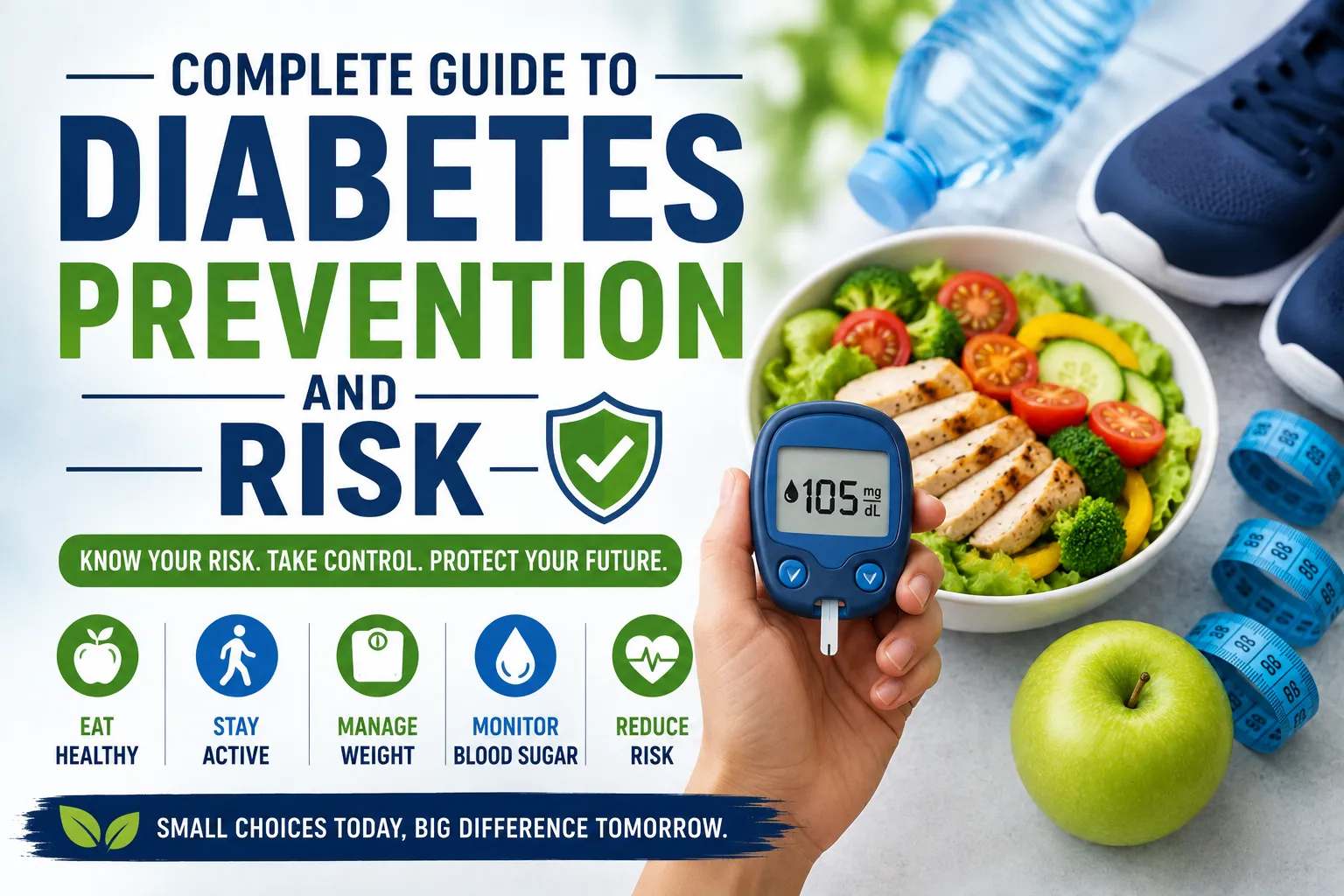

Complete Guide to Diabetes Prevention and Risk
Diabetes is one of the most important chronic health conditions to understand, but the conversation around prevention is often too simplistic.
Not every type of diabetes can be prevented. **Type 1 diabetes currently has no known prevention strategy**, while type 2 diabetes can often be prevented or delayed through changes in physical activity, eating patterns and weight management. Gestational diabetes has its own risk factors and prevention considerations.
Understanding your personal risk is therefore just as important as knowing what lifestyle changes may help.
For people at elevated risk of type 2 diabetes—particularly those with prediabetes—early action can make a meaningful difference. A broader complete guide to healthy weight management can also help put the role of weight, physical activity and sustainable habits into context.
**What Is Diabetes?**
Diabetes is a chronic condition in which blood glucose, or blood sugar, becomes too high because the body does not produce enough insulin, does not use insulin effectively, or both.
Insulin helps glucose move from the bloodstream into cells, where it can be used for energy. When this process does not work properly, glucose can remain in the bloodstream and, over time, contribute to serious health problems.
There are three major types:
- Type 1 diabetes
- Type 2 diabetes
- Gestational diabetes, which develops during pregnancy
Although all three involve problems with blood glucose regulation, their causes and prevention strategies are different.
**Can Diabetes Be Prevented?**
The answer depends on the type.
**Type 1 Diabetes**
There is currently no known way to prevent type 1 diabetes. It is believed to involve an autoimmune reaction in which the body’s immune system attacks insulin-producing cells in the pancreas.
Healthy eating and exercise are beneficial for overall health, but they should not be presented as proven methods for preventing type 1 diabetes.
**Type 2 Diabetes**
Type 2 diabetes is different.
Research shows that many people at high risk can **prevent or delay type 2 diabetes** through lifestyle changes. The landmark Diabetes Prevention Program found that an intensive lifestyle intervention reduced the development of type 2 diabetes by 58% over roughly three years compared with placebo.
The benefit was observed across participating racial and ethnic groups and in both men and women.
**Gestational Diabetes**
Gestational diabetes develops during pregnancy in people who did not previously have diabetes.
Some risk factors cannot be changed, but healthy eating, physical activity and appropriate weight management before and during pregnancy can be part of reducing risk when medically appropriate.
Anyone who is pregnant should discuss individualized nutrition, activity and weight recommendations with their maternity care team.
**Understanding Prediabetes**
Prediabetes occurs when blood glucose levels are higher than normal but not yet within the diabetes range.
It is important because it is more than simply a warning label. Prediabetes increases the risk of developing type 2 diabetes as well as cardiovascular problems.
Prediabetes can also exist for years without obvious symptoms.
That means a person can feel completely healthy while still having an elevated risk.
In the United States, the CDC estimates that more than two in five adults have prediabetes, with many unaware that they have it.
**What Increases the Risk of Type 2 Diabetes?**
Some diabetes risk factors can be changed, while others cannot.
According to the CDC, important risk factors include:
- Having prediabetes
- Having overweight or obesity
- Being age 45 or older
- Having a parent, brother or sister with type 2 diabetes
- Getting little physical activity
- Having had gestational diabetes
- Having given birth to a baby weighing more than 9 pounds
- Having certain ethnic or racial backgrounds associated with increased risk
- Having non-alcoholic fatty liver disease
- Having polycystic ovary syndrome in some circumstances
Having one or more risk factors does **not** mean that someone will definitely develop diabetes.
Risk is cumulative and individual.
**Family History Matters**
Genetics can influence diabetes risk.
Having a parent, brother or sister with type 2 diabetes increases your likelihood of developing the condition.
This is one reason prevention should not be framed around willpower alone.
A person can follow a healthy lifestyle and still develop type 2 diabetes. Conversely, someone with several risk factors may be able to substantially reduce their risk through lifestyle changes.
Knowing your family history can help determine whether screening and preventive action deserve particular attention.
**Why Prediabetes Deserves Attention**
Prediabetes provides an important opportunity because it can sometimes be reversed or prevented from progressing to type 2 diabetes.
The CDC recommends lifestyle changes such as losing a modest amount of weight when appropriate, eating healthfully and increasing physical activity.
The goal is not necessarily a dramatic transformation.
Small, sustainable changes can be more realistic than extreme diets or exercise programs that are difficult to maintain.
**How Much Weight Loss Can Help?**
For people with overweight who have prediabetes or are at elevated risk, modest weight loss can make a difference.
NIDDK’s prevention guidance recommends aiming for approximately **5% to 10% of current body weight** for people who are overweight.
The Diabetes Prevention Program and subsequent research demonstrate that lifestyle intervention involving weight loss and increased physical activity can significantly delay or prevent type 2 diabetes in high-risk adults.
Importantly, this does not mean everyone needs to reach a particular body size before their health can improve.
Even when substantial weight loss is difficult, becoming more physically active and improving dietary habits can provide health benefits. For a broader look at how exercise and sustainable weight management fit together, see Exercise for Weight Management Remains a Top Health Priority.
**Physical Activity and Diabetes Prevention**
Regular physical activity is one of the most consistently supported approaches for lowering type 2 diabetes risk.
NIDDK recommends working toward at least **150 minutes of moderate-intensity physical activity per week**, such as brisk walking, when appropriate.
That can be divided across several days.
Examples include:
- Brisk walking
- Cycling
- Swimming
- Dancing
- Hiking
- Recreational sports
- Active household tasks
You do not need to start at 150 minutes.
If you have been inactive, beginning with short periods of activity and gradually increasing the duration can make the habit more sustainable.
**Why Walking Can Be a Good Starting Point**
Walking is accessible, inexpensive and relatively easy to incorporate into everyday life.
Someone who currently does very little activity might begin with a 5- or 10-minute walk and gradually increase the duration.
The goal is consistency rather than perfection.
A walk after a meal, walking during a lunch break or taking the stairs when practical can all contribute to a more active routine.
People with chronic illnesses, injuries, significant mobility limitations or concerns about exercising should discuss an appropriate activity plan with a healthcare professional.
**Strength Training Also Matters**
Diabetes prevention should not be limited to aerobic exercise.
Muscle-strengthening activities can be incorporated at least two days per week as part of a broader physical activity routine.
Strength training can include:
- Resistance bands
- Weight machines
- Free weights
- Bodyweight exercises
- Other resistance-based activities
Beginners can start with simple movements and gradually increase difficulty.
Combining aerobic and strength-based exercise may offer additional benefits for people focused on metabolic health. For more detail, see Why Combining Cardio and Strength Training May Be Better for Diabetes Prevention.
**Eating Patterns That Support Diabetes Prevention**
There is no single “diabetes prevention diet” that everyone must follow.
Instead, the emphasis is generally on a sustainable eating pattern that supports a healthy weight and provides nutritious foods.
NIDDK recommends approaches that include healthier food choices, appropriate portions and limiting foods and drinks high in calories, saturated fat and added sugars.
A practical plate might include:
- Plenty of non-starchy vegetables
- A source of protein
- Whole grains or other high-fiber carbohydrate sources
- Fruit
- Water or another unsweetened beverage
The precise combination can vary according to culture, budget, preferences and individual health needs.
**Why Sugary Drinks Matter**
Sweetened drinks can add substantial amounts of sugar and calories without necessarily making a person feel as full as a solid meal.
NIDDK specifically recommends choosing water instead of sugar-sweetened drinks such as soda and sports drinks when working toward type 2 diabetes prevention.
For someone who regularly drinks sugary beverages, replacing some of them with water or unsweetened alternatives can be a relatively simple starting point.
Fruit juice also contains naturally occurring sugars and calories, so it should not automatically be treated as equivalent to whole fruit.
**Focus on Whole Foods More Often**
A diabetes-prevention eating pattern can include a wide variety of foods.
Useful choices include:
- Vegetables
- Whole fruits
- Beans
- Lentils
- Whole grains
- Nuts
- Seeds
- Fish
- Lean sources of protein
- Lower-fat dairy or suitable alternatives
CDC prevention guidance similarly highlights vegetables, fruits, lean proteins and whole grains as foods that can form part of a healthier eating pattern.
The objective is not to create a perfect menu.
It is to make healthier choices easier and more consistent.
**Portion Size Matters Too**
Even nutritious foods can contribute substantial calories when eaten in very large portions.
Paying attention to portion sizes can therefore be useful for people who are trying to manage weight or reduce diabetes risk.
Practical strategies include:
- Using smaller plates when helpful
- Eating slowly
- Checking nutrition labels
- Serving food before sitting down to eat
- Avoiding eating directly from large packages
- Paying attention to hunger and fullness
A sustainable approach is usually more useful than severe restriction.
**Sleep and Diabetes Risk**
Sleep is an important part of overall metabolic health.
Healthy lifestyle programs often address sleep alongside nutrition, physical activity, weight management and stress.
NIDDK notes that adequate sleep may help prevent some health problems and support healthy lifestyle habits.
Poor sleep can also make healthy eating and regular exercise harder to maintain.
If you regularly have difficulty sleeping, addressing the underlying cause may therefore be an important part of a broader prevention strategy.
**Stress and Healthy Habits**
Stress does not simply cause type 2 diabetes on its own, but chronic stress can make healthy routines more difficult to maintain.
For example, stress may affect:
- Sleep
- Eating habits
- Physical activity
- Alcohol consumption
- Motivation
Building manageable stress-reduction habits can therefore support the broader lifestyle changes used in diabetes prevention.
These might include walking, relaxation exercises, social connection, hobbies or structured support.
**Why Screening Matters**
One of the challenges with prediabetes and type 2 diabetes is that they may develop without obvious symptoms.
The CDC recommends discussing blood sugar testing with a healthcare professional when risk factors are present.
Testing can identify elevated blood glucose before a person develops noticeable symptoms.
Depending on the circumstances, healthcare professionals may use tests such as:
- A1C
- Fasting blood glucose
- Oral glucose tolerance testing
The appropriate test depends on the individual and clinical situation.
**Understanding the A1C Test**
A1C is a blood test that provides an estimate of average blood glucose over approximately the previous three months.
The CDC’s prevention guidance lists the following ranges:
| A1C result | Category |
|---|---|
| Below 5.7% | Normal |
| 5.7%–6.4% | Prediabetes |
| 6.5% or higher | Diabetes |
These values are used for diagnostic purposes in appropriate clinical settings, and an abnormal result may need confirmation depending on the circumstances.
A home glucose reading or screening result should not be treated as a diagnosis without appropriate medical evaluation.
**Can Prediabetes Be Reversed?**
Prediabetes can sometimes return to the normal blood glucose range, particularly when lifestyle changes are made.
The CDC describes prediabetes as a condition that can often be reversed and emphasizes early action.
However, “reversed” should not be interpreted as meaning the underlying risk has disappeared permanently.
People who have had prediabetes may continue to have an elevated risk and should continue healthy habits and appropriate medical monitoring.
**The Diabetes Prevention Program**
One of the strongest pieces of evidence for type 2 diabetes prevention comes from the NIH-sponsored **Diabetes Prevention Program (DPP)**.
The study showed that an intensive lifestyle intervention reduced the risk of developing type 2 diabetes by 58% compared with placebo over approximately three years. Metformin reduced risk by 31% in the study.
Long-term follow-up through the Diabetes Prevention Program Outcomes Study has found that prevention or delay continued for at least 15 years among participants who received the lifestyle intervention or took metformin.
This research helped establish lifestyle intervention as a major component of type 2 diabetes prevention.
**Is Metformin Used to Prevent Diabetes?**
Metformin is primarily a medication used to treat type 2 diabetes, but research has shown that it can also reduce the likelihood of developing diabetes in some people at high risk.
In the DPP, metformin reduced diabetes development by 31% compared with placebo.
However, metformin is not a supplement or a general-purpose diabetes-prevention pill.
Whether it is appropriate depends on individual risk factors and medical circumstances.
Anyone with prediabetes should discuss medication options with their healthcare professional rather than starting or stopping prescription medication independently.
**What Is the National Diabetes Prevention Program?**
The CDC-led **National Diabetes Prevention Program** provides structured lifestyle-change programs for people at risk of type 2 diabetes.
The programs are based on the research behind the Diabetes Prevention Program and focus on practical changes involving:
- Healthy eating
- Physical activity
- Weight management
- Stress management
- Problem-solving
- Long-term behavior change
The CDC reports that participants in its lifestyle-change program can reduce their risk of type 2 diabetes substantially, with the DPP research showing a 58% reduction overall and 71% among participants age 60 and older.
**Diabetes Prevention Is Not About Perfection**
One of the biggest mistakes people can make is assuming that diabetes prevention requires an extreme lifestyle overhaul.
It does not.
A person might begin by:
- Replacing one sugary drink each day with water.
- Taking a 10-minute walk after dinner.
- Adding vegetables to one additional meal.
- Reducing oversized portions.
- Gradually working toward 150 minutes of activity each week.
- Tracking progress.
- Asking family members to provide support.
Small changes can become meaningful when they are repeated consistently.
CDC guidance specifically emphasizes gradual changes and sustainable routines rather than expecting people to transform everything at once.
**Common Diabetes Prevention Mistakes**
**Waiting for Symptoms**
Prediabetes and early type 2 diabetes can have few or no obvious symptoms.
Waiting until you feel unwell can mean missing an opportunity for early intervention.
**Following Extreme Diets**
Very restrictive diets may be difficult to maintain.
A sustainable eating pattern is generally more useful than a short-term “detox” or crash diet.
**Exercising Too Aggressively**
Someone who has been inactive does not need to immediately begin intense workouts.
Starting gradually and increasing activity over time can make exercise safer and easier to sustain.
**Focusing Only on Sugar**
Reducing added sugar can be useful, but diabetes prevention involves much more than eliminating table sugar.
Overall dietary quality, calorie balance, physical activity, weight management and other health factors all matter.
**Ignoring Family History**
Genetic risk cannot be changed, but knowing your family history can help you and your healthcare professional determine whether screening and prevention deserve greater attention.
**What About Diabetes Supplements?**
The internet is full of supplements marketed for blood sugar control or diabetes prevention.
These products should be approached cautiously.
A supplement being labeled “natural” does not prove that it prevents diabetes, and supplements can interact with medications or have side effects.
Lifestyle changes and clinically appropriate screening have much stronger evidence for type 2 diabetes prevention than relying on unproven supplements.
If you are considering a supplement specifically to prevent diabetes, discuss it with a healthcare professional before using it.
**A Simple Diabetes Prevention Checklist**
For someone concerned about type 2 diabetes risk, a practical starting checklist might look like this:
- **Know your risk:** Consider age, family history, weight, activity level and previous gestational diabetes.
- **Ask about screening:** Discuss blood glucose testing with a healthcare professional if you have risk factors.
- **Move regularly:** Work toward at least 150 minutes of moderate activity each week.
- **Build strength:** Include muscle-strengthening activities on at least two days each week when appropriate.
- **Choose healthier foods:** Emphasize vegetables, fruits, whole grains, legumes and nutritious protein sources.
- **Watch portions:** Choose amounts that support your health and weight goals.
- **Limit sugary drinks:** Make water or unsweetened beverages your usual choices.
- **Aim for sustainable weight management:** If you have overweight, even modest weight loss can help reduce risk.
- **Get enough sleep:** Make sleep part of your health routine.
- **Ask for support:** A structured prevention program, healthcare professional, dietitian or supportive family member can make change easier.
**When to Talk With a Healthcare Professional**
Consider discussing diabetes risk with a healthcare professional if you:
- Have a parent, brother or sister with type 2 diabetes
- Have overweight or obesity
- Have been told you have prediabetes
- Are age 45 or older
- Have had gestational diabetes
- Have PCOS
- Are physically inactive
- Have high blood pressure
- Have other conditions associated with increased metabolic risk
The CDC recommends talking with a healthcare professional about testing when risk factors for prediabetes are present.
You should also seek medical advice rather than attempting to diagnose diabetes yourself if you develop symptoms such as unusual thirst, frequent urination, unexplained weight loss, fatigue or blurred vision.
**Building a Lower-Risk Future**
Diabetes prevention is not about guaranteeing that a person will never develop the disease. Some risk factors—such as age and family history—cannot be changed.
The goal is to identify the factors that **can** be influenced and act on them early.
For type 2 diabetes, the evidence is particularly encouraging. The Diabetes Prevention Program demonstrated that modest weight loss, healthier eating and increased physical activity can substantially reduce the risk of developing the disease among people at high risk.
For many people, prevention can begin with surprisingly ordinary choices: walking more, eating balanced meals, reducing sugary drinks, managing portions, getting adequate sleep and seeking screening when risk factors are present.
The most important step is not finding a perfect plan. It is finding a **realistic plan that can become part of everyday life**.
**Health disclaimer:** This article is intended for general educational purposes and does not diagnose, prevent or treat diabetes for any individual. Diabetes risk and screening recommendations vary by person. If you have risk factors, abnormal blood glucose results, symptoms of diabetes, are pregnant, or take medication affecting blood sugar, consult a qualified healthcare professional for individualized advice.
Continue Reading
Similar Posts

How Antibodies Help the Immune System Fight Infection
Understanding how antibodies work provides a clearer picture of why people develop immunity after certain infections or vaccinations and why the immune system can respond more effectively when it encounters a familiar pathogen again.
Read article
What Is the Difference Between Disease and Disorder
Understanding the distinction can make health information easier to interpret and help explain why doctors sometimes use one term rather than the other.
Read article
Why Blood Pressure Matters for Long-Term Health
Understanding why blood pressure matters can make it easier to recognize the importance of routine screening, healthy habits and appropriate treatment.
Read article

Join 10,000+ Readers Building Healthier Habits
Get actionable wellness tips every week plus our newest articles delivered straight to your inbox.