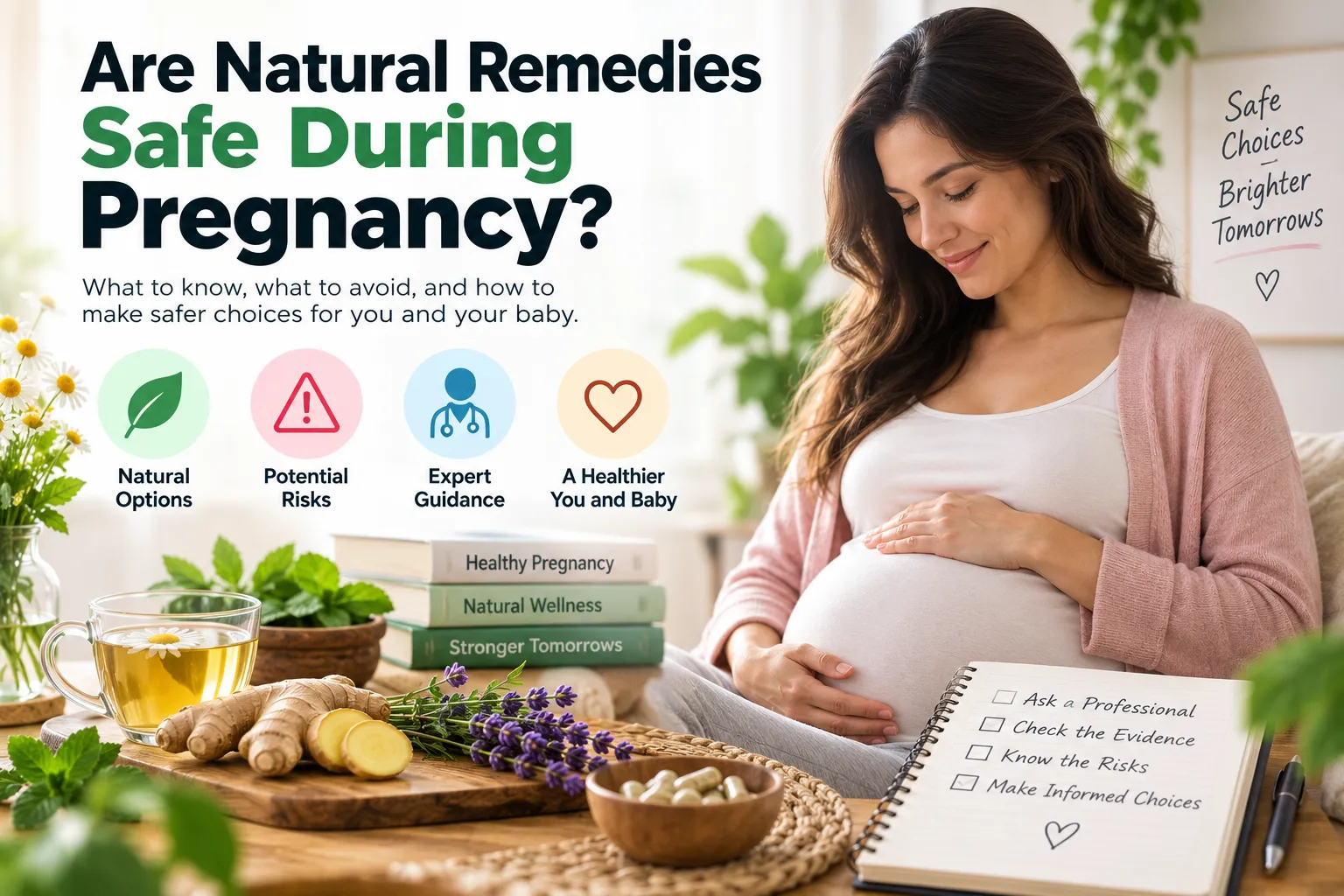
Are Natural Remedies Safe During Pregnancy?
Pregnancy can bring a long list of new questions about what is safe to eat, drink, take, or use.
That uncertainty often leads people to consider natural remedies for common concerns such as nausea, indigestion, constipation, colds, headaches, anxiety, sleep problems, or discomfort. Herbal teas, essential oils, supplements, traditional medicines, and other complementary approaches may seem gentler than conventional medicines because they come from plants or other natural sources.
But natural does not automatically mean safe during pregnancy.
Some natural products may be appropriate in certain circumstances, while others have not been studied well enough to establish their safety. Some can interact with medicines, affect hormones, cause uterine contractions, or contain ingredients that are not clearly disclosed on the label. Health authorities therefore recommend discussing herbal products, supplements, and other remedies with a qualified healthcare professional during pregnancy.
The safest approach is not to assume that a remedy is harmless simply because it is natural. Instead, its ingredients, dose, purpose, evidence, and potential risks should all be considered.
What Counts as a Natural Remedy?
“Natural remedy” is a broad term rather than a precise medical category.
It can refer to products or practices such as:
- Herbal supplements
- Herbal teas
- Essential oils
- Plant extracts
- Traditional medicines
- Vitamins and minerals
- Dietary supplements
- Fermented or botanical products
- Certain foods used for therapeutic purposes
- Aromatherapy
- Homeopathic products
- Traditional preparations
These products can vary enormously in their ingredients and concentrations.
A cup of a commonly consumed food or beverage is very different from a concentrated herbal extract containing several active compounds.
That difference matters during pregnancy.
Why Pregnancy Changes the Safety Equation
Pregnancy involves significant physiological changes.
The body processes substances differently, while the developing fetus can be particularly sensitive to certain exposures. A substance that is tolerated well by a nonpregnant adult may not necessarily have the same safety profile during pregnancy.
The amount of available research also matters.
For many herbal products, there simply are not enough high-quality pregnancy studies to determine whether they are safe. MotherToBaby notes that information is limited for many herbal products and that products containing multiple ingredients can be especially difficult to evaluate.
This creates an important distinction:
Lack of evidence that a product causes harm is not the same as evidence that the product is safe.
“Natural” Does Not Mean Risk-Free
The idea that natural substances are inherently safer than medicines is misleading.
Plants can contain biologically active chemicals. Some can affect the nervous system, cardiovascular system, hormones, blood clotting, or other physiological processes.
Even familiar substances can become problematic at concentrated doses.
The U.S. Food and Drug Administration advises pregnant people to consult healthcare professionals before taking medicines, vitamins, herbs, or dietary supplements and specifically warns against assuming a product is safe simply because it is marketed as natural.
This does not mean every natural product is dangerous.
It means safety needs to be evaluated individually.
Herbal Supplements Require Particular Caution
Herbal supplements are among the most important natural products to approach carefully during pregnancy.
MotherToBaby reports that there is limited information about the safety of many herbal products during pregnancy. It also notes concerns about interactions with medications and the possibility that products may contain substances not clearly listed on their labels.
Some herbal products have also been associated with effects such as:
- Hormonal changes
- Uterine contractions
- Potential effects on labor
- Drug interactions
- Allergic reactions
- Contamination or adulteration
Because the evidence varies substantially from one product to another, it is not possible to classify all herbs as either safe or unsafe as a group.
The specific ingredient, preparation, dose, timing, and reason for use matter.
Herbal Teas Are Not Automatically Safe
Herbal teas can seem harmless because they are consumed as beverages rather than pills or concentrated extracts.
But there is limited research on many herbal teas during pregnancy.
For that reason, the NHS advises limiting herbal tea consumption during pregnancy and specifically recommends avoiding herbal teas containing liquorice root.
This illustrates an important principle:
A natural beverage can still contain pharmacologically active compounds.
If a tea contains several herbs, it can also become difficult to determine which ingredients are responsible for any potential effects.
What About Ginger for Pregnancy Nausea?
Ginger is one of the more commonly discussed natural options for pregnancy-related nausea.
However, even when a natural ingredient has some evidence supporting a particular use, that does not mean every form or dose is automatically appropriate.
For example, ginger consumed as part of food is different from a highly concentrated supplement.
Anyone considering ginger supplements or other concentrated products during pregnancy should discuss the specific product and dose with their healthcare professional.
The broader lesson is useful: evidence about one form of a substance should not automatically be applied to every preparation containing that substance.
Vitamins and Minerals Are Different From Herbal Remedies
Pregnancy increases the need for certain nutrients, and prenatal vitamins are commonly recommended as part of prenatal care.
But vitamins and minerals are not automatically harmless simply because they are nutrients.
Both deficiency and excessive intake can cause problems.
For example, the appropriate amount of a nutrient depends on factors such as:
- Age
- Pregnancy stage
- Diet
- Existing health conditions
- Other supplements
- Medications
- Laboratory results
Some people may require additional supplementation under medical supervision, while others may already be getting enough from food and a prenatal supplement.
This is why pregnancy supplements should be selected based on individual needs rather than simply choosing a product marketed as “natural.”
Prenatal Vitamins Should Be Discussed With a Healthcare Professional
Prenatal care commonly includes recommendations about vitamins and minerals such as folic acid, iron, iodine, calcium, and vitamin D.
The exact nutritional needs of an individual can vary.
The FDA recommends discussing prenatal vitamins with a healthcare professional, while MotherToBaby advises reviewing supplements and their ingredients with a healthcare provider.
A supplement marketed for general wellness may also contain herbs or other ingredients that are not appropriate during pregnancy.
Reading the entire ingredient list is therefore important.
Essential Oils and Aromatherapy Need Careful Consideration
Essential oils are highly concentrated plant extracts.
They may be used in diffusers, massage preparations, bath products, or other applications.
However, the fact that an oil comes from a plant does not establish pregnancy safety.
For many essential oils, pregnancy-specific evidence is limited. MotherToBaby, for example, notes that several natural plant oils used in insect repellents have not been adequately studied in human pregnancy.
Safety can also depend on how an essential oil is used.
Inhaling a diluted fragrance is different from swallowing a concentrated essential oil.
Pregnant people should therefore avoid ingesting essential oils unless specifically instructed by a qualified healthcare professional and should discuss topical or aromatherapy use when there is uncertainty.
Homeopathic Products Are Not Automatically Safe
Homeopathic products are sometimes included under the broader category of natural or complementary remedies.
Their safety depends on the specific product and ingredients.
The NHS advises that not all herbal and homeopathic remedies are safe during pregnancy and recommends discussing complementary therapies with an appropriate healthcare professional.
It is therefore better to evaluate a homeopathic product based on its actual ingredients and evidence rather than assuming it is safe because it is labeled homeopathic.
Natural Remedies Can Interact With Medicines
Another important concern is drug interactions.
A person may assume that a supplement is harmless because it is not a prescription medication, but some herbs and supplements can affect how medicines work.
Interactions can potentially:
- Increase medication effects
- Reduce medication effectiveness
- Increase side effects
- Affect blood clotting
- Change how drugs are metabolized
The FDA warns that combining dietary supplements with medications can sometimes cause serious or even life-threatening effects.
This is especially important during pregnancy because some people take medications for conditions that require continued treatment.
Never Stop Prescribed Medication on Your Own
Someone who becomes pregnant may worry that a prescription medicine could harm the baby and decide to replace it with a natural remedy.
That can be dangerous.
ACOG advises people not to stop prescribed medication during pregnancy without discussing it with their healthcare professional. In some situations, stopping treatment can create greater risks than continuing the medication.
The safer approach is to review the medication with an obstetric care provider, doctor, midwife, or pharmacist.
They can help determine whether:
- The medication should continue
- The dose should change
- Another treatment is preferable
- A non-drug approach could help
- Additional monitoring is needed
Evidence Matters More Than Marketing
Natural-remedy marketing often uses phrases such as:
- “Chemical-free”
- “Pure”
- “Traditional”
- “Detoxifying”
- “Hormone balancing”
- “Clinically proven”
- “Safe for mothers”
These phrases should not be treated as proof of pregnancy safety.
The quality of evidence matters much more.
A well-designed clinical study is stronger evidence than:
- Testimonials
- Social media posts
- Influencer recommendations
- Anecdotal experiences
- Traditional use alone
- Marketing claims
For a broader discussion of how to evaluate evidence behind natural treatments, Complete Guide to Natural Remedies Evidence provides useful context.
Why Multi-Ingredient Products Can Be Difficult to Evaluate
Some natural products contain a long list of ingredients.
A single supplement might include several herbs, vitamins, minerals, extracts, and proprietary blends.
This creates several problems.
Researchers may not have pregnancy safety data for the exact combination.
One ingredient may interact with another.
The amount of each ingredient may also be unclear when a proprietary blend does not provide individual quantities.
MotherToBaby specifically notes that products containing more than one herbal ingredient can be particularly difficult to study for pregnancy effects.
For pregnancy, simpler is often easier to evaluate.
Product Quality Is Another Concern
Even when an ingredient itself appears relatively low-risk, the quality of a supplement can vary.
Potential concerns include:
- Incorrect labeling
- Contamination
- Undisclosed ingredients
- Variable concentrations
- Substitution of ingredients
- Manufacturing problems
The NHS warns that some complementary products may not be of sufficient quality and could contain harmful substances such as lead.
This is one reason it is important to purchase products from reputable manufacturers and discuss supplements with a healthcare professional.
Food Is Usually Different From Concentrated Supplements
An important distinction is the difference between using an ingredient as food and consuming it as a concentrated medicinal preparation.
For example, herbs and spices are commonly used in ordinary cooking in relatively small quantities.
A concentrated capsule or extract can provide substantially different exposure.
Therefore, hearing that an herb is commonly used in food does not automatically mean that a concentrated supplement containing that herb is appropriate during pregnancy.
When evaluating a product, consider its:
- Form
- Concentration
- Dose
- Frequency
- Duration
- Other ingredients
What About Natural Remedies for Common Pregnancy Symptoms?
Pregnancy can cause several uncomfortable symptoms, including:
- Nausea
- Heartburn
- Constipation
- Back discomfort
- Difficulty sleeping
- Mild headaches
- Nasal congestion
It can be tempting to search for a natural solution to each problem.
But the safest approach is to determine why the symptom is occurring and whether it requires medical attention before trying a remedy.
Some symptoms are common and manageable.
Others can signal pregnancy complications.
For example, severe headache, significant swelling, vaginal bleeding, severe abdominal pain, reduced fetal movement later in pregnancy, or other concerning symptoms should not simply be treated with a home remedy.
A broader overview of warning signs and clinical care is available in How Pregnancy Complications Are Recognized and Managed.
Natural Remedies Should Not Replace Prenatal Care
Complementary approaches can sometimes be used alongside conventional healthcare, but they should not replace routine prenatal care.
Prenatal appointments allow healthcare professionals to monitor:
- Maternal health
- Fetal development
- Blood pressure
- Weight
- Laboratory markers
- Pregnancy progression
- Potential complications
The NHS specifically advises that complementary remedies and therapies should not replace conventional antenatal care.
This is especially important because pregnancy can change quickly, and some complications may not produce obvious symptoms initially.
How to Evaluate a Natural Remedy Before Using It
Before taking or using a natural remedy during pregnancy, consider asking the following questions.
1. What exactly is in it?
Look at the complete ingredient list.
Avoid relying solely on the product name or marketing description.
2. Is there pregnancy-specific research?
Evidence from nonpregnant adults cannot automatically establish safety during pregnancy.
3. What is the dose?
A food-level exposure may be very different from a concentrated extract.
4. Could it interact with medication?
Tell your healthcare professional about every supplement you take.
5. Is the product from a reputable manufacturer?
Quality and contamination can be concerns with supplements.
6. Is there a safer alternative?
Sometimes a conventional treatment has substantially better pregnancy safety data.
7. Do you actually need it?
If the benefit is uncertain and the pregnancy safety evidence is limited, avoiding unnecessary exposure may make sense.
A Practical Pregnancy Safety Checklist
Before using a natural product, consider the following checklist:
Read the label.
Identify every active and inactive ingredient.
Check the dose.
Do not assume that a small-looking capsule contains a small amount of active compounds.
Check for combinations.
Multiple herbs can make safety harder to determine.
Review your medications.
Potential interactions matter.
Tell your prenatal care provider.
Bring the product packaging or a clear photograph of the label.
Look for pregnancy-specific evidence.
Evidence in the general population is not necessarily sufficient.
Avoid replacing prescribed treatment without guidance.
Stopping treatment can sometimes be more dangerous than continuing it.
Seek care for concerning symptoms.
Do not attempt to manage potentially serious pregnancy complications with home remedies alone.
What About Remedies That Have Been Used Traditionally for Generations?
Traditional use can provide useful clues for researchers, but it is not the same as establishing safety.
A remedy may have been used for hundreds of years without producing obvious problems in every user.
That does not tell researchers:
- The exact dose people consumed
- Which preparation they used
- Whether adverse effects were recognized
- Whether other ingredients were present
- Whether the remedy is safe during every stage of pregnancy
- Whether it interacts with modern medications
Scientific research can help answer those questions more systematically.
Traditional use can therefore be part of the evidence, but it should not be the only evidence.
Pregnancy Is Not the Time for Unnecessary Experiments
For many healthy adults, trying a new supplement may carry relatively little concern.
Pregnancy changes the calculation.
If a product has uncertain benefits and poorly understood pregnancy risks, there may be little reason to experiment with it.
This does not mean pregnant people must avoid every natural product.
It means the benefit-risk balance deserves greater attention.
A treatment with well-established benefits and good safety evidence may be preferable to a natural product whose effectiveness and pregnancy safety remain uncertain.
The Importance of Individualized Advice
There is no universal list of natural remedies that is appropriate for every pregnant person.
Safety can depend on:
- Stage of pregnancy
- Dosage
- Existing medical conditions
- Other medications
- Allergies
- Nutrition status
- The specific product
- The reason for treatment
Someone with a high-risk pregnancy may have different considerations from someone with an uncomplicated pregnancy.
This is why individualized advice from an obstetric provider, doctor, midwife, pharmacist, or another appropriately qualified professional can be more useful than a generic online list.
A Broader View of Reproductive Health
Pregnancy safety is part of a much larger reproductive-health picture.
Nutrition, medications, chronic conditions, lifestyle, infections, prenatal care, and environmental exposures can all influence reproductive health.
For a broader overview, The Complete Guide to Reproductive Health provides additional context on the factors that can influence reproductive well-being.
What If You Already Took a Natural Remedy?
Accidentally taking a natural product does not automatically mean that something has gone wrong.
The appropriate response is to find out exactly what was taken rather than assuming the worst.
Gather information such as:
- Product name
- Ingredient list
- Amount taken
- Time it was taken
- How often it was used
- Stage of pregnancy
- Any symptoms that developed
Then contact a healthcare professional, pharmacist, or an appropriate pregnancy-exposure information service for individualized advice.
Do not stop prescribed medication or begin another treatment in an attempt to “counteract” the exposure unless instructed to do so.
The Safest Approach to Natural Remedies During Pregnancy
The answer to whether natural remedies are safe during pregnancy is sometimes—but not automatically.
Some natural products may have evidence supporting particular uses, while others have insufficient pregnancy safety data. Certain herbs can interact with medications or have effects that could be concerning during pregnancy. Product quality and labeling can also vary.
The most useful rule is therefore simple:
Do not judge pregnancy safety by the word “natural.” Judge it by the evidence, ingredients, dose, quality, potential interactions, and individual circumstances.
Before taking an herbal supplement, concentrated extract, essential oil, or other natural remedy during pregnancy, discuss it with your healthcare professional. ACOG, FDA, NHS, and MotherToBaby all emphasize the importance of reviewing medicines, herbs, vitamins, and supplements during pregnancy rather than assuming they are safe.
Pregnancy is a time when cautious decision-making matters. In many cases, the safest choice is not to find the most powerful natural remedy, but to find the best-supported and appropriately evaluated option for both parent and baby.
Continue Reading
Similar Posts
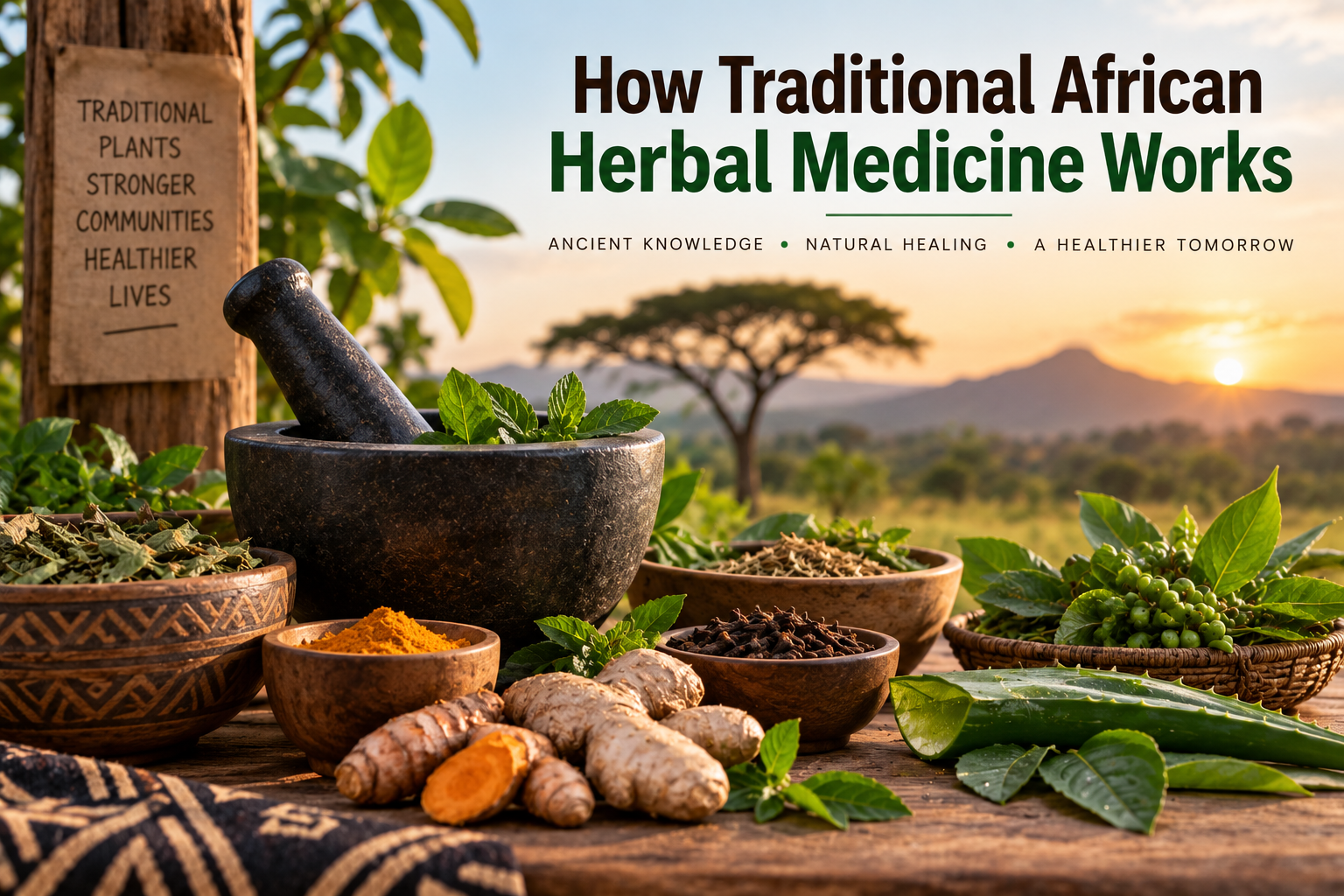
How Traditional African Herbal Medicine Works
Understanding how these remedies work requires looking at both traditional knowledge and modern scientific research. Some medicinal plants contain compounds with biological effects that researchers can study, while evidence for other traditional uses remains limited or uncertain.
Read article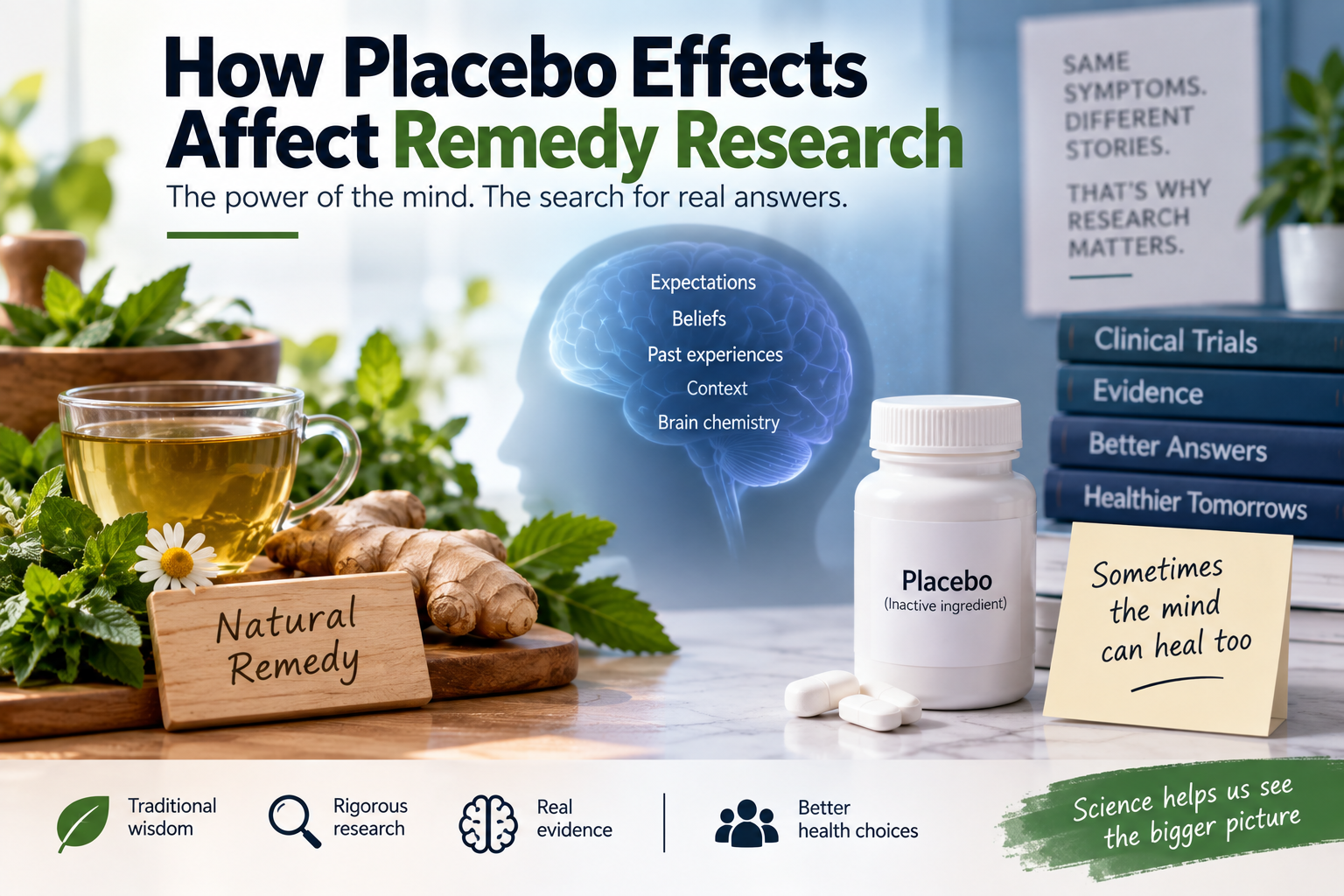
How Placebo Effects Affect Remedy Research
For natural remedies, this distinction can be particularly important. Many remedies have long histories of traditional use, and people may have strong expectations about their effectiveness. Carefully designed research is therefore needed to determine whether improvements are caused by the remedy, the context surrounding its use, natural changes in symptoms or some combination of factors
Read article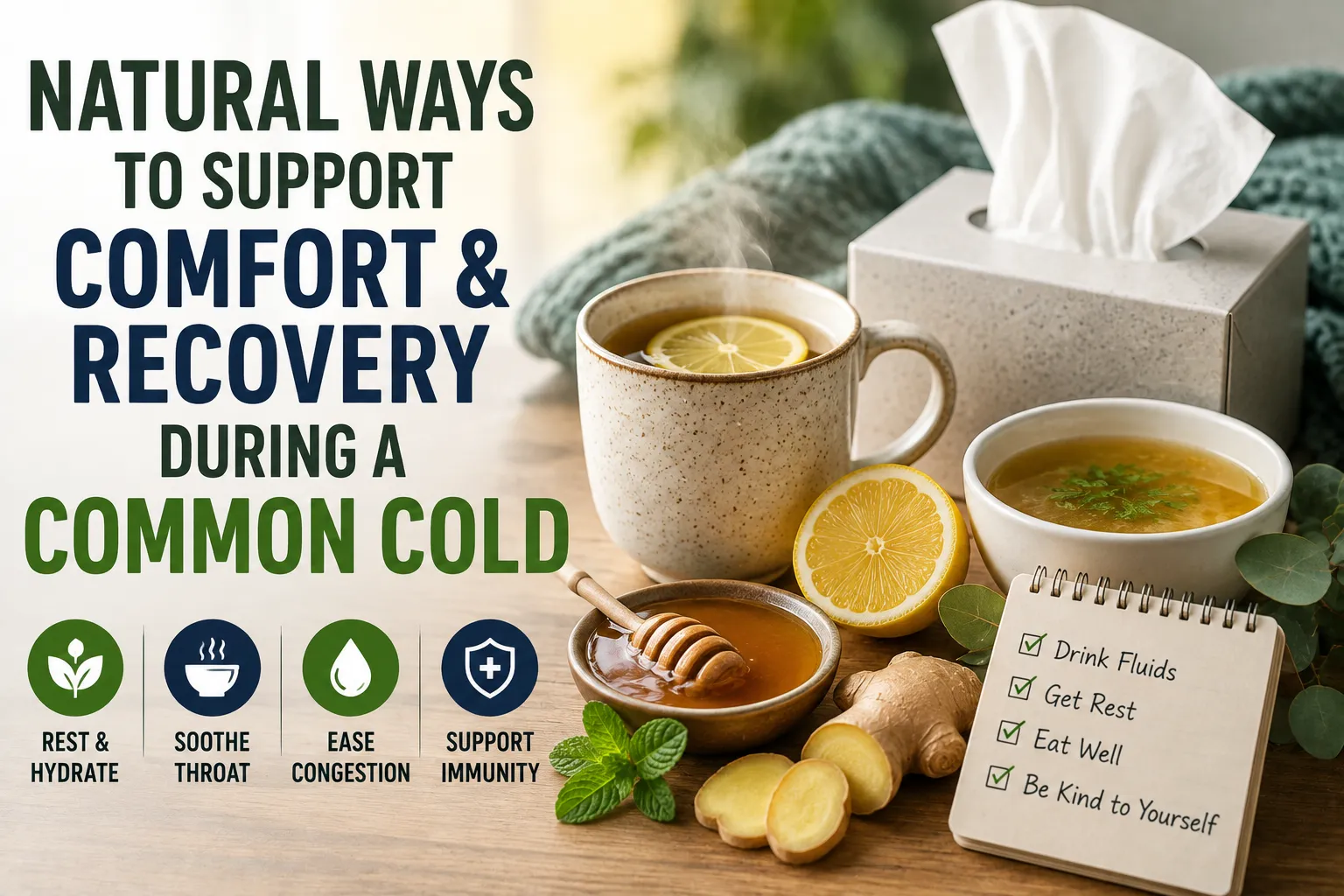
Natural Ways to Support Comfort and Recovery During a Common Cold
Most common colds are caused by viruses and improve on their own. The goal of supportive care is therefore not to eliminate the virus directly, but to ease symptoms, maintain hydration and give the body the conditions it needs to recover.
Read article

Join 10,000+ Readers Building Healthier Habits
Get actionable wellness tips every week plus our newest articles delivered straight to your inbox.