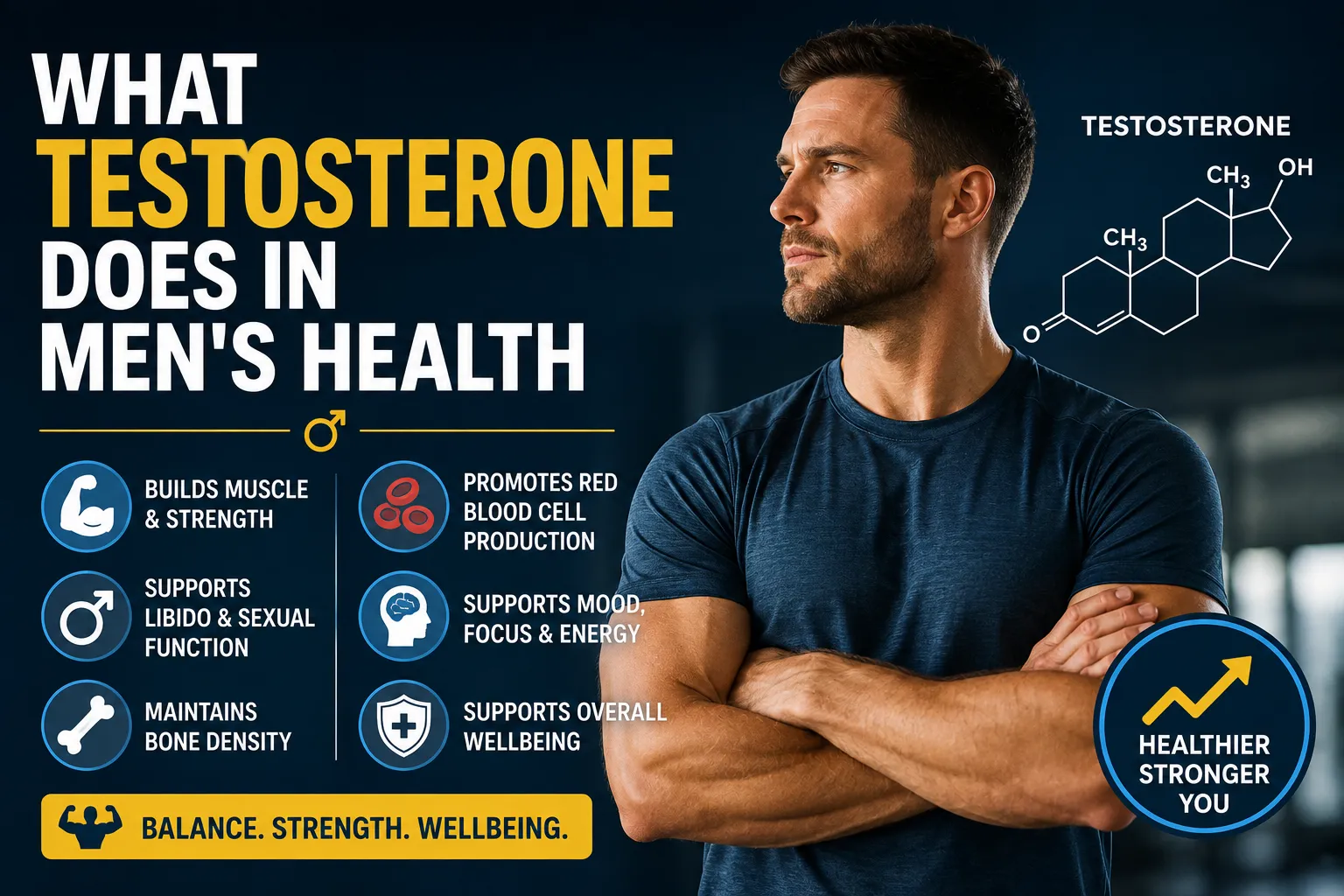

What Testosterone Does in Men’s Health
Testosterone is one of the hormones most closely associated with men’s health, but its role extends far beyond muscle growth or sex drive.
Produced primarily in the testes, testosterone influences sexual development, reproductive function, muscle and bone health, red blood cell production, body composition and aspects of mood and cognition. Levels naturally change throughout life, and they can also be affected by sleep, illness, body weight, medications and other health conditions.
Because testosterone is involved in so many biological processes, unusually low levels can affect several areas of health at once. At the same time, having a higher testosterone level does not automatically mean better health.
Understanding what testosterone actually does can help separate the hormone’s legitimate biological roles from some of the exaggerated claims often made about testosterone-boosting products.
What Is Testosterone?
Testosterone is an androgen, a class of hormones involved in the development and maintenance of male reproductive and sexual characteristics.
In men, most testosterone is produced by specialized cells in the testes. Smaller amounts are produced by the adrenal glands.
Testosterone production is regulated by a communication system involving the brain, pituitary gland and testes. The hypothalamus and pituitary gland help signal the testes to produce testosterone, while testosterone itself contributes to feedback that helps regulate the system.
Women also produce testosterone, although generally at substantially lower levels. The hormone contributes to health and normal biological functions in women as well.
Testosterone and Male Development
Testosterone plays a major role during puberty.
As testosterone production increases, it contributes to changes such as:
- Growth of facial and body hair
- Deepening of the voice
- Increased muscle development
- Changes in body composition
- Growth and maturation of reproductive organs
- Increased sex drive
- Development of male secondary sexual characteristics
Testosterone also works alongside other hormones during puberty, including hormones involved in growth and development.
These changes are part of a complex biological process rather than the result of testosterone acting alone.
Testosterone and Sexual Health
One of testosterone’s most recognized roles involves sexual function.
Adequate testosterone levels contribute to normal sexual development and libido, or sexual desire.
Low testosterone can be associated with reduced sexual interest. However, sexual function is influenced by many other factors, including cardiovascular health, psychological wellbeing, relationship factors, sleep, medications and other medical conditions.
This means that low sexual desire does not automatically indicate low testosterone.
Erectile dysfunction, for example, can have numerous possible causes, and testosterone is only one piece of the picture. Men looking at the broader picture of sexual wellbeing may also benefit from understanding the issues covered in the Sexual Health Guide.
Testosterone and Sperm Production
Testosterone is important for male reproductive function, but an important distinction is often overlooked.
The body needs testosterone for normal sperm production, but taking additional testosterone does not necessarily improve fertility.
In fact, testosterone taken from outside the body can suppress the hormonal signals that stimulate the testes. This can reduce sperm production.
That is why men concerned about fertility should not assume that testosterone treatment is appropriate simply because they have symptoms that might be associated with low testosterone.
A medical evaluation can help determine what is actually causing the problem. Broader questions about reproductive function are also addressed in Understanding Fertility for Women and Men.
Testosterone Helps Maintain Muscle
Testosterone contributes to the development and maintenance of skeletal muscle.
It influences processes involved in protein synthesis and muscle tissue maintenance, which helps explain why testosterone levels are associated with differences in muscle mass and strength.
Testosterone is not, however, a substitute for exercise.
Resistance training, adequate nutrition, sufficient protein, sleep and overall health all influence muscle development.
For men with normal testosterone levels, attempting to raise testosterone beyond the body’s physiological range does not necessarily translate into proportionally better health.
Testosterone and Body Composition
Testosterone also plays a role in body composition.
Lower testosterone levels can be associated with increased body fat and reduced lean body mass. The relationship can work in both directions, however.
Excess body fat, particularly obesity, can be associated with lower testosterone levels in some men.
This creates a complicated relationship between hormone levels, metabolism, physical activity and body composition.
Improving overall health through sustainable physical activity, adequate sleep and appropriate nutrition may therefore benefit testosterone status without requiring hormone treatment.
Testosterone Supports Bone Health
Bone health is another important part of testosterone’s role.
Testosterone contributes to maintaining bone density in men. Some testosterone is also converted into estrogen, which plays an important role in male bone health.
Persistently low testosterone can therefore contribute to reduced bone density and increase concerns about osteoporosis in some men.
Bone health is influenced by many other factors as well, including calcium and vitamin D status, physical activity, age and other medical conditions.
Testosterone and Red Blood Cell Production
Testosterone stimulates the body’s production of red blood cells.
This is one reason men generally have higher average hemoglobin levels than women.
However, the relationship also has a clinical downside. Testosterone treatment can increase red blood cell production enough to cause erythrocytosis, in which the concentration of red blood cells becomes unusually high.
For men receiving testosterone therapy, healthcare professionals may therefore monitor blood counts as part of ongoing treatment.
Testosterone and Mood
Hormones and mental wellbeing are closely connected, and testosterone can influence aspects of mood and psychological functioning.
Some men with genuinely low testosterone report symptoms such as:
- Low energy
- Reduced motivation
- Irritability
- Difficulty concentrating
- Depressed mood
- Reduced sense of wellbeing
However, these symptoms are nonspecific.
Fatigue and low mood can result from sleep problems, depression, chronic illness, stress, medication effects, nutritional deficiencies and many other causes.
A man experiencing these symptoms should not assume that testosterone is the explanation without an appropriate evaluation.
Testosterone and Energy Levels
Low energy is one of the symptoms sometimes associated with testosterone deficiency.
Testosterone can influence muscle mass, red blood cell production and other physiological processes that contribute to physical functioning.
But tiredness is extremely common and has many potential causes.
A person who is consistently exhausted may need to consider sleep quality, workload, stress, physical activity, nutrition and underlying health conditions before attributing the problem to hormones.
This is one reason testosterone testing should generally be interpreted in the context of symptoms and medical history.
Testosterone Naturally Changes With Age
Testosterone levels do not remain constant throughout a man’s life.
Levels generally rise during puberty and reach adult concentrations during early adulthood. Testosterone production then tends to decline gradually with age.
However, aging alone does not mean that every older man has testosterone deficiency.
Some men maintain testosterone levels within the normal range well into later life, while others may experience clinically significant reductions.
The distinction between normal age-related change and testosterone deficiency is important when considering treatment.
What Is Low Testosterone?
Low testosterone, sometimes called hypogonadism, occurs when the body does not produce enough testosterone.
The condition can result from problems affecting the testes, the pituitary gland or the hypothalamus.
Potential causes include:
- Certain genetic conditions
- Testicular injury or disease
- Pituitary disorders
- Some medications
- Certain chronic illnesses
- Obesity
- Significant nutritional or physical stress
- Treatments such as chemotherapy or radiation
Some causes are temporary or reversible, while others require long-term management.
These issues fit into the broader picture described in What Common Men’s Health Conditions Are and How Their Symptoms Differ.
Symptoms Can Be Subtle
Testosterone deficiency does not always produce obvious symptoms.
Some men may experience clear changes in sexual desire or function, while others primarily notice fatigue, reduced strength or changes in mood.
Possible symptoms include:
- Reduced libido
- Erectile difficulties
- Lower energy
- Reduced muscle mass
- Increased body fat
- Decreased bone density
- Reduced body hair
- Changes in mood
- Difficulty concentrating
- Reduced fertility
Having one or more of these symptoms does not prove that testosterone is low.
How Testosterone Deficiency Is Diagnosed
A diagnosis generally involves more than a single symptom or a single blood test.
Testosterone levels naturally fluctuate during the day, and testing conditions can affect results.
Healthcare professionals typically consider a man’s symptoms, medical history and laboratory results together. When low testosterone is suspected, testing is commonly performed in the morning, when testosterone levels are generally higher.
A low result may need to be confirmed with repeat testing before a diagnosis is established.
Doctors may also investigate the underlying cause rather than simply treating the hormone number.
Total Testosterone and Free Testosterone
Testosterone in the bloodstream exists in different forms.
Some is tightly bound to proteins, while another portion is more readily available for tissues to use.
Total testosterone measures the overall amount of testosterone in the blood.
Free testosterone refers to the portion that is not bound to certain blood proteins.
In some circumstances, measuring or estimating free testosterone can provide additional information, particularly when total testosterone does not clearly match a person’s symptoms.
Interpretation should be left to a qualified healthcare professional because testosterone results depend on the testing method, reference range and clinical context.
Testosterone Replacement Therapy
For men who have confirmed testosterone deficiency accompanied by relevant symptoms, testosterone replacement therapy (TRT) may be considered.
Treatment can be delivered in several forms, depending on the specific medication and circumstances.
These may include:
- Injections
- Gels
- Patches
- Other prescription formulations
The goal is generally to restore testosterone to an appropriate physiological range rather than produce exceptionally high levels.
Treatment decisions should account for potential benefits, risks, fertility considerations and the underlying cause of low testosterone.
Testosterone Therapy Is Not a General Anti-Aging Treatment
The growing popularity of testosterone clinics and hormone optimization programs has sometimes blurred the difference between treating a medical deficiency and attempting to enhance normal physiology.
A man with confirmed testosterone deficiency may benefit from appropriately supervised treatment.
That does not mean every healthy man with fatigue, low motivation or concerns about aging needs testosterone.
Using testosterone simply to pursue greater muscle mass, energy or sexual performance carries potential risks and should not be treated as a routine wellness strategy.
Testosterone Can Affect Fertility
One of the most important considerations before starting testosterone therapy is fertility.
External testosterone can suppress the body’s natural reproductive hormone signals. As a result, sperm production can fall significantly.
For men who are trying to have children, this can be an especially important concern.
Anyone considering testosterone treatment who may want children in the future should discuss fertility with a qualified healthcare professional before beginning therapy.
Potential Risks of Testosterone Therapy
Testosterone treatment can provide benefits for appropriately selected patients, but it is not risk-free.
Potential concerns can include:
- Increased red blood cell production
- Acne or oily skin
- Fluid retention
- Reduced sperm production
- Changes in fertility
- Breast tenderness or enlargement
- Worsening of certain sleep-related breathing problems
- Changes in prostate-related symptoms
The risks can vary depending on the individual, dose, formulation and underlying health conditions.
Regular medical monitoring is therefore an important part of prescription testosterone treatment.
Testosterone and the Prostate
The relationship between testosterone therapy and prostate health is an area that requires individualized medical assessment.
Testosterone can influence prostate tissue, and men considering therapy may need evaluation based on their age, symptoms and medical history.
Men who develop urinary symptoms or other prostate-related concerns should discuss them with a healthcare professional rather than assuming that testosterone is responsible.
For a broader look at this area of men’s health, see the Complete Guide to Prostate Health for Men.
Routine medical monitoring helps identify potential problems early.
Lifestyle Can Influence Testosterone
Hormone levels are connected to broader health.
Several lifestyle factors can influence testosterone status, including:
- Adequate sleep
- Regular physical activity
- Maintaining a healthy body weight
- Balanced nutrition
- Managing excessive stress
- Limiting harmful substance use
These strategies should not be marketed as guaranteed ways to dramatically increase testosterone.
Their greater value is that they support overall health, which can also support normal hormonal function.
Sleep Deserves Special Attention
Sleep is particularly important when discussing testosterone.
Hormone production follows daily biological rhythms, and inadequate or disrupted sleep can affect endocrine function.
Persistent sleep deprivation can also contribute to fatigue, poor concentration, mood changes and reduced physical performance—symptoms that can sometimes be mistakenly attributed entirely to low testosterone.
Improving sleep can therefore be an important part of addressing symptoms before jumping to hormone treatment.
Exercise Supports Overall Hormonal Health
Physical activity contributes to cardiovascular health, muscle strength, metabolic health and body composition.
Resistance training is particularly useful for maintaining muscle and bone health.
Regular exercise can also help address some of the health factors associated with low testosterone, including excess body weight.
However, extreme training combined with inadequate recovery and nutrition can have the opposite effect on hormonal and overall health.
Balance matters.
Nutrition Matters Too
There is no single food that reliably transforms testosterone levels.
A balanced diet that provides adequate protein, healthy fats, vitamins, minerals and overall energy supports normal physiological function.
Severe calorie restriction and significant nutritional deficiencies can interfere with hormone production.
For most men, a nutritious eating pattern is more useful than chasing individual “testosterone-boosting” foods or supplements.
Be Skeptical of Testosterone Boosters
The supplement market contains products promoted as natural testosterone boosters.
These products may contain combinations of herbs, minerals or other compounds marketed as ways to increase testosterone, muscle growth or sexual performance.
Marketing claims can be much stronger than the available evidence.
Some supplements may also interact with medications or contain ingredients that are not appropriate for particular people.
Before using a supplement specifically to alter hormone levels, it is worth discussing the product with a healthcare professional.
Testosterone Is Only One Part of Men’s Health
It can be tempting to treat testosterone as the central measure of male health.
It is not.
Cardiovascular health, metabolic health, sleep, mental wellbeing, nutrition, physical activity, relationships and preventive healthcare all contribute to how a man feels and functions.
A normal testosterone level does not guarantee good health, just as a low testosterone result does not explain every health problem.
Looking at the whole person provides a much more useful approach. Testosterone is one of several issues covered in the broader Common Men’s Health Concerns Explained guide.
When Men Should Talk to a Doctor
Persistent symptoms that could be associated with testosterone deficiency deserve attention, particularly when they affect quality of life.
A medical evaluation may be appropriate if a man experiences persistent:
- Loss of sexual desire
- Erectile difficulties
- Unexplained fatigue
- Reduced strength
- Changes in body composition
- Fertility problems
- Changes in mood
- Other unexplained physical changes
Rather than ordering testosterone supplements online or attempting to self-treat, professional evaluation can help determine whether a hormone problem actually exists and what might be causing it.
Understanding Testosterone Without the Hype
Testosterone is an important hormone, but its role in men’s health is considerably more complex than the popular image of it as a simple “male strength hormone.”
It contributes to sexual development, libido, fertility, muscle and bone maintenance, red blood cell production and aspects of physical and psychological wellbeing. Testosterone levels also change naturally throughout life and can be influenced by overall health.
For men with genuine testosterone deficiency, appropriate medical treatment can be valuable. But raising testosterone above normal levels is not a universal path to better health, and hormone therapy can have meaningful risks and consequences, particularly for fertility.
The most useful approach is to view testosterone as one component of a much larger health picture. Maintaining good sleep, regular physical activity, balanced nutrition and healthy body weight can support overall wellbeing, while persistent symptoms warrant a proper medical assessment rather than assumptions based on a hormone number alone.
Continue Reading
Similar Posts

How Communication Supports Sexual Health
Whether people are discussing contraception, sexual preferences, STI testing, fertility, consent, or changes in their health, clear communication can play an important role in making sexual relationships safer and healthier.
Read article
Why Health History Matters for Women
For women, keeping an accurate health history can be especially valuable because health needs can change significantly throughout different stages of life.
Read article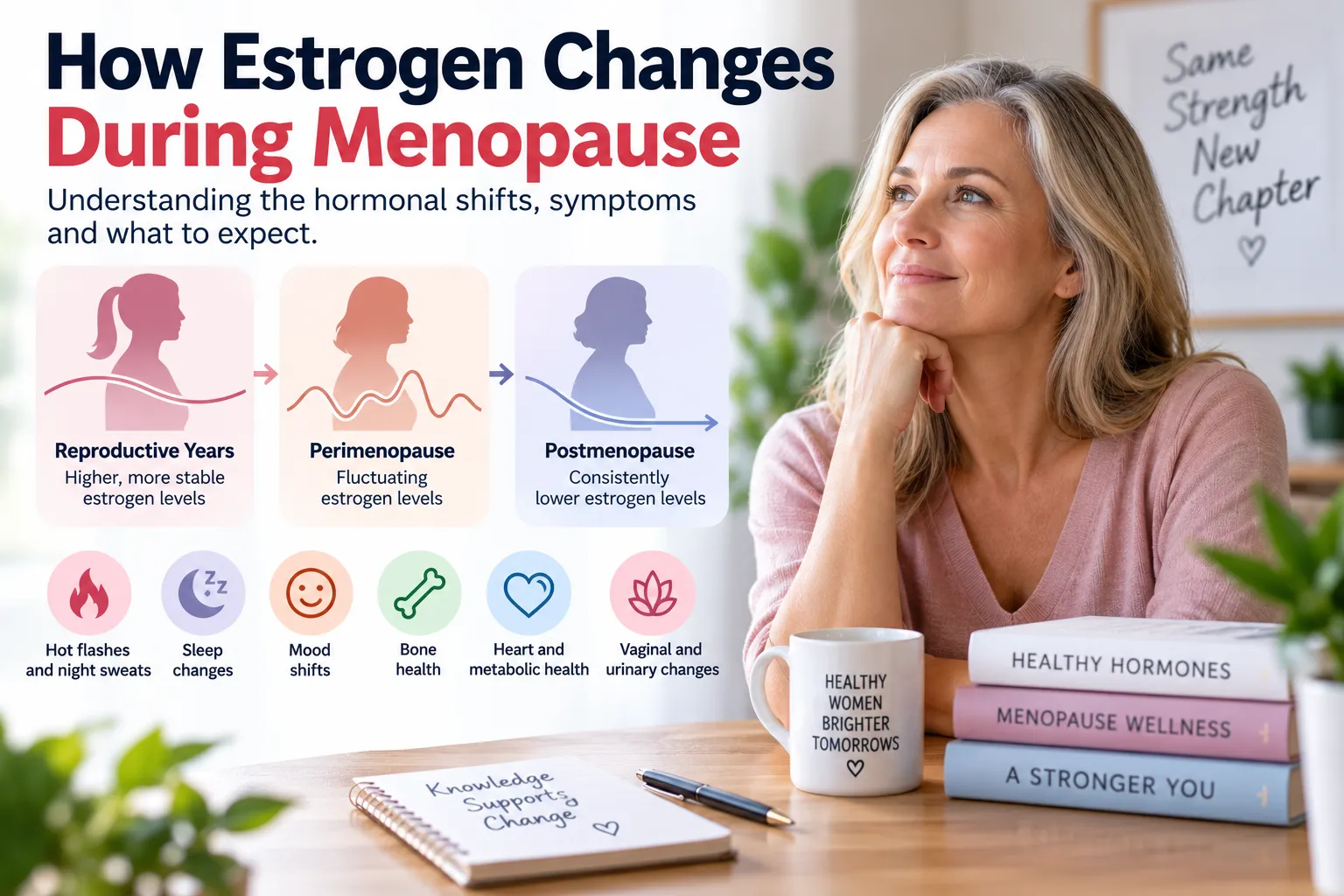
How Estrogen Changes During Menopause
Understanding how estrogen changes can make many of the physical and emotional changes associated with this stage of life easier to recognize and discuss with a healthcare professional.
Read article

Join 10,000+ Readers Building Healthier Habits
Get actionable wellness tips every week plus our newest articles delivered straight to your inbox.