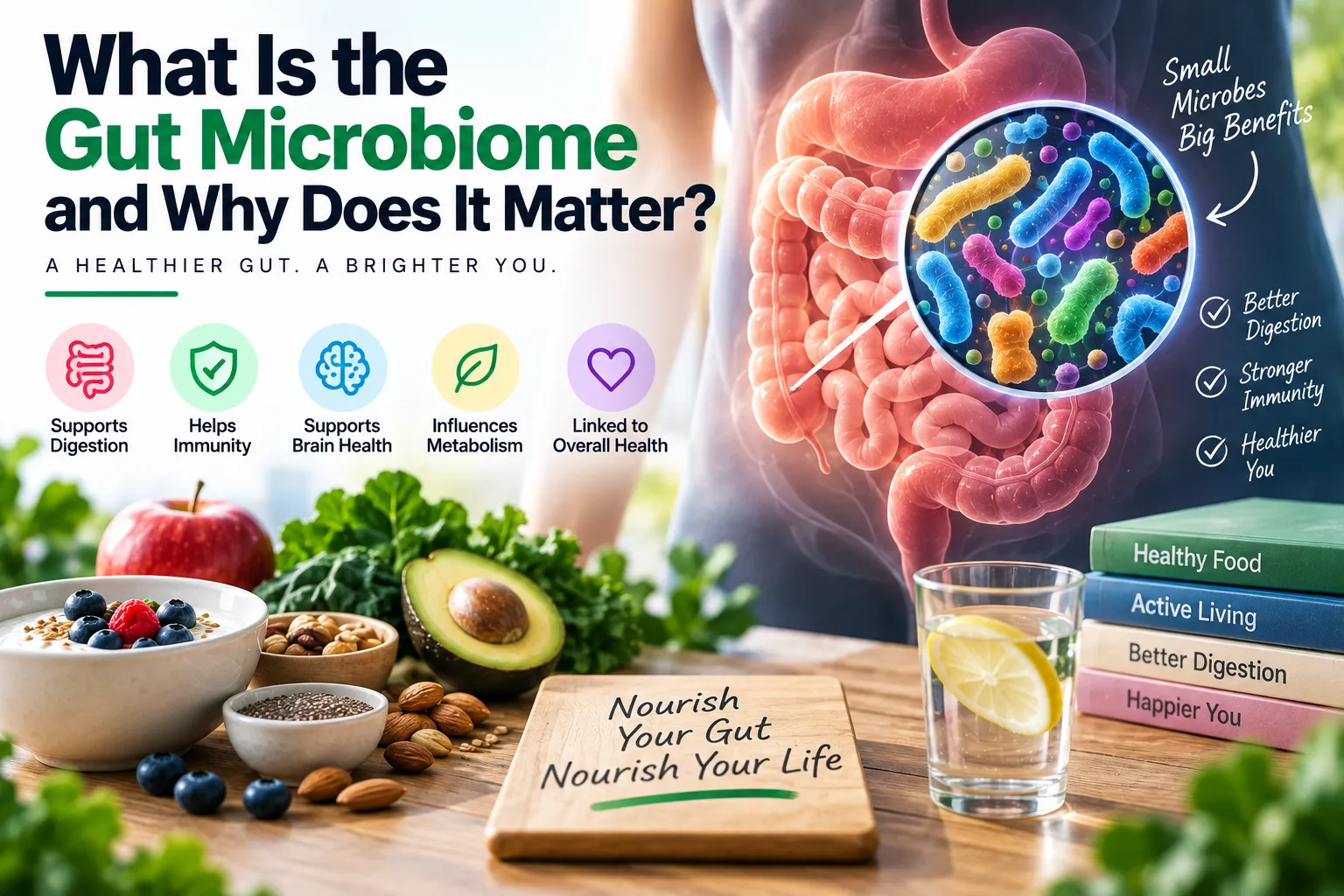
What Is the Gut Microbiome and Why Does It Matter?
Inside the human digestive system lives a vast community of microorganisms that plays an important role in everyday health.
This community, known as the gut microbiome, includes trillions of microorganisms such as bacteria, viruses, fungi, and other microscopic organisms. Far from being passive passengers, many of these microbes interact with food, digestive processes, the immune system, and other biological functions.
The gut microbiome has become an important area of scientific research because changes in the composition and activity of these microorganisms may be associated with digestion, metabolism, immune function, and overall health.
But the microbiome is not simply a matter of having more “good bacteria.” It is a complex ecosystem in which different microorganisms interact with one another and with the human body.
Understanding how this ecosystem works can make it easier to understand why diet, lifestyle, medications, and other factors can influence digestive health.
What Is the Gut Microbiome?
The gut microbiome refers to the community of microorganisms living in the gastrointestinal tract, particularly in the large intestine.
These microorganisms include:
- Bacteria
- Viruses
- Fungi
- Archaea
- Other microscopic organisms
The term microbiota generally refers to the microorganisms themselves, while microbiome can refer more broadly to the microorganisms and their genetic material and surrounding ecosystem.
The human digestive tract contains different microbial communities throughout its length. The large intestine is particularly rich in microorganisms because it provides an environment where many microbes can thrive.
Every person’s microbiome is somewhat different.
Factors such as genetics, age, diet, environment, medications, health conditions, and lifestyle can all influence the microbial community.
Why Does the Gut Contain So Many Microorganisms?
The digestive tract provides an environment with food sources and conditions that allow microorganisms to survive and reproduce.
In return, many gut microbes perform useful functions for their host.
One of their most important roles involves processing components of food that human digestive enzymes cannot completely break down.
For example, certain bacteria can ferment dietary fibers and produce compounds known as short-chain fatty acids.
These compounds can interact with intestinal cells and may influence metabolic and immune processes.
This relationship is one reason dietary patterns can have such an important influence on the gut microbiome.
The Gut Microbiome and Digestion
One of the clearest connections between the microbiome and health is digestion.
Humans cannot digest every component of the foods they eat.
Certain types of dietary fiber reach the large intestine relatively intact. There, gut microorganisms can ferment some of these fibers.
This process produces various metabolic products, including short-chain fatty acids such as:
- Acetate
- Propionate
- Butyrate
These compounds can be used by cells or participate in biological signaling.
Butyrate, for example, is an important energy source for many cells lining the colon.
This does not mean that every type of fiber affects the microbiome in exactly the same way. Different microbes use different food sources, which is one reason dietary variety can be useful.
The Gut Microbiome and Fiber
Fiber is one of the most important dietary components for supporting a diverse gut ecosystem.
Many fiber-rich foods contain carbohydrates that humans cannot fully digest but that certain gut microorganisms can use.
Good sources of dietary fiber include:
- Beans
- Lentils
- Peas
- Whole grains
- Vegetables
- Fruits
- Nuts
- Seeds
Increasing fiber gradually can be helpful because a sudden large increase may cause temporary bloating or gas in some people.
Adequate fluid intake can also support normal digestion when dietary fiber intake increases.
For a broader look at building a nutritious eating pattern, Complete Guide to Healthy Eating and Balanced Nutrition provides useful context.
What Are Probiotics?
Probiotics are live microorganisms that can provide a health benefit when consumed in adequate amounts.
Some foods naturally contain live microorganisms, while others are produced or marketed as probiotic products.
Examples of foods that may contain live cultures include certain:
- Yogurts
- Fermented milk products
- Fermented vegetables
- Other fermented foods
However, not every fermented food is necessarily a probiotic food in the scientific sense. A microorganism generally needs to be identified and shown to provide a health benefit under appropriate conditions.
The effects of probiotics can also be strain-specific.
For more information about these microorganisms and how they are used, Complete Guide to Probiotics provides a deeper introduction.
What Are Prebiotics?
Prebiotics are another important concept in discussions about gut health.
A prebiotic is a substance that is utilized by microorganisms in a way that provides a health benefit to the host.
Many prebiotics are types of dietary carbohydrates or fibers that reach the colon and can be used by certain microorganisms.
Examples of foods containing compounds that can support beneficial microbial activity include:
- Onions
- Garlic
- Leeks
- Asparagus
- Legumes
- Whole grains
- Certain fruits
Prebiotics and probiotics are therefore not the same thing.
A probiotic provides living microorganisms.
A prebiotic provides a substance that can be utilized by microorganisms in a beneficial way.
People interested in this distinction can learn more from How Prebiotic Supplements Work for Gut Health.
The Gut Microbiome and the Immune System
A large portion of the body’s immune activity is associated with the gastrointestinal tract.
The gut is constantly exposed to substances from food and the external environment, so the immune system must carefully distinguish between harmless substances and potential threats.
Gut microorganisms interact with intestinal cells and immune cells and can influence the environment in which immune responses occur.
Some microbial compounds may affect immune signaling, while the intestinal barrier helps regulate what passes from the digestive tract into the body’s internal environment.
The relationship is complex, and researchers are still investigating precisely how different microbial communities influence human immunity.
It is therefore more accurate to say that the gut microbiome interacts with and helps shape aspects of immune function rather than claiming that particular bacteria simply “boost” immunity.
The Gut Barrier
The intestinal lining forms an important physical barrier between the contents of the digestive tract and the rest of the body.
This barrier is not simply a wall.
It involves:
- Intestinal cells
- Mucus
- Immune components
- Tight junctions between cells
- Microorganisms and their metabolic products
A healthy intestinal environment helps regulate interactions between food, microbes, and the immune system.
Research has investigated how changes in the gut environment and intestinal barrier may be associated with various health conditions, although the relationships are often complicated and can work in both directions.
The Gut Microbiome and Metabolism
Gut microorganisms can influence the metabolism of nutrients and produce compounds that interact with human physiology.
They may participate in processes involving:
- Carbohydrates
- Fiber
- Bile acids
- Certain vitamins
- Amino acids
- Other dietary compounds
Microbial metabolites can interact with cells in the intestine and elsewhere in the body.
Researchers are studying how these interactions may relate to metabolic health, blood glucose regulation, appetite, and body weight.
However, microbiome research is still developing, and it is usually too simplistic to attribute a complex metabolic condition to a single bacterial species or microbial imbalance.
Can the Gut Microbiome Affect the Brain?
The gut and brain communicate through several interconnected pathways, often referred to collectively as the gut-brain axis.
Communication can involve:
- The nervous system
- Immune signaling
- Hormones
- Microbial metabolites
- The vagus nerve
- Metabolic pathways
Scientists are investigating whether changes in gut microorganisms may influence aspects of brain function and behavior.
Research has explored possible relationships involving mood, stress, cognition, and neurological conditions.
However, many of these relationships remain under investigation.
The gut-brain connection is real and biologically complex, but claims that specific foods or supplements can directly treat mental or neurological conditions by “fixing the microbiome” often go beyond the available evidence.
What Determines the Composition of the Microbiome?
There is no single universal gut microbiome.
The composition of the microbial community can vary considerably between people.
Factors that can influence it include:
Diet
The foods a person regularly consumes provide different substrates for gut microorganisms.
Age
The microbiome changes throughout life.
Geography and Environment
Living conditions, environmental exposures, and cultural dietary patterns can influence microbial communities.
Medications
Some medications, particularly antibiotics, can significantly alter gut microbial populations.
Physical Activity
Exercise and physical activity have been associated with differences in gut microbial composition, although the relationship is influenced by many other factors.
Stress and Sleep
Lifestyle factors can interact with digestive function and the broader gut environment.
Health Conditions
Disease can influence the microbiome, while microbial changes may also interact with disease processes.
The relationship is therefore bidirectional rather than a simple cause-and-effect chain.
Antibiotics and the Gut Microbiome
Antibiotics are among the clearest examples of how medication can alter the gut microbiome.
These medications are designed to kill or inhibit susceptible bacteria that cause infections. However, antibiotics can also affect bacteria that normally live in the digestive tract.
The extent and duration of these changes can vary depending on:
- The antibiotic
- Dose
- Treatment duration
- Individual microbiome
- Other health factors
This is one reason antibiotics should be used appropriately and according to medical guidance.
They can be extremely important and sometimes lifesaving medications, but unnecessary antibiotic use can create avoidable problems, including antibiotic resistance and disruption of microbial communities.
What Does a Healthy Microbiome Look Like?
There is no single microbial composition that can be labeled the perfect healthy microbiome.
Instead, researchers often consider characteristics such as:
- Microbial diversity
- Functional capacity
- Stability
- Ability to respond to environmental changes
- Interaction with the host
- Production of beneficial metabolites
A diverse microbiome is often discussed as a desirable characteristic, but diversity alone does not automatically equal health.
Some microorganisms can be beneficial under certain circumstances and problematic under others.
The goal is therefore not simply to maximize the number of bacterial species.
It is to support a balanced ecosystem that functions appropriately within the individual.
What Can Disrupt the Gut Microbiome?
Several factors can influence the gut ecosystem.
Potential disruptors include:
- Highly restrictive diets
- Very low fiber intake
- Certain medications
- Excessive alcohol consumption
- Illness
- Significant dietary changes
- Chronic stress
- Poor sleep
- Infections
Not every change is harmful, and the microbiome is capable of adapting.
Temporary changes can occur without producing lasting health problems.
The important consideration is the overall pattern rather than one isolated meal or one short-term change.
How Diet Supports a Healthy Gut Environment
There is no single “gut health diet” that works identically for everyone.
However, several broad dietary principles can support a healthy digestive environment.
Eat a Variety of Plant Foods
Different plants provide different types of fiber and naturally occurring compounds.
A diverse diet can therefore provide substrates for a wider range of microorganisms.
Prioritize Fiber-Rich Foods
Whole grains, legumes, fruits, vegetables, nuts, and seeds can provide fermentable carbohydrates that gut microbes can use.
Include Fermented Foods Where Appropriate
Some fermented foods can provide live microorganisms and may add variety to the diet.
Limit Excessively Processed Dietary Patterns
Highly processed foods are not automatically harmful, but diets dominated by highly refined foods may provide less fiber and dietary variety than patterns rich in whole and minimally processed foods.
Stay Hydrated
Adequate fluid intake supports normal digestive function.
These principles fit naturally into an overall balanced eating pattern rather than requiring an extreme dietary program.
Do Gut Health Supplements Always Help?
The popularity of gut-health supplements has grown rapidly.
Products may contain:
- Probiotics
- Prebiotics
- Fiber
- Digestive enzymes
- Herbal ingredients
- Other compounds marketed for digestive health
But more supplements do not necessarily mean better gut health.
The effects of probiotics, for example, can depend on the specific microorganism, dose, formulation, and reason for taking it.
Similarly, adding large amounts of prebiotic fiber too quickly can cause gas, bloating, or abdominal discomfort.
Consumers should therefore evaluate supplements carefully rather than assuming that any product labeled “gut health” will improve the microbiome.
Natural Approaches to Supporting Digestion
Many basic habits can support normal digestive function without requiring complicated supplement routines.
These can include:
- Eating enough dietary fiber
- Drinking adequate fluids
- Eating a varied diet
- Staying physically active
- Eating meals at a comfortable pace
- Getting adequate sleep
- Managing stress
- Avoiding unnecessary medication use
- Paying attention to foods that consistently cause symptoms
For additional discussion of everyday approaches to digestive comfort, Natural Remedies for Digestion provides a useful companion resource.
However, persistent or severe digestive symptoms should not automatically be attributed to the microbiome. Conditions such as inflammatory bowel disease, celiac disease, gastrointestinal infections, and other disorders require appropriate medical evaluation.
Is More Bacteria Always Better?
One of the biggest misconceptions about the microbiome is that having more bacteria is automatically healthier.
That is not how the ecosystem works.
The human digestive tract naturally contains enormous numbers of microorganisms. Some are helpful, some are neutral, and some can become problematic under particular circumstances.
Health depends on interactions between microbial communities and their host.
The objective is not to eliminate all potentially harmful organisms or fill the digestive tract with as many bacteria as possible.
It is to support a stable and appropriately functioning microbial ecosystem.
Can You Change Your Gut Microbiome?
Yes, the gut microbiome can change.
Dietary patterns, medications, illness, age, environment, and lifestyle can all influence microbial composition and activity.
However, changing the microbiome is not as simple as taking one supplement for a few days.
Microbial communities interact with one another and with the host. A dietary change may influence one group of microorganisms while also changing the resources available to others.
Some changes may be temporary, while others can persist longer.
This is why sustainable lifestyle patterns generally make more sense than searching for a single “microbiome reset.”
Why Variety Matters
Dietary variety can be particularly useful because different foods contain different types of fiber and plant compounds.
Consider a diet that regularly includes:
- Oats
- Beans
- Lentils
- Berries
- Leafy vegetables
- Cruciferous vegetables
- Nuts
- Seeds
- Whole grains
These foods do not all provide identical nutrients or fibers.
Their diversity gives the gut microbiome access to a broader range of substrates.
This does not mean people need to eat dozens of different plant foods every day. The broader principle is simply to avoid unnecessarily narrow diets when a wider variety of nutritious foods is practical.
The Microbiome Is Part of a Larger System
It can be tempting to think of the gut microbiome as an independent organ that controls health.
It is better understood as one component of a much larger biological system.
The microbiome interacts with:
- The digestive tract
- Immune system
- Nervous system
- Metabolism
- Diet
- Hormonal signaling
- Physical activity
- Medications
- Environment
These relationships are constantly changing.
A person’s health cannot therefore be explained solely by their gut bacteria.
Why Gut Microbiome Research Is So Complicated
Scientists face several challenges when studying the microbiome.
First, microbial communities differ significantly between individuals.
Second, identifying which microorganisms are present does not always tell researchers what those microorganisms are doing.
Third, association does not necessarily establish causation.
For example, researchers might discover that people with a particular health condition have different gut microbial communities from healthy individuals.
That does not automatically mean the microbial difference caused the condition.
The disease itself, medication, diet, or other lifestyle factors could have changed the microbiome.
Researchers increasingly use experimental studies, longitudinal research, metabolic measurements, and other approaches to better understand these relationships.
Common Myths About the Gut Microbiome
Myth: Everyone Needs the Same Probiotic
Different probiotic strains can have different effects.
There is no single probiotic product that is universally necessary for everyone.
Myth: A Detox Can Completely Reset Your Gut
The gut microbiome is a complex ecosystem, not something that needs to be periodically “flushed.”
Extreme cleanses and restrictive detox diets are not necessary for maintaining a healthy microbiome.
Myth: All Fermented Foods Are Probiotics
Fermentation does not automatically make a food a probiotic. Specific microorganisms and demonstrated health benefits matter.
Myth: More Fiber Is Always Better
Fiber is important, but suddenly consuming very large amounts can cause digestive discomfort.
Gradual increases are often easier to tolerate.
Myth: Gut Bacteria Determine Everything About Your Health
The microbiome is important, but health results from interactions among genetics, environment, behavior, nutrition, medical conditions, and many other factors.
Signs That Digestive Symptoms Need Attention
People sometimes attribute virtually any digestive symptom to an unhealthy microbiome.
Bloating, gas, constipation, diarrhea, abdominal discomfort, and changes in bowel habits can have many possible causes.
Persistent or severe symptoms deserve appropriate medical evaluation, particularly when accompanied by warning signs such as:
- Blood in the stool
- Unexplained weight loss
- Persistent vomiting
- Severe abdominal pain
- Ongoing diarrhea
- Difficulty swallowing
- Significant changes in bowel habits
- Signs of dehydration
- Unexplained anemia
The microbiome may be involved in some digestive conditions, but it should not become a substitute for proper diagnosis.
Building Better Gut Health Habits
Supporting a healthy gut environment generally does not require a complicated routine.
A practical approach can include:
Eat a varied diet.
Include different fruits, vegetables, legumes, whole grains, nuts, and seeds.
Prioritize fiber.
Increase fiber gradually if your current intake is low.
Stay active.
Regular physical activity supports overall health and may influence the gut environment.
Sleep adequately.
Consistent sleep is part of a healthy lifestyle.
Manage stress.
Stress can influence digestive function and the gut-brain connection.
Use medications responsibly.
Take medications according to appropriate medical guidance.
Avoid unnecessary extremes.
Fad diets, aggressive cleanses, and excessive supplement use are rarely necessary.
The Gut Microbiome Is an Ecosystem, Not a Single Health Switch
The gut microbiome matters because it participates in an enormous number of interactions within the digestive system and throughout the body.
Gut microorganisms help process components of food, produce metabolic compounds, interact with intestinal cells, and participate in communication with the immune and nervous systems.
At the same time, the science is still evolving.
There is no universally perfect microbiome, no single food that can transform everyone’s gut health, and no supplement that automatically fixes an individual’s digestive ecosystem.
The most reliable foundation remains remarkably familiar: a varied and nutritious diet, adequate fiber, regular physical activity, sufficient sleep, appropriate medical care, and sustainable everyday habits.
Rather than trying to completely control the microorganisms living inside the digestive tract, the more practical goal is to create an environment in which a healthy and diverse microbial community can function alongside the rest of the body.
That perspective turns gut health from a search for a quick fix into something more useful: a long-term part of overall healthy living.
Continue Reading
Similar Posts

How Your Environment Affects Everyday Health
Understanding these connections can help people make practical changes that support healthier daily living.
Read article
How Aerobic Exercise Supports Cardiovascular Health
Understanding how aerobic exercise affects cardiovascular health can make it easier to choose activities that are enjoyable, sustainable, and appropriate for your fitness level.
Read article
Why Does the Body Need Protein Every Day?
Unlike some nutrients that the body can store for long periods, protein is continuously being broken down and rebuilt. That is one reason getting enough protein regularly matters, rather than treating it as something needed only after exercise or during periods of intense physical activity.
Read article

Join 10,000+ Readers Building Healthier Habits
Get actionable wellness tips every week plus our newest articles delivered straight to your inbox.