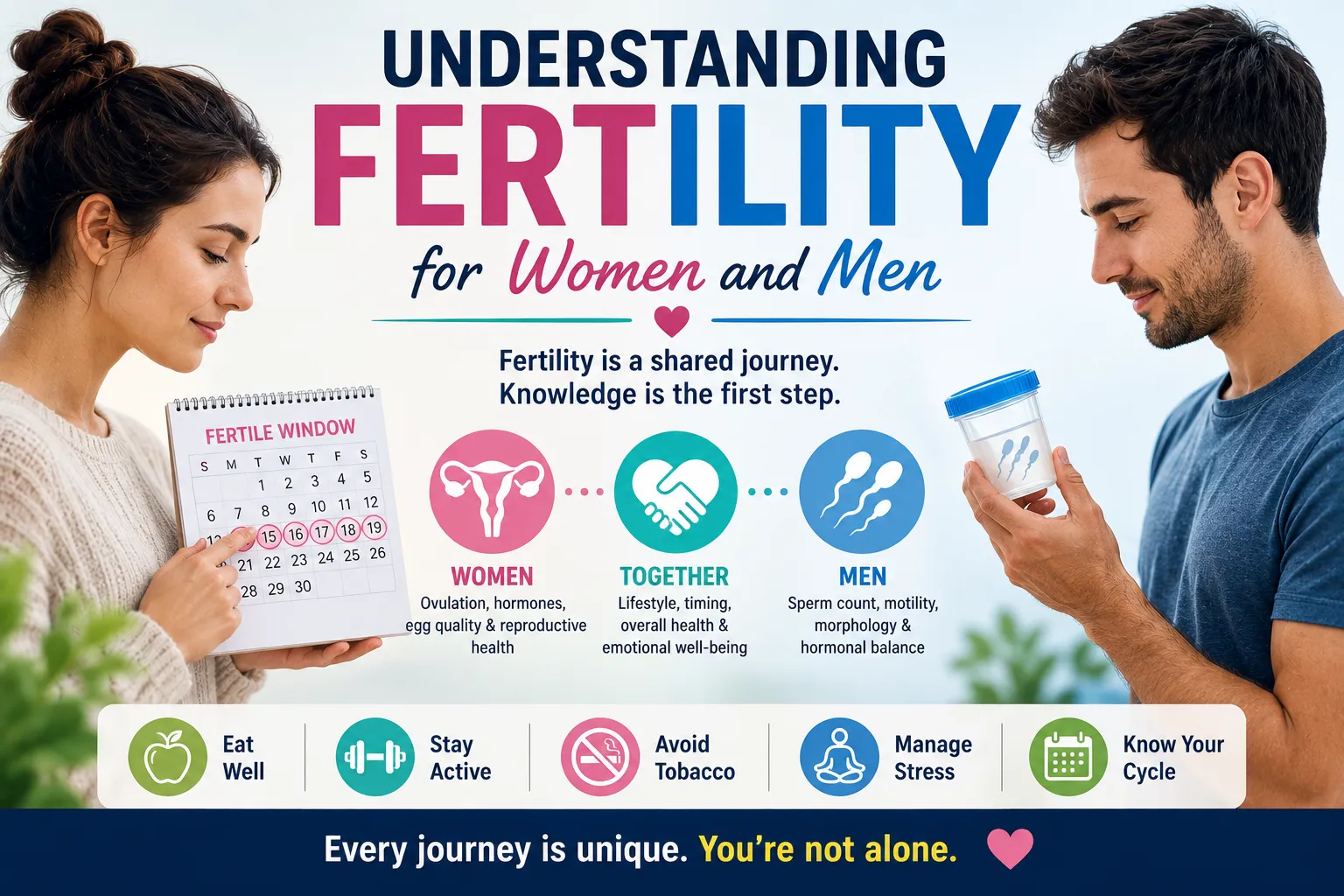

Understanding Fertility for Women and Men
Fertility is often discussed as though it were a simple question of whether someone can or cannot have a child. In reality, conception depends on several interconnected factors involving both partners.
For people planning a pregnancy, understanding how fertility works can make it easier to recognize the factors that influence conception, know when professional advice may be appropriate, and avoid common misconceptions about reproductive health. For a broader overview of the systems and factors involved, see this complete guide to reproductive health.
Fertility also changes over time and can be affected by medical conditions, medications, previous treatments, lifestyle factors, and reproductive health problems. Importantly, difficulties conceiving are not necessarily caused by the person who will carry the pregnancy. Male factors alone account for an estimated 20% to 30% of infertility cases and contribute to another 20% to 30%, meaning male factors are involved in about half of infertile couples.
What Does Fertility Mean?
Fertility refers to the biological ability to achieve a pregnancy.
For pregnancy to occur through intercourse, several processes have to work together. An egg must be released, sperm must reach and fertilize the egg, the resulting embryo must develop appropriately, and implantation must occur in the uterus.
This means fertility is not determined by a single measurement.
For someone with ovaries and a uterus, factors can include:
- Ovulation
- Ovarian function
- Egg quality
- Fallopian tube health
- Uterine health
- Age
- Hormonal function
- Overall reproductive health
For someone producing sperm, relevant factors include:
- Sperm production
- Sperm concentration
- Sperm movement
- Sperm shape
- Ability to deliver sperm
- Hormonal function
- Reproductive anatomy
Because both partners can contribute to difficulty conceiving, fertility evaluation should generally consider both people rather than automatically focusing on the woman.
How Ovulation Affects Fertility
Ovulation is the release of an egg from an ovary.
Pregnancy is most likely when intercourse occurs during the fertile window surrounding ovulation because sperm can survive for several days under favorable conditions, while the egg remains fertilizable for a much shorter period.
For people with regular menstrual cycles, tracking cycle timing can provide useful information about when ovulation may occur. Understanding menstrual health and how menstrual cycles work can therefore be useful when trying to understand cycle patterns and reproductive timing.
Ovulation predictor kits are another option. These tests detect a rise in luteinizing hormone, or LH, in urine. According to the American Society for Reproductive Medicine, an LH surge generally occurs one to two days before ovulation.
However, cycle tracking and ovulation tests are not substitutes for medical evaluation when there are signs of an underlying fertility problem.
Understanding Egg Supply and Egg Quality
Egg quantity and egg quality are related but different concepts.
Ovarian reserve refers broadly to the remaining supply of eggs. Tests such as anti-Müllerian hormone, or AMH, and antral follicle count can provide information about ovarian reserve.
But these tests should not be interpreted as a simple prediction of whether someone will become pregnant naturally.
ASRM notes that age is an important indicator of egg quality and that ovarian reserve testing is particularly relevant in certain circumstances, including older reproductive age, previous ovarian surgery, chemotherapy, pelvic radiation, endometriosis, or unexplained infertility.
This distinction is important because having a particular AMH level does not by itself answer every fertility question.
Age and Fertility
Age is an important factor in reproductive potential, particularly for people producing eggs.
As age increases, both the number and quality of remaining eggs generally decline. This can make conception more difficult and increase the likelihood of miscarriage.
ASRM patient information notes that reproductive potential decreases with age and that fertility can end several years before menopause.
Age also matters when deciding when to seek an infertility evaluation.
For heterosexual couples having regular, unprotected intercourse, evaluation is generally recommended after 12 months when the person with ovaries is under 35. Earlier evaluation—typically after six months—is recommended when that person is 35 or older.
These are general guidelines, not rules that apply identically to every individual.
Male Fertility Matters Too
Fertility discussions have historically placed considerable emphasis on women, but sperm health is equally relevant when sperm are being used to achieve a pregnancy.
Sperm must be produced in adequate numbers and have appropriate movement and structure. Problems affecting sperm production, transport, or ejaculation can interfere with conception.
Common contributors to male infertility can include:
- Hormonal problems
- Genetic conditions
- Varicocele
- Blockages
- Ejaculation problems
- Certain medications
- Previous cancer treatment
- Other reproductive or medical conditions
ASRM recommends that an initial male fertility evaluation include a reproductive history and one or more semen analyses, with additional evaluation when abnormalities are identified.
For broader context on male reproductive and hormonal health, see What Testosterone Does in Men’s Health and Common Men’s Health Concerns Explained.
What Is a Semen Analysis?
A semen analysis is one of the central tests used to evaluate male fertility.
It can assess characteristics such as:
- Sperm concentration
- Sperm movement
- Sperm shape
- Semen volume
A semen analysis is useful because fertility cannot be determined reliably from appearance, sexual performance, or the ability to have an erection.
ASRM specifically notes that semen analysis is an essential component of infertility evaluation and should be considered even if the man has previously fathered children.
Common Causes of Fertility Problems in Women
Fertility difficulties can arise from many different conditions.
Possible factors include:
Ovulation Problems
Irregular or absent ovulation can make conception more difficult.
Conditions affecting hormones can interfere with the normal process that leads to egg release.
Fallopian Tube Problems
The fallopian tubes provide the pathway through which sperm and egg meet.
Damage or blockage can interfere with this process.
Possible causes include previous infections, surgery, endometriosis, or other pelvic conditions.
Endometriosis
Endometriosis occurs when tissue similar to the lining of the uterus grows outside the uterus.
It can be associated with pelvic pain and may affect fertility in some people.
Uterine Conditions
Conditions involving the uterus, including some fibroids and structural abnormalities, can affect reproductive outcomes.
Ultrasound and other tests may help clinicians investigate these possibilities.
Common Causes of Fertility Problems in Men
Male fertility problems can also have multiple causes.
These may involve sperm production, sperm transport, hormonal regulation, or ejaculation.
Some men have abnormalities that can be identified and treated. Others may require assisted reproductive techniques.
Certain medications can also affect sperm production. ASRM notes that testosterone treatment, for example, can suppress sperm production.
Anyone concerned about fertility should discuss medication changes with a healthcare professional rather than stopping prescribed treatment independently.
Lifestyle and Fertility
Lifestyle factors can influence reproductive health, although they should not be treated as explanations for every case of infertility.
Smoking, for example, is associated with reproductive health risks, while some other lifestyle and health factors can affect sperm quantity or quality.
ASRM identifies smoking, marijuana use, and being overweight among factors associated with problems affecting sperm quantity and quality.
However, fertility problems can occur in people who have healthy lifestyles.
It is therefore important not to turn fertility advice into blame.
Preparing for Pregnancy
People planning pregnancy can use the preconception period to address general health. A dedicated preconception health guide can provide additional context on preparing for pregnancy before conception.
Depending on individual circumstances, this may involve:
- Reviewing medications with a healthcare professional
- Managing existing health conditions
- Discussing vaccinations
- Avoiding tobacco
- Reviewing alcohol and recreational drug use
- Maintaining a balanced diet
- Establishing appropriate physical activity
- Taking recommended prenatal supplements
- Discussing known genetic or reproductive risks
Preconception care is particularly important for people with medical conditions or a history that could affect pregnancy.
For people actively preparing to conceive, a pregnancy planning guide can also help organize the practical and health considerations involved before pregnancy.
When Should Fertility Testing Begin?
For many heterosexual couples, the general guideline is to seek evaluation after 12 months of regular, unprotected intercourse if the person with ovaries is under 35.
When the person with ovaries is 35 or older, evaluation is generally recommended after six months.
Earlier assessment can be appropriate when there are known or suspected risk factors.
Examples include:
- Irregular or absent menstrual periods
- Known endometriosis
- Suspected problems involving the uterus or fallopian tubes
- Previous cancer treatment
- Known male fertility problems
- Previous reproductive surgery
- Family history of early menopause
- Difficulties with sexual function
- Other medical conditions associated with fertility problems
ASRM emphasizes that evaluation should be individualized rather than applying the same testing schedule to everyone.
What Happens During a Fertility Evaluation?
A fertility evaluation usually begins with a detailed medical and reproductive history.
Depending on the circumstances, testing may include:
- Semen analysis
- Blood tests
- Ovulation assessment
- Pelvic ultrasound
- Evaluation of the uterus
- Testing of fallopian tube openness
- Ovarian reserve testing
- Additional male reproductive testing
The purpose is not simply to find one abnormal test.
The goal is to identify relevant factors that could explain difficulty conceiving and determine what options may be appropriate.
ASRM recommends beginning with less invasive approaches capable of identifying common causes before moving to more specialized testing when appropriate.
What If No Cause Is Found?
Sometimes fertility testing does not identify an obvious explanation.
This is commonly referred to as unexplained infertility.
An absence of an identified cause does not mean the problem is imaginary or that pregnancy is impossible.
ASRM notes that some cases have no obvious explanation even after evaluation, and treatment can still help some couples with unexplained infertility.
Fertility care should therefore be based on the complete clinical picture rather than a single test result.
Fertility Treatments Can Take Different Forms
When pregnancy does not occur naturally, treatment depends on the underlying circumstances.
Options may include:
- Treatment of an underlying medical condition
- Ovulation-related treatment
- Intrauterine insemination
- In vitro fertilization
- Use of donor sperm
- Use of donor eggs
- Donor embryos
- Gestational carrier arrangements
Not every treatment is appropriate for every person.
The best option depends on factors such as age, reproductive anatomy, sperm and egg characteristics, medical history, previous treatment, preferences, and access to care.
Fertility Is Not the Same as Sexual Function
Being sexually active does not necessarily mean that someone has normal fertility.
Likewise, infertility does not necessarily mean a person has problems with sexual desire, erections, ejaculation, or sexual satisfaction.
Fertility involves reproductive processes that extend beyond sexual performance.
This distinction can help reduce stigma and encourage couples to seek appropriate medical evaluation rather than making assumptions about one another.
Fertility Can Affect Emotional Well-Being
Difficulty conceiving can be emotionally challenging.
People may experience:
- Frustration
- Anxiety
- Sadness
- Stress
- Feelings of isolation
- Relationship strain
- Uncertainty about the future
ASRM notes that infertility can affect relationships, self-perception, and emotional well-being, and that counseling or mental health support can be helpful when distress becomes difficult to manage.
Seeking emotional support is not an admission of failure. Fertility challenges can be medically and emotionally demanding, and support can be part of comprehensive care.
Common Fertility Myths to Avoid
“Infertility Is Mainly a Women’s Problem”
This is incorrect. Male factors alone account for a substantial proportion of infertility cases and contribute to many additional cases.
“Having Had a Child Means Male Infertility Is Impossible”
Previous fertility does not guarantee current fertility. ASRM recommends semen analysis as part of evaluation even when a man has previously fathered children.
“A Normal Period Guarantees Fertility”
Regular menstruation can provide useful information but does not guarantee healthy fallopian tubes, egg quality, sperm function, or other factors required for conception.
“One Fertility Test Can Tell You Everything”
Fertility is complex. A single hormone level or semen measurement cannot provide a complete picture.
“Infertility Always Has an Obvious Cause”
Sometimes no clear explanation is found even after evaluation.
Questions to Discuss With a Healthcare Professional
If you are concerned about fertility, useful questions may include:
- Could my medical history affect fertility?
- Should my partner and I be evaluated at the same time?
- Are my menstrual cycles consistent with regular ovulation?
- Would a semen analysis be appropriate?
- Do medications I take affect fertility?
- Should we consider testing the fallopian tubes?
- Would ovarian reserve testing be useful in my circumstances?
- When should we consider a fertility specialist?
- What treatment options would apply to our situation?
Writing down questions and bringing relevant medical records can make an appointment more productive.
Knowing When to Seek Fertility Guidance
Fertility is influenced by both partners, and understanding that early can make the path toward pregnancy less confusing.
For many couples, patience and healthy preconception habits are appropriate. But persistent difficulty conceiving, irregular menstrual cycles, known reproductive conditions, previous cancer treatment, or other risk factors may justify earlier professional assessment.
Most importantly, fertility should not be viewed as a test of someone’s worth or masculinity, femininity, or health. When conception does not happen as expected, a structured evaluation can help identify possible causes and clarify what options are available.
Understanding fertility is ultimately about replacing assumptions with information—and recognizing that both women’s and men’s reproductive health deserve equal attention.
Continue Reading
Similar Posts

How Communication Supports Sexual Health
Whether people are discussing contraception, sexual preferences, STI testing, fertility, consent, or changes in their health, clear communication can play an important role in making sexual relationships safer and healthier.
Read article
Why Health History Matters for Women
For women, keeping an accurate health history can be especially valuable because health needs can change significantly throughout different stages of life.
Read article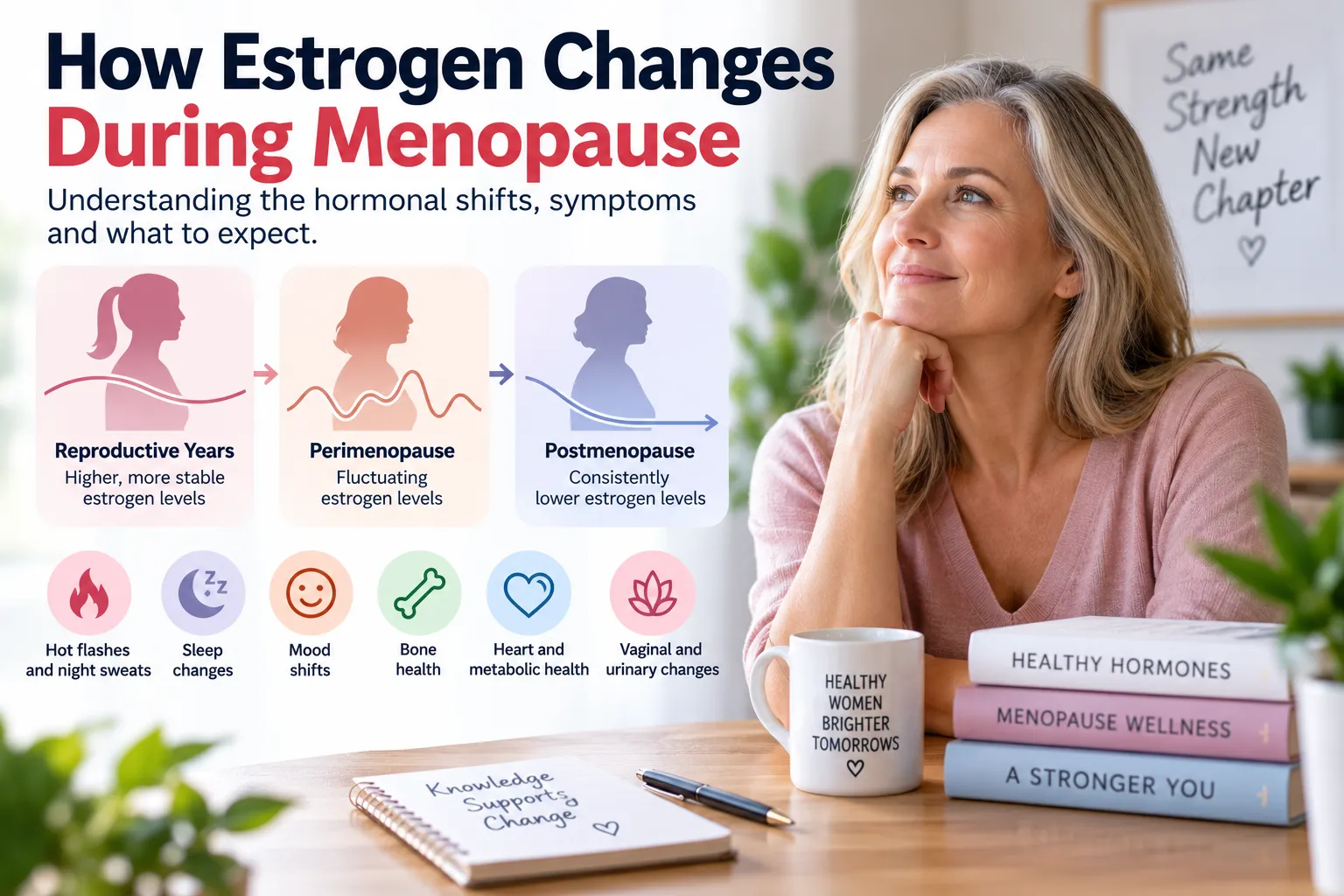
How Estrogen Changes During Menopause
Understanding how estrogen changes can make many of the physical and emotional changes associated with this stage of life easier to recognize and discuss with a healthcare professional.
Read article

Join 10,000+ Readers Building Healthier Habits
Get actionable wellness tips every week plus our newest articles delivered straight to your inbox.