
Study Finds Nutritional Deficiencies in Nearly 1 in 6 Children Taking GLP-1 Drugs
A new study is raising questions about nutritional monitoring for children and teenagers taking GLP-1 medications after researchers found that nearly one in six developed a documented nutritional deficiency or related complication within a year of starting treatment.
The study, published in Childhood Obesity in September 2026, examined health insurance claims for 2,031 patients between the ages of 10 and 17 who began taking a GLP-1 receptor agonist and did not have a documented nutritional deficiency during the six months before treatment began.
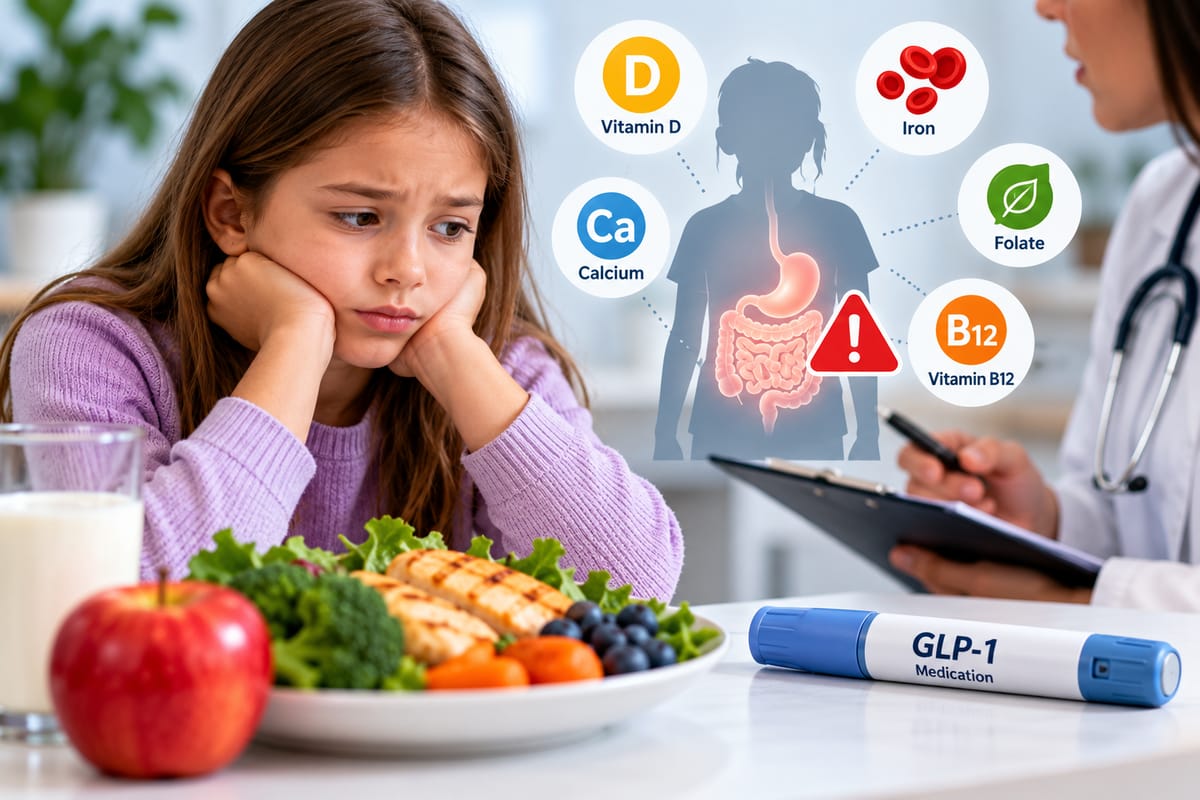
Within 365 days, 16.8% of the patients had been diagnosed with at least one nutritional deficiency or deficiency-related complication. Vitamin D deficiency was the most frequently recorded problem, affecting 12.4% of the group. Nutritional anemia affected 1.55%, while iron-deficiency anemia was recorded in 1.44%.
The findings do not establish that GLP-1 medications directly caused the deficiencies. The researchers analyzed previously collected insurance claims rather than conducting a randomized clinical trial, and the claims data did not contain laboratory values or detailed clinical notes.
Still, the results highlight an important issue as GLP-1 treatment becomes increasingly relevant in pediatric obesity and diabetes care: reducing food intake does not automatically guarantee that a child is receiving all the nutrients required for healthy growth.
What the Study Found
Researchers used administrative claims data from the United States covering more than 100 million people between 2017 and 2022.
After applying eligibility requirements, they identified 2,031 children and adolescents aged 10 to 17 who had newly started a GLP-1 receptor agonist, had continuous insurance enrollment and had no documented nutritional deficiency or related complication during the six months before treatment.
The average age was 15, and 61.5% of the patients were female. About 62.6% had an obesity diagnosis, while 67.2% had type 2 diabetes, 5.1% had prediabetes and 27.7% had no recorded diabetes diagnosis.
Liraglutide was by far the most commonly used medication in the study, accounting for 78.6% of GLP-1 prescriptions. Dulaglutide accounted for 10.4% and semaglutide for 9.1%. Tirzepatide was not included because it had not been approved during the study period.
Vitamin D Deficiency Was the Most Common Finding
Vitamin D deficiency stood out among the nutritional problems identified by the researchers.
Within one year of starting treatment, 12.4% of the children had a documented diagnosis of vitamin D deficiency. Overall vitamin deficiencies, including vitamin D and other categories, affected 12.9% of the study group.
Nutritional anemia was recorded in 1.5% of patients, while iron-deficiency anemia affected 1.4%.
The researchers also identified other nutrition-related complications, including dehydration and muscle loss, although these occurred at lower rates than vitamin deficiencies.
At six months, 10.2% of patients had experienced at least one nutritional deficiency or deficiency-related complication. That figure increased to 16.8% by 12 months.
The increase over time is one reason ongoing monitoring may matter rather than relying solely on nutritional assessments conducted before treatment begins.
Why Nutrition Is Especially Important During Adolescence
Children and teenagers have nutritional requirements that extend beyond maintaining a stable body weight.
Adolescence is a period of rapid physical development, including increases in height, muscle mass and bone mineralization. Adequate energy, protein and micronutrients are needed to support these processes.
The study authors specifically identified nutrients such as vitamin D, iron and calcium as areas of concern because deficiencies during adolescence can have implications for skeletal health and development.
That does not mean every child taking a GLP-1 medication will develop a deficiency.
Instead, the study highlights why weight or blood-sugar changes should not be viewed separately from nutritional status.
A treatment plan can have multiple goals at the same time: managing obesity or diabetes, supporting healthy growth and ensuring that the child’s diet remains nutritionally adequate.
How GLP-1 Medicines Can Affect Food Intake
GLP-1 receptor agonists work through several mechanisms, including increasing feelings of fullness, slowing gastric emptying and reducing appetite.
These effects can be therapeutically useful for people being treated for obesity or diabetes. But a reduction in overall food intake can also mean that a person consumes less of certain nutrients if food choices become less varied or nutrient-dense.
The issue can be particularly relevant for children because their bodies are still developing.
A smaller appetite does not necessarily mean that a child is eating an unhealthy diet. It does, however, make the quality and nutrient density of the food that is consumed more important.
This is one reason understanding GLP-1 Drugs and Diet can provide useful context when considering how medication and nutrition interact.
The Study Found a Gap in Nutrition Counseling
One of the study’s other important findings involved access to professional nutrition care.
Only 5.8% of the children had a nutrition therapy or counseling visit within 30 days of starting a GLP-1 medication.
Within 90 days, 14.7% had received such care. Within 180 days, the figure reached 23.3%. By one year, 38.3% had recorded at least one nutrition therapy or counseling visit.
Among those who received nutrition counseling after treatment began, the average time to the first visit was 149 days.
The researchers described this as a potential missed opportunity for proactive nutrition support.
However, the data should be interpreted carefully. A claims record does not capture every conversation between a clinician and patient, and the study could not determine exactly what nutrition counseling involved.
Nutrition Counseling and Deficiency Diagnoses Are Not a Simple Cause-and-Effect Relationship
The study found that patients who received nutrition therapy or counseling actually had higher rates of documented nutritional deficiencies than those who did not.
By 365 days, 23.2% of patients who received nutrition therapy or counseling had a nutritional deficiency or related complication, compared with 14.8% of those without a recorded visit.
This does not mean that nutrition counseling caused deficiencies.
A more likely explanation is that children who developed nutritional concerns, or who were already considered at greater nutritional risk, may have been more likely to receive professional nutrition care.
The researchers’ analysis was designed to describe real-world patterns rather than establish cause and effect.
This distinction is important when interpreting headlines about the study.
The Findings Do Not Prove GLP-1 Drugs Caused the Deficiencies
The study is observational and based on administrative claims.
That means researchers could identify associations between starting GLP-1 therapy and later diagnoses, but they could not determine with certainty whether the medications themselves caused those nutritional problems.
Children receiving GLP-1 therapy may differ from other children in important ways. Many had obesity or diabetes, conditions that can themselves be associated with differences in diet, nutrient status, physical activity and healthcare use.
The researchers also did not have access to laboratory values or detailed clinical notes in the claims database. Diagnoses were identified through medical billing codes.
These limitations do not make the findings irrelevant. They simply define what the study can and cannot tell us.
The Study Period Predates Some of Today’s GLP-1 Landscape
Another important limitation is the timing of the data.
The analysis covered 2017 through 2022. GLP-1 medications and pediatric weight-management practices have continued to evolve since then.
The study was dominated by older medications, particularly liraglutide. Semaglutide accounted for only 9.1% of the pediatric prescriptions in the cohort, and tirzepatide was absent because it was not yet approved during the study period.
As a result, the findings should not automatically be applied to every GLP-1 medication currently used in children or teenagers.
Newer research will be needed to determine whether similar nutritional patterns appear among patients receiving more recently adopted treatments.
Why a Balanced Diet Still Matters During Treatment
Medication does not replace the basic importance of a balanced diet.
Children generally need a variety of foods that provide protein, carbohydrates, healthy fats, vitamins, minerals and other nutrients.
When appetite is reduced, choosing foods that provide substantial nutritional value in smaller portions may become particularly important.
That can include nutrient-dense sources of protein, fruits and vegetables, whole grains, dairy or suitable alternatives, legumes, nuts and seeds when appropriate for the child’s age and dietary needs.
The exact dietary approach should depend on the child’s health status, medication, nutritional needs and treatment goals.
A broad Complete Guide to Healthy Eating and Balanced Nutrition provides useful background on how different nutrients contribute to an overall eating pattern.
Protein May Receive More Attention
Protein is another nutrient that can become an important part of discussions about GLP-1 treatment.
Reduced appetite can make it more difficult for some people to consume enough food overall. Ensuring adequate protein intake can therefore be part of a broader effort to preserve lean tissue while weight changes occur.
For children and teenagers, however, protein needs should be considered in the context of age, growth, activity level and overall health rather than through a one-size-fits-all target.
The goal is not simply to maximize protein intake.
Instead, nutrition professionals can help families determine how to provide adequate protein alongside the other nutrients required for growth.
The growing attention to this issue is reflected in the discussion around GLP-1 Drugs Are Creating a New Nutrition Industry Focused on Protein and Nutrient Intake.
Recognizing Nutritional Deficiencies Can Be Difficult
Nutritional deficiencies do not always produce obvious symptoms at first.
Fatigue, weakness, changes in concentration, reduced exercise tolerance or other nonspecific symptoms can have many possible causes.
That makes clinical monitoring particularly important for children receiving medication that changes appetite or food intake.
Healthcare professionals can determine whether symptoms warrant dietary assessment, laboratory testing or other evaluation.
Families should not assume that a symptom automatically indicates a nutritional deficiency, just as the absence of symptoms does not necessarily rule one out.
Understanding How Nutrient Deficiencies Develop and Get Identified helps put the study’s findings into a broader nutritional context.
What Nutrition Monitoring Could Involve
The study’s findings have renewed attention on integrating nutrition support into pediatric GLP-1 treatment.
Depending on the individual situation, clinical monitoring may include reviewing:
- changes in appetite;
- overall food intake;
- dietary variety;
- protein and micronutrient intake;
- growth patterns;
- physical activity;
- hydration;
- symptoms that could indicate a nutritional problem;
- relevant laboratory measurements; and
- changes in weight and body composition.
Not every child will require the same approach.
The appropriate monitoring schedule and testing depend on the medication, medical condition, age, growth pattern and other factors determined by the child’s healthcare team.
Weight Loss and Healthy Growth Are Not the Same Goal
One of the central challenges in pediatric obesity treatment is balancing changes in body weight with healthy development.
For adults, weight reduction may often be discussed primarily in terms of changes in body weight and metabolic risk.
For children and adolescents, clinicians also need to consider growth and development.
A treatment plan that changes appetite or food intake therefore needs to account for the child’s nutritional requirements as those requirements evolve.
The objective is not simply to reduce the amount of food consumed. It is to support an overall pattern of eating that provides sufficient nutrition while addressing the medical reason for treatment.
Why the Findings Matter as GLP-1 Use Expands
GLP-1 medications have become an increasingly important tool for treating obesity and type 2 diabetes, including among some pediatric patients.
As their use expands, researchers are looking beyond weight reduction and blood-sugar control to examine how treatment affects nutrition, growth, muscle mass and long-term health.
The new study contributes to that discussion by providing real-world evidence from more than 2,000 children and teenagers.
Its strongest message is not that GLP-1 drugs are inherently unsafe for children.
Rather, it suggests that nutritional status deserves deliberate attention when these medications are prescribed during a period of rapid growth.
More Research Is Still Needed
The study raises important questions that cannot be answered using claims data alone.
Future research could examine nutritional status using laboratory measurements, detailed dietary assessments and body-composition data. Longer follow-up could also help researchers determine whether identified deficiencies are temporary or persist over time.
Studies involving newer GLP-1 medications will be particularly useful because prescribing patterns have changed since the 2017–2022 period covered by this research.
Researchers will also need to determine which forms of nutritional monitoring are most effective and when nutrition counseling should be introduced.
What the New Findings Mean for Families
For families considering or already managing pediatric GLP-1 treatment, the study reinforces the importance of viewing medication as one part of a broader treatment plan.
A child’s healthcare team may need to consider not only whether the medication is helping with its intended medical goal, but also whether the child is maintaining adequate nutrition and progressing appropriately through growth and development.
The study found that 16.8% of its participants received a diagnosis of a nutritional deficiency or related complication within one year, with vitamin D deficiency accounting for the largest share.
That figure should not be interpreted as a prediction that an individual child taking a GLP-1 medication will develop a deficiency.
Instead, it highlights why nutritional assessment and appropriate follow-up can be important components of pediatric care.
As GLP-1 therapies become more widely used among younger patients, the conversation is increasingly shifting from weight and blood-sugar numbers alone toward the broader question of whether treatment supports healthy growth, adequate nutrition and long-term well-being at the same time.
Continue Reading
Similar Posts

Bettergoods Pasta Recalled Over Listeria Risk: What Consumers Need to Know
The recall originally covered two specific lots, but consumers should now treat the broader recall as applying to the product regardless of lot number.
Read article
GLP-1 Drugs and Nutritional Deficiencies: What New Research Says About Children
The findings do not prove that GLP-1 drugs directly caused the deficiencies. The study used administrative insurance claims rather than laboratory measurements or detailed clinical records, and the researchers themselves describe nutritional deficiencies as an under-recognized concern rather than establishing a direct causal relationship.
Read article
New Micronutrient Research Could Reshape How Experts Fight Vitamin and Mineral Deficiencies
The findings could influence how governments, nutrition organizations and food producers approach one of the world's most persistent nutrition problems.
Read article

Join 10,000+ Readers Building Healthier Habits
Get actionable wellness tips every week plus our newest articles delivered straight to your inbox.