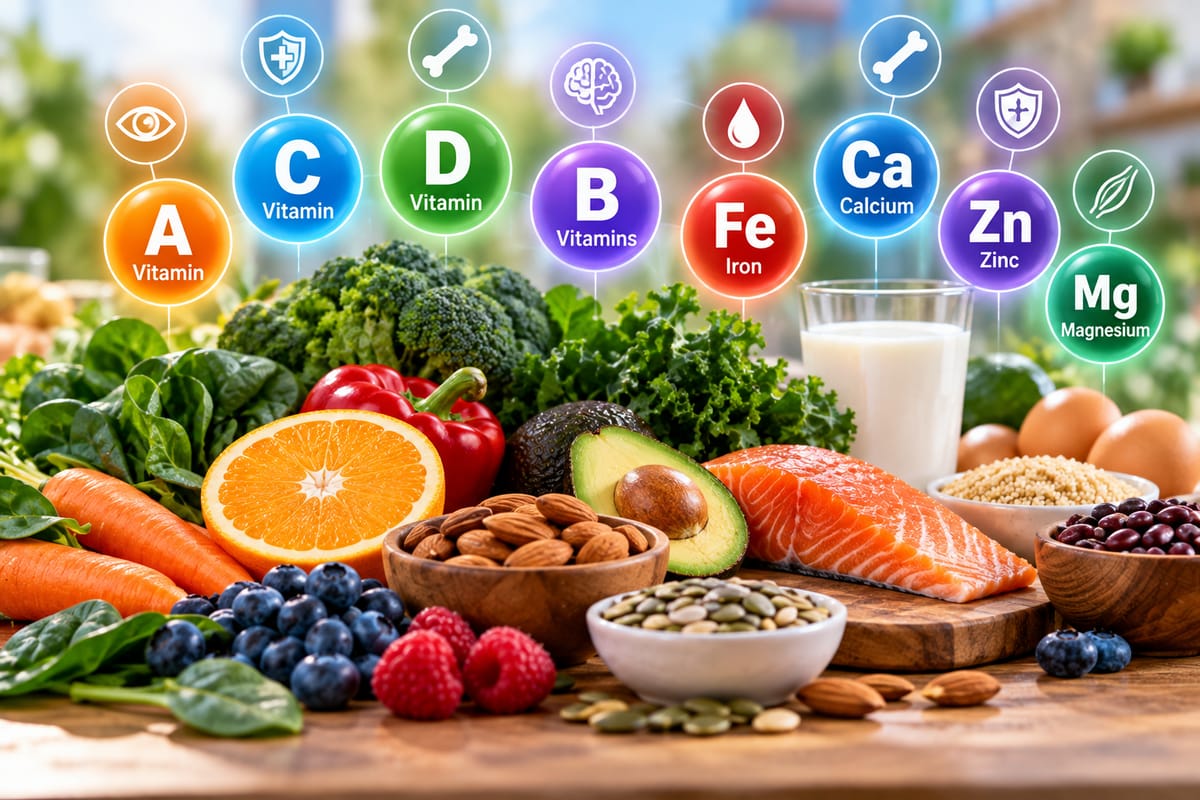

New Micronutrient Research Could Reshape How Experts Fight Vitamin and Mineral Deficiencies
New research is giving nutrition experts a clearer picture of where vitamin and mineral deficiencies persist and how large-scale interventions could address them.
A major 2026 modelling study published in The Lancet Global Health examined micronutrient inadequacies across 185 countries while accounting for existing food-fortification programs. The analysis suggests that fortification is already preventing billions of inadequate nutrient intakes each year, but it also shows that substantial gaps remain.
The findings could influence how governments, nutrition organizations and food producers approach one of the world’s most persistent nutrition problems.
Rather than relying on a single intervention, the research points toward a combination of fortified staple foods, improved compliance with fortification standards, broader program coverage and better overall diet quality.
Why Micronutrients Matter
Micronutrients are vitamins and minerals required by the body in relatively small amounts but with important roles in growth, metabolism, immune function, blood production, neurological development and other physiological processes.
The World Health Organization identifies deficiencies in nutrients such as iron, vitamin A and iodine as major global public-health concerns. Micronutrient deficiencies can contribute to conditions ranging from anemia and impaired development to cognitive problems and increased vulnerability to disease.
Unlike macronutrients such as protein, carbohydrates and fat, micronutrients are not primarily about supplying calories. Their importance comes from the biological processes they help regulate.
A person’s diet can therefore provide enough energy while still failing to provide adequate amounts of particular vitamins or minerals.
A useful overview of these nutrients is available in the Complete Guide to Vitamins and Their Roles.
New Research Looks at More Than Individual Deficiencies
Much nutrition research focuses on a particular nutrient or population.
The new modelling analysis takes a broader approach.
Researchers estimated inadequate intakes of 13 micronutrients across 185 countries and incorporated information about large-scale food-fortification programs. The analysis considered fortification of foods including wheat flour, maize flour, rice, oil and salt.
This matters because micronutrient inadequacy is rarely limited to one nutrient across an entire population.
People’s diets differ according to geography, income, food availability, cultural practices, age and sex. A population may therefore face multiple nutritional gaps at the same time.
Understanding those overlapping deficiencies can help public-health programs target interventions more effectively.
Fortification Is Already Preventing Billions of Inadequate Intakes
The researchers estimated that existing large-scale food-fortification programs prevent approximately 7 billion inadequate person-nutrient intakes each year.
The study estimated the annual cost of those existing programs at about $1.06 billion, equivalent to an average of approximately $0.18 per person across the five fortified food vehicles examined.
Iodine fortification accounted for a particularly large share of the estimated benefit.
The researchers estimated that existing iodine-fortification programs prevent about 3.3 billion inadequate iodine intakes annually.
Iron fortification was also significant, with an estimated 1.4 billion inadequate iron intakes prevented by current programs.
These estimates illustrate why fortification has become such an important tool in population-level nutrition policy.
Instead of requiring every individual to change their diet or purchase a supplement, fortification can add essential nutrients to foods consumed by large portions of a population.
Yet Huge Nutritional Gaps Remain
The same research also shows why fortification cannot be treated as a complete solution.
Even after accounting for current fortification programs, researchers estimated that 38.6 billion inadequate person-nutrient intakes remain globally each year.
The number represents person-nutrient inadequacies rather than 38.6 billion different people.
For example, one individual could have inadequate intake of more than one nutrient and therefore contribute more than once to the total.
That distinction is important when interpreting the findings. The research measures estimated dietary inadequacy rather than directly diagnosing billions of individuals with clinical nutrient deficiencies.
The authors also emphasize that future research needs to better connect estimated dietary inadequacies with biological measurements of nutrient status.
Improving Compliance Could Make Existing Programs More Effective
One of the most important findings concerns compliance.
Fortification programs may have established standards on paper but fail to deliver their full potential if manufacturers do not consistently meet those standards or if fortified foods do not reach enough consumers.
The modelling study estimated that improving compliance with existing fortification standards could prevent approximately 13.1 billion inadequate person-nutrient intakes annually, compared with the estimated 7 billion prevented under current programs.
The model estimated the annual cost of this improved-compliance scenario at about $3.48 billion.
That finding suggests that improving implementation could be an important part of addressing micronutrient gaps without necessarily creating an entirely new nutrition system.
In practical terms, stronger quality control, monitoring and enforcement could determine how much nutritional benefit a fortification policy actually produces.
International Standards Could Also Change the Picture
The researchers modelled another scenario in which fortification standards were aligned with international guidelines while compliance was improved.
Under that scenario, the model estimated that approximately 17.2 billion inadequate intakes could be prevented each year.
The analysis then examined what could happen if those improvements were combined with expanded fortification coverage in countries where there was a demonstrated need and an appropriate food vehicle.
That scenario produced an estimated 24.7 billion prevented inadequate intakes annually.
Even then, however, approximately 20.9 billion inadequate intakes would remain.
That result reinforces an important point: fortification can substantially reduce micronutrient gaps, but it cannot replace a diverse and nutritious diet.
Vitamins and Minerals Work Together
Nutrition discussions sometimes treat vitamins and minerals as isolated substances.
In reality, the body’s nutrient systems are interconnected.
Iron is essential for oxygen transport and is closely connected to blood health. Folate and vitamin B12 are involved in cell production and neurological processes. Vitamin A contributes to vision and immune function. Iodine is necessary for thyroid hormone production.
Minerals also perform diverse roles.
Calcium is important for bones and muscle function, magnesium participates in numerous biochemical reactions, zinc supports immune and cellular functions, and selenium is involved in antioxidant and thyroid-related processes.
The different roles of these nutrients are explored in Minerals Explained: Essential Nutrients Your Body Needs Every Day.
Because micronutrients have different functions, addressing one deficiency does not necessarily solve another.
Diet Quality Remains at the Center of the Problem
The new research provides strong evidence for fortification as a population-level intervention, but the researchers also emphasize the importance of diet quality.
WHO recommends diets containing a wide variety of nutrient-dense foods, including fruits, vegetables, whole grains, legumes, nuts, seeds and appropriate sources of animal foods. Dietary diversity increases the likelihood of meeting vitamin and mineral requirements.
This creates two complementary approaches.
Fortification can help close predictable nutritional gaps across a population, particularly where certain staple foods are widely consumed.
Dietary diversity can provide a broader range of nutrients while also supplying protein, fiber and other beneficial compounds.
Neither approach needs to replace the other.
Why Deficiencies Can Be Difficult to Identify
Micronutrient deficiencies do not always produce obvious symptoms immediately.
Some deficiencies develop gradually, while symptoms such as fatigue, weakness or reduced concentration can have many possible causes.
That makes nutritional assessment more complicated than simply looking at someone’s diet or asking whether they feel tired.
Laboratory testing, dietary assessment, clinical evaluation and population-level surveys can all contribute to identifying nutritional problems.
The difference between inadequate intake and confirmed biological deficiency is particularly important. A model may estimate that a person or population is consuming too little of a nutrient, but that does not necessarily establish that every individual has a clinically confirmed deficiency.
The process is discussed in How Nutrient Deficiencies Develop and Get Identified.
Fortification Can Also Carry Risks
Increasing micronutrient intake is not automatically beneficial at every level.
The body needs many vitamins and minerals within appropriate ranges, and excessive intake of certain nutrients can create health risks.
The 2026 modelling study specifically identified potential risks of excessive intake under some expanded fortification scenarios, particularly for nutrients such as iodine and zinc. The researchers emphasized the need for monitoring systems that balance the benefits of fortification against the possibility of excessive intake.
That means effective fortification policy requires more than simply adding larger amounts of nutrients to food.
Programs need to consider existing dietary intake, population characteristics, food consumption patterns and the nutritional contribution of other fortified foods and supplements.
Food Fortification Can Reach People Without Changing Habits
One of the strongest arguments for fortification is that it can work through foods people already consume.
If a staple food is regularly eaten by a large share of the population, adding an appropriate amount of a micronutrient can increase intake without requiring every household to make a major behavioral change.
Salt iodization provides one of the best-known examples.
WHO identifies universal salt iodization as the preferred strategy for controlling iodine deficiency, while also noting that fortification of staples such as flour can help address other micronutrient deficiencies.
The approach can be particularly valuable in settings where nutrient-rich foods are expensive, unavailable or difficult to access consistently.
Poverty and Food Access Still Shape Micronutrient Health
Micronutrient deficiencies are not simply the result of poor individual food choices.
Food prices, availability, agricultural systems, household income, education, infrastructure and access to healthcare can all affect nutritional status.
WHO notes that low- and middle-income countries carry a disproportionate burden of micronutrient deficiencies.
A household may understand the importance of eating a diverse diet but still struggle to afford a consistent supply of nutrient-rich foods.
This is why population-level strategies can be important alongside nutrition education.
Research Is Moving Toward More Detailed Nutrition Surveillance
Better data could also change how governments respond to micronutrient deficiencies.
WHO maintains a Vitamin and Mineral Nutrition Information System designed to collect and summarize information about vitamin and mineral status across populations. Its database includes indicators covering 17 micronutrients or micronutrient-related conditions.
More detailed surveillance can help identify where deficiencies are concentrated and whether interventions are working.
It can also reveal differences between demographic groups.
Age, sex, pregnancy status, geography, income and dietary patterns can all influence nutritional risk.
Better measurement therefore makes it possible to move from broad assumptions toward more targeted interventions.
Micronutrient Problems Can Overlap
Another emerging theme in nutrition research is the importance of looking at multiple deficiencies simultaneously.
A 2026 national survey in Madagascar examined anemia, micronutrient deficiencies, inflammation and malaria among children, adolescents and women. The study illustrates how nutritional problems can coexist with infection and inflammation rather than occurring in isolation.
This matters because treating one nutritional issue may not resolve the underlying health problem.
For example, anemia can have several causes, including deficiencies in iron, folate or vitamin B12, as well as inflammation and infectious disease.
Understanding those interactions is essential for designing effective interventions.
Nutrient Density May Become More Important
The continuing focus on micronutrients also reinforces the importance of nutrient density.
Nutrient-dense foods provide substantial amounts of vitamins, minerals and other beneficial nutrients relative to their calorie content.
That concept can help explain why simply consuming enough calories does not guarantee adequate nutrition.
A diet dominated by foods that provide large amounts of energy but relatively few essential micronutrients can leave nutritional gaps even when total calorie intake is sufficient.
For a closer look at this concept, see What Nutrient Density Means and How to Choose Nutrient-Dense Foods.
Why the New Findings Could Influence Nutrition Policy
The 2026 research does not suggest that one policy can eliminate vitamin and mineral deficiencies.
Instead, it provides evidence for a layered approach.
Governments could improve compliance with existing fortification requirements, update standards where appropriate, expand programs in populations with significant inadequacies and strengthen monitoring.
At the same time, public-health programs can continue promoting dietary diversity, breastfeeding where appropriate, targeted supplementation and access to nutrient-rich foods.
The modelling suggests that improving several parts of the fortification system simultaneously could substantially increase its estimated impact.
What This Means for Everyday Nutrition
For individuals, the research does not mean that fortified foods should replace whole foods or that everyone should begin taking multiple supplements.
The basic nutritional message remains relatively consistent: a varied diet built around nutrient-rich foods provides a foundation for meeting vitamin and mineral needs.
Supplements can have an important role when a deficiency has been identified, when dietary intake is insufficient, or when a particular life stage or medical circumstance creates increased nutritional requirements. But unnecessary supplementation can also lead to excessive intake of certain nutrients.
Individual nutritional needs are therefore best considered in context.
The Next Stage of Micronutrient Research
The biggest shift may be toward combining different types of evidence.
Researchers increasingly have access to dietary intake databases, food-fortification information, laboratory measurements, national surveys and population-health data.
Bringing those sources together could help answer questions that are difficult to resolve using any single dataset.
It could also help distinguish between estimated inadequate intake and confirmed biological deficiency, an issue the 2026 fortification researchers specifically identified as an important area for future work.
That distinction could improve how nutrition programs are designed and evaluated.
A Broader Strategy for Tackling Hidden Hunger
Micronutrient deficiencies remain a major global nutrition challenge despite decades of progress in food fortification, supplementation and nutrition programs.
The latest research suggests that existing interventions are already preventing billions of inadequate nutrient intakes, while also showing that substantial gaps remain.
The emerging strategy is therefore not about choosing between fortification and healthy diets.
It is about using multiple tools together: improving fortified foods, expanding access where needed, monitoring nutritional status, supporting diverse diets and identifying deficiencies more accurately.
As researchers develop better ways to measure micronutrient needs and governments gain more detailed information about nutritional gaps, the fight against vitamin and mineral deficiencies could become increasingly targeted, data-driven and responsive to the realities of different populations.
Continue Reading
Similar Posts

Bettergoods Pasta Recalled Over Listeria Risk: What Consumers Need to Know
The recall originally covered two specific lots, but consumers should now treat the broader recall as applying to the product regardless of lot number.
Read article
GLP-1 Drugs and Nutritional Deficiencies: What New Research Says About Children
The findings do not prove that GLP-1 drugs directly caused the deficiencies. The study used administrative insurance claims rather than laboratory measurements or detailed clinical records, and the researchers themselves describe nutritional deficiencies as an under-recognized concern rather than establishing a direct causal relationship.
Read article
Study Finds Nutritional Deficiencies in Nearly 1 in 6 Children Taking GLP-1 Drugs
The findings do not establish that GLP-1 medications directly caused the deficiencies. The researchers analyzed previously collected insurance claims rather than conducting a randomized clinical trial, and the claims data did not contain laboratory values or detailed clinical notes.
Read article

Join 10,000+ Readers Building Healthier Habits
Get actionable wellness tips every week plus our newest articles delivered straight to your inbox.