

GLP-1 Drugs and Nutritional Deficiencies: What New Research Says About Children
GLP-1 medications are becoming an increasingly important part of obesity treatment, including for some children and adolescents. But as their use expands, researchers are paying closer attention to a question that goes beyond weight loss: Are young patients getting enough essential nutrients while taking these medications?
A new study published in Childhood Obesity adds to that discussion after examining more than 2,000 pediatric patients who started GLP-1 receptor agonist therapy. Researchers found that 16.88% were diagnosed with at least one nutritional deficiency or deficiency-related complication within a year of starting treatment. Vitamin D deficiency was the most frequently documented problem.
The findings do not prove that GLP-1 drugs directly caused the deficiencies. The study used administrative insurance claims rather than laboratory measurements or detailed clinical records, and the researchers themselves describe nutritional deficiencies as an under-recognized concern rather than establishing a direct causal relationship.
Still, the results highlight why nutrition may need to remain an important part of care when children and adolescents use GLP-1 medications.
What Are GLP-1 Drugs?
GLP-1 receptor agonists are medications that mimic the effects of a naturally occurring hormone involved in appetite regulation, blood sugar control and digestion.
Medications in this class include drugs such as liraglutide, semaglutide and dulaglutide. Some newer treatments also combine GLP-1 activity with other hormonal pathways.
They can reduce appetite and food intake, which is part of why they can help people with obesity lose weight.
For a broader explanation of the relationship between these medications and eating patterns, the GLP-1 Drugs and Diet guide explores how appetite changes can affect dietary choices and nutritional intake.
What the New Pediatric Study Found
The new study analyzed administrative claims data covering more than 100 million patients to identify 2,031 GLP-1 receptor agonist users between the ages of 10 and 17.
The researchers selected patients who had no documented nutritional deficiency during the six months before beginning treatment and then examined diagnoses during the following year.
Among those patients, 16.88% received a diagnosis for at least one nutritional deficiency or deficiency-related complication within 365 days.
The most frequently documented conditions were:
- Vitamin D deficiency: 12.4%
- Nutritional anemia: 1.55%
- Iron-deficiency anemia: 1.44%
The medications used in the study were primarily liraglutide, which accounted for 78.6% of prescriptions, followed by dulaglutide at 10.4% and semaglutide at 9.1%.
These numbers should be interpreted carefully. A diagnosis recorded in an insurance claim is not the same thing as a laboratory-confirmed deficiency in every case.
The Study Does Not Prove GLP-1 Drugs Caused the Deficiencies
Perhaps the most important qualification is that the study was observational.
Researchers examined medical claims after treatment began, rather than randomly assigning children to receive GLP-1 medication or another treatment and measuring nutrient levels over time.
That means the findings can show an association but cannot establish that GLP-1 therapy itself caused the nutritional problems.
Children receiving GLP-1 medications may already have differences in diet, health status, weight, metabolic health or access to nutritional care that could influence their risk of nutritional deficiencies.
The study also covered patients beginning treatment between 2017 and 2022. That means the medication mix does not represent every GLP-1 drug currently used in pediatric care.
Tirzepatide, for example, was not represented in the cohort because it had not yet been approved during the study period.
Why Appetite Suppression Matters for Nutrition
One potential concern is straightforward: If a medication substantially reduces appetite, a person may eat less food.
Eating less can be beneficial when excessive calorie intake contributes to obesity. But reducing total food intake can also make it more difficult to obtain sufficient protein, vitamins, minerals, fiber and other nutrients if the remaining meals are not nutrient-dense.
This issue can affect adults as well as younger patients.
A 2026 narrative review of GLP-1 therapy and micronutrients identified appetite suppression, delayed gastric emptying and changes in food intake as potential pathways through which nutritional adequacy could become a concern. The review also emphasized that much of the available evidence remains observational.
For children and adolescents, the issue can be particularly important because they are still growing and developing.
Growth Makes Pediatric Nutrition Different
Children are not simply smaller versions of adults.
Young people require adequate energy, protein, vitamins and minerals to support normal growth, bone development, muscle development and other physiological processes.
That means nutritional adequacy needs to be considered alongside the desired effects of weight-management treatment.
A treatment strategy that reduces food intake may need to be accompanied by careful attention to what remains in the diet.
The goal is not necessarily to maximize food intake. Instead, the emphasis is on making the available food as nutritionally useful as possible while following an appropriate medical treatment plan.
Vitamin D Was the Most Common Deficiency
Vitamin D deficiency was the most frequently documented nutritional problem in the new pediatric study, affecting 12.4% of the cohort within the follow-up period.
Vitamin D is important for calcium absorption and bone health, among other biological functions.
However, the study cannot establish whether the deficiency developed because of GLP-1 treatment, was related to dietary patterns, reflected an underlying condition or resulted from other factors.
This distinction matters because nutritional deficiencies can exist before someone begins a weight-management medication.
Research on GLP-1 therapy has increasingly emphasized that people with obesity can already have inadequate nutrient intake or suboptimal nutritional status before treatment begins.
Iron and Anemia Also Deserve Attention
The pediatric study found smaller but notable percentages of nutritional anemia and iron-deficiency anemia.
Iron is essential for producing hemoglobin, the protein that helps red blood cells carry oxygen.
Inadequate iron intake can become a concern when overall food consumption falls or when a person’s diet lacks sufficient iron-rich foods.
For young people, identifying anemia or iron deficiency can be particularly important because nutritional needs change throughout childhood and adolescence.
This does not mean every child taking a GLP-1 medication will develop an iron problem. Instead, the research supports the importance of considering individual nutritional status rather than assuming that weight loss automatically means nutritional health is improving.
Protein Is Another Important Consideration
Protein has received increasing attention in discussions about GLP-1 medications because weight loss can involve changes in lean mass as well as fat mass.
A 2026 review of nutritional considerations during GLP-1 therapy highlighted protein adequacy and lean-mass preservation as important areas for monitoring.
For children and adolescents, protein is also essential for normal growth and development.
This is one reason nutrition strategies for young people using GLP-1 medications often emphasize nutrient-dense meals and adequate protein rather than simply focusing on reducing calories.
The broader trend is explored in GLP-1 Drugs Are Creating a New Nutrition Industry Focused on Protein and Nutrient Intake.
Smaller Meals May Need to Deliver More Nutrition
Some people taking GLP-1 medications experience gastrointestinal effects or reduced appetite.
When meal sizes become smaller, the nutritional quality of those meals can become increasingly important.
A plate containing nutrient-dense foods may provide more vitamins, minerals, protein and other essential nutrients than a smaller meal dominated by foods with relatively little nutritional value.
A 2026 review specifically examining dietary recommendations for pediatric and adolescent patients using GLP-1 receptor agonists emphasized strategies including adequate protein, nutrient-dense meals, smaller portions, gradual attention to fiber and monitoring of micronutrients.
This is consistent with a broader principle of healthy eating: the nutritional value of the overall diet matters, not simply the number of calories consumed.
The Complete Guide to Healthy Eating and Balanced Nutrition provides additional context on building diets that supply a broad range of essential nutrients.
Nutrition Counseling Was Not Common
Another notable finding from the pediatric study was how frequently formal nutrition therapy or counseling occurred.
Only 23.3% of the patients had received a nutrition therapy or counseling visit within 180 days of starting GLP-1 treatment. The average time to the first documented nutrition visit was 149 days.
That raises questions about whether nutritional support is being integrated early enough into pediatric GLP-1 treatment.
The researchers found that patients who received nutrition therapy or counseling had higher rates of documented nutritional deficiencies or related complications than those who did not.
That finding should not be interpreted as evidence that nutrition counseling caused deficiencies.
A more likely explanation is that children already considered to be at greater nutritional risk may have been more likely to receive counseling. In other words, the association could reflect differences between the groups rather than an adverse effect of nutritional care.
How Nutritional Deficiencies Can Develop
Nutritional deficiencies can arise for many reasons.
A person may consume too little of a particular nutrient, have increased nutritional requirements, experience problems absorbing nutrients, or have a medical condition that changes nutrient metabolism.
Medication-related changes in appetite and food intake can potentially add another factor.
Understanding the different pathways is important because simply identifying a deficiency does not always reveal why it occurred.
The How Nutrient Deficiencies Develop and Get Identified guide explores the broader process of recognizing nutritional inadequacies and determining when further evaluation may be appropriate.
GLP-1 Treatment Does Not Automatically Mean Malnutrition
It is important not to turn the new findings into the message that GLP-1 medications inevitably cause nutritional deficiencies.
The evidence does not support that conclusion.
GLP-1 therapies have demonstrated benefits for weight management and metabolic health in appropriate patients, and clinical trials have established their effectiveness for specific pediatric indications.
A 2026 network meta-analysis of 17 randomized controlled trials involving 1,230 adolescents found that GLP-1 receptor agonists were associated with improvements in several cardiometabolic measures, although the researchers also noted limitations in the available evidence and indirect comparisons between some treatments.
The nutritional question is therefore not whether the medications should be viewed as universally harmful.
It is how treatment can be delivered while also protecting nutritional adequacy and healthy development.
Why Monitoring May Become More Important
As pediatric use of GLP-1 medications expands, clinicians may need to pay closer attention to nutrition before and during treatment.
That can involve looking at dietary intake, growth patterns, symptoms, medical history and, when clinically appropriate, laboratory measures.
The exact approach will depend on the child and the medication being used.
There is no single blood test that provides a complete picture of nutritional health, and testing every possible nutrient in every patient may not be appropriate.
Instead, nutritional assessment can be tailored to individual risk.
A Broader Shift in GLP-1 Treatment
The new research reflects a broader shift in how experts think about GLP-1-based weight management.
The first question surrounding these medications was largely whether they could produce meaningful weight loss and improve metabolic health.
Increasingly, researchers are asking what happens to the quality of the weight lost, dietary intake, muscle mass, micronutrient status and long-term nutritional health.
A recent expert advisory on nutrition and GLP-1 therapy has similarly emphasized the importance of adequate protein, micronutrients and dietary quality during treatment.
That broader perspective is particularly relevant when the patient is still growing.
What Parents and Care Teams Should Keep in Perspective
The latest findings provide a reason for attention, not alarm.
Parents should not assume that a child taking a GLP-1 medication will automatically develop a vitamin or mineral deficiency. At the same time, reduced appetite or food intake should not be treated as irrelevant simply because weight loss is an intended effect.
A child’s treatment plan should account for both the medical goals of GLP-1 therapy and the nutritional requirements associated with growth and development.
Questions about supplements, laboratory testing, protein intake or dietary changes are best addressed with the child’s healthcare team rather than through self-directed supplementation.
The Research Raises a Bigger Question About Pediatric Weight Management
The new study adds an important piece to a rapidly developing area of research.
Among 2,031 pediatric GLP-1 users studied, 16.88% had a documented nutritional deficiency or related complication within one year, with vitamin D deficiency accounting for the largest share. Yet the study’s claims-based design means the results cannot establish that GLP-1 treatment caused those deficiencies.
What the findings do demonstrate is the value of looking beyond the number on the scale.
For children and adolescents, successful weight management also involves supporting normal growth, maintaining adequate nutrition and identifying potential deficiencies when they occur.
As GLP-1 medications become more common in pediatric care, nutrition is likely to remain an increasingly important part of the conversation. The challenge will be finding ways to preserve the therapeutic benefits of these medications while making sure that reduced appetite and lower food intake do not unintentionally leave young patients short of the nutrients they need.
Continue Reading
Similar Posts

Bettergoods Pasta Recalled Over Listeria Risk: What Consumers Need to Know
The recall originally covered two specific lots, but consumers should now treat the broader recall as applying to the product regardless of lot number.
Read article
New Micronutrient Research Could Reshape How Experts Fight Vitamin and Mineral Deficiencies
The findings could influence how governments, nutrition organizations and food producers approach one of the world's most persistent nutrition problems.
Read article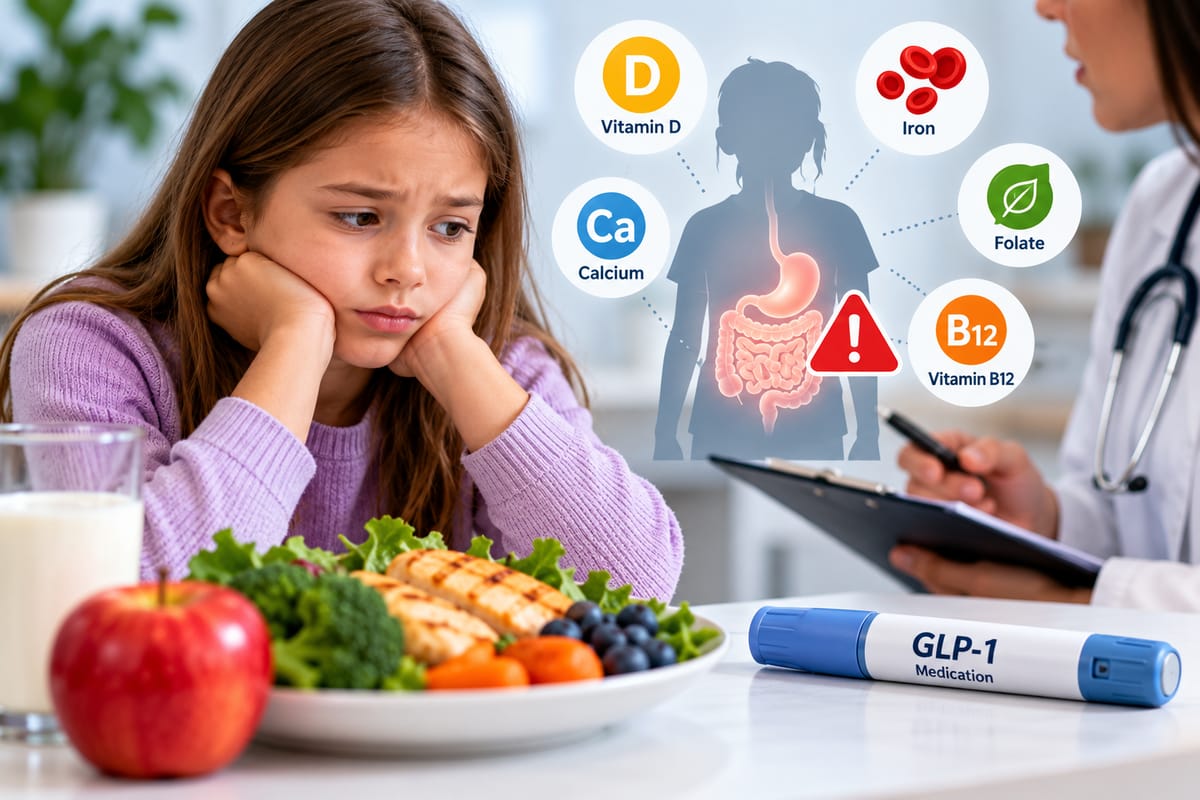
Study Finds Nutritional Deficiencies in Nearly 1 in 6 Children Taking GLP-1 Drugs
The findings do not establish that GLP-1 medications directly caused the deficiencies. The researchers analyzed previously collected insurance claims rather than conducting a randomized clinical trial, and the claims data did not contain laboratory values or detailed clinical notes.
Read article

Join 10,000+ Readers Building Healthier Habits
Get actionable wellness tips every week plus our newest articles delivered straight to your inbox.