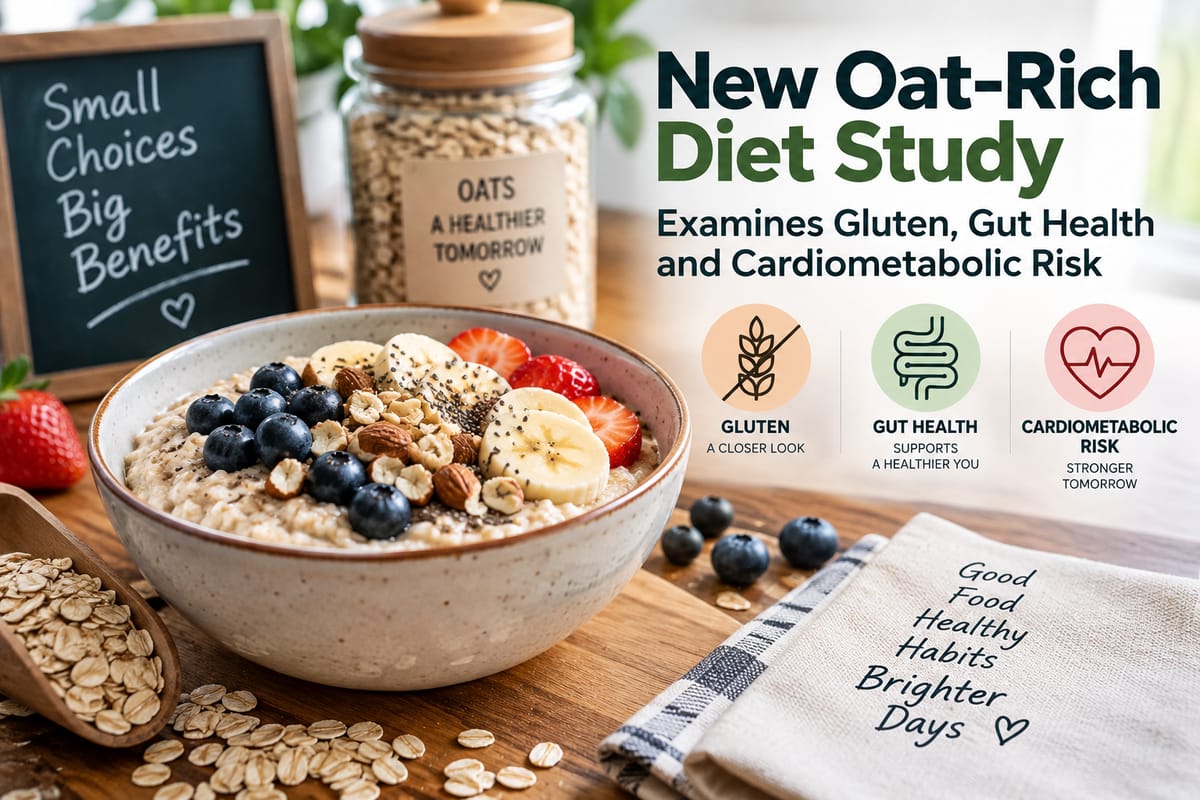

New Oat-Rich Diet Study Examines Gluten, Gut Health and Cardiometabolic Risk
A new randomized clinical trial is adding to the growing research around oats, low-gluten diets, gut health and cardiometabolic risk. The study found that an oat-rich low-gluten diet increased circulating short-chain fatty acids, including butyrate, while producing no significant overall changes in the fecal microbiome or measured inflammatory markers.
The findings come from researchers in Finland who studied 69 adults with increased cardiometabolic risk. Participants followed either an oat-rich or rice-rich low-gluten diet for six weeks, giving researchers an opportunity to examine how changing the main grain source could affect gut-related and metabolic measures.
The research builds on an earlier analysis of the same clinical trial, which found that the oat-rich diet produced a greater reduction in LDL cholesterol than the rice-rich diet and was associated with better bowel regularity and fewer constipation symptoms.
What the New Study Examined
The latest analysis focused on three closely connected areas: the gut microbiome, short-chain fatty acids and inflammatory markers.
Researchers collected stool samples, blood samples and dietary information before and after the six-week intervention. They used advanced genetic sequencing to characterize the microbial communities in participants’ stool and measured short-chain fatty acids in fasting blood samples. They also assessed a broad panel of inflammatory markers.
The participants were adults between 30 and 68 years old who had elevated cardiometabolic risk. Eligibility included being overweight or obese along with high cholesterol, high blood pressure, or both.
The trial therefore does not represent the entire population. Its findings are particularly relevant to people with similar metabolic risk characteristics.
Oats Increased Circulating Short-Chain Fatty Acids
One of the clearest findings involved short-chain fatty acids, often abbreviated as SCFAs.
The oat-rich diet increased concentrations of several circulating SCFAs. Butyrate showed a greater increase with the oat-rich diet than with the rice-rich diet, while acetate and propionate also increased within the oat group.
SCFAs are produced partly when gut microorganisms ferment dietary carbohydrates and fiber. They are often studied because they may participate in communication between the gut and other parts of the body.
Oats contain fermentable fibers, including beta-glucan and arabinoxylans, which can provide substrates for microbial fermentation.
This relationship between dietary choices and the microorganisms living in the digestive tract is also explored in What Is the Gut Microbiome and Why Does It Matter?.
The Gut Microbiome Did Not Change as Expected
The researchers initially expected the oat-rich diet to produce more favorable changes in the fecal microbiome because oats provided more fiber.
The results were more complicated.
The oat-rich diet did not produce significant overall changes in microbiome richness, the ratio of major bacterial groups or overall microbial community diversity. In contrast, the rice group showed more pronounced microbiome changes during the intervention.
This distinction is important because changes in circulating SCFAs occurred without a corresponding broad restructuring of the fecal microbiome.
In other words, the study suggests that the biological effects of eating oats cannot necessarily be understood simply by counting how many bacterial species are present in stool samples.
Why Fiber May Be Part of the Explanation
The researchers point to the fiber content of oats as one possible reason for the observed differences.
A low-gluten diet can become lower in fiber when wheat, barley and rye products are removed without replacing them with other fiber-rich foods. Oats can help fill that nutritional gap.
The earlier analysis of this trial found that participants following the oat-rich diet had higher fiber intake and that the rice group experienced more constipation symptoms.
This highlights a broader principle in nutrition: removing a food or food group does not automatically make a diet healthier. What replaces it matters.
People interested in the fundamentals of building a varied diet can explore the Complete Guide to Healthy Eating and Balanced Nutrition.
Oats and Cardiometabolic Health
The new microbiome analysis is part of a larger research project examining how oats may affect cardiometabolic health.
In the earlier six-week trial, the oat group experienced a greater reduction in LDL cholesterol compared with the rice group. The researchers also observed improvements in bowel regularity and fewer constipation symptoms among participants eating the oat-rich diet.
Oats contain beta-glucan, a soluble fiber that has been extensively studied for its relationship with cholesterol metabolism.
The findings do not mean that eating oats alone prevents cardiovascular disease or other metabolic conditions. Instead, they add to evidence that replacing lower-fiber grain choices with fiber-rich whole grains can influence several markers associated with metabolic health.
The nutritional value of a food is also about more than one nutrient. The broader concept is discussed in What Nutrient Density Means and How to Choose Nutrient-Dense Foods.
The Study Found No Significant Inflammatory Changes
Despite the changes in circulating short-chain fatty acids, the researchers did not find significant differences in the measured inflammatory markers after correcting for multiple comparisons.
That result is particularly important because it prevents the findings from being overstated.
It would be inaccurate to describe the study as proving that an oat-rich diet reduces inflammation. The researchers observed some tendencies in individual markers, but these did not meet the study’s threshold for significant changes after statistical correction.
The findings instead suggest that metabolic effects associated with oats may occur without obvious changes across a broad panel of inflammatory markers during a relatively short intervention.
Low-Gluten Does Not Mean Gluten-Free
The study focused on a low-gluten diet, rather than simply testing whether gluten itself is harmful.
That distinction matters.
The participants reduced their intake of gluten-containing cereals and used either oats or rice as their primary cereal source. The researchers were interested in what happened when the composition of a low-gluten diet changed, not in proving that gluten avoidance is necessary for everyone.
For people with coeliac disease or another medically diagnosed condition requiring gluten avoidance, dietary decisions are different from those of someone who simply chooses to reduce gluten.
The study should therefore not be interpreted as evidence that everyone should eliminate gluten from their diet.
Why the Rice Comparison Matters
Using rice as the comparison food gave researchers a way to examine what happens when two naturally different cereal patterns are used within a low-gluten diet.
Rice is naturally gluten-free, while oats are naturally free of gluten but can be exposed to gluten-containing grains during cultivation, processing or manufacturing. The earlier trial used oat products appropriate to its low-gluten design.
The comparison also demonstrates why the phrase “gluten-free” tells only part of the nutritional story.
Two diets can both reduce gluten while differing considerably in fiber, whole-grain content and other nutrients.
What the Findings Mean for Blood Sugar and Diabetes Risk
The study’s primary focus was not diabetes prevention, and it should not be presented as a clinical trial proving that oats prevent diabetes.
However, the findings fit into a wider nutritional discussion about fiber, whole grains and metabolic health.
Oats provide beta-glucan and other nutrients that can contribute to a higher-fiber eating pattern. Dietary patterns rich in minimally processed, fiber-containing foods are relevant when considering long-term metabolic health.
For a broader look at the factors involved, see the Complete Guide to Diabetes Prevention and Risk.
What Researchers Still Need to Learn
The six-week intervention provides useful evidence, but it also leaves several questions unanswered.
The researchers note that longer studies are needed to determine whether the observed microbiome and metabolic changes persist over time. Future research could also examine people who do not regularly consume oats before entering a trial, since habitual intake may influence how the gut responds to a dietary change.
Larger studies could provide greater statistical power and help researchers determine whether the findings apply to broader populations.
It will also be important to understand how individual differences in diet, gut microbiota, metabolism and lifestyle influence responses to oats.
Oats May Be More Than a Gluten Alternative
The latest research adds another layer to the scientific picture surrounding oats.
The oat-rich low-gluten diet increased circulating short-chain fatty acids, particularly butyrate, without producing major overall changes in the fecal microbiome or inflammatory markers. The earlier results from the same trial also linked the oat-rich diet with higher fiber intake, a greater reduction in LDL cholesterol compared with rice, and better bowel regularity.
Taken together, the findings suggest that the nutritional value of oats may extend beyond their role as a substitute for gluten-containing grains. Their fiber content and broader nutrient profile may make them a useful component of a balanced eating pattern.
At the same time, the research does not establish that oats are a treatment for cardiometabolic disease, that gluten should be avoided by everyone, or that changes in short-chain fatty acids automatically translate into long-term health benefits.
The larger message is more practical: when changing a diet, the nutritional quality of the foods used as replacements can matter just as much as the foods being removed.
Continue Reading
Similar Posts

Bettergoods Pasta Recalled Over Listeria Risk: What Consumers Need to Know
The recall originally covered two specific lots, but consumers should now treat the broader recall as applying to the product regardless of lot number.
Read article
GLP-1 Drugs and Nutritional Deficiencies: What New Research Says About Children
The findings do not prove that GLP-1 drugs directly caused the deficiencies. The study used administrative insurance claims rather than laboratory measurements or detailed clinical records, and the researchers themselves describe nutritional deficiencies as an under-recognized concern rather than establishing a direct causal relationship.
Read article
New Micronutrient Research Could Reshape How Experts Fight Vitamin and Mineral Deficiencies
The findings could influence how governments, nutrition organizations and food producers approach one of the world's most persistent nutrition problems.
Read article

Join 10,000+ Readers Building Healthier Habits
Get actionable wellness tips every week plus our newest articles delivered straight to your inbox.