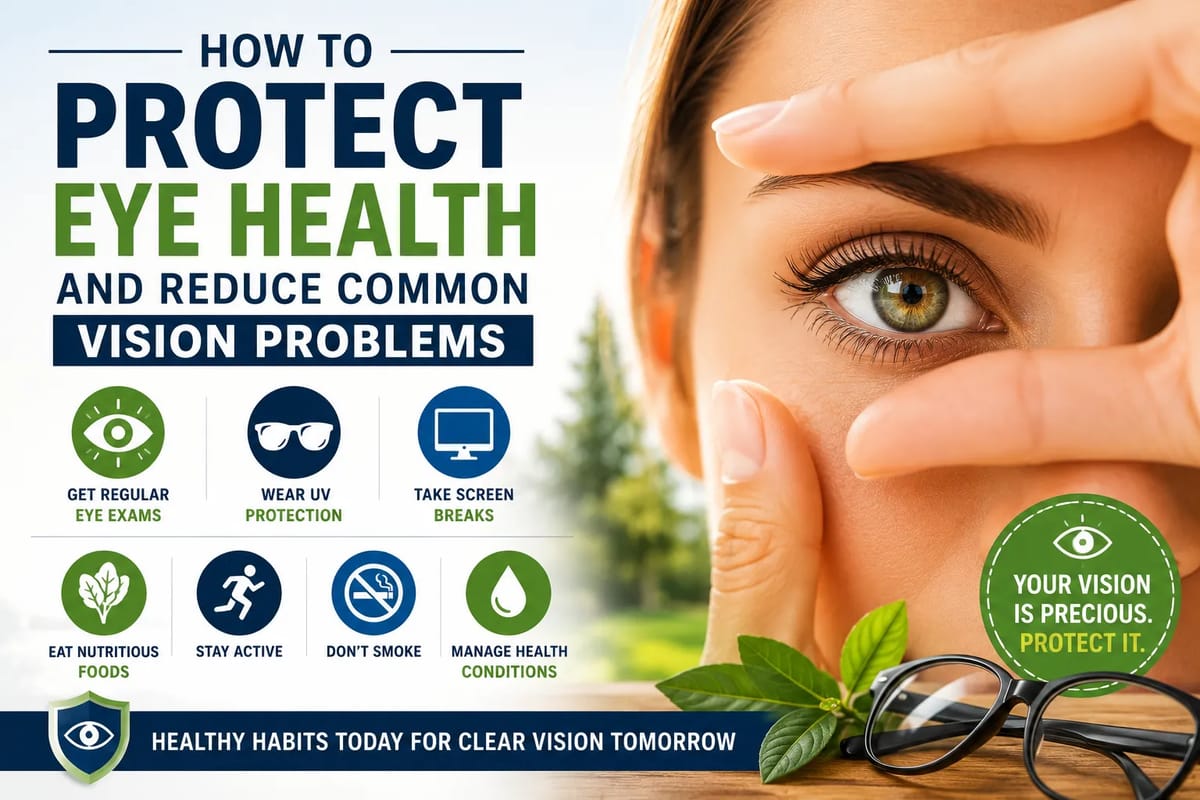
How to Protect Eye Health and Reduce Common Vision Problems
Our eyes work almost constantly, yet eye health is easy to overlook until something starts to change.
Blurred vision, dry eyes, difficulty focusing, headaches and increasing sensitivity to light can all affect everyday life. Some changes are relatively minor and may be linked to fatigue or prolonged screen use, while others can be signs of an underlying eye condition that requires professional attention.
The good news is that protecting vision is not limited to wearing glasses or getting an eye test after a problem appears. Regular eye examinations, healthy lifestyle choices, protection from ultraviolet radiation, careful use of digital screens and management of conditions such as diabetes and high blood pressure can all play a role in maintaining healthy vision.
The National Eye Institute says many eye diseases have no early symptoms, making regular comprehensive eye examinations particularly important for detecting problems before significant vision loss occurs. (National Eye Institute)
Why Eye Health Deserves More Attention
Vision affects almost every part of daily life.
We rely on our eyes to:
- Read and work
- Drive and navigate
- Recognize people
- Watch television and use digital devices
- Exercise and play sports
- Maintain balance and awareness of our surroundings
- Perform everyday household tasks
Some vision changes are a normal part of aging, but vision loss should not automatically be dismissed as something that everyone must accept.
Conditions such as cataracts, glaucoma, age-related macular degeneration and diabetic eye disease can affect vision, sometimes without producing obvious symptoms in their early stages.
That is why prevention and early detection are so important.
Get Regular Comprehensive Eye Examinations
One of the most effective ways to protect vision is to have your eyes examined regularly by an eye-care professional.
A comprehensive dilated eye examination allows the clinician to examine structures inside the eye, including the retina and optic nerve. The National Eye Institute describes regular dilated examinations as one of the best ways to detect eye diseases early, when treatment may be more effective. (National Eye Institute)
How often someone needs an examination depends on factors such as:
- Age
- Family history
- Existing eye conditions
- Diabetes
- High blood pressure
- Other health conditions
- Previous eye injuries
- Medications and other risk factors
There is therefore no single schedule that applies equally to everyone.
Ask an eye-care professional how frequently you should be examined based on your individual risk.
Do Not Wait Until Your Vision Gets Worse
A common mistake is assuming that an eye examination is only necessary when vision becomes blurry.
Some important eye diseases can develop without noticeable symptoms.
Glaucoma, for example, can damage the optic nerve gradually, and people may not recognize changes in their peripheral vision until substantial damage has occurred.
A comprehensive examination can identify problems that a person may not notice while going about normal activities.
Early detection can give people more opportunities to manage or treat a condition before it causes significant vision loss. (National Eye Institute)
Protect Your Eyes From UV Radiation
The same sunlight that can damage skin can also affect the eyes.
Long-term exposure to ultraviolet radiation is associated with eye problems including cataracts.
The National Eye Institute recommends sunglasses that block 99% to 100% of both UVA and UVB radiation. (National Eye Institute)
When buying sunglasses, look for clear UV protection information rather than assuming that darker lenses automatically provide better protection.
A wide-brimmed hat can provide additional protection when spending significant time outdoors.
And sunglasses are not just for bright summer days. UV exposure can occur whenever you are outside, including on cloudy days.
Take Digital Eye Strain Seriously
Screens have become an unavoidable part of modern life.
Computers, smartphones, tablets and televisions can all contribute to visual discomfort when used for extended periods.
Digital eye strain may involve symptoms such as:
- Tired eyes
- Dryness
- Burning or irritation
- Blurred vision
- Headaches
- Difficulty focusing
- Neck and shoulder discomfort
One reason prolonged screen use can be uncomfortable is that people tend to blink less frequently when concentrating on a screen.
Taking regular breaks and consciously blinking can help reduce discomfort. The commonly recommended 20-20-20 approach involves looking at something about 20 feet away for 20 seconds every 20 minutes of screen work. (EyeWiki)
The goal is not to eliminate screen use but to make prolonged screen work more comfortable.
Adjust Your Screen Setup
Small changes to your workspace can also reduce visual discomfort.
Consider:
- Positioning the screen at a comfortable distance
- Reducing distracting glare
- Adjusting screen brightness
- Increasing text size when necessary
- Keeping the display clean
- Maintaining comfortable posture
- Taking regular visual breaks
Lighting matters too.
A screen that is dramatically brighter or darker than its surroundings can be uncomfortable to look at for extended periods.
If headaches, blurred vision or persistent eye discomfort continue despite changing your screen habits, an eye examination can help determine whether another problem is involved.
Remember to Blink
Blinking is easy to overlook.
Each blink helps spread tears across the surface of the eye, supporting the tear film that keeps the eye comfortable.
When concentrating intensely on a computer or phone, people may blink less often.
If your eyes frequently feel dry while using screens, consciously blinking more often and taking breaks may help.
Persistent or severe dryness, however, should not simply be attributed to screen use. An eye-care professional can investigate other causes.
Eat for Overall Health—and Your Eyes Benefit Too
Eye health is closely connected to overall health.
The National Eye Institute recommends a healthy eating pattern that includes foods such as dark leafy greens and fish rich in omega-3 fatty acids. A nutritious diet can also help reduce the risk of health conditions such as diabetes and high blood pressure that can affect vision. (National Eye Institute)
Foods that can contribute to a balanced diet include:
- Spinach and other leafy greens
- Broccoli
- Carrots
- Sweet potatoes
- Beans and legumes
- Nuts and seeds
- Eggs
- Fish such as salmon and tuna
- A variety of colorful fruits and vegetables
There is no single “magic” food that guarantees healthy vision.
A varied diet is more useful than focusing on one supposed eye-health superfood.
Keep Blood Sugar Under Control
Diabetes can have serious effects on the eyes.
High blood glucose can damage the small blood vessels that supply the retina, potentially leading to diabetic retinopathy.
Diabetes can also increase the risk of other eye problems.
Importantly, diabetic eye disease can develop before a person notices major changes in vision.
Managing blood glucose and attending recommended eye examinations can therefore be an important part of protecting vision. The National Eye Institute recommends comprehensive dilated examinations for people with diabetes and emphasizes managing diabetes to help prevent or delay vision loss. (National Eye Institute)
If you have diabetes, follow the screening schedule recommended by your healthcare and eye-care professionals.
Pay Attention to Blood Pressure
High blood pressure affects more than the heart and blood vessels.
It can also contribute to damage involving the eyes.
The National Eye Institute identifies high blood pressure as a health condition that can increase the risk of some eye diseases. (National Eye Institute)
Regular physical activity, a balanced diet, appropriate weight management and following prescribed treatment can help people manage blood pressure.
Protecting your cardiovascular health can therefore also contribute to protecting your vision.
Smoking Can Harm Eye Health
Smoking affects virtually every major system in the body, and the eyes are no exception.
The National Eye Institute notes that smoking increases the risk of certain eye diseases, including cataracts and age-related macular degeneration. (National Eye Institute)
If you smoke, quitting is one of the most meaningful steps you can take for your overall health.
For people who have tried to quit before, repeated attempts are common. Support from healthcare professionals, structured quit programs and evidence-based treatments can make the process easier.
Exercise Is Good for More Than Your Eyes
Regular physical activity can indirectly support eye health by helping reduce the risk of conditions that can affect vision.
The National Eye Institute notes that physical activity can lower the risk of health conditions such as diabetes and high blood pressure, both of which can affect the eyes. (National Eye Institute)
Activities such as:
- Walking
- Cycling
- Swimming
- Dancing
- Hiking
- Strength training
can contribute to a healthy lifestyle.
You do not need an extreme fitness program to benefit. Consistent movement throughout the week can be more sustainable.
Use Protective Eyewear
Eye injuries can occur at home, at work, during sports or while working with tools and chemicals.
Ordinary glasses and sunglasses are not necessarily designed to protect against impact.
For activities involving flying debris, chemicals or significant eye-injury risk, use appropriate protective eyewear.
The National Eye Institute specifically recommends protective eyewear for sports and notes that ordinary prescription glasses, contact lenses and sunglasses should not be assumed to provide adequate protection from injury. (National Eye Institute)
This is particularly important during:
- Home repairs
- Woodworking
- Gardening with power equipment
- Construction
- Laboratory work
- Certain sports
- Activities involving chemicals
A few seconds of protection can potentially prevent a serious injury.
Be Careful With Contact Lenses
Contact lenses can provide excellent vision correction, but they need proper care.
Poor contact-lens hygiene can increase the risk of eye infections and other complications.
Good habits include following the cleaning and replacement instructions provided by your eye-care professional and the lens manufacturer.
Avoid treating contact lenses as something that can be handled casually.
If your eyes become painful, unusually red or sensitive to light while wearing contacts, remove the lenses and seek professional advice rather than continuing to wear them.
Do Not Ignore Persistent Dry Eyes
Occasional dry eyes are common, especially during prolonged screen use, in dry environments or when concentrating for extended periods.
But persistent dryness can have many possible causes.
It may be associated with:
- Age
- Certain medications
- Environmental conditions
- Contact lens use
- Reduced blinking
- Some medical conditions
- Problems involving the tear glands or eyelids
If dry-eye symptoms are frequent, severe or affecting daily activities, an eye-care professional can determine the cause and recommend appropriate treatment.
Know the Warning Signs
Some changes in vision require prompt attention.
Seek professional medical or eye-care evaluation if you experience:
- Sudden vision loss
- A sudden increase in floaters
- Flashes of light
- A dark curtain or shadow across your vision
- Significant eye pain
- Sudden double vision
- A sudden major change in vision
- Persistent redness accompanied by pain or vision changes
Some of these symptoms can indicate urgent eye conditions.
For example, retinal detachment can cause symptoms such as flashes, floaters or a shadow across the field of vision and requires prompt medical attention. (National Eye Institute)
Sudden changes should never be dismissed as ordinary eye strain.
Family History Matters
Your family medical history can provide clues about your risk of certain eye diseases.
Conditions such as glaucoma and age-related macular degeneration can run in families.
The National Eye Institute recommends learning about your family’s eye-health history and sharing relevant information with your eye-care professional. (National Eye Institute)
If several relatives have experienced an eye condition, tell your doctor.
This information may influence how your eyes are monitored.
Healthy Aging Includes Eye Health
Vision can change as people get older.
Some age-related changes are normal, such as needing more light to read or having greater difficulty focusing on nearby objects.
But significant vision loss should not simply be written off as aging.
Age is associated with a greater risk of conditions such as cataracts, glaucoma and age-related macular degeneration.
Regular examinations become particularly important as risk increases with age. The National Eye Institute provides specific guidance emphasizing comprehensive eye examinations and risk-based monitoring for older adults and people at higher risk of glaucoma. (National Eye Institute)
Give Your Eyes a Break From Constant Near Focus
Much of modern life involves looking at things relatively close to the face.
Computers, phones, books and tablets all require sustained near focus.
Rather than spending hours continuously staring at one distance, make a habit of periodically looking across the room or outside.
A short visual break can make prolonged close-up work more comfortable.
It is also a useful opportunity to stand up, move around and reset your posture.
Keep Your Overall Health in Focus
Eye health is not isolated from the rest of the body.
The same habits that support cardiovascular and metabolic health can also support vision.
A healthy lifestyle generally includes:
- Regular physical activity
- A balanced diet
- Healthy blood pressure
- Good blood glucose control when needed
- Avoiding tobacco
- Adequate sleep
- Appropriate sun protection
- Regular preventive healthcare
This broader approach is more useful than relying on a single supplement, food or exercise.
Be Skeptical of “Vision-Boosting” Claims
The internet is filled with products promising sharper vision, stronger eyes or protection against nearly every eye disease.
Some nutritional supplements have legitimate uses for specific eye conditions and populations, but that does not mean every product marketed for eye health is effective.
Be particularly cautious about claims that a supplement can:
- Restore lost vision
- Cure glaucoma
- Eliminate the need for glasses
- Reverse cataracts
- Replace prescribed treatment
If a product makes extraordinary claims without strong clinical evidence, it deserves skepticism.
A qualified eye-care professional can help distinguish legitimate treatment from marketing.
Children Need Eye Protection Too
Eye health habits should begin early.
Children spend considerable time reading, using digital devices, playing sports and participating in outdoor activities.
Parents and caregivers can encourage:
- Regular vision checks
- Outdoor play
- Appropriate protective eyewear during risky activities
- Good screen habits
- Healthy eating
- Avoiding direct exposure to extremely bright light
Vision problems in childhood can affect learning and development, so concerns about a child’s ability to see clearly should be evaluated rather than ignored.
A Simple Daily Eye-Health Checklist
Protecting your vision does not need to involve an elaborate routine.
A simple checklist can help:
Every day:
- Eat a varied, nutritious diet.
- Stay physically active.
- Take breaks from prolonged screen work.
- Avoid smoking.
- Wear appropriate sunglasses outdoors.
- Use protective eyewear for risky activities.
Regularly:
- Get recommended eye examinations.
- Manage blood pressure and blood glucose.
- Review medications and eye symptoms with your healthcare team.
- Update your eye-care professional about changes in your family history.
Immediately when necessary:
- Seek professional care for sudden or severe changes in vision.
These habits are simple, but together they address several important risk factors.
The Most Important Step Is Early Detection
There is no guaranteed way to prevent every eye disease.
Genetics, aging and other factors can influence eye health even among people who maintain excellent lifestyles.
But many risks are modifiable, and early detection can make a meaningful difference.
The strongest approach is therefore not to wait for vision problems to become obvious.
Protect your eyes from unnecessary injury and UV exposure. Stay physically active. Eat well. Manage conditions that can affect vision. Take sensible breaks from screens. Avoid smoking. And, perhaps most importantly, make comprehensive eye examinations part of your regular healthcare rather than something you schedule only after your eyesight changes.
Healthy vision is something worth protecting long before there is a problem to fix. (National Eye Institute)
Continue Reading
Similar Posts

How Vector Control Prevents Infectious Diseases
Vector control includes a wide range of measures designed to reduce contact between people and disease-carrying organisms.
Read article
How Sun Exposure Affects Skin Cancer Risk
Understanding how sun exposure affects the skin can make prevention more practical. Protection is not about avoiding daylight altogether. Instead, it involves reducing unnecessary ultraviolet exposure and recognizing situations when the skin is particularly vulnerable.
Read article
How Type 2 Diabetes Risk Develops
Understanding how type 2 diabetes risk develops can make the condition easier to prevent or manage. Risk factors do not guarantee that someone will develop diabetes, and some people develop the condition without having an obvious single cause. Instead, risk tends to emerge from the interaction of several factors over time.
Read article
Join 10,000+ Readers Building Healthier Habits
Get actionable wellness tips every week plus our newest articles delivered straight to your inbox.