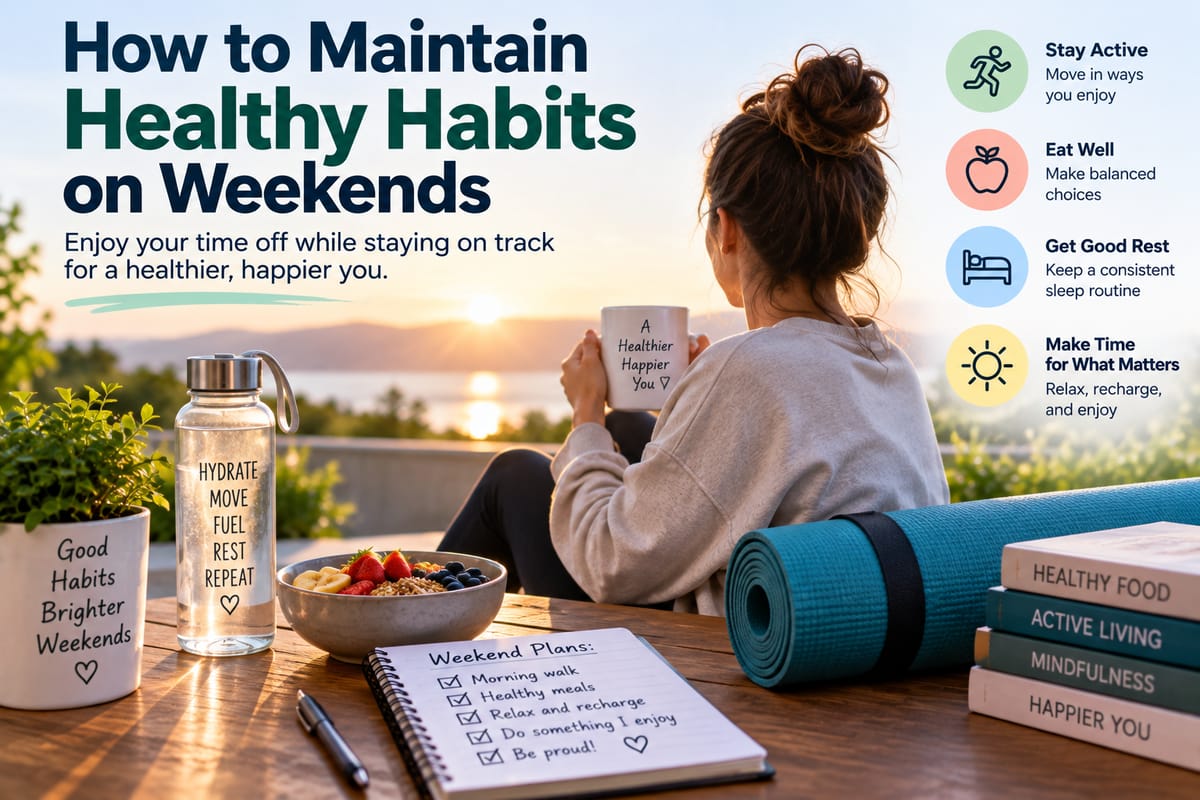

How to Maintain Healthy Habits on Weekends
Weekends are supposed to provide a break from the demands of the working week, but they can also make healthy routines harder to maintain. Later mornings, social events, restaurant meals, travel, family commitments, and unplanned downtime can quickly disrupt habits that feel easy to follow from Monday through Friday.
Maintaining healthy habits on weekends does not mean following a rigid schedule or avoiding everything enjoyable. The goal is to create enough consistency that weekends support your overall well-being rather than repeatedly forcing you to restart your routine every Monday.
Small adjustments can make a significant difference. Keeping some structure around sleep, meals, movement, hydration, relaxation, and other everyday behaviors can help you enjoy your weekends while staying connected to your broader health goals.
Why Weekends Can Disrupt Healthy Habits
Healthy routines often depend on predictable cues. During the week, work or school schedules may naturally determine when you wake up, eat, exercise, and go to bed.
Weekends remove many of those cues.
You might:
- Wake up several hours later than usual
- Skip breakfast and eat later
- Spend more time sitting
- Eat more meals away from home
- Stay up late
- Drink less water
- Spend more time using screens
- Skip planned workouts
- Change your usual sleep schedule
- Have more social commitments
None of these behaviors automatically make a weekend unhealthy. Problems are more likely to occur when occasional changes become a repeated pattern that makes it difficult to return to your normal routine.
The answer is not to eliminate flexibility. Instead, it is to build a routine that can accommodate some variation.
Define What Healthy Living Means for You
Before trying to maintain healthy habits on weekends, it helps to understand what your overall wellness routine is supposed to support.
Healthy living is broader than exercise or food choices. It can include nutrition, physical activity, sleep, stress management, relationships, emotional well-being, and other behaviors that contribute to overall health.
What Is Healthy Living and What Does It Include? provides a broader look at the different areas that can contribute to a healthy lifestyle.
This broader perspective can prevent an all-or-nothing approach.
For example, having a restaurant meal with friends does not mean that the entire weekend has become unhealthy. Similarly, missing one workout does not erase the value of your other physical activity.
A sustainable routine makes room for normal life.
Keep Your Weekend Schedule Flexible but Structured
One of the simplest ways to protect healthy habits is to maintain a few consistent anchors.
These might include:
- A reasonably consistent wake-up time
- Regular meal periods
- A daily movement goal
- A planned bedtime
- A short period of outdoor activity
- Dedicated relaxation time
- A basic hydration routine
You do not have to follow these times perfectly.
The purpose is to prevent the weekend from becoming completely disconnected from the habits that support you during the week.
A flexible structure might allow you to sleep somewhat later on Saturday while still avoiding a dramatic shift in your sleep schedule.
Protect Your Sleep Routine
Sleep is often one of the first habits to change during the weekend.
Late nights, sleeping in, social events, and extended screen time can shift your usual sleep schedule.
Rather than trying to maintain an identical schedule every day, aim for reasonable consistency.
You can support your sleep routine by:
- Keeping your bedtime within a manageable range
- Avoiding excessive caffeine late in the day
- Creating a relaxing pre-bed routine
- Limiting unnecessary screen use before sleeping
- Keeping your bedroom comfortable and quiet
- Avoiding extremely late wake-up times when possible
A weekend should provide opportunities for rest, but consistently shifting your sleep schedule can make Monday mornings considerably more difficult.
Plan Some Movement Into Your Weekend
Exercise does not have to mean completing the exact same workout you perform during the week.
Weekends can be a useful opportunity to make physical activity more enjoyable and social.
Consider:
- Going for a walk
- Cycling
- Swimming
- Hiking
- Playing a recreational sport
- Gardening
- Dancing
- Doing a short home workout
- Stretching
- Exploring a new neighborhood on foot
The activity does not have to be intense to become part of an active weekend.
If you normally spend much of the week sitting at a desk, even simple opportunities to walk more can help break up long periods of inactivity.
Avoid the All-or-Nothing Mindset With Food
Weekend eating can become difficult when healthy habits are viewed as a strict set of rules.
People may follow a highly restrictive routine during the week and then feel that the weekend is an opportunity to abandon it completely.
A more sustainable approach is to think about overall eating patterns rather than individual meals.
You can enjoy foods that are less common in your normal routine while still including:
- Vegetables and fruits
- Whole grains
- Protein-rich foods
- Healthy sources of fat
- Adequate fluids
- Balanced meals
You also do not need to compensate for an indulgent meal by severely restricting food afterward.
The objective is to return naturally to your normal eating pattern at the next meal.
Prepare for Social Events
Social activities can make weekend habits unpredictable.
A dinner, birthday celebration, family gathering, or day out may involve unfamiliar foods and a different schedule.
Instead of trying to control every detail, identify the habits you can realistically maintain.
For example, before leaving home you might:
- Drink some water
- Eat a balanced meal if the event is several hours away
- Take a walk
- Pack a snack when appropriate
- Decide how you want to approach alcohol or sugary drinks
- Avoid arriving extremely hungry
During the event, focus on enjoying the social experience rather than constantly evaluating whether every choice is perfectly healthy.
Keep Hydration on Your Radar
Busy weekends can make it surprisingly easy to forget about drinking fluids.
Travel, outdoor activities, social events, and long periods away from home can disrupt normal hydration habits.
Simple strategies include:
- Carrying a reusable water bottle
- Drinking water with meals
- Keeping water available during outdoor activities
- Drinking regularly rather than waiting until you are extremely thirsty
- Paying attention to increased fluid needs during hot weather or physical activity
Individual hydration needs vary, particularly depending on activity, environment, age, and health circumstances.
Make Healthy Choices Convenient
Convenience strongly influences behavior.
If maintaining a healthy habit requires significant effort every weekend, it becomes easier to skip.
Instead, prepare your environment so that healthier choices are relatively easy.
For example:
- Keep fruit or other convenient foods available
- Prepare simple meals before a busy weekend
- Put walking shoes somewhere accessible
- Keep a water bottle nearby
- Decide on an activity before the weekend begins
- Keep workout equipment easy to access
- Plan a few meals instead of improvising every meal
The objective is to reduce the amount of decision-making required.
Use Habits You Already Have as Anchors
Existing routines can provide useful reminders for new behaviors.
For example:
- After morning coffee → drink a glass of water
- After breakfast → take a short walk
- Before watching a movie → prepare a healthy snack
- After lunch → spend a few minutes outdoors
- Before showering → complete a short stretching routine
- Before bed → begin a consistent wind-down routine
These connections can make healthy behaviors easier to remember.
For people interested in building stronger routines overall, How to Build Healthy Daily Habits That Last Long-Term explores ways to make healthy behaviors more consistent over time.
Don’t Try to Fix Everything at Once
A common mistake is attempting to redesign the entire weekend.
Someone might decide to wake up early, exercise, meal-prep, meditate, avoid processed foods, spend less time on screens, drink more water, and go to bed early—all starting on the same Saturday.
That can create unnecessary pressure.
Instead, choose one or two habits that matter most.
For example:
“This weekend, I will take a 30-minute walk on Saturday and Sunday.”
Once that becomes routine, another habit can be added.
Small changes are easier to evaluate and maintain.
Create a Weekend Version of Your Routine
Your weekend routine does not have to look exactly like your weekday routine.
In fact, creating a separate but compatible version may make consistency easier.
For example:
| Weekday | Weekend Alternative |
|---|---|
| Gym workout | Hike or recreational activity |
| Packed lunch | Balanced meal at home or restaurant |
| Fixed work schedule | Flexible meal and activity windows |
| Early bedtime | Slightly later but consistent bedtime |
| Commute walking | Morning or evening walk |
| Structured breaks | Outdoor or social activity |
The key is maintaining the underlying behavior rather than insisting on the exact same method.
Give Yourself Room to Enjoy the Weekend
Healthy living should leave room for enjoyment.
A weekend can include restaurant meals, desserts, social events, travel, hobbies, entertainment, and periods of doing very little.
The presence of these activities does not automatically conflict with a healthy lifestyle.
What matters more is the overall pattern.
An occasional less-balanced meal is different from consistently abandoning habits every weekend. Similarly, spending one quiet afternoon on the couch is different from becoming inactive for the entire weekend.
Flexibility can actually make healthy habits easier to sustain because the routine does not feel like a punishment.
Avoid Turning One Unhealthy Choice Into a Lost Weekend
One of the most common psychological traps is the idea that a single deviation means the rest of the weekend no longer matters.
For example, someone might eat more than planned at dinner and then decide that healthy eating is “ruined” until Monday.
This can turn one choice into several days of unwanted behavior.
Instead, treat each decision independently.
If one meal does not go according to plan, the next meal is an opportunity to return to your usual routine.
If you miss Saturday’s workout, you can still walk on Sunday.
If you stay up too late one night, you can return to your normal bedtime the following evening.
This approach prevents temporary setbacks from becoming extended disruptions.
Build Sustainable Habits Instead of Weekend Rules
The strongest healthy routines are usually designed to survive real-world circumstances.
That means considering what happens when:
- You travel
- Friends invite you out
- The weather changes
- You are tired
- Your schedule becomes busy
- You eat at a restaurant
- You miss a planned workout
- You have less time than expected
How to Build Healthy Habits That Become Sustainable Long-Term Behaviors offers a broader perspective on turning individual actions into behaviors that can remain practical over the long term.
A habit that only works under perfect conditions may need to be redesigned.
Have a Plan for Monday
One of the easiest ways to maintain weekend consistency is to make the transition into the new week smoother.
Before Sunday ends, consider preparing for Monday by:
- Planning your first few meals
- Preparing work clothes
- Organizing exercise equipment
- Checking your schedule
- Going to bed at a reasonable time
- Preparing food if necessary
- Identifying your most important wellness priority for the week
This can reduce the sense that Monday requires a complete reset.
What to Do When a Weekend Goes Off Track
No routine survives perfectly every week.
Travel, celebrations, fatigue, unexpected commitments, and other circumstances can disrupt even well-established habits.
The important thing is how you respond afterward.
Instead of trying to compensate with extreme restrictions or excessive exercise, return to your normal routine gradually.
How to Recover After Breaking Healthy Habits provides additional guidance on recovering from disruptions without turning a temporary setback into a long-term abandonment of healthy behaviors.
A useful approach is:
- Identify what disrupted the routine.
- Avoid unnecessary self-criticism.
- Resume one familiar habit.
- Re-establish your normal schedule.
- Make a small adjustment if the same problem keeps occurring.
The goal is recovery, not perfection.
Make Weekends Part of Your Healthy Lifestyle
Maintaining healthy habits on weekends does not require turning Saturday and Sunday into extensions of the workweek.
A better approach is to create a flexible structure that protects the habits that matter most while leaving plenty of room for rest, enjoyment, relationships, and spontaneity.
Keep a few consistent anchors around sleep, food, hydration, and movement. Plan ahead for social events. Make healthy choices convenient, and avoid allowing one disrupted habit to derail the entire weekend.
Most importantly, think beyond individual days. A healthy lifestyle is built from patterns that can continue through ordinary weeks, busy weekends, holidays, travel, and unexpected changes.
When healthy habits are designed to fit real life, weekends can become a source of recovery and enjoyment without requiring you to abandon the routines that support your well-being.
Continue Reading
Similar Posts

How Meal Planning Supports Healthy Eating
Meal planning does not require complicated recipes, strict diets, or preparing every meal days in advance. It can be as simple as deciding on several meals, creating a shopping list, and making sure the kitchen has the ingredients needed to prepare balanced options.
Read article
How Dehydration Affects the Body
Understanding how dehydration affects the body can make it easier to recognize early signs, understand when fluid needs increase, and take practical steps to maintain adequate hydration.
Read article
How Heat and Climate Affect Hydration
Understanding these relationships can make it easier to adapt fluid intake to changing conditions rather than relying on the same hydration habits throughout the year.
Read article

Join 10,000+ Readers Building Healthier Habits
Get actionable wellness tips every week plus our newest articles delivered straight to your inbox.