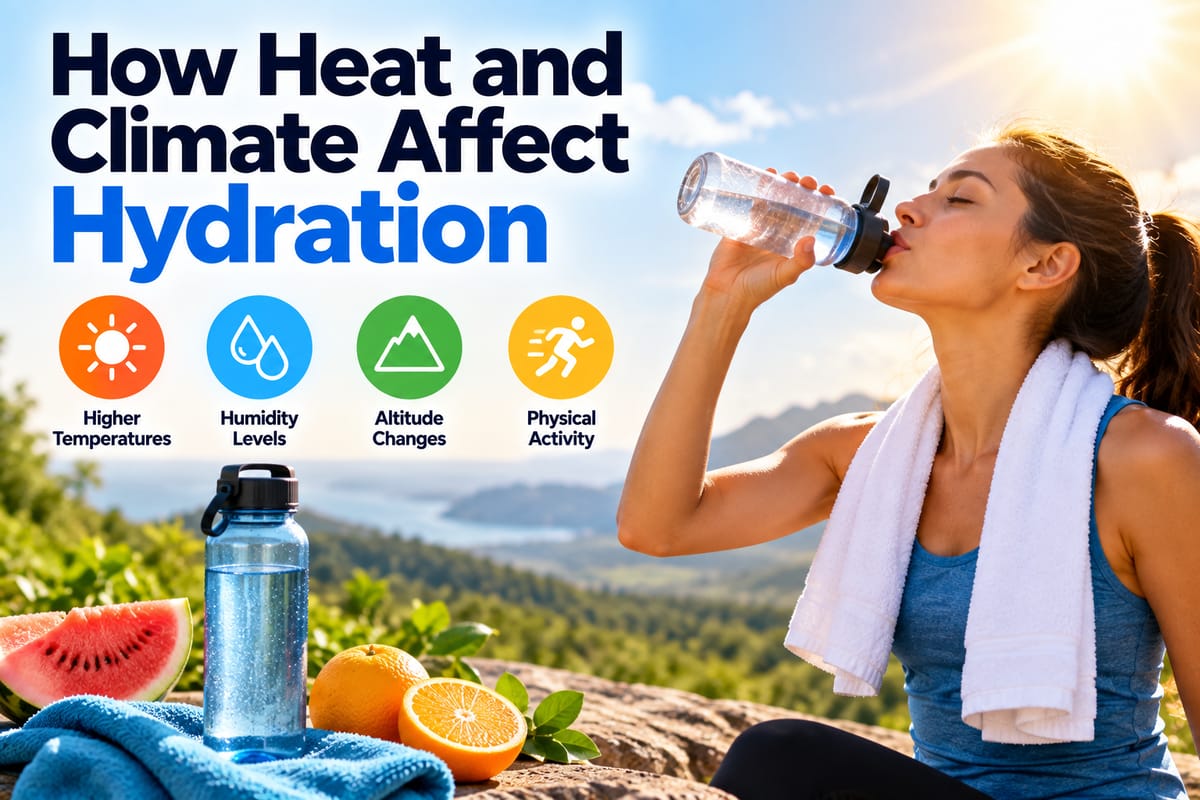

How Heat and Climate Affect Hydration
Hydration is not determined by how much water a person drinks alone. The body is constantly gaining and losing fluid, and the balance can change significantly depending on temperature, humidity, altitude, physical activity, clothing, and the surrounding environment.
Hot weather is particularly important because the body relies on sweating and increased blood flow to the skin to release heat. As temperatures rise, fluid losses can increase, especially when someone is physically active or spending extended periods outdoors.
Climate can also influence hydration habits over longer periods. People who regularly live or work in hot, dry, humid, or high-altitude environments may have different fluid needs and may need to pay closer attention to signs of dehydration.
Understanding these relationships can make it easier to adapt fluid intake to changing conditions rather than relying on the same hydration habits throughout the year.
Why Hydration Matters
Water is essential for many processes throughout the body.
It helps support:
- Temperature regulation
- Blood circulation
- Digestion
- Nutrient transport
- Waste removal
- Joint lubrication
- Normal cellular function
- Physical performance
The body has sophisticated mechanisms for regulating its fluid levels. Thirst, kidney function, hormones, and changes in urine production all contribute to maintaining the appropriate balance.
The underlying process is explained in greater detail in How the Body Maintains Fluid Balance.
How the Body Loses Water
Fluid leaves the body through several pathways.
These include:
- Urination
- Sweating
- Breathing
- Bowel movements
Under ordinary conditions, these losses can be replaced through food and beverages.
However, environmental conditions can increase some forms of fluid loss.
Heat is particularly important because the body may produce more sweat as it attempts to prevent its internal temperature from rising too far.
Why the Body Sweats in Hot Weather
Sweating is one of the body’s primary cooling mechanisms.
When sweat reaches the surface of the skin, it can evaporate. Evaporation removes heat from the body and helps regulate temperature.
The amount a person sweats can vary considerably.
Factors include:
- Air temperature
- Humidity
- Physical activity
- Clothing
- Body size
- Acclimatization
- Individual physiology
- Duration of heat exposure
As sweating increases, fluid losses can increase as well.
Heat Can Increase Fluid Requirements
A person who spends several hours in a hot environment may lose substantially more fluid than someone spending the same amount of time in a cool environment.
This does not mean there is one universal amount of water everyone should drink in hot weather.
Fluid needs vary according to the individual and circumstances.
Someone sitting indoors in moderate heat may have very different needs from someone performing physical labor outdoors in direct sunlight.
The Complete Guide to Hydration and Healthy Fluid Intake provides broader guidance on maintaining adequate fluid intake.
Humidity Changes How Sweating Works
Temperature is not the only environmental factor that affects hydration.
Humidity also matters.
When the air contains a high amount of moisture, sweat may evaporate more slowly from the skin.
This can make the body’s cooling process less efficient.
A person may therefore feel very hot and continue sweating heavily without receiving as much cooling benefit from evaporation.
High humidity can make prolonged physical activity particularly challenging because both heat stress and fluid losses can become important considerations.
Dry Heat Creates Different Challenges
Hot, dry environments can also increase fluid losses.
Low humidity allows sweat to evaporate relatively quickly. This can provide effective cooling, but it can also make sweat loss less noticeable.
Someone may not realize how much fluid they are losing because sweat disappears from the skin quickly.
Dry air can also increase water loss through breathing.
The result is that people in hot, dry conditions need to pay attention to hydration even when they do not feel obviously sweaty.
Wind Can Increase Evaporative Loss
Wind can influence how quickly moisture evaporates from the skin.
A breeze may make hot conditions feel more comfortable because it increases evaporation.
However, greater evaporation can also contribute to fluid loss.
This is one reason perceived comfort is not always a reliable indication of how much fluid the body is losing.
Sun Exposure Can Increase Heat Stress
Direct sunlight can add to the body’s heat load.
A person exercising or working outdoors may be exposed to:
- High air temperatures
- Direct solar radiation
- Hot surfaces
- Limited shade
- Increased physical exertion
Together, these conditions can make temperature regulation more difficult.
Seeking shade, taking appropriate breaks, wearing suitable clothing, and maintaining adequate fluid intake can help manage heat exposure.
Physical Activity Changes Hydration Needs
Exercise increases heat production.
The harder the body works, the more heat it generally needs to dissipate.
Sweating is one of the mechanisms used to accomplish this.
This means someone exercising outdoors on a hot day may lose substantially more fluid than they would during a sedentary day in a cool environment.
The duration and intensity of exercise matter as well.
A short walk and a long-distance run do not create the same hydration demands.
Running in Hot Weather Requires Extra Planning
Running can create substantial heat and fluid losses, particularly when temperatures and humidity are high.
Runners may need to consider:
- Weather conditions
- Run duration
- Intensity
- Access to fluids
- Clothing
- Shade
- Time of day
- Individual sweat rate
The specific challenges of exercising in very hot conditions are explored in Running in Extreme Heat.
Acclimatization Can Change the Body’s Response to Heat
The body can gradually adapt to repeated exposure to hot conditions.
This process is often called heat acclimatization.
With appropriate gradual exposure, physiological changes can improve the body’s ability to cope with heat.
However, acclimatization does not make someone immune to heat-related problems.
A newly hot environment can still present significant challenges, particularly for people who are not accustomed to the conditions.
Climate Can Influence Everyday Hydration
Hydration is not only an issue during exercise.
People may lose additional fluid while:
- Working outdoors
- Traveling
- Gardening
- Walking
- Commuting
- Doing household chores
- Spending time in poorly ventilated spaces
Someone who normally spends most of the day in an air-conditioned environment may notice a substantial difference when working outdoors in hot weather.
Hydration habits should therefore reflect actual environmental exposure.
Cold Weather Can Affect Hydration Too
Hydration is often associated with hot weather, but cold conditions can also affect fluid balance.
People may drink less because they feel less thirsty.
Cold, dry air can also increase water loss through breathing.
Physical activity in cold weather can further increase fluid needs, particularly when people wear layers that cause sweating.
Hydration remains important even when the temperature is low.
Altitude Can Change Fluid Loss
Higher elevations can introduce additional environmental challenges.
At altitude, people may breathe more rapidly, which can increase water loss through respiration.
Cold, dry air can add to this effect.
Physical activity at elevation can further increase fluid requirements.
Travelers moving from low elevations to higher altitudes may therefore need to pay attention to hydration while their bodies adjust.
Air Conditioning Can Affect Hydration Habits
Air conditioning changes the indoor environment.
Conditioned air may be relatively dry, and people may spend long periods in climate-controlled buildings without noticing gradual fluid loss.
At the same time, cooler temperatures can reduce the sensation of thirst.
This does not mean air conditioning automatically causes dehydration. It simply illustrates why thirst should not be the only consideration when thinking about fluid intake.
Climate and Sweat Rates Are Individual
Two people can experience the same weather conditions and lose different amounts of fluid.
Differences can result from:
- Body size
- Fitness level
- Exercise intensity
- Acclimatization
- Clothing
- Genetics
- Individual sweat patterns
- Duration of exposure
There is therefore no single hydration strategy that works identically for everyone.
Sweat Contains More Than Water
Sweat is primarily water, but it also contains electrolytes and other substances.
Sodium is one of the major electrolytes lost through sweat.
The concentration of electrolytes in sweat varies considerably between individuals.
For short periods of ordinary activity, replacing fluids through normal food and beverage intake is often sufficient.
Long-duration or intense exercise in hot conditions can create different requirements, particularly when substantial sweating occurs.
When Electrolytes May Matter More
Electrolytes become particularly relevant when fluid losses are substantial.
Situations can include:
- Prolonged endurance exercise
- Heavy physical work in heat
- Extended outdoor activity
- Significant sweating over several hours
Sports drinks and electrolyte products can provide fluids and electrolytes, but they are not automatically necessary for every person who exercises or spends time outdoors.
The appropriate approach depends on the duration and intensity of activity, environmental conditions, individual needs, and overall diet.
Food Also Contributes to Hydration
Beverages are not the only source of water.
Many foods contain substantial amounts of fluid.
Examples include:
- Watermelon
- Oranges
- Grapefruit
- Cucumbers
- Tomatoes
- Lettuce
- Soups
- Yogurt
- Other fruits and vegetables
A varied diet can therefore contribute to overall fluid intake.
Thirst Is an Important Signal
Thirst is one of the body’s natural mechanisms for regulating fluid intake.
When the body begins to lose more water, changes in fluid concentration can stimulate thirst.
However, thirst may not always provide a perfect real-time measure of fluid needs, particularly during prolonged exercise or extreme environmental conditions.
Other factors, including activity level and weather, should also be considered.
Urine Can Provide Another Clue
Urine color and frequency can sometimes provide general information about hydration status.
Dark, concentrated urine can occur when the body is conserving water.
Very clear urine, particularly when it occurs frequently, may indicate high fluid intake.
However, urine color can also be affected by foods, supplements, medications, and other factors.
It should therefore be viewed as one clue rather than a precise hydration measurement.
Don’t Wait Until You Feel Extremely Thirsty During Long Activity
During prolonged physical activity in hot conditions, fluid planning can be useful.
Instead of waiting until discomfort becomes severe, people can plan ahead by considering:
- Expected temperature
- Humidity
- Activity duration
- Access to drinking water
- Previous experience with sweating
- Planned intensity
- Opportunities for rest
This is especially useful for long runs, hikes, outdoor work, and sporting events.
Avoid Assuming More Water Is Always Better
Hydration is about maintaining an appropriate fluid balance, not simply maximizing water consumption.
Drinking excessive amounts of water over a short period can also create health risks by diluting sodium levels in the blood.
This is one reason hydration strategies should be individualized rather than based on the assumption that more water is always healthier.
Climate Can Affect Different People Differently
Environmental conditions can be more challenging for certain groups.
Extra caution may be appropriate for:
- Older adults
- Young children
- People working outdoors
- Endurance athletes
- People with certain medical conditions
- People taking medications that affect fluid balance
- People who are not acclimatized to heat
Individual circumstances matter, and people with health conditions should follow advice from their healthcare professionals regarding fluid intake.
Recognizing Possible Dehydration
Fluid losses can become significant when intake does not keep pace with losses.
Possible signs of dehydration can include:
- Thirst
- Dry mouth
- Reduced urination
- Darker urine
- Fatigue
- Headache
- Dizziness
- Reduced physical performance
More severe symptoms require prompt attention.
Heat-related illness can become a medical emergency, particularly when confusion, fainting, severe weakness, or other serious symptoms develop.
Heat Illness Is More Than a Hydration Problem
It is important not to treat every heat-related problem simply by drinking water.
Heat illness can involve the body’s inability to adequately regulate temperature.
A person experiencing serious symptoms after heat exposure should be moved to a cooler environment and receive appropriate medical attention.
Cooling strategies and emergency care can be just as important as fluid replacement.
Timing Matters During Hot Weather
Hydration planning can begin before exposure to extreme conditions.
For example, someone planning an outdoor activity can:
- Check the expected weather
- Carry appropriate fluids
- Identify shaded or cool locations
- Schedule breaks
- Choose suitable clothing
- Avoid unnecessary exposure during the hottest part of the day
Preparation can reduce the likelihood of becoming overwhelmed by heat and fluid losses.
Choose Clothing That Supports Cooling
Clothing affects how effectively heat can leave the body.
In hot conditions, breathable and lightweight clothing can help support heat dissipation.
Protective clothing may also be necessary for sun exposure.
The right balance depends on the environment and activity.
Clothing should support both cooling and protection from environmental hazards.
The Environment Is Part of the Hydration Equation
Hydration cannot be separated completely from the surrounding environment.
Temperature, humidity, sunlight, wind, altitude, air quality, clothing, and access to water can all influence how comfortable and physically demanding an activity becomes.
The broader relationship between environmental conditions and everyday well-being is discussed in How Your Environment Affects Everyday Health.
Adapting Hydration to Different Situations
A practical approach is to adjust hydration habits according to the conditions.
Cool Indoor Day
Normal food and beverage intake may provide sufficient fluids for many people.
Hot Outdoor Day
Greater attention may be needed because sweating can increase.
Hot and Humid Conditions
Cooling through evaporation can become less effective, making heat management especially important.
Hot and Dry Conditions
Sweat may evaporate quickly, making fluid losses less obvious.
Long Exercise Session
Fluid and electrolyte losses may become more significant as duration increases.
High-Altitude Activity
Increased breathing and environmental dryness can contribute to additional fluid loss.
Keep Water Accessible
One of the simplest practical strategies is to make drinking water convenient.
Keeping a reusable bottle nearby can make it easier to drink throughout the day.
This can be particularly useful when:
- Working outdoors
- Traveling
- Exercising
- Commuting
- Spending time in hot environments
Convenience can influence behavior, so having fluids readily available may make regular hydration easier.
Don’t Rely Only on Weather Temperature
A weather forecast’s temperature does not tell the entire hydration story.
Also consider:
- Humidity
- Heat index
- Sun exposure
- Wind
- Duration outdoors
- Activity level
- Clothing
- Access to shade
A moderately hot day with high humidity can feel substantially different from a hotter but much drier day.
Hydration During Travel
Travel can disrupt normal hydration routines.
Long flights, road trips, unfamiliar climates, increased walking, and changes in altitude can all affect fluid needs and habits.
When traveling to a hotter climate, people may also need time to adjust to conditions that are substantially different from those at home.
Keeping water accessible and paying attention to environmental conditions can help maintain normal hydration habits.
Outdoor Workers Face Additional Challenges
People who work outdoors may spend many hours exposed to heat.
Construction workers, agricultural workers, landscapers, delivery workers, and other outdoor professionals may experience repeated heat exposure combined with physical exertion.
Employers and workers can reduce risk through measures such as:
- Access to drinking water
- Rest breaks
- Shade or cooling areas
- Appropriate clothing
- Heat-acclimatization practices
- Awareness of heat illness symptoms
Hydration is one part of a broader heat-safety strategy.
Hydration Is Part of a Larger Healthy-Living Pattern
Fluid intake works alongside nutrition, physical activity, sleep, and environmental conditions.
A person who eats a varied diet, remains appropriately active, sleeps adequately, and adapts routines to environmental conditions has a broader foundation for supporting everyday health.
Hydration should therefore be viewed as one component of healthy living rather than an isolated target.
A Practical Hot-Weather Hydration Checklist
Before spending significant time in hot conditions, consider:
- Water: Do I have access to enough fluids?
- Weather: How hot and humid will it be?
- Activity: How physically demanding will the activity be?
- Duration: How long will I be exposed?
- Shade: Where can I cool down?
- Clothing: Is it suitable for the conditions?
- Breaks: When can I rest?
- Electrolytes: Could prolonged sweating make electrolyte replacement relevant?
- Warning signs: Do I know the symptoms of heat illness?
This simple checklist can help turn hydration from an afterthought into part of environmental planning.
Adapting to Climate Instead of Following One Fixed Rule
Hydration needs change because the body’s fluid losses change.
A person may need relatively little additional attention to hydration during a cool, quiet day but require much more planning during a long outdoor workout in hot, humid weather.
The most useful approach is therefore flexible.
Pay attention to the environment, activity level, duration, individual response, and access to fluids. Combine those factors with the body’s normal signals and sensible heat-management practices.
Building Hydration Habits That Match the Environment
Heat and climate influence hydration primarily by changing how much fluid the body loses and how effectively it can regulate temperature.
Hot temperatures can increase sweating, humidity can reduce evaporation, dry conditions can increase unnoticed fluid loss, altitude can affect breathing-related water loss, and physical activity can multiply the effects of environmental heat.
Maintaining healthy hydration therefore involves more than carrying a water bottle. It means adapting fluid intake and daily routines to the conditions in which the body is operating.
By planning ahead, recognizing environmental risks, replacing appropriate fluid losses, taking cooling breaks, and paying attention to signs of heat stress, people can make hydration a practical part of everyday healthy living rather than something considered only when they become thirsty.
Continue Reading
Similar Posts

How Meal Planning Supports Healthy Eating
Meal planning does not require complicated recipes, strict diets, or preparing every meal days in advance. It can be as simple as deciding on several meals, creating a shopping list, and making sure the kitchen has the ingredients needed to prepare balanced options.
Read article
How Dehydration Affects the Body
Understanding how dehydration affects the body can make it easier to recognize early signs, understand when fluid needs increase, and take practical steps to maintain adequate hydration.
Read article
Difference Between Whole and Processed Foods
Understanding that difference can make everyday food choices much easier.
Read article

Join 10,000+ Readers Building Healthier Habits
Get actionable wellness tips every week plus our newest articles delivered straight to your inbox.