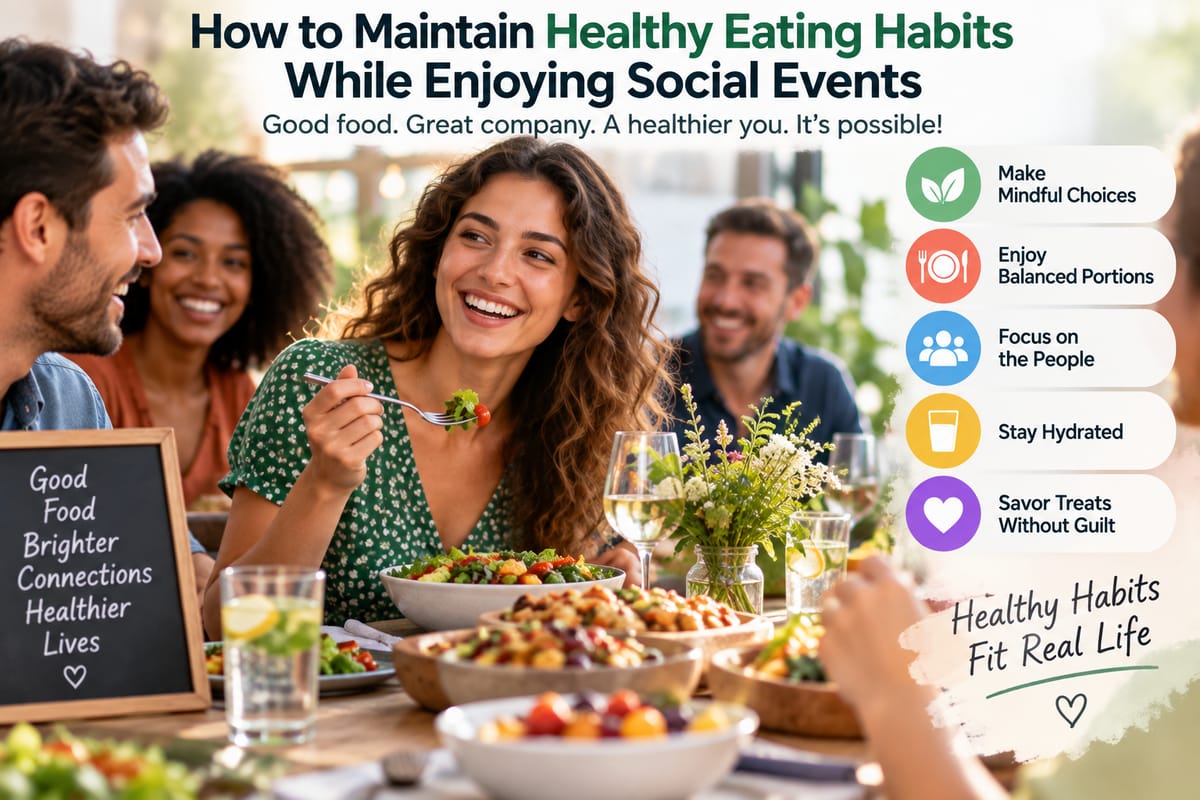

How to Maintain Healthy Eating Habits While Enjoying Social Events
Social events are an important part of everyday life. Family gatherings, birthdays, weddings, dinners with friends, workplace celebrations, holidays, and community events often revolve around food.
For people trying to maintain healthy eating habits, these occasions can sometimes feel challenging. Large portions, desserts, snacks, restaurant meals, and unfamiliar menus can make it difficult to follow the routines that work well at home.
The good news is that healthy eating does not require avoiding social occasions or refusing every enjoyable food. A sustainable approach allows room for flexibility while keeping nutritious choices at the center of everyday eating.
The goal is not to eat perfectly at every event. Instead, it is to develop habits that allow you to enjoy social experiences without feeling that one meal has undone your broader efforts.
Healthy Eating Does Not Have to Mean Perfect Eating
Healthy eating is about overall patterns rather than a single meal.
A balanced diet can include vegetables, fruits, whole grains, protein-rich foods, healthy fats, and other foods that provide important nutrients. It can also include foods that are primarily enjoyed for pleasure.
The Complete Guide to Healthy Eating and Balanced Nutrition provides broader information about building balanced eating habits.
When viewed this way, a social event does not need to become an all-or-nothing decision.
You can enjoy a dessert at a celebration and still maintain healthy eating habits throughout the rest of the week.
Avoid Arriving Extremely Hungry
One of the simplest ways to make social eating easier is to avoid arriving at an event extremely hungry.
If you skip several meals in anticipation of a large dinner, you may become so hungry that it is difficult to make deliberate choices.
Instead, maintain your normal eating routine when practical.
A balanced meal or snack earlier in the day might include:
- Fruit and yogurt
- Vegetables and hummus
- Whole-grain toast with eggs
- A small sandwich
- Nuts and fruit
- Oatmeal with fruit
- A balanced lunch containing protein and vegetables
The goal is not to eat as little as possible before the event. It is to arrive feeling comfortable enough to make choices based on appetite rather than extreme hunger.
Look at the Whole Meal
When you arrive at a buffet or large meal, take a moment to look at the available choices before filling your plate.
This can make it easier to create a meal that includes different types of food.
A plate might include:
- Vegetables or salad
- A protein source
- A whole-grain or other carbohydrate-rich food
- A smaller portion of a richer or celebratory dish
This approach allows you to enjoy the foods that make the event special while still including foods that provide important nutrients.
Prioritize Nutrient-Dense Foods
Nutrient density is useful to consider when navigating social meals.
Nutrient-dense foods provide significant amounts of useful nutrients relative to their energy content.
Vegetables, fruits, legumes, whole grains, nuts, seeds, and many protein-rich foods can contribute important vitamins, minerals, fiber, protein, or other nutrients.
What Nutrient Density Means and How to Choose Nutrient-Dense Foods explains the concept in greater detail.
At a social event, this might mean choosing a vegetable side dish, adding fruit to your plate, or selecting a protein-rich option before deciding which indulgent foods you would like to enjoy.
Give Yourself Permission to Enjoy Special Foods
Trying to completely avoid every food considered unhealthy can make social occasions unnecessarily stressful.
Some foods have cultural, emotional, or social significance. A birthday cake, traditional family dish, or favorite dessert may be part of the experience itself.
Allowing yourself to enjoy these foods in reasonable portions can make healthy eating more sustainable.
Instead of thinking:
“I cannot eat this.”
A more flexible approach might be:
“I can enjoy some of this and continue with my usual eating habits afterward.”
This removes some of the pressure surrounding occasional indulgence.
Pay Attention to Portion Sizes
Social events can make portions larger than they would normally be at home.
Buffets, restaurant meals, shared dishes, and party platters can all encourage people to eat more simply because food remains available.
You can manage portions without turning the meal into a strict calculation.
Practical strategies include:
- Start with a moderate portion.
- Eat slowly.
- Wait before taking seconds.
- Use a smaller plate when appropriate.
- Choose the foods you genuinely want rather than taking everything.
- Share large desserts when practical.
- Stop when you feel comfortably satisfied.
The objective is not to restrict yourself. It is to give your body time to signal when you have had enough.
Eat Slowly and Enjoy the Experience
Social meals are about more than food.
Conversation, laughter, music, activities, and time with other people are also part of the experience.
Eating slowly can help shift attention away from simply consuming as much food as possible.
Try putting the fork down occasionally, participating in conversation, and noticing the flavors and textures of the meal.
Eating more slowly can also make it easier to recognize when you are becoming satisfied.
Do Not Turn One Meal Into an Entire Weekend
A common problem is the idea that once someone has eaten more than planned, the entire day or weekend is already “ruined.”
That mindset can lead to continued overeating.
For example:
Large dinner → “I already messed up” → more indulgent food the next day → several days away from normal habits.
A more useful approach is:
Large dinner → enjoy it → return to normal eating at the next opportunity.
One meal is only one part of an overall eating pattern.
Be Careful With Liquid Calories
Drinks can contribute significant amounts of energy without creating the same feeling of fullness as food.
Social events may offer:
- Sugary soft drinks
- Sweetened juices
- Specialty coffees
- Alcoholic beverages
- Energy drinks
- Sweet cocktails
Water is often an easy default choice.
You can also alternate richer drinks with water or choose unsweetened beverages when they are available.
If you drink alcohol, remember that it can also affect judgment and appetite, potentially making it easier to eat more than intended.
People who do not drink alcohol do not need to start for the sake of fitting into a social event.
Make Water Easy to Access
Simple habits can make healthier choices easier.
Keep a glass or bottle of water nearby during an event. Drink according to your thirst and make water a regular part of the meal.
This can also give you something to hold while talking with other people, reducing the tendency to continuously reach for snacks simply because they are nearby.
Choose the Foods You Actually Enjoy
A buffet may contain dozens of options, but you do not have to sample everything.
Instead, consider choosing the foods you genuinely want.
For example, if a particular dessert is your favorite part of a celebration, you might choose a portion of that dessert rather than eating several other sweets that you do not particularly enjoy.
This approach can make indulgence more intentional rather than automatic.
Do Not Label Foods as Completely Good or Bad
Rigid food labels can make social eating more difficult.
Foods vary in their nutritional characteristics, but a person’s overall diet matters more than assigning moral value to individual meals.
A meal containing a burger and dessert does not automatically make someone unhealthy.
Likewise, a salad does not automatically make an entire diet balanced.
Instead of dividing foods into strict categories, consider questions such as:
- What nutrients does this meal provide?
- How hungry am I?
- What foods will make me feel satisfied?
- What foods do I genuinely want to enjoy?
- How does this meal fit into my usual eating pattern?
This can encourage a more flexible relationship with food.
Consider the Social Side of Eating
Food often has a social purpose.
Sharing a traditional meal with relatives may connect people to family history. Cooking together can strengthen relationships. Eating at a restaurant may be an important part of spending time with friends.
Healthy eating does not require removing these experiences.
In fact, social connection can be an important part of overall well-being.
The healthiest approach may be one that allows both nutritious eating and meaningful social experiences to coexist.
Navigate Buffets With a Simple Strategy
Buffets can make portion control challenging because there are so many choices.
A simple approach is to survey the entire buffet before serving yourself.
Then:
- Choose foods you genuinely want.
- Add vegetables or other nutrient-rich options.
- Include a source of protein.
- Add carbohydrate-rich foods according to your appetite.
- Select a small portion of special foods you want to enjoy.
- Eat slowly before deciding whether you want more.
You do not need to avoid the foods you like. The goal is to make intentional choices instead of automatically filling your plate with everything available.
Eating at Restaurants
Restaurants can present different challenges because portions may be larger and meals may contain more added fats, salt, sugar, or sauces than meals prepared at home.
You can still enjoy restaurant meals while making choices that fit your normal eating habits.
Possible strategies include:
- Look at the menu before arriving.
- Choose grilled, baked, roasted, or steamed options when appealing.
- Add vegetables where possible.
- Ask for sauces or dressings separately.
- Share a large dessert.
- Eat only as much as feels satisfying.
- Take leftovers home if appropriate.
You do not need to order the most restrictive item on the menu. Choose something that you will enjoy and that fits reasonably well within your overall eating pattern.
Do Not Feel Pressured to Match Other People’s Choices
Social pressure can influence eating.
Friends or relatives may encourage you to have another serving or try a particular dish.
A simple response can be enough:
“It was delicious, but I’m satisfied for now.”
Healthy eating does not require explaining every food decision to other people.
At the same time, try not to pressure others about their own food choices. Different people have different nutritional needs, preferences, cultural traditions, and health circumstances.
Healthy Eating Can Work on a Limited Budget
Social events can also create financial pressure when eating out frequently or purchasing special foods.
Healthy eating does not have to mean buying expensive specialty products.
Planning ahead can help.
Healthy Eating on a Limited Budget offers strategies for building nutritious eating habits while managing food costs.
When attending social events, practical approaches can include:
- Bringing a homemade dish when appropriate
- Eating regular meals instead of relying on expensive event food
- Choosing reasonably priced menu options
- Sharing dishes when appropriate
- Planning social meals within the monthly food budget
The goal is to make healthy habits financially sustainable as well as nutritionally realistic.
Bring a Dish You Feel Good About
If you are attending a potluck or gathering where guests contribute food, bringing a nutritious dish can give you an option you know you will enjoy.
Ideas include:
- Vegetable salads
- Roasted vegetables
- Bean-based dishes
- Fruit platters
- Whole-grain dishes
- Homemade dips
- Yogurt-based options
- Lean protein dishes
This does not mean the entire gathering needs to be centered around healthy food.
It simply ensures that you have at least one option that fits your usual eating pattern.
Be Flexible During Holidays and Celebrations
Holidays often involve traditional foods that appear only a few times a year.
Trying to maintain exactly the same eating routine during every celebration may be unrealistic.
Instead, focus on the bigger picture.
You might enjoy traditional foods during a holiday meal while continuing other healthy habits such as:
- Eating breakfast
- Drinking water
- Staying physically active
- Getting enough sleep
- Including fruits and vegetables
- Returning to normal meals afterward
Flexibility can make healthy habits easier to maintain over the long term.
Avoid Compensating for a Large Meal
Some people respond to a large social meal by severely restricting food the following day or attempting to exercise excessively.
This can create an unhelpful cycle of restriction and overeating.
Instead, return to your normal routine.
Have a balanced breakfast or lunch when you are hungry. Drink water. Continue normal physical activity. Get adequate sleep.
There is usually no need to punish yourself for enjoying a celebration.
Healthy Weight Management Requires a Long-Term View
People who are managing their weight may feel particular pressure during social events.
However, healthy weight management is generally about sustainable habits rather than attempting to control every individual meal.
The Complete Guide to Healthy Weight Management provides broader information about sustainable approaches to managing weight.
A social meal can fit within a long-term eating pattern.
What matters is what happens consistently over weeks, months, and years—not whether every plate at every gathering looks exactly the same.
Focus on What You Can Control
You cannot control the menu at every event.
You may also encounter unexpected desserts, unfamiliar foods, large portions, or changes to your normal schedule.
Instead of trying to control everything, focus on the decisions that are within your control.
You can usually control:
- Whether you arrive extremely hungry
- Which foods you choose
- How much you initially serve yourself
- How quickly you eat
- What you drink
- Whether you take seconds
- How you approach the next meal
This mindset can reduce unnecessary stress.
Keep Your Normal Habits Around the Event
Healthy eating is easier to maintain when the rest of your routine remains relatively stable.
If you have a dinner party in the evening, you do not necessarily need to abandon your normal breakfast and lunch.
Likewise, if you have a large weekend celebration, you can continue your usual physical activity and sleep schedule when possible.
Maintaining familiar routines creates stability around occasional changes.
Enjoy the People, Not Just the Food
At some social events, food becomes the primary focus simply because it is always available.
Try shifting some attention toward the people and activities around you.
Talk with friends. Join a game. Dance. Take a walk. Help prepare food. Participate in the celebration.
When the entire experience is not centered on eating, it can become easier to enjoy the event without continuously thinking about the next snack.
Build a Flexible Approach That Lasts
The most sustainable healthy eating habits are usually those that can survive real life.
Real life includes:
- Birthdays
- Weddings
- Restaurant dinners
- Holidays
- Work events
- Family celebrations
- Travel
- Unexpected invitations
- Special occasions
A healthy eating pattern that works only when every meal is prepared at home may be difficult to maintain.
A flexible approach allows people to enjoy social experiences while returning to nutritious everyday habits afterward.
Keeping Social Eating in Perspective
Healthy eating does not require choosing between nutrition and enjoyment.
A person can eat nutrient-rich foods regularly, maintain appropriate portions, stay active, and still enjoy birthday cake with friends or a favorite meal at a family celebration.
The key is to focus on patterns rather than isolated occasions. Plan when practical, avoid arriving excessively hungry, choose foods intentionally, eat slowly, enjoy the social experience, and return to normal habits after the event.
When healthy eating becomes flexible enough to accommodate real life, social occasions no longer have to feel like obstacles. They can simply become another part of a balanced and sustainable approach to living well.
Continue Reading
Similar Posts

How Meal Planning Supports Healthy Eating
Meal planning does not require complicated recipes, strict diets, or preparing every meal days in advance. It can be as simple as deciding on several meals, creating a shopping list, and making sure the kitchen has the ingredients needed to prepare balanced options.
Read article
How Dehydration Affects the Body
Understanding how dehydration affects the body can make it easier to recognize early signs, understand when fluid needs increase, and take practical steps to maintain adequate hydration.
Read article
How Heat and Climate Affect Hydration
Understanding these relationships can make it easier to adapt fluid intake to changing conditions rather than relying on the same hydration habits throughout the year.
Read article

Join 10,000+ Readers Building Healthier Habits
Get actionable wellness tips every week plus our newest articles delivered straight to your inbox.