
How the Endocrine System Works and Preventive Health Matters
The human body depends on an intricate network of chemical signals to keep everything from metabolism and growth to reproduction, stress responses and blood sugar within workable ranges.
Much of that communication is handled by the endocrine system.
Made up of glands and hormone-producing tissues throughout the body, the endocrine system continuously adjusts biological processes in response to what is happening inside and outside the body. Hormones travel through the bloodstream and act on specific tissues and organs, helping coordinate functions that can change over seconds, hours, days or even years. (MedlinePlus)
Because hormones influence so many aspects of health, understanding the endocrine system also highlights an important principle of preventive care: small health problems can sometimes be identified and addressed before they develop into larger ones.
That does not mean every disease can be prevented or that everyone needs extensive hormone testing. Instead, preventive health is about understanding risk, maintaining healthy behaviors, recognizing persistent changes and getting appropriate medical care when it is needed.
What Is the Endocrine System?
The endocrine system is a collection of glands and tissues that produce hormones.
Hormones are chemical messengers. They are released into the bloodstream and travel to target organs or tissues, where they influence particular biological processes.
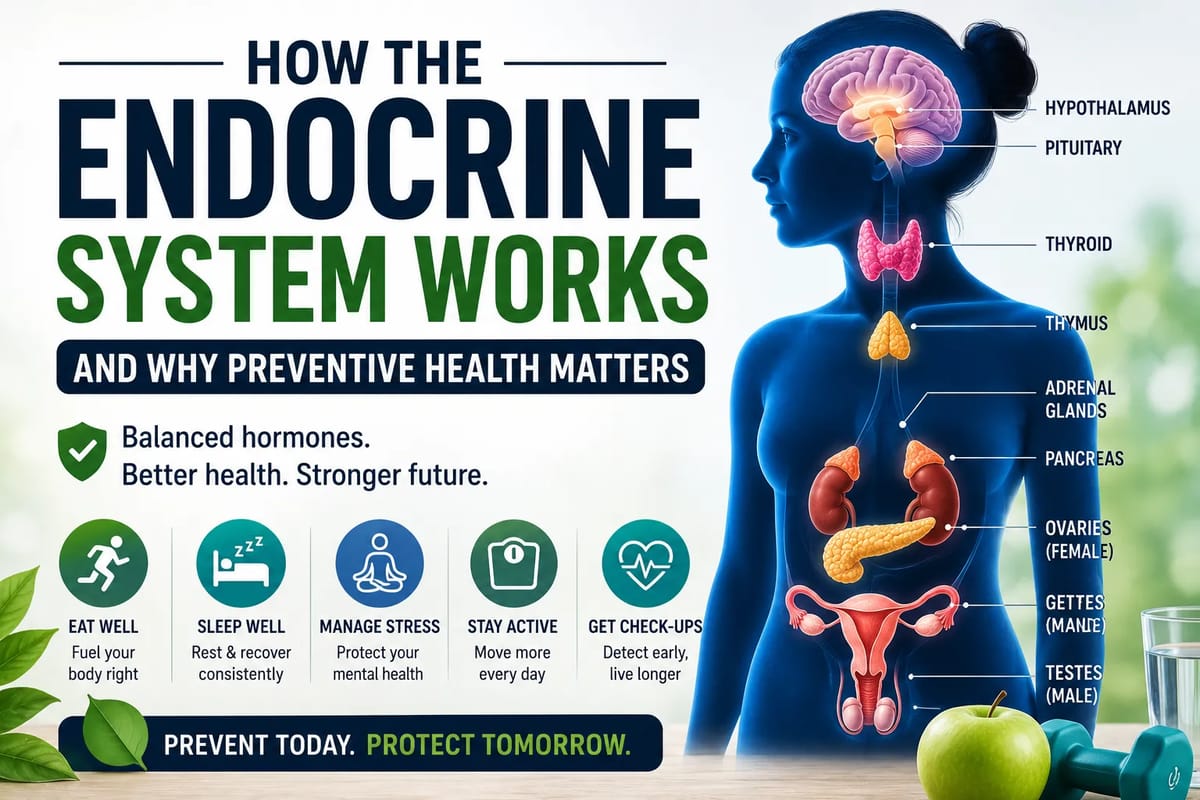
Major endocrine structures include the:
- Hypothalamus
- Pituitary gland
- Thyroid gland
- Parathyroid glands
- Adrenal glands
- Pancreas
- Pineal gland
- Ovaries
- Testes
- Thymus
Not every hormone-producing tissue is traditionally described as a standalone gland, but together these structures form a communication network that affects the body from head to toe. (MedlinePlus)
Why Hormones Matter
Hormones affect a remarkably broad range of functions.
They help regulate:
- Growth and development
- Metabolism
- Blood glucose
- Reproduction
- Sexual function
- Stress responses
- Mood
- Body temperature
- Fluid and electrolyte balance
Because hormones can have powerful effects even in very small amounts, both excessive and insufficient hormone production can cause health problems. (MedlinePlus)
The endocrine system therefore is not simply a collection of isolated glands. It is an interconnected communication network that constantly adjusts the body’s internal environment.
The Brain Plays a Central Role
The endocrine system works closely with the nervous system.
A particularly important structure is the hypothalamus, a region of the brain that helps control endocrine activity. It communicates with the pituitary gland, which in turn regulates several other hormone-producing glands.
This arrangement allows the brain and endocrine system to coordinate responses throughout the body.
The system also relies heavily on feedback mechanisms.
When hormone levels rise sufficiently, signals can be sent back through the system to reduce further production. This helps maintain balance, a process known as homeostasis. (MedlinePlus)
The Pituitary Gland: A Key Coordinator
The pituitary gland is a small structure located beneath the brain.
It is sometimes called the “master gland” because hormones released by the pituitary influence other endocrine glands.
For example, pituitary signals help regulate thyroid function and adrenal activity.
But describing it simply as a master gland can be misleading because the pituitary itself is controlled by the hypothalamus, while feedback from other organs helps regulate the entire system.
It is better understood as one important part of a highly coordinated network.
The Thyroid Helps Regulate Metabolism
The thyroid gland sits in the front of the neck and produces hormones that influence the body’s metabolic activity.
Thyroid hormones affect how quickly chemical processes occur throughout the body.
Too little thyroid hormone can contribute to hypothyroidism, while excessive thyroid activity can lead to hyperthyroidism.
Symptoms of thyroid disorders can vary, but changes in energy, weight, heart rate, temperature tolerance and other body functions may occur.
Because these symptoms can overlap with many other conditions, persistent or unexplained changes should be evaluated rather than automatically attributed to a “hormonal imbalance.”
The Pancreas Connects Hormones and Blood Sugar
The pancreas has both digestive and endocrine functions.
Its endocrine cells produce hormones including insulin, which plays a central role in regulating blood glucose.
When the body cannot produce enough insulin, cannot use it effectively, or both, blood glucose can become elevated.
Diabetes is the most common endocrine disease, according to MedlinePlus. (MedlinePlus)
This is one reason preventive health measures such as appropriate diabetes risk assessment, physical activity, balanced nutrition and routine medical care can be important.
The Adrenal Glands Help the Body Respond to Demands
The adrenal glands are small structures located above the kidneys.
They produce several hormones, including cortisol and aldosterone. The inner part of each adrenal gland also produces adrenaline and noradrenaline, which are involved in the body’s rapid response to stress. (MedlinePlus)
These hormones help regulate processes involving blood pressure, metabolism, fluid balance and the body’s response to physical or psychological demands.
Problems involving adrenal hormone production can occur when the glands produce too much or too little of particular hormones.
Reproductive Hormones Change Across Life
The ovaries and testes produce hormones that influence reproductive function and other aspects of health.
Hormone production naturally changes throughout life.
Puberty brings substantial endocrine changes, while pregnancy, menopause and aging can also alter hormone levels and how tissues respond to hormones.
These changes are not automatically signs of disease.
MedlinePlus notes that aging can change both hormone production and the sensitivity of tissues to hormones. (MedlinePlus)
Understanding this distinction can help people avoid interpreting every normal life-stage change as a medical disorder.
What Happens When Hormone Levels Go Wrong?
Endocrine disorders can develop for many reasons.
A gland may produce too much hormone.
It may produce too little.
The body may fail to respond properly to a hormone.
A problem in one part of the regulatory network may also affect another gland.
Conditions can involve the thyroid, pancreas, adrenal glands, pituitary gland, reproductive organs or other endocrine tissues.
Some endocrine disorders are influenced by genetics or autoimmune processes, while others can be related to tumors, medications or other medical conditions. (MedlinePlus)
This variety is another reason why broad claims about “balancing hormones” can be misleading.
There is no single hormone-balancing treatment that applies to every endocrine problem.
Symptoms Can Be Easy to Overlook
Hormonal disorders can sometimes develop gradually.
Changes in energy, weight, sleep, appetite, thirst, urination, mood, menstrual cycles or sexual function may have many possible causes.
That makes self-diagnosis difficult.
For example, persistent fatigue could result from inadequate sleep, stress, nutritional problems, medications, an endocrine disorder or another health condition.
Similarly, unexpected weight changes can have numerous explanations.
Rather than assuming a symptom proves that hormones are “out of balance,” persistent or unexplained changes are better discussed with a healthcare professional.
Preventive Health Starts Before Symptoms Appear
Preventive healthcare is not simply about treating diseases early.
It also involves identifying risk factors, maintaining protective behaviors and using appropriate screening and preventive services.
The exact approach depends on factors such as:
- Age
- Family history
- Sex
- Pregnancy status
- Existing health conditions
- Medications
- Lifestyle
- Previous test results
- Personal risk factors
This means preventive care should be individualized rather than treated as a universal checklist.
Why Blood Pressure Checks Matter
Blood pressure is not itself an endocrine measurement, but it provides important information about overall health and can be affected by multiple biological systems, including hormones.
High blood pressure often produces no obvious symptoms.
The U.S. Preventive Services Task Force recommends screening adults aged 18 and older for hypertension and recommends confirming an elevated office reading with measurements outside the clinical setting before starting treatment. (USPSTF)
Regular blood pressure checks can therefore identify a potentially important health issue before symptoms develop.
Blood Sugar Screening Can Identify Risk Early
The endocrine system’s role in glucose regulation makes diabetes prevention and detection particularly relevant.
For adults aged 35 to 70 who have overweight or obesity and no symptoms of diabetes, the USPSTF recommends screening for prediabetes and type 2 diabetes. It also recommends offering or referring people with prediabetes to effective preventive interventions. (USPSTF)
Screening may involve tests such as:
- Fasting plasma glucose
- Hemoglobin A1c
- Oral glucose tolerance testing
The appropriate test and frequency depend on the individual.
Early identification of abnormal blood glucose can create an opportunity to address risk factors before diabetes becomes established.
Physical Activity Supports Metabolic Health
Regular physical activity is an important part of preventive health.
Exercise affects energy expenditure, cardiovascular fitness, muscle function and metabolic health.
For people at risk of type 2 diabetes, lifestyle interventions can be particularly important.
The goal does not have to be an extreme fitness program.
Walking, cycling, swimming, strength training, recreational sports and other forms of movement can all contribute to a more active lifestyle.
The most useful approach is often one that can be maintained consistently.
Nutrition Influences Endocrine and Metabolic Health
Food provides the energy and nutrients required for the body’s systems to function.
Dietary patterns can influence body weight, blood glucose, cardiovascular risk and overall metabolic health.
A balanced approach generally emphasizes a variety of nutrient-dense foods rather than relying on highly restrictive rules.
Depending on individual circumstances, this can include:
- Vegetables and fruits
- Whole grains
- Beans and other legumes
- Protein-rich foods
- Nuts and seeds
- Healthy sources of dietary fat
- Appropriate amounts of dairy or alternatives
People with specific medical conditions may need individualized dietary advice.
Sleep Is Part of Preventive Health
Sleep is sometimes treated as separate from physical health, but it is closely connected to many biological processes.
A consistent sleep routine supports normal daily functioning, and disrupted or insufficient sleep can affect energy, concentration, mood and other aspects of health.
Rather than focusing exclusively on a particular number of hours, people can also pay attention to whether their sleep is reasonably consistent and restorative.
Persistent problems with sleep deserve attention, particularly when they interfere with daytime functioning.
Chronic Stress Can Affect the Body
The endocrine system is closely involved in the body’s response to stress.
The adrenal glands produce cortisol and other hormones involved in stress responses. (MedlinePlus)
Stress itself is a normal biological response.
The problem arises when people experience persistent stress without adequate opportunities for recovery or support.
Preventive health does not require eliminating every stressful experience.
Instead, useful strategies can include regular physical activity, adequate sleep, social connection, time for relaxation and seeking professional support when stress becomes difficult to manage.
Avoid Tobacco and Be Cautious With Alcohol
Preventive health also involves reducing exposures that increase disease risk.
Tobacco use is associated with numerous serious health conditions.
Alcohol can also affect health, with risk influenced by the amount and pattern of consumption.
People who drink should discuss their individual circumstances with a healthcare professional if they have concerns about how alcohol affects medications, existing conditions or overall health.
Avoiding tobacco altogether is one of the clearest preventive choices a person can make.
Be Careful With Hormone Supplements
The popularity of “hormone optimization” has created a large market for supplements and therapies marketed around energy, metabolism, aging and performance.
But hormones are powerful biological messengers.
Taking hormones or hormone-like substances without a clear medical indication can have consequences.
The appropriate response to a suspected endocrine disorder is evaluation, not automatically purchasing a supplement advertised as a solution to “balance” hormones.
Blood or urine testing can measure various hormone levels when clinically appropriate, but testing should generally be guided by symptoms, medical history and professional assessment. (MedlinePlus)
Not Everyone Needs Hormone Testing
The availability of laboratory tests can make it tempting to order broad hormone panels simply to look for abnormalities.
But a test result does not always provide a useful diagnosis.
Hormone levels naturally vary according to factors such as time of day, age, reproductive status, medications and other physiological circumstances.
Some tests are highly useful when a particular condition is suspected.
Others may be difficult to interpret without the right clinical context.
Preventive medicine therefore is not about testing everything.
It is about using the right assessment for the right person at the right time.
Know Your Family History
Family history can influence the risk of certain endocrine and metabolic conditions.
A history of diabetes, thyroid disease or other hormone-related disorders may be relevant when discussing symptoms and screening with a healthcare professional.
Knowing which conditions affect close relatives can help provide useful context.
It does not mean that a person will necessarily develop the same condition.
Genetic and environmental factors interact in complicated ways.
Screening Is Not the Same as Diagnosis
This distinction is important.
Screening looks for a disease or risk in people who may not have symptoms.
Diagnostic testing is used when symptoms, signs or other information suggest that a particular condition may be present.
A positive screening result does not automatically mean someone has a disease.
Additional evaluation may be required.
This is why preventive screening should be connected to appropriate follow-up rather than treated as an isolated test.
Preventive Care Extends Beyond the Endocrine System
Even though the endocrine system is the focus of this article, preventive health is much broader.
Depending on age, sex, risk factors and local guidelines, preventive care may involve:
- Blood pressure assessment
- Diabetes screening
- Cancer screening
- Vaccinations
- Mental health screening
- Sexual and reproductive health
- Oral health
- Vision and hearing care
- Weight and nutrition assessment
- Lifestyle counseling
The USPSTF maintains a large collection of evidence-based recommendations covering different preventive services, illustrating why preventive care needs to be individualized rather than reduced to one universal schedule. (USPSTF)
Mental Health Belongs in Preventive Care
Preventive health is sometimes framed entirely around physical measurements.
That is too narrow.
Mental health is an important part of overall health, and some preventive guidelines specifically recommend screening for common mental health conditions.
For example, the USPSTF recommends screening adults for depression and recommends screening adults up to age 64 for anxiety disorders, with appropriate follow-up when screening identifies a concern. (USPSTF)
The endocrine and nervous systems also interact closely, reinforcing the idea that health systems cannot always be separated into isolated categories.
When to Seek Medical Advice
Some symptoms deserve professional evaluation rather than prolonged self-monitoring.
Examples can include persistent or unexplained:
- Changes in weight
- Extreme fatigue
- Increased thirst or urination
- Changes in heart rate
- Heat or cold intolerance
- Menstrual changes
- Changes in sexual function
- Muscle weakness
- Unusual sweating
- Significant changes in appetite
- Changes in growth or development
These symptoms do not necessarily indicate an endocrine disorder.
They simply warrant attention when they are persistent, severe, unexplained or accompanied by other concerning changes.
The Endocrine System Changes Throughout Life
Hormonal health is not static.
The endocrine system changes during childhood, puberty, pregnancy, menopause and aging.
Some changes are expected.
Others may indicate disease.
The challenge is distinguishing normal biological transitions from abnormalities.
That is one reason regular healthcare can be useful even when a person feels healthy.
Preventive visits create opportunities to discuss changes that may otherwise be dismissed or overlooked.
Healthy Habits Are Part of the Bigger Picture
There is no lifestyle that can prevent every endocrine disorder.
Some conditions arise from genetic, autoimmune or other factors that cannot be controlled through diet and exercise alone.
Still, many behaviors can support overall health and reduce certain preventable risks.
A practical foundation includes:
- Stay physically active.
- Eat a varied, balanced diet.
- Maintain a healthy sleep routine.
- Avoid tobacco.
- Limit harmful or excessive alcohol use.
- Manage stress in sustainable ways.
- Keep recommended preventive appointments.
- Follow through when screening results require additional evaluation.
- Discuss persistent symptoms with a healthcare professional.
- Be cautious about unproven hormone supplements and “detox” products.
None of these steps guarantees perfect health.
Their value comes from supporting a broad strategy for reducing avoidable risks.
Preventive Health Is About Staying Ahead of Problems
The endocrine system illustrates how interconnected the human body really is.
A small group of glands and hormone-producing tissues can influence metabolism, growth, reproduction, blood sugar, stress responses and countless other processes. Hormones move through the bloodstream, feedback mechanisms continually adjust their production, and the endocrine and nervous systems work together to maintain internal balance. (MedlinePlus)
That complexity is also a reminder not to oversimplify health.
There is no single “hormone balance” formula, universal supplement or test that can guarantee wellness. Instead, good preventive care combines healthy daily behaviors with appropriate screening, attention to risk factors and timely medical evaluation.
The most useful approach is proactive without becoming obsessive: take care of the fundamentals, know what is normal for you, pay attention when something changes and use evidence-based healthcare to investigate concerns early.
In many cases, preventive health is not about waiting for a warning sign. It is about creating enough awareness and routine care that potential problems have a better chance of being recognized while there is still an opportunity to address them.
Continue Reading
Similar Posts

How Vector Control Prevents Infectious Diseases
Vector control includes a wide range of measures designed to reduce contact between people and disease-carrying organisms.
Read article
How Sun Exposure Affects Skin Cancer Risk
Understanding how sun exposure affects the skin can make prevention more practical. Protection is not about avoiding daylight altogether. Instead, it involves reducing unnecessary ultraviolet exposure and recognizing situations when the skin is particularly vulnerable.
Read article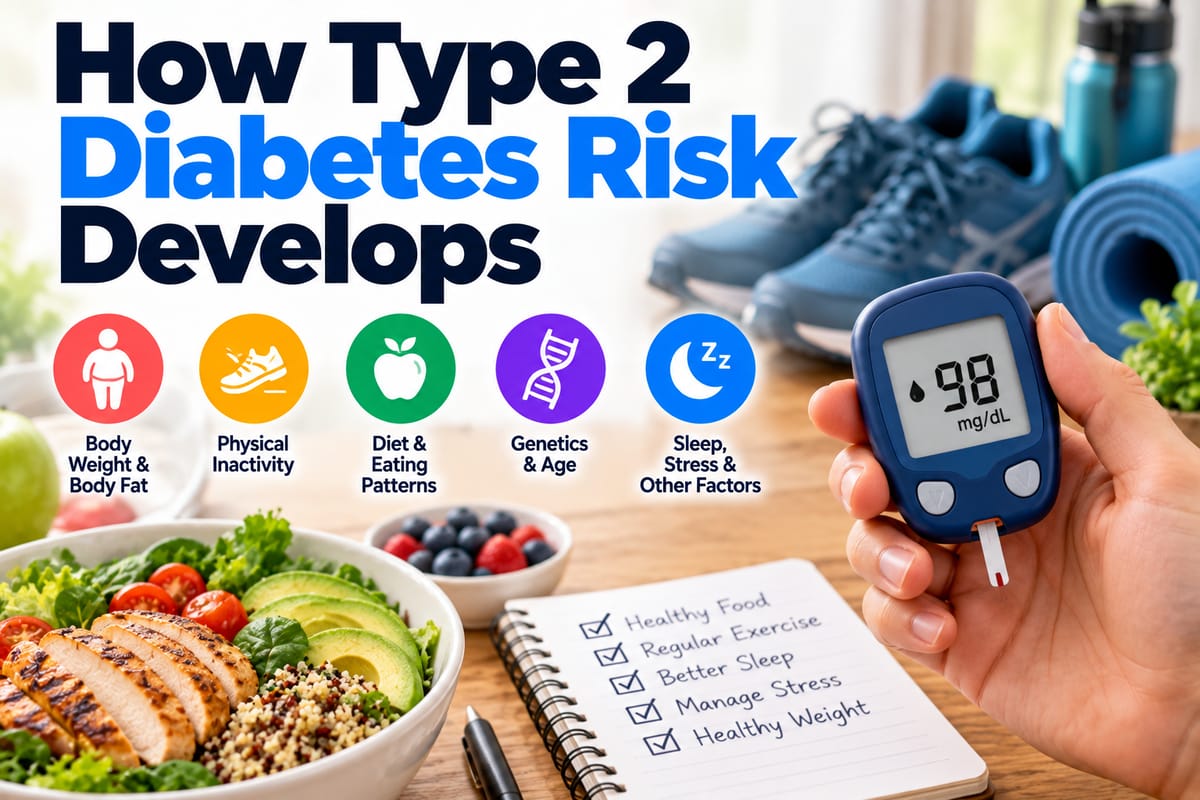
How Type 2 Diabetes Risk Develops
Understanding how type 2 diabetes risk develops can make the condition easier to prevent or manage. Risk factors do not guarantee that someone will develop diabetes, and some people develop the condition without having an obvious single cause. Instead, risk tends to emerge from the interaction of several factors over time.
Read article

Join 10,000+ Readers Building Healthier Habits
Get actionable wellness tips every week plus our newest articles delivered straight to your inbox.