
How Sperm Production Works in Men
Sperm production is a continuous biological process that plays a central role in male reproductive function. It involves the coordinated activity of the brain, hormones, testicles, and reproductive tract to produce, mature, store, and transport sperm cells.
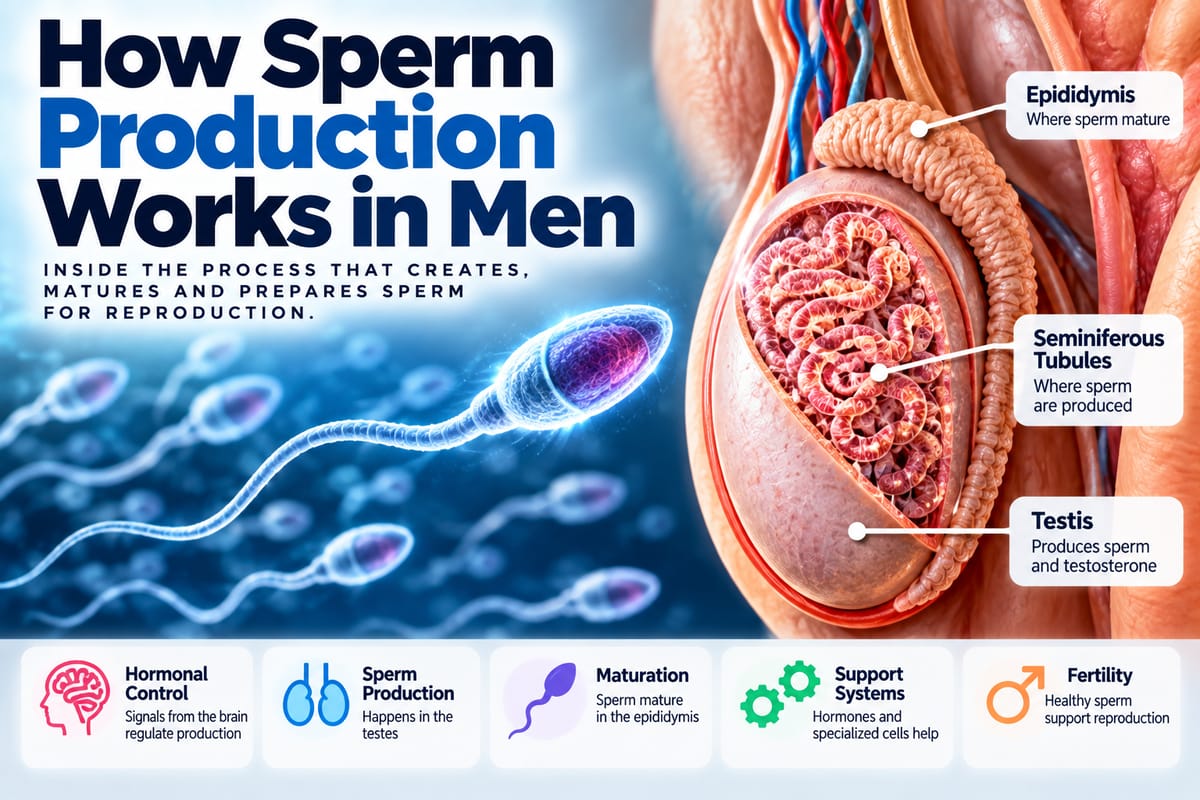
Unlike many cells in the body, sperm are specifically designed to carry genetic material to an egg during reproduction. Their development takes place through a complex process called spermatogenesis, which occurs primarily inside the seminiferous tubules of the testes.
Understanding how this process works can provide useful insight into male fertility, reproductive health, hormones, and the factors that can influence sperm production.
What Is Sperm Production?
Sperm production is the process through which immature reproductive cells develop into mature sperm cells.
The process takes place mainly within the testes. Specialized cells divide and develop through several stages before becoming spermatozoa, the mature sperm cells found in semen.
Sperm production is regulated by hormones and supported by specialized cells within the testes. Once sperm have developed, they move into the epididymis, where they continue to mature and acquire the ability to move effectively.
Reproductive health involves much more than sperm production alone. The Complete Guide to Reproductive Health provides a broader look at the systems and factors involved in human reproduction.
Where Are Sperm Produced?
The testes are the primary organs responsible for sperm production.
Inside each testis are numerous tightly coiled structures called seminiferous tubules. These microscopic tubes contain developing sperm cells and specialized cells that support their development.
After sperm are produced in the seminiferous tubules, they move toward the epididymis.
The epididymis is a long, coiled structure located along the back of each testicle. It provides an environment where sperm can mature and develop improved motility.
The Basic Stages of Spermatogenesis
Spermatogenesis involves several stages rather than a single transformation.
The process begins with cells called spermatogonia, which are located near the walls of the seminiferous tubules.
These cells undergo divisions and developmental changes that eventually produce immature sperm cells called spermatids.
The spermatids then undergo a process known as spermiogenesis, during which they develop the characteristic structure of mature sperm.
The resulting sperm cells have three major structural regions:
- Head: Contains the nucleus and genetic material.
- Midpiece: Contains mitochondria that provide energy for movement.
- Tail: Helps propel the sperm forward.
The entire process is carefully regulated and requires the correct hormonal and cellular environment.
The Role of Testosterone
Testosterone is an important hormone in male reproductive biology.
It is produced primarily by specialized cells called Leydig cells, which are located in the testes. Testosterone supports sperm production and contributes to numerous other functions associated with male development and health.
However, testosterone alone does not control the entire sperm-production process.
Sperm production depends on communication between the brain, pituitary gland, and testes. Testosterone works alongside other hormones to create the conditions needed for normal spermatogenesis.
Understanding what testosterone does in men’s health provides additional context about the hormone’s broader functions.
How the Brain Helps Control Sperm Production
The brain plays an important role in regulating the reproductive system.
A region of the brain called the hypothalamus releases gonadotropin-releasing hormone, commonly known as GnRH.
GnRH signals the pituitary gland to release two important hormones:
- Luteinizing hormone (LH)
- Follicle-stimulating hormone (FSH)
LH stimulates Leydig cells in the testes to produce testosterone.
FSH acts on specialized cells called Sertoli cells, which support developing sperm and help create the environment required for spermatogenesis.
This communication system is often referred to as the hypothalamic-pituitary-gonadal axis.
The Role of Sertoli Cells
Sertoli cells are specialized support cells located within the seminiferous tubules.
They provide physical and nutritional support to developing sperm cells and contribute to the environment needed for their maturation.
Sertoli cells also participate in hormonal regulation and help coordinate different stages of sperm development.
Their role demonstrates that sperm production is not simply a process in which reproductive cells divide independently. It depends on a highly organized environment within the testes.
How Long Does Sperm Production Take?
Sperm development takes several weeks.
From the earliest stages of spermatogenesis to the production of mature sperm, the process generally takes around two to three months. Additional maturation occurs as sperm travel through the epididymis.
Because sperm production is continuous, the testes are constantly producing new sperm under normal physiological conditions.
This also means that changes affecting sperm production may not immediately appear in a semen sample. The effects of certain lifestyle changes, illnesses, medications, or other factors can take time to become apparent.
How Sperm Reach Semen
Sperm cells themselves make up only a small part of semen.
After maturing in the epididymis, sperm travel through the reproductive ducts during ejaculation.
Along the way, fluids from accessory reproductive glands are added.
The seminal vesicles, prostate gland, and bulbourethral glands all contribute fluids to the reproductive tract.
The resulting mixture is called semen.
Semen provides a fluid environment that helps transport sperm through the reproductive tract.
Sperm Production and Ejaculation Are Different Processes
Sperm production and ejaculation are related but distinct biological processes.
Sperm production occurs continuously within the testes.
Ejaculation, on the other hand, is the process through which semen is expelled from the reproductive tract.
An ejaculation does not simply empty the testes of all available sperm. Sperm production continues, and mature sperm are stored primarily within the epididymis and associated reproductive pathways.
This distinction is useful when understanding how the male reproductive system functions.
What Determines Sperm Quality?
Fertility is not determined solely by whether sperm are present.
Several characteristics can be assessed when evaluating sperm, including:
- Sperm concentration
- Total sperm number
- Sperm movement, known as motility
- Sperm shape and structure, known as morphology
- Semen volume
- Other laboratory characteristics
A semen analysis can provide information about several of these characteristics.
Importantly, individual semen measurements can vary from one sample to another, so a single result does not necessarily provide a complete picture of reproductive potential.
Factors That Can Affect Sperm Production
Sperm production can be influenced by many factors.
These may include:
- Hormonal changes
- Certain medical conditions
- Some medications
- Genetic factors
- Testicular disorders
- Infections
- Excessive heat exposure
- Tobacco use
- Heavy alcohol consumption
- Certain recreational drugs
- Significant nutritional problems
- Environmental exposures
- Age
The effect of any particular factor can vary considerably between individuals.
Why Temperature Matters
The testes are located outside the main body cavity partly because sperm production works best at a temperature slightly below core body temperature.
The scrotum helps regulate testicular temperature by moving the testes closer to or farther from the body as environmental conditions change.
Prolonged exposure to elevated testicular temperatures can affect sperm production in some circumstances.
This is one reason researchers and healthcare professionals consider heat exposure when evaluating certain fertility concerns.
Sperm Production and Age
Men can continue producing sperm throughout much of adulthood, but sperm production and reproductive characteristics can change with age.
Changes may occur in sperm quality, hormone levels, and other aspects of reproductive function.
Age does not affect every person in exactly the same way, and male fertility cannot be determined from age alone.
Other health conditions and lifestyle factors can also influence reproductive function.
Lifestyle and Sperm Health
General health can influence reproductive function.
A balanced diet, regular physical activity, adequate sleep, avoidance of tobacco, moderation of alcohol consumption, and management of certain health conditions can support overall well-being.
These habits should not be viewed as guarantees of fertility. Reproductive health is influenced by many biological factors that lifestyle changes cannot always control.
Still, maintaining overall health is an important part of caring for the reproductive system.
Sperm Production and Fertility
Sperm production is an important part of male fertility, but fertility involves much more than sperm production.
Successful reproduction depends on several factors, including sperm quantity and quality, sperm transport, sexual function, reproductive anatomy, timing, and the reproductive health of both partners.
The broader topic of understanding fertility for women and men helps place sperm production within the larger picture of human fertility.
What Happens When Sperm Production Is Reduced?
Reduced sperm production can result in a lower sperm concentration or total sperm count.
In some cases, sperm production may be significantly impaired or absent.
Possible causes can include hormonal disorders, genetic conditions, testicular injury or disease, certain medications, infections, and other health problems.
Because the causes are varied, reduced sperm production cannot be diagnosed simply from symptoms.
A healthcare professional may use medical history, physical examination, hormone testing, semen analysis, and other investigations to identify potential causes.
Male and Female Reproductive Systems Have Important Differences
Human reproductive systems differ in their structure, hormonal regulation, and reproductive processes.
In men, sperm production generally continues throughout adulthood, while women are born with a finite number of immature eggs and experience major reproductive changes across the lifespan.
These differences are part of the broader biological distinctions between male and female reproductive health.
The topic is explored further in how sexual and reproductive health differs between women and men.
When to Seek Medical Advice
Someone experiencing concerns about fertility, sexual function, hormonal health, testicular changes, or other reproductive symptoms can discuss them with a qualified healthcare professional.
Medical evaluation may be particularly appropriate when there has been persistent difficulty conceiving, significant changes in sexual or reproductive function, testicular pain or swelling, or other concerning symptoms.
Fertility concerns can involve either partner, so evaluation may sometimes involve both people rather than focusing exclusively on the male reproductive system.
A Continuous Biological Process
Sperm production is a complex process involving the testes, specialized cells, hormones, and the reproductive tract. It begins with early reproductive cells and progresses through several stages before mature sperm are produced and stored.
Hormonal signals from the brain help regulate the process, while testosterone, FSH, Sertoli cells, and other components of the reproductive system work together to support sperm development.
Understanding these mechanisms also helps explain why reproductive health is influenced by multiple factors rather than a single hormone, organ, or lifestyle habit. Sperm production is one important part of a much larger reproductive system that operates continuously throughout adult life.
Continue Reading
Similar Posts

How Gender Can Influence Health Outcomes
Understanding these influences can help explain why some health conditions affect women and men differently and why healthcare cannot always take a one-size-fits-all approach.
Read article
How Period Pain Differs From Severe Pain
Understanding the difference between typical menstrual cramps and pain that may be unusually severe can help people recognize when symptoms deserve additional attention.
Read article
How Fetal Development Progresses During Pregnancy
Understanding the general stages of fetal development can make pregnancy easier to understand and can provide useful context for prenatal care, pregnancy planning, and discussions with healthcare professionals.
Read article

Join 10,000+ Readers Building Healthier Habits
Get actionable wellness tips every week plus our newest articles delivered straight to your inbox.