
How Primary, Secondary, and Tertiary Prevention Differ
Disease prevention is not limited to avoiding illness before it begins. Healthcare professionals use several levels of prevention to reduce the likelihood of disease, identify problems early, and limit the effects of conditions that have already developed.
The three commonly discussed levels are primary prevention, secondary prevention, and tertiary prevention. Each serves a different purpose and applies at a different stage of the disease process.
Understanding these differences can make it easier to understand why vaccination, health screenings, early diagnosis, rehabilitation, and long-term disease management are all considered parts of preventive healthcare.
What Is Disease Prevention?
Disease prevention refers to actions designed to reduce the likelihood of illness, detect health problems early, or minimize the effects of an existing condition.
Prevention can involve:
- Healthy lifestyle habits
- Vaccination
- Screening tests
- Early diagnosis
- Treatment
- Rehabilitation
- Risk-factor management
- Health education
- Environmental and workplace safety
The Preventive Healthcare Guide provides a broader overview of how preventive healthcare can be incorporated into different stages of life.
The key difference between the three major levels is when and why the intervention occurs.
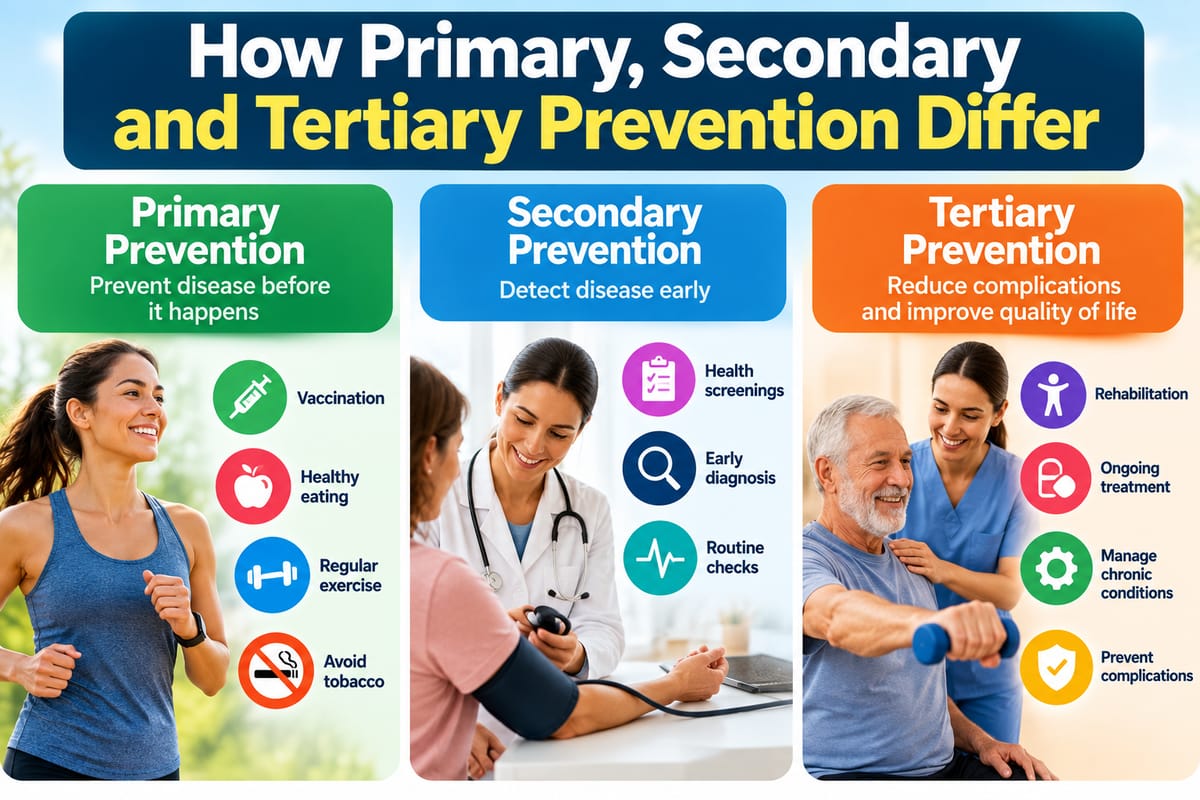
The Three Levels of Prevention at a Glance
| Level | Main goal | Typical timing | Examples |
|---|---|---|---|
| Primary prevention | Prevent disease from developing | Before disease occurs | Vaccination, healthy diet, physical activity |
| Secondary prevention | Detect disease early | After disease may have begun but before major complications | Screening tests, early diagnosis |
| Tertiary prevention | Reduce complications and disability | After a disease or condition is established | Rehabilitation, disease management |
These categories can overlap in practice, but each has a distinct focus.
What Is Primary Prevention?
Primary prevention aims to prevent a disease or health problem from occurring in the first place.
The intervention takes place before the condition has developed.
Examples include:
- Vaccination
- Healthy eating
- Regular physical activity
- Avoiding tobacco
- Limiting harmful alcohol use
- Using protective equipment
- Sun protection
- Maintaining a healthy weight
- Improving environmental safety
The objective is to reduce exposure to factors that can contribute to disease or strengthen protective factors that lower risk.
How Vaccination Fits Into Primary Prevention
Vaccination is a well-known example of primary prevention.
Vaccines can prepare the immune system to recognize particular infectious threats before a person encounters them.
The intervention occurs before the targeted infection develops, which makes vaccination an example of primary prevention.
Other measures that reduce exposure to infectious diseases can also fit into primary prevention, including appropriate hygiene and certain environmental controls.
Lifestyle Habits and Primary Prevention
Many everyday health behaviors can contribute to primary prevention.
These may include:
- Eating a varied and nutritious diet
- Engaging in regular physical activity
- Getting adequate sleep
- Avoiding tobacco products
- Using sun protection
- Practicing appropriate hygiene
- Maintaining a healthy body weight
- Managing exposure to environmental hazards
These behaviors do not guarantee that a person will never develop a disease. Instead, they can reduce exposure to certain risk factors and support overall health.
Why Risk Factors Matter
Understanding risk factors is central to primary prevention.
A risk factor is a characteristic, exposure, behavior, or circumstance associated with a greater likelihood of developing a particular health condition.
Risk factors can include:
- Age
- Family history
- Tobacco exposure
- Physical inactivity
- Certain dietary patterns
- Environmental exposures
- High blood pressure
- Elevated blood glucose
- Excess body weight
- Certain infections
The Understanding Major Risk Factors for Disease guide explores how different factors can influence disease risk.
Knowing about risk factors can help individuals and healthcare professionals identify areas where preventive measures may be appropriate.
What Is Secondary Prevention?
Secondary prevention focuses on detecting a disease or health problem at an early stage.
The condition may already have begun, but it may not yet have produced obvious symptoms or significant complications.
The main goal is early detection and intervention.
Examples include:
- Screening tests
- Routine blood pressure checks
- Certain cancer screenings
- Blood tests used to identify health problems
- Early identification of abnormal findings
- Follow-up testing after an initial abnormal result
Secondary prevention is particularly valuable when detecting a condition early can provide opportunities for treatment or management.
Why Screening Is Secondary Prevention
Screening looks for a disease or risk-related abnormality before a person necessarily develops noticeable symptoms.
For example, a screening test may identify an abnormality that requires additional evaluation.
The person may feel completely healthy, but the screening process can identify a potential problem that warrants further investigation.
This is different from primary prevention because the focus is no longer simply on preventing disease from occurring. Instead, the objective is to identify a potential condition as early as possible.
Screening Is Not the Same as Diagnosis
Screening and diagnosis are related but different.
Screening is generally used to identify people who may have a condition or increased likelihood of a condition.
Diagnostic testing is used to investigate symptoms, abnormal screening results, or other clinical concerns and determine what condition may be present.
A positive screening result does not necessarily mean that someone has the disease being investigated. Additional evaluation may be necessary.
Examples of Secondary Prevention
Depending on age, sex, personal risk factors, and clinical circumstances, secondary prevention can include screening for conditions such as:
- Certain cancers
- High blood pressure
- Diabetes
- High cholesterol
- Some infectious diseases
- Certain vision problems
The appropriate screening schedule varies by condition and individual circumstances.
The Essential Health Screenings for Men and Women guide provides additional information about the role of routine health screenings.
Why Early Detection Matters
Some diseases can progress significantly before obvious symptoms appear.
Early detection can provide an opportunity to:
- Confirm a diagnosis
- Begin treatment
- Monitor a condition
- Reduce exposure to contributing risk factors
- Prevent or delay complications
- Make informed healthcare decisions
However, screening is not appropriate for every condition or every person. The benefits and limitations of individual screening tests should be considered in the context of a person’s circumstances.
What Is Tertiary Prevention?
Tertiary prevention focuses on reducing the effects of a disease or established health condition.
At this stage, the condition is already known or clinically established.
The goal is to prevent complications, reduce disability, preserve function, and support quality of life.
Examples can include:
- Rehabilitation
- Physical therapy
- Occupational therapy
- Long-term disease management
- Medication management
- Assistive devices
- Complication prevention
- Support for maintaining daily activities
Tertiary prevention is therefore not about stopping the initial disease from appearing. It is about limiting its impact after it has developed.
Rehabilitation as Tertiary Prevention
Rehabilitation is a common example of tertiary prevention.
A person recovering from a serious injury, stroke, or other health condition may need rehabilitation to regain or maintain physical, cognitive, communication, or daily-living abilities.
Depending on the condition, rehabilitation can involve:
- Physical therapy
- Occupational therapy
- Speech therapy
- Cognitive rehabilitation
- Mobility training
- Adaptive equipment
The objective is to help the person function as effectively and independently as possible.
Managing Chronic Conditions
Long-term management of an established condition can also be considered tertiary prevention.
For example, someone living with a chronic disease may need ongoing care to reduce the risk of complications.
Management can involve:
- Regular monitoring
- Medication
- Lifestyle adjustments
- Follow-up appointments
- Self-management education
- Monitoring for complications
- Rehabilitation
The specific approach depends on the condition and the individual’s healthcare needs.
Preventing Complications
Tertiary prevention often focuses heavily on complications.
A person with an established disease may face additional health problems if the condition is poorly controlled.
Preventive measures can help reduce the likelihood or severity of some complications.
This may involve monitoring symptoms, following treatment plans, attending follow-up appointments, and making appropriate lifestyle changes.
How the Three Levels Work Together
Primary, secondary, and tertiary prevention should not be viewed as completely separate systems.
They can operate together throughout a person’s life.
For example:
Primary prevention:
A person maintains healthy habits and receives recommended vaccinations.
Secondary prevention:
Routine screening identifies an abnormal finding.
Tertiary prevention:
If a condition is diagnosed, treatment and rehabilitation help reduce complications and preserve function.
This illustrates how prevention can continue even after a disease has been identified.
A Simple Example: Cardiovascular Health
Cardiovascular disease provides a useful example of the three levels.
Primary Prevention
Actions can include:
- Avoiding tobacco
- Maintaining regular physical activity
- Eating a balanced diet
- Managing body weight
- Addressing certain cardiovascular risk factors
The objective is to reduce the likelihood of developing cardiovascular disease.
Secondary Prevention
Screening and monitoring may identify:
- High blood pressure
- High cholesterol
- Elevated blood glucose
Early identification can allow appropriate management before more serious complications develop.
Tertiary Prevention
For someone who already has cardiovascular disease, ongoing treatment and rehabilitation may help:
- Manage the condition
- Reduce complications
- Improve physical function
- Support long-term quality of life
The same broad health area can therefore involve all three levels.
A Simple Example: Infectious Disease
Infectious diseases can also illustrate the distinction.
Primary Prevention
Examples include:
- Vaccination
- Hand hygiene
- Food safety
- Appropriate protective measures
These aim to prevent infection.
Secondary Prevention
Early testing can identify an infection so that appropriate treatment and measures to reduce transmission can begin.
Tertiary Prevention
For an established infection that causes complications, treatment and rehabilitation may be needed to manage those effects and support recovery.
A Simple Example: Cancer
Cancer prevention can also involve different levels.
Primary Prevention
Primary prevention may involve reducing exposure to certain known risk factors and supporting healthy behaviors.
Secondary Prevention
Screening can help detect certain cancers or precancerous changes earlier, depending on the type of cancer and the screening method.
Tertiary Prevention
After cancer has been diagnosed, treatment, rehabilitation, monitoring, and supportive care can help manage the condition and its effects.
The appropriate preventive approach depends heavily on the specific cancer type and individual circumstances.
The Difference Between Prevention and Treatment
Prevention and treatment are closely connected but are not identical.
Primary prevention generally occurs before disease develops.
Secondary prevention focuses on early detection and intervention.
Tertiary prevention focuses on reducing the consequences of an established condition.
Treatment can occur during secondary or tertiary prevention, but not every treatment is itself considered preventive.
For example, treating an established infection primarily addresses an existing illness. Preventing complications resulting from that illness can be considered part of tertiary prevention.
Why Prevention Is Sometimes Difficult to Classify
Real-world healthcare does not always fit neatly into three categories.
The same intervention can have different purposes depending on the circumstances.
For example, a screening test may be used for someone without symptoms as secondary prevention, while diagnostic testing for a person with symptoms serves a different clinical purpose.
Likewise, medication can be used to prevent a disease from occurring in someone at high risk, manage an established condition, or reduce the likelihood of complications.
The context and intended purpose matter.
The Role of Healthcare Professionals
Healthcare professionals help determine which preventive measures are appropriate based on factors such as:
- Age
- Medical history
- Family history
- Existing conditions
- Lifestyle
- Risk factors
- Previous test results
- Symptoms
- Personal circumstances
Prevention is therefore not simply a checklist that applies identically to everyone.
A healthcare professional can help determine which screenings, vaccinations, lifestyle interventions, treatments, and follow-up measures are appropriate.
Prevention Across Different Stages of Life
Preventive priorities can change throughout life.
Children may have different vaccination, developmental, and safety needs from adults.
Adults may focus on cardiovascular risk factors, cancer screening, occupational health, and other concerns.
Older adults may require greater attention to falls, chronic conditions, medication management, functional ability, and other age-related considerations.
This makes prevention a continuing process rather than a one-time activity.
How Preventive Healthcare Fits Into Everyday Life
Prevention can be incorporated into ordinary routines.
Examples include:
- Eating nutritious foods
- Staying physically active
- Avoiding tobacco
- Following recommended vaccination schedules
- Attending appropriate screening appointments
- Managing known health conditions
- Following prescribed treatments
- Taking safety precautions
- Seeking medical attention for concerning symptoms
The How Disease Prevention Works and How to Reduce Health Risks guide provides a broader look at how different preventive strategies can reduce health risks.
The Importance of Individual Risk
Preventive healthcare should account for individual risk rather than assuming everyone faces the same health challenges.
Two people of the same age may have very different risk profiles because of differences in:
- Family history
- Existing medical conditions
- Lifestyle
- Occupational exposures
- Environmental factors
- Previous health events
This can affect which preventive measures are appropriate.
Primary Prevention Is About Avoiding Disease
The easiest way to remember primary prevention is:
Primary prevention happens before disease develops.
Its goal is to reduce the chance that a disease or injury will occur.
Examples include:
- Vaccination
- Healthy lifestyle behaviors
- Safety measures
- Risk-factor reduction
It focuses on maintaining health and preventing the initial occurrence of a condition.
Secondary Prevention Is About Finding Problems Early
The simplest way to remember secondary prevention is:
Secondary prevention focuses on early detection.
The condition may already be developing, but the objective is to identify it before it causes more significant harm.
Examples include:
- Screening
- Early detection
- Follow-up testing
- Early intervention
The emphasis is on identifying problems while there may still be an opportunity to address them effectively.
Tertiary Prevention Is About Limiting the Impact
The simplest way to remember tertiary prevention is:
Tertiary prevention focuses on reducing the effects of established disease.
Examples include:
- Rehabilitation
- Chronic disease management
- Preventing complications
- Restoring function
- Supporting quality of life
The condition is already present, so the goal shifts toward managing its consequences.
Comparing the Three Levels
The differences become clearer when viewed together:
| Question | Primary | Secondary | Tertiary |
|---|---|---|---|
| Has the disease developed? | No | May be developing or not yet apparent | Yes |
| Main objective | Prevent disease | Detect disease early | Reduce impact |
| Typical approach | Risk reduction | Screening and early intervention | Treatment, rehabilitation, management |
| Example | Vaccination | Screening test | Rehabilitation |
| Main focus | Avoid occurrence | Identify early | Limit complications |
These categories provide a useful framework for understanding preventive healthcare, even though real-world medical care can involve overlap between them.
Prevention Is a Continuous Process
Primary, secondary, and tertiary prevention represent different points along the health journey.
Primary prevention aims to stop disease before it begins. Secondary prevention focuses on identifying problems early, often through screening and follow-up evaluation. Tertiary prevention addresses established conditions by reducing complications, disability, and other long-term effects.
Together, these approaches show that prevention is not simply about avoiding illness. It also includes recognizing health problems early and supporting people after a condition has developed.
Understanding the three levels can help make sense of why healthy behaviors, routine screenings, early medical evaluation, treatment, and rehabilitation all have a place within a broader preventive healthcare strategy.
Continue Reading
Similar Posts

How Vector Control Prevents Infectious Diseases
Vector control includes a wide range of measures designed to reduce contact between people and disease-carrying organisms.
Read article
How Sun Exposure Affects Skin Cancer Risk
Understanding how sun exposure affects the skin can make prevention more practical. Protection is not about avoiding daylight altogether. Instead, it involves reducing unnecessary ultraviolet exposure and recognizing situations when the skin is particularly vulnerable.
Read article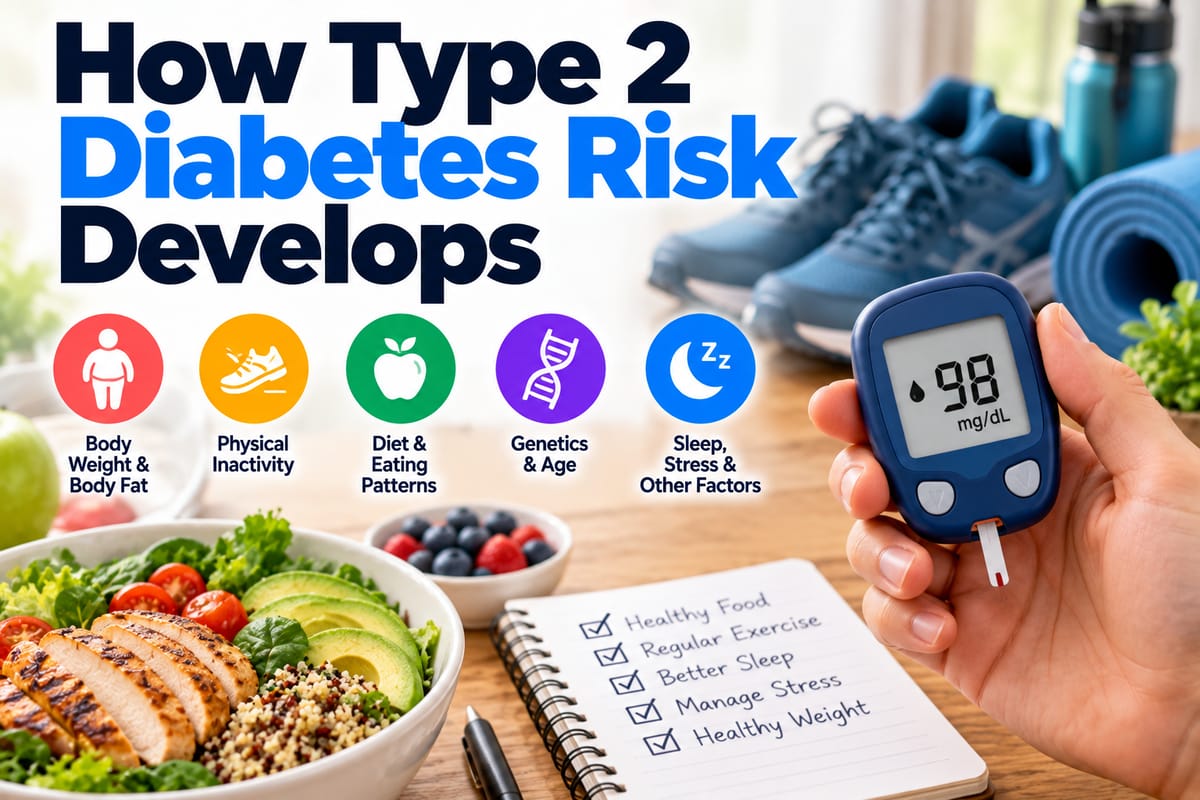
How Type 2 Diabetes Risk Develops
Understanding how type 2 diabetes risk develops can make the condition easier to prevent or manage. Risk factors do not guarantee that someone will develop diabetes, and some people develop the condition without having an obvious single cause. Instead, risk tends to emerge from the interaction of several factors over time.
Read article

Join 10,000+ Readers Building Healthier Habits
Get actionable wellness tips every week plus our newest articles delivered straight to your inbox.