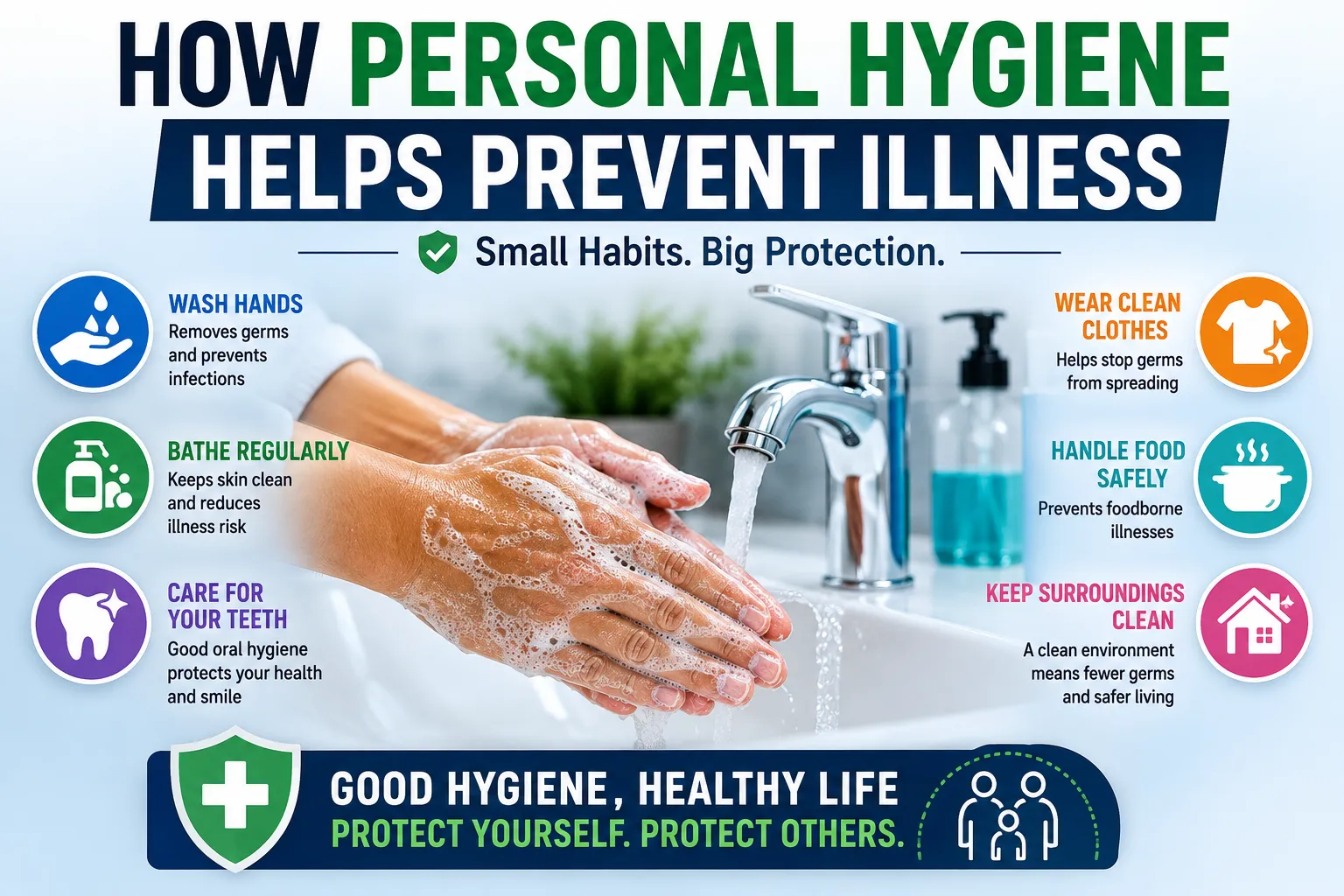

How Personal Hygiene Helps Prevent Illness
Personal hygiene is one of the simplest ways people can protect their health every day. Practices such as washing hands, bathing regularly, caring for teeth, keeping clothes clean, handling food safely, and maintaining clean living spaces can reduce exposure to germs and other sources of infection.
Although good hygiene cannot prevent every illness, it can significantly reduce opportunities for harmful microorganisms to spread between people, food, surfaces, and the body. Hand hygiene is an important public-health measure for reducing diarrheal diseases and acute respiratory infections in community settings.
Personal hygiene is therefore one part of a broader approach to healthy living and long-term wellness. It also forms an important part of the broader guide to infectious disease prevention.
What Is Personal Hygiene?
Personal hygiene refers to the everyday habits people use to keep their bodies clean and reduce the spread of potentially harmful microorganisms.
These habits can include:
- Washing hands with soap and water
- Bathing or showering regularly
- Brushing and flossing teeth
- Keeping fingernails clean and trimmed
- Wearing clean clothes
- Cleaning and covering minor wounds
- Practicing safe food-handling habits
- Covering the mouth and nose when coughing or sneezing
- Keeping frequently touched personal items clean
- Maintaining clean toilets, kitchens, and other living areas
Hygiene is not about eliminating every microorganism from the body. Many microorganisms are harmless or beneficial. Instead, the goal is to reduce exposure to pathogens and prevent them from reaching vulnerable parts of the body or spreading to other people.
How Poor Hygiene Can Spread Illness
Many infections spread through relatively ordinary daily activities.
A person may touch a contaminated surface, shake someone’s hand, prepare food, touch their face, or handle shared objects without realizing that microorganisms have been transferred.
Hands are particularly important because people frequently touch their eyes, nose, mouth, food, and other objects throughout the day. Germs can move from hands to food, surfaces, and other people, creating opportunities for illness to spread.
This creates a chain of transmission:
Contaminated surface → hands → face, food, or another person → possible infection
Breaking that chain through regular hygiene can reduce the risk.
Personal hygiene is therefore one practical component of disease prevention and reducing health risks.
Handwashing Is One of the Most Important Habits
Among everyday hygiene practices, handwashing deserves particular attention.
Washing hands with soap and clean running water physically removes microorganisms and other contaminants. Handwashing should include the palms, backs of the hands, between the fingers, and under the nails, and should generally take at least 20 seconds.
Important times to wash your hands include:
- Before preparing food
- Before eating
- After using the toilet
- After changing diapers
- After coughing, sneezing, or blowing your nose
- After caring for someone who is sick
- After handling animals or animal waste
- After cleaning
- After touching potentially contaminated surfaces
- Before and after caring for wounds
Hand hygiene has benefits beyond individual health. Effective hand hygiene can help reduce the spread of diarrheal disease and respiratory infections.
Soap and Water Versus Hand Sanitizer
Soap and water are generally preferred when hands are visibly dirty or greasy.
Alcohol-based hand sanitizer can be useful when soap and water are not readily available, but it does not work equally well against every type of microorganism and may not remove certain chemicals or physical contaminants from the hands.
For this reason, hand sanitizer should complement rather than completely replace proper handwashing.
Good hygiene also depends on access to basic supplies. Many people around the world lack reliable access to basic hand-hygiene services at home, highlighting that hygiene is not simply a matter of individual behavior but also of access to water, soap, sanitation, and appropriate facilities.
Personal Hygiene and Food Safety
Personal hygiene is particularly important when preparing or serving food.
Microorganisms on unwashed hands can contaminate ingredients, utensils, plates, and ready-to-eat foods. Once food becomes contaminated, some microorganisms can multiply under favorable conditions.
Simple habits can help reduce this risk:
- Wash hands before preparing food.
- Keep fingernails clean.
- Avoid preparing food when experiencing certain infectious illnesses when doing so could expose others.
- Keep cuts and wounds properly covered.
- Clean food-preparation surfaces and utensils.
- Separate raw foods from ready-to-eat foods.
- Wash hands after handling raw meat, poultry, seafood, or eggs.
- Store food appropriately.
Good personal hygiene therefore works alongside safe food storage, cooking, cleaning, and sanitation.
Dental Hygiene Protects More Than Your Smile
Oral hygiene is another important part of personal hygiene.
Brushing teeth regularly with fluoride toothpaste and cleaning between teeth helps remove plaque and food particles. This supports oral health and can reduce the risk of problems such as tooth decay and gum disease.
A healthy mouth also makes everyday activities such as eating and speaking more comfortable.
Dental hygiene should therefore be considered part of overall health rather than simply a cosmetic routine.
Bathing and Skin Hygiene
Regular bathing or showering helps remove sweat, dirt, oils, and microorganisms from the skin.
The frequency needed can vary depending on factors such as climate, physical activity, occupation, age, and individual skin characteristics.
In hot or humid environments, for example, people may sweat more and need to pay particular attention to areas where moisture accumulates.
Skin hygiene also includes changing out of heavily soiled clothing, keeping towels reasonably clean, and caring appropriately for minor cuts and abrasions.
However, more cleaning is not always better. Excessive washing or the inappropriate use of harsh products can irritate or damage the skin barrier. Good hygiene should aim for cleanliness without unnecessary irritation.
Clean Hands Help Protect Vulnerable People
Personal hygiene becomes particularly important when interacting with people who may be more vulnerable to infections.
Young children, older adults, hospitalized patients, and people with certain medical conditions may face greater consequences from some infections.
For caregivers and healthcare workers, hand hygiene is especially important because hands can transfer microorganisms between people.
Appropriate hand hygiene is a core component of infection prevention and control and can substantially reduce preventable infections in healthcare settings.
The same basic principle applies in homes, schools, workplaces, and public spaces: cleaner hands can mean fewer opportunities for microorganisms to move from one person or surface to another.
Hygiene Habits for Families
Families can make hygiene easier by turning basic practices into routines rather than treating them as occasional tasks.
Useful household habits include:
- Washing hands when entering the home after certain activities
- Encouraging children to wash their hands before meals
- Keeping bathrooms clean
- Cleaning frequently touched surfaces when appropriate
- Washing towels and clothing regularly
- Avoiding the sharing of personal items such as toothbrushes
- Covering coughs and sneezes
- Keeping food preparation areas clean
- Properly disposing of household waste
- Cleaning and covering minor wounds
Teaching children why these habits matter can also make them more likely to continue practicing them as they grow.
Personal Hygiene at School and Work
Schools and workplaces bring many people into close contact with shared surfaces and facilities.
Door handles, desks, keyboards, phones, bathroom fixtures, and shared equipment can all become points of contact between people.
This does not mean every surface needs to be constantly disinfected. Instead, practical hygiene measures should focus on behaviors and situations that meaningfully reduce transmission.
Handwashing facilities should be easy to access, and people should have adequate supplies such as soap, water, clean drying materials, or appropriate hand sanitizer where necessary.
Community hygiene works best when environments make effective hand hygiene possible rather than relying solely on individual reminders.
Common Personal Hygiene Mistakes
Even people who generally practice good hygiene can overlook certain habits.
Washing Hands Too Quickly
Briefly rinsing hands with water may not remove contaminants as effectively as washing thoroughly with soap.
Forgetting the Fingertips and Nails
The fingertips and areas beneath the nails can be easily overlooked.
Touching the Face Frequently
Clean hands can quickly become contaminated again after touching dirty surfaces.
Assuming Gloves Replace Handwashing
Gloves can provide an important barrier in certain situations, but they do not replace proper hand hygiene.
Sharing Personal Hygiene Items
Items such as toothbrushes, razors, and certain towels can provide opportunities for microorganisms to spread between people.
Ignoring Small Wounds
Cuts and abrasions can provide an entry point for microorganisms. Keeping wounds clean and appropriately covered can help reduce exposure.
Personal Hygiene Is Part of a Bigger Health Strategy
Good hygiene is powerful, but it is not a substitute for every other form of disease prevention.
Vaccination, safe drinking water, nutritious food, adequate sleep, physical activity, appropriate medical care, ventilation, sanitation, and responsible use of medicines all contribute to health.
Similarly, hygiene practices cannot guarantee that someone will never become sick. People can still encounter infectious organisms despite taking reasonable precautions.
The goal is to reduce avoidable exposure and interrupt transmission wherever possible.
Personal hygiene also works alongside other preventive measures, including appropriate health screenings for men and women and attention to individual health risks.
Vaccination is another important layer of prevention, particularly for diseases that can spread efficiently through communities. Learn more about how vaccines help prevent infectious diseases.
Building Better Hygiene Habits
The most effective hygiene routines are usually the ones that become automatic.
Instead of relying on memory, people can connect hygiene practices to existing daily activities. Washing hands after using the toilet, before meals, and before preparing food can become as routine as brushing teeth.
Families can keep soap and clean towels readily available. Schools and workplaces can make handwashing facilities convenient. Public facilities can provide appropriate sanitation resources.
These environmental changes matter because people are more likely to maintain healthy behaviors when the necessary resources are accessible.
Small Habits Can Have a Large Public Health Impact
Personal hygiene may seem like a collection of simple everyday tasks, but its effect extends beyond individual cleanliness.
Every time someone washes their hands before preparing food, covers a cough, properly cares for a wound, or avoids sharing personal hygiene items, they can reduce an opportunity for harmful microorganisms to spread.
Community hand-hygiene guidance reinforces the importance of hand hygiene as a practical public-health intervention, particularly for reducing diarrheal disease and respiratory infections.
The broader lesson is straightforward: good hygiene works best when it becomes a consistent part of everyday life. Clean hands, safe food practices, oral care, skin care, and clean surroundings cannot eliminate every health risk, but together they form an important first line of defense against many preventable illnesses.
Continue Reading
Similar Posts
How Your Environment Affects Everyday Health
Understanding these connections can help people make practical changes that support healthier daily living.
Read article
How Aerobic Exercise Supports Cardiovascular Health
Understanding how aerobic exercise affects cardiovascular health can make it easier to choose activities that are enjoyable, sustainable, and appropriate for your fitness level.
Read article
What Is the Gut Microbiome and Why Does It Matter
Understanding how this ecosystem works can make it easier to understand why diet, lifestyle, medications, and other factors can influence digestive health.
Read article

Join 10,000+ Readers Building Healthier Habits
Get actionable wellness tips every week plus our newest articles delivered straight to your inbox.