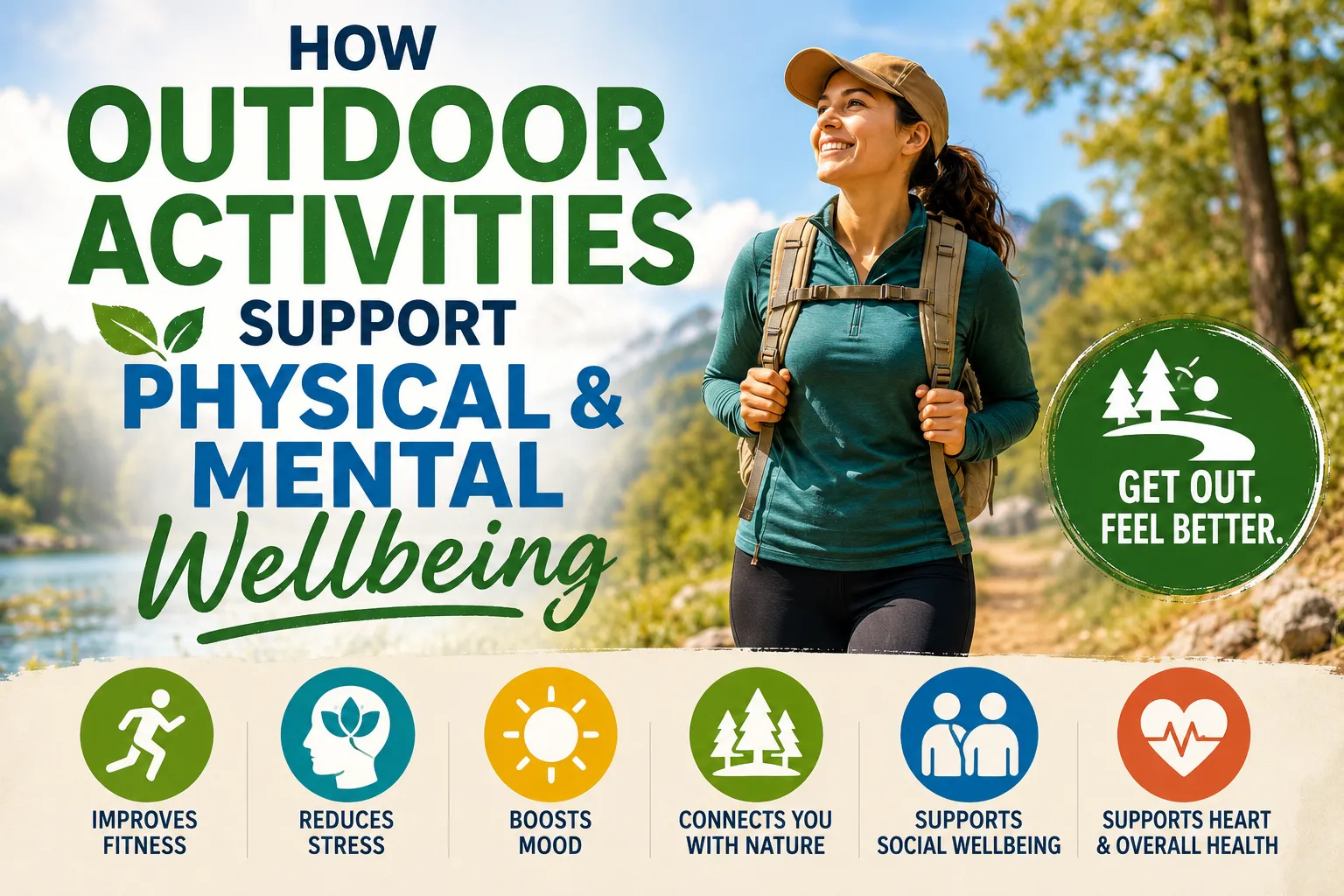

How Outdoor Activities Support Physical and Mental Wellbeing
Spending time outdoors can be one of the simplest ways to support a healthier lifestyle. Walking through a park, cycling along a trail, gardening, swimming, hiking or simply spending time in a natural setting can provide benefits that extend beyond physical fitness.
Outdoor activities combine movement, fresh surroundings and a change of environment. That combination can support cardiovascular health, muscle strength, mobility, mood and overall wellbeing.
The benefits do not necessarily require intense workouts or expensive equipment. For many people, making outdoor movement a regular part of everyday life can be a practical way to become more active while also creating opportunities to relax and recharge.
For a broader look at how different forms of movement fit into a healthy lifestyle, see the complete guide to physical activity and exercise.
Why Being Outdoors Can Make a Difference
Modern life often involves spending long periods indoors, sitting at desks, commuting, watching screens or performing other sedentary activities.
Outdoor activities can interrupt that pattern.
Going outside often encourages people to move naturally. A walk through a neighborhood, for example, may involve more steps than simply walking around the house. A hike can challenge the legs and cardiovascular system, while gardening can involve bending, lifting, reaching and carrying.
At the same time, being outdoors changes the environment around us.
Natural light, fresh air, changing scenery and exposure to green spaces can create a noticeable contrast with indoor routines.
This combination of movement and environmental change makes outdoor activity particularly appealing as part of a healthy lifestyle.
Walking Is One of the Easiest Ways to Start
Walking requires little equipment and can be adapted to almost any fitness level.
A leisurely walk can provide gentle movement, while a brisk pace can provide a more demanding cardiovascular workout.
Regular walking can help support:
- Cardiovascular fitness
- Muscle endurance
- Joint mobility
- Balance
- Energy expenditure
- Everyday physical function
Walking can also be easy to incorporate into daily routines.
Someone might walk to a nearby store, take a short walk during a lunch break or spend part of the evening walking through a local park.
The simplicity of walking is one of its greatest strengths.
For people who are interested in how walking fits into broader activity goals, the evidence on whether you really need 10,000 steps a day provides useful context.
Hiking Adds Variety and Challenge
Hiking can turn ordinary walking into a more varied physical activity.
Uneven terrain, inclines and declines can require the body to work differently from walking on a flat surface.
Hiking may challenge:
- Leg muscles
- Core stability
- Balance
- Coordination
- Cardiovascular endurance
It can also provide a change of scenery that makes exercise feel less repetitive.
Instead of watching a clock or counting repetitions, hikers can focus on the trail, landscape and experience.
That can make physical activity feel more like recreation than exercise.
Cycling Can Build Cardiovascular Fitness
Cycling is another versatile outdoor activity.
Whether someone rides on roads, trails or dedicated cycling paths, pedaling can provide an effective cardiovascular workout while also engaging the muscles of the lower body.
Cycling can be adjusted to different fitness levels.
A relaxed ride can provide gentle movement, while hills, longer distances or faster speeds can increase the physical challenge.
Cycling can also serve a practical purpose by providing an alternative way to travel for some people.
When exercise becomes part of transportation or recreation, it may be easier to maintain consistently.
Gardening Is Physical Activity Too
Gardening may not look like traditional exercise, but it can involve considerable movement.
Digging, planting, carrying soil, pulling weeds, watering plants and moving around a garden can require strength, flexibility and endurance.
Gardening can also encourage people to spend extended periods outdoors without feeling like they are completing a formal workout.
For older adults in particular, gardening can provide opportunities for movement while supporting a sense of purpose and connection with nature.
It can also encourage healthier eating when people grow fruits, vegetables and herbs at home.
Outdoor Activities Can Support Heart Health
Regular physical activity is an important component of cardiovascular health.
Activities that elevate the heart rate can help improve cardiovascular fitness over time.
Brisk walking, cycling, swimming, hiking and other aerobic activities can all contribute to an active lifestyle.
The key is consistency.
A single intense workout is unlikely to transform cardiovascular health. Regular movement accumulated over weeks, months and years is more meaningful.
Outdoor activities can make that consistency easier because they offer many ways to remain active without repeating the same workout.
For another perspective on how different forms of exercise complement one another, see strength training vs cardio for long-term health.
Nature Can Provide a Mental Break
The psychological benefits of outdoor activity are another important part of the picture.
Spending time outside can provide a break from work, household responsibilities and digital screens.
A walk through a green space may create an opportunity to step away from notifications and concentrate on the physical environment.
Instead of staring at a computer or phone, people can pay attention to trees, sounds, weather, wildlife and the surrounding landscape.
That change in attention can make an outdoor activity feel restorative.
Outdoor Movement and Stress
Everyday stress can affect how people feel physically and mentally.
Exercise is widely recognized as one component of a healthy approach to managing stress, and outdoor exercise adds an environmental element to that experience.
A walk after a demanding day, for example, can provide both physical movement and a transition between work and personal time.
The activity does not have to be intense.
Even a gentle walk can create a deliberate pause in the day.
For some people, that routine can become a useful way to clear their minds and create separation from stressful situations.
Outdoor Activities Can Improve Mood
Physical activity and psychological wellbeing are closely connected.
Exercise can influence mood and is often associated with better emotional wellbeing.
Outdoor activities may offer additional benefits by combining exercise with exposure to natural surroundings.
A person who dislikes conventional gym workouts may find it easier to stay active by walking, hiking, gardening or cycling outdoors.
Enjoyment matters.
An activity that someone genuinely likes is more likely to become a regular habit.
Sunlight and the Body’s Daily Rhythm
Spending time outdoors also exposes people to natural light.
Light plays an important role in the body’s circadian system, which helps regulate the sleep-wake cycle.
Getting natural light during the day can support healthy daily rhythms, particularly when combined with consistent sleep and wake times.
This does not mean people should seek excessive sun exposure.
Outdoor activity should be balanced with sensible sun protection, particularly during periods of strong ultraviolet radiation.
Shade, protective clothing and appropriate sunscreen can help reduce unnecessary exposure.
Outdoor Activities Can Encourage Better Sleep Habits
Regular physical activity is associated with healthier sleep for many people.
Outdoor routines may also help establish a clearer distinction between daytime activity and nighttime rest.
For example, someone who spends part of the morning walking outdoors may begin the day with movement and natural light rather than immediately starting work in front of a screen.
A consistent daily routine can support healthy sleep habits.
However, people differ in how exercise affects their sleep, and very intense activity close to bedtime may not feel comfortable for everyone.
Social Connection Is Another Benefit
Outdoor activities do not have to be solitary.
Walking with a friend, joining a hiking group, cycling with others or playing an outdoor sport can create opportunities for social interaction.
Social connection is an important part of overall wellbeing.
A regular walking partner can also provide accountability.
It can be easier to maintain a habit when someone else is expecting you to show up.
For families, outdoor activities can create opportunities to spend time together away from screens and other distractions.
Outdoor Activities Can Help Children Stay Active
Children naturally benefit from opportunities to move, explore and play.
Outdoor play can involve running, climbing, jumping, balancing and other forms of movement that support physical development.
It can also provide opportunities for creativity and problem-solving.
Instead of structured exercise, children may simply explore their surroundings, play games or participate in sports.
Encouraging enjoyable outdoor activity can help establish positive attitudes toward movement that may continue into adulthood.
Outdoor Exercise Can Reduce Exercise Monotony
One reason people stop exercising is boredom.
Repeating the same indoor workout can eventually become less appealing.
Outdoor activities offer almost unlimited variety.
One day might involve:
- Walking
- Another day cycling
- Weekend hiking
- Gardening on another afternoon
- Swimming during warmer weather
- Playing an outdoor sport
This variety can make an active lifestyle more interesting.
It also allows people to choose activities based on their mood, schedule and surroundings.
Shorter activities can also be useful when time is limited. You may not need a long workout to make movement part of a busy day.
Different Activities Train Different Abilities
A varied outdoor routine can expose the body to different forms of movement.
Walking can build endurance.
Hiking can challenge balance and leg strength.
Cycling can improve cardiovascular fitness.
Gardening can involve strength and flexibility.
Outdoor sports can add speed, coordination and agility.
This variety can contribute to broader physical fitness rather than focusing exclusively on one ability.
Outdoor Activities Can Support Healthy Aging
Staying physically active becomes increasingly important as people age.
Regular movement can help maintain muscle strength, balance, mobility and independence.
Outdoor activities can provide enjoyable ways to keep moving.
Walking, gardening, low-impact cycling and other activities can be adapted to different abilities.
For older adults, balance and fall prevention may be particularly important. Activities should therefore be selected according to individual fitness, mobility and medical circumstances.
The goal is not necessarily intense exercise. Maintaining the ability to move confidently and independently can be a major part of healthy aging.
Exercise Does Not Have to Feel Like Exercise
One of the most useful ideas behind outdoor activity is that physical movement can be integrated into enjoyable experiences.
A person may not want to spend an hour on a treadmill, but they might happily spend an hour walking through a scenic area.
Someone who dislikes lifting weights might enjoy gardening.
Another person might not enjoy running but could spend an afternoon cycling with friends.
These activities can still contribute to physical fitness.
The distinction matters because enjoyment can make healthy behaviors easier to sustain.
Outdoor Activities Can Encourage Exploration
Exploring new places can add a sense of discovery to physical activity.
A person might visit a different park, explore a new walking route or plan a weekend hike.
This can turn exercise into an experience rather than a chore.
Exploration can also encourage people to spend more time outside because the environment itself becomes part of the motivation.
For people who enjoy travel, walking tours and outdoor excursions can provide a natural way to stay active while discovering new destinations.
Weather Does Not Always Have to Stop the Routine
Outdoor activity is naturally affected by weather, but a healthy routine does not have to depend on perfect conditions.
People can adapt activities to the season.
During hot weather, outdoor exercise may be more comfortable in the morning or evening. During colder months, appropriate clothing can make walking and other activities more comfortable.
Rain, extreme heat, storms or poor air quality may require people to move their workouts indoors.
Flexibility is important.
The objective is to maintain regular physical activity safely rather than forcing an outdoor workout regardless of conditions.
Safety Should Come First
Outdoor activities are generally accessible, but they are not completely risk-free.
People should consider:
- Weather conditions
- Heat and hydration
- Sun exposure
- Traffic
- Uneven terrain
- Wildlife
- Water safety
- Visibility
- Appropriate footwear
Hikers should consider the difficulty of a route before starting, particularly when exploring unfamiliar areas.
Cyclists should use appropriate safety equipment and follow local traffic rules.
People exercising in hot weather should pay attention to signs of overheating and adjust their activity accordingly.
Good preparation allows people to enjoy the benefits of outdoor activity while reducing avoidable risks.
Start Small and Build Gradually
Someone who has been inactive does not need to begin with a demanding hiking expedition or long-distance cycling trip.
Starting small can be more sustainable.
A simple progression might look like:
Week 1: Take short walks several times during the week.
Week 2: Increase walking time or pace slightly.
Week 3: Add a longer weekend activity.
Week 4: Introduce another type of movement, such as cycling or basic outdoor strength exercises.
The exact progression will vary between individuals.
The important principle is to increase activity gradually and allow the body time to adapt.
For people who prefer shorter bouts of activity, short sprints can provide another way to incorporate movement.
Creating an Outdoor Routine
A successful outdoor routine does not need to be complicated.
Choose activities that are:
- Convenient
- Enjoyable
- Appropriate for your fitness level
- Easy to repeat
- Accessible in your environment
It can also help to connect outdoor activity with an existing part of the day.
For example:
- Walk after breakfast
- Take a walk during lunch
- Garden in the afternoon
- Cycle on weekends
- Take an evening stroll with family
The more naturally an activity fits into daily life, the easier it may be to maintain.
Technology Can Support Outdoor Activity
Although outdoor activities can provide a break from screens, technology can sometimes make them easier to track and organize.
Smartphones and wearable devices can monitor:
- Steps
- Distance
- Heart rate
- Activity duration
- Routes
- Pace
Mapping applications can help people discover walking and cycling routes.
However, technology should support the experience rather than become the focus of it.
There is value in occasionally leaving the phone in your pocket and simply enjoying the environment.
The Mental Benefits Go Beyond Exercise
The appeal of outdoor activities comes from more than physical movement.
They can create opportunities to slow down, connect with other people, explore new surroundings and spend time away from digital distractions.
For someone experiencing a stressful day, a walk may provide a temporary change of environment.
For someone feeling isolated, a group activity may create social connection.
For someone struggling to maintain an exercise routine, an enjoyable outdoor hobby may make regular movement feel more natural.
These effects can complement the physical benefits of staying active.
Making Outdoor Activity Part of Everyday Life
Outdoor activity does not need to be an ambitious lifestyle project.
It can begin with something as simple as choosing to walk instead of drive for a short journey, spending time gardening, taking the stairs in an outdoor setting or going for a short evening stroll.
Over time, these small decisions can add up.
The most valuable routine is not necessarily the one that burns the most calories or covers the greatest distance. It is the one that fits into real life and can be repeated consistently.
A Healthier Relationship With the Outdoors
Outdoor activities offer a practical way to bring movement, recreation and mental breaks together.
Walking, cycling, hiking, gardening, swimming and outdoor sports can support different aspects of physical fitness while creating opportunities to spend time away from sedentary indoor routines.
The mental side is equally important. Natural surroundings can provide a change of pace, social activities can strengthen connections, and enjoyable movement can make an active lifestyle easier to maintain.
There is no requirement to become an endurance athlete or spend every weekend on a mountain trail. A few regular outdoor activities that you genuinely enjoy can become a powerful part of a balanced approach to physical and mental wellbeing.
The best place to start may simply be the nearest safe outdoor space—and the next step you are willing to take.
Continue Reading
Similar Posts

How Your Environment Affects Everyday Health
Understanding these connections can help people make practical changes that support healthier daily living.
Read article
How Aerobic Exercise Supports Cardiovascular Health
Understanding how aerobic exercise affects cardiovascular health can make it easier to choose activities that are enjoyable, sustainable, and appropriate for your fitness level.
Read article
What Is the Gut Microbiome and Why Does It Matter
Understanding how this ecosystem works can make it easier to understand why diet, lifestyle, medications, and other factors can influence digestive health.
Read article

Join 10,000+ Readers Building Healthier Habits
Get actionable wellness tips every week plus our newest articles delivered straight to your inbox.