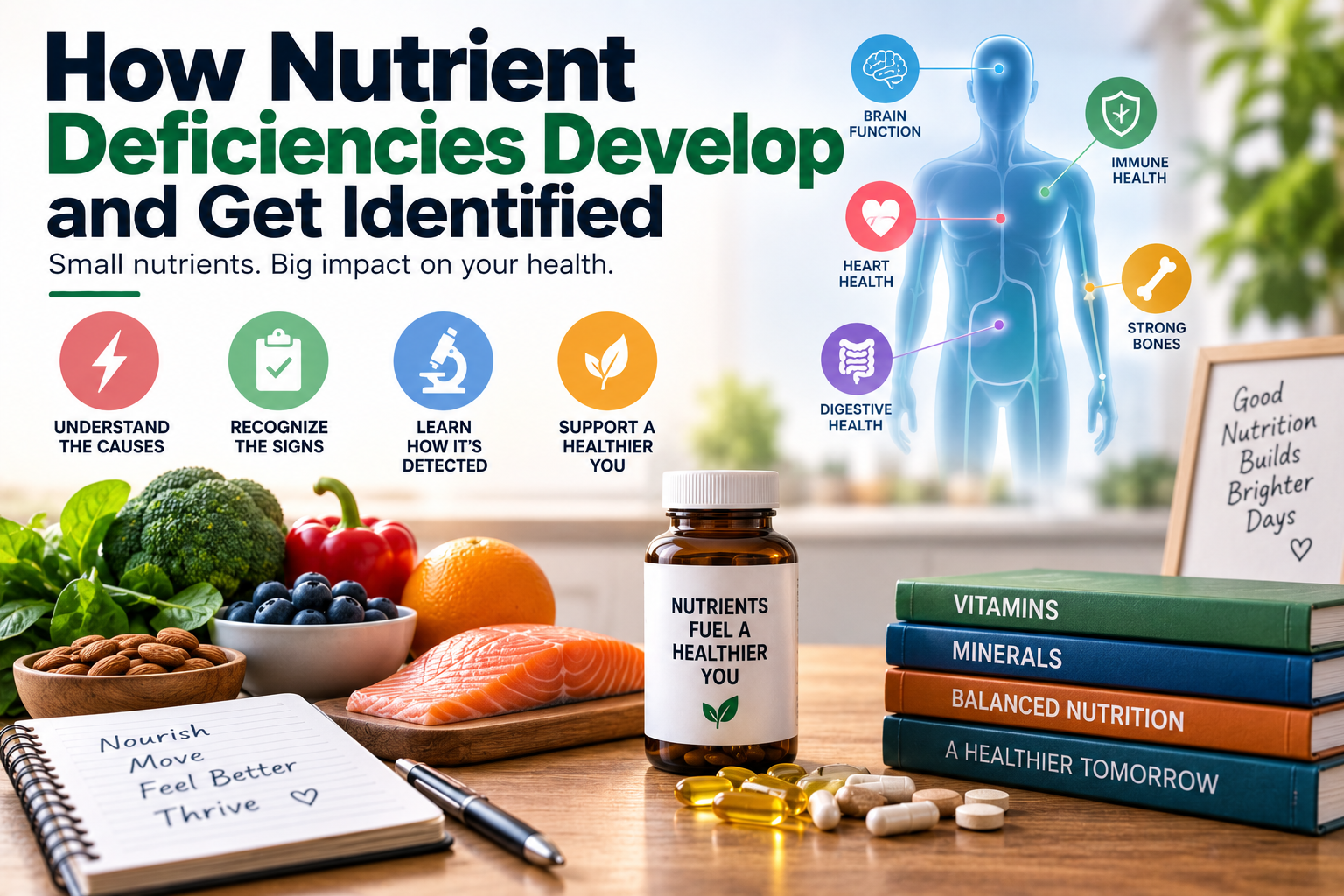

How Nutrient Deficiencies Develop and Get Identified
Nutrients are essential for nearly every process in the human body. Vitamins and minerals help produce energy, maintain bones and muscles, support the immune system, make blood cells, regulate hormones, and keep the brain and nervous system functioning properly.
Yet it is possible to develop a nutrient deficiency without realizing it. Some deficiencies develop gradually, with symptoms that can easily be mistaken for stress, lack of sleep, aging, or another health problem. Others may become apparent more quickly when the body is unable to absorb or obtain enough of a particular nutrient.
Understanding how nutrient deficiencies develop—and how healthcare professionals identify them—can make it easier to recognize potential problems before they become more serious.
What Is a Nutrient Deficiency?
A nutrient deficiency occurs when the body does not have enough of a particular essential nutrient to meet its needs.
Nutrients include vitamins, minerals, proteins, fats, carbohydrates, and other compounds required for normal physiological functions. When a person’s intake, absorption, storage, or use of a nutrient is insufficient, levels can eventually fall below what the body needs.
The severity of a deficiency can vary considerably. A person may initially have inadequate nutrient stores without obvious symptoms. As the deficiency progresses, biochemical changes can occur, followed by noticeable physical or neurological symptoms.
Not every low nutrient level represents a clinically significant deficiency. Blood concentrations can also be influenced by factors such as hydration, inflammation, medications, recent food intake, and how the body distributes or stores nutrients.
How Nutrient Deficiencies Develop
There is rarely just one reason someone becomes deficient. Several factors can contribute at the same time.
Inadequate Dietary Intake
One of the most straightforward causes is not consuming enough of a nutrient.
A highly restrictive diet, limited food variety, poor appetite, food insecurity, or regularly skipping meals can reduce the amount of essential nutrients entering the body.
For example, someone who eats very few foods may receive adequate calories but still fall short of certain vitamins or minerals.
This is one reason dietary quality matters alongside the total amount of food consumed. A broader look at food choices can be found in this Complete Guide to Healthy Eating and Balanced Nutrition.
Increased Nutritional Requirements
The body’s nutrient requirements are not identical throughout life.
Growth, pregnancy, breastfeeding, intense physical activity, recovery from illness, and certain medical conditions can increase nutritional needs.
If dietary intake does not increase accordingly, nutrient stores may gradually become depleted.
Children and adolescents, for instance, require nutrients to support growth and development. Pregnancy creates additional demands because nutrients are needed for both the pregnant person and the developing fetus.
Poor Absorption
A person can consume enough of a nutrient and still become deficient if the digestive system cannot absorb it properly.
Conditions affecting the stomach or intestines may interfere with nutrient absorption. Certain gastrointestinal disorders, intestinal surgeries, and persistent digestive problems can sometimes contribute to deficiencies.
The same issue can occur when the body lacks substances needed to absorb or process particular nutrients.
This means that simply increasing dietary intake or taking a supplement does not necessarily address the underlying problem when absorption is impaired.
Certain Medications
Some medications can affect nutrient levels by reducing absorption, altering metabolism, increasing nutrient losses, or changing how the body stores or uses certain nutrients.
The effect depends on the medication, dose, duration of treatment, and individual circumstances.
People taking medications for long periods should not automatically begin supplements, however. Supplementation can also interact with medications, and excessive amounts of certain nutrients can cause harm.
Increased Nutrient Loss
Nutrients can sometimes be lost from the body faster than they are replaced.
Examples may include prolonged vomiting or diarrhea, excessive blood loss, certain kidney conditions, and other circumstances that interfere with normal nutrient balance.
When losses continue over time, the body’s reserves may eventually become insufficient.
Alcohol and Other Lifestyle Factors
Heavy alcohol consumption can interfere with dietary intake, digestion, absorption, storage, and metabolism of several nutrients.
Smoking and other lifestyle factors can also influence nutritional status in different ways.
Poor sleep, chronic stress, and an inactive lifestyle do not automatically cause nutrient deficiencies, but they can influence eating patterns, appetite, and overall health behaviors that affect nutritional intake.
Vitamins and Minerals Play Different Roles
Vitamins and minerals are often discussed together, but they are chemically and biologically different.
Vitamins are organic compounds required in relatively small amounts. They participate in processes ranging from energy metabolism and immune function to blood formation and nervous-system activity.
For a broader look at what individual vitamins do, see the Complete Guide to Vitamins and Their Roles.
Minerals are inorganic elements that the body obtains from food and, in some cases, water. Calcium, iron, magnesium, potassium, zinc, iodine, and selenium are among the minerals needed for various bodily functions.
The Minerals Explained: Essential Nutrients Your Body Needs Every Day guide provides a closer look at their individual functions.
Water-Soluble and Fat-Soluble Vitamins Behave Differently
Another important distinction involves how vitamins are stored and handled by the body.
Water-soluble vitamins generally circulate through body fluids and, for many of them, excess amounts are eliminated through urine. They generally need to be consumed regularly because the body stores relatively limited amounts of many of these vitamins.
Fat-soluble vitamins, by contrast, can be stored in body tissues and the liver. This includes vitamins A, D, E, and K.
The difference matters because both deficiency and excessive intake can have different implications depending on the nutrient.
The difference between water-soluble and fat-soluble vitamins explains why these two groups behave differently in the body.
Why Deficiencies Can Be Difficult to Recognize
One of the biggest challenges with nutrient deficiencies is that symptoms are often nonspecific.
Fatigue is a good example. Feeling tired can be associated with inadequate sleep, stress, illness, medication effects, low mood, overtraining, or numerous other factors. In some circumstances, it can also occur with a nutrient deficiency.
Other possible symptoms may include:
- Weakness
- Changes in appetite
- Difficulty concentrating
- Headaches
- Pale skin
- Hair or skin changes
- Muscle weakness or cramps
- Numbness or tingling
- Changes in mood
- Slow wound healing
- Frequent infections
- Changes in vision
- Bone or joint problems
Having one of these symptoms does not prove that a nutrient deficiency is responsible.
That is why trying to diagnose a deficiency based solely on symptoms can be misleading.
Some Deficiencies Develop Slowly
The body has mechanisms for storing and regulating many nutrients.
When dietary intake decreases, the body may initially draw on existing stores. A person can therefore remain relatively symptom-free for some time even while their nutritional reserves are gradually declining.
The time required for a deficiency to develop depends on the nutrient, the person’s existing stores, diet, absorption, health status, and rate of nutrient use or loss.
This helps explain why a dietary change may not immediately produce obvious symptoms—and why symptoms can sometimes appear only after a prolonged period of inadequate intake.
How Healthcare Professionals Identify Nutrient Deficiencies
Identifying a deficiency usually involves more than a single test.
Healthcare professionals may consider several pieces of information, including:
- Symptoms and medical history
- Dietary patterns
- Medications and supplements
- Existing medical conditions
- Physical examination findings
- Laboratory testing
- Additional diagnostic tests when necessary
The goal is not simply to determine whether a nutrient is low but to understand why it is low and whether the result explains the person’s symptoms.
Blood Tests Can Provide Important Clues
Laboratory testing is commonly used when a deficiency is suspected.
Depending on the suspected nutrient and clinical situation, testing may measure the nutrient itself, a related compound, or biological markers affected by nutrient status.
For example, evaluating iron status may involve several laboratory measurements rather than relying on one number alone.
Similarly, some nutrients are stored primarily in tissues, meaning blood concentrations may not always provide a complete picture of total body stores.
Test results therefore need to be interpreted in context.
A number outside a laboratory’s reference range does not automatically mean a person has a clinically important deficiency, just as a result within the reference range does not always eliminate every possible nutritional concern.
Medical History Can Be Just as Important as Testing
A healthcare professional may ask questions about eating habits, digestive symptoms, weight changes, medications, alcohol consumption, previous surgeries, chronic conditions, and other factors.
These details can provide important clues about why a deficiency might have developed.
For example, a person with a restricted diet may have a different risk profile from someone who eats a varied diet but has a condition affecting nutrient absorption.
Likewise, someone experiencing persistent gastrointestinal symptoms may need evaluation of the underlying digestive problem rather than simply being advised to take a multivitamin.
Physical Signs Can Point Toward a Problem
Certain nutrient deficiencies can produce recognizable physical findings.
Changes in the skin, hair, mouth, tongue, nails, muscles, neurological function, or bones may provide clues.
However, physical signs are rarely enough by themselves to establish a diagnosis because many conditions can produce similar changes.
A healthcare professional may combine these observations with dietary information and laboratory results to determine what further evaluation is appropriate.
Why Taking Supplements Is Not Always the Answer
When people suspect they have a nutrient deficiency, supplements can seem like the simplest solution.
But more is not necessarily better.
Some vitamins and minerals can accumulate in the body, and excessive intake can produce adverse effects. Supplements can also interact with medications or interfere with laboratory testing.
Taking a supplement without knowing whether a deficiency exists can therefore create a new problem while leaving the original cause untreated.
For example, if a deficiency results from poor absorption, simply increasing dietary intake may not resolve it. If medication is contributing to the problem, the underlying treatment plan may need to be reviewed by a healthcare professional.
Food Usually Comes First
For most people, a varied diet provides the foundation for meeting nutritional needs.
Whole grains, vegetables, fruits, legumes, nuts, seeds, dairy or suitable alternatives, eggs, fish, meat, and other protein-rich foods can contribute different combinations of vitamins and minerals.
Dietary diversity is particularly important because no single food supplies every nutrient in the amounts the body needs.
Supplements can still have an important role in specific situations. People with confirmed deficiencies, certain medical conditions, restricted diets, increased nutritional requirements, or other risk factors may benefit from targeted supplementation under appropriate guidance.
Who May Be More Vulnerable to Deficiencies?
Nutrient deficiencies can affect anyone, but certain circumstances can increase the risk.
These may include:
- Highly restrictive diets
- Limited access to nutritious foods
- Persistent digestive problems
- Previous gastrointestinal surgery
- Certain chronic diseases
- Long-term use of some medications
- Pregnancy and breastfeeding
- Older age
- Rapid growth
- Heavy alcohol consumption
- Conditions associated with increased nutrient loss
- Poor appetite over an extended period
Having a risk factor does not mean a person has a deficiency. It simply means nutritional status may deserve greater attention.
Nutrient Deficiency Is Different From Poor Diet Quality
A person can have a diet that is generally healthy while still developing a deficiency.
Conversely, someone may consume enough of a particular nutrient while having an overall dietary pattern that lacks balance.
Nutritional health is therefore broader than checking individual vitamins and minerals.
A balanced eating pattern provides protein, carbohydrates, healthy fats, fiber, vitamins, minerals, and other beneficial compounds while supporting appropriate energy intake.
Focusing exclusively on individual nutrients can sometimes encourage people to overlook the bigger picture.
When Testing May Be Worth Discussing
Testing is particularly worth discussing with a healthcare professional when symptoms are persistent, unexplained, or accompanied by other changes in health.
It may also be appropriate when someone has a condition or circumstance known to affect nutrient absorption or requirements.
Rather than ordering every possible nutrient test, clinicians generally use the person’s history and symptoms to determine which tests are most relevant.
This targeted approach can reduce unnecessary testing and make results easier to interpret.
What Happens After a Deficiency Is Identified?
Treatment depends on the nutrient involved and the reason it became deficient.
A healthcare professional may recommend:
- Increasing specific foods
- Using a targeted supplement
- Adjusting the dose or form of a supplement
- Treating an underlying medical condition
- Addressing absorption problems
- Reviewing medications when appropriate
- Monitoring laboratory levels over time
Treatment may also require patience.
If nutrient stores have been depleted significantly, restoring them can take time. Symptoms may improve at different rates depending on the underlying cause and the extent of the deficiency.
Preventing Nutrient Deficiencies
Prevention begins with maintaining a varied and adequate diet.
Practical strategies include:
- Eating a wide variety of foods
- Including fruits and vegetables regularly
- Choosing different sources of protein
- Eating nutrient-rich whole grains and legumes
- Including healthy sources of dietary fat
- Paying attention to calcium- and iron-rich foods
- Avoiding unnecessarily restrictive diets
- Discussing dietary restrictions with a healthcare professional when needed
- Reviewing long-term supplement use periodically
- Seeking medical advice for persistent digestive symptoms
- Following recommended nutritional guidance during pregnancy and other periods of increased need
The objective is not to consume as many nutrients as possible. It is to provide the body with appropriate amounts consistently.
Listening to Symptoms Without Self-Diagnosing
Symptoms should not be ignored, but they should also not automatically be attributed to a vitamin or mineral deficiency.
Fatigue, headaches, weakness, changes in concentration, hair loss, and other common symptoms have many possible causes.
Self-diagnosing based on internet symptom lists can lead people toward unnecessary supplements or delay evaluation of another medical condition.
A more reliable approach is to consider the entire picture: symptoms, diet, medical history, medications, risk factors, and appropriate testing.
The Bigger Picture Behind Nutrient Status
Nutrient deficiencies rarely appear out of nowhere. They can develop through a gradual combination of inadequate intake, increased requirements, poor absorption, nutrient losses, medication effects, or underlying health conditions.
Recognizing the potential causes is just as important as identifying the nutrient involved.
For anyone concerned about a possible deficiency, the most useful first step is usually not automatically reaching for a high-dose supplement. It is understanding what may be causing the problem and determining whether testing or professional evaluation is appropriate.
Good nutrition is ultimately about more than individual nutrient numbers. A varied diet, appropriate medical care, and attention to changes in health provide a stronger foundation for maintaining nutritional status over the long term.
Continue Reading
Similar Posts
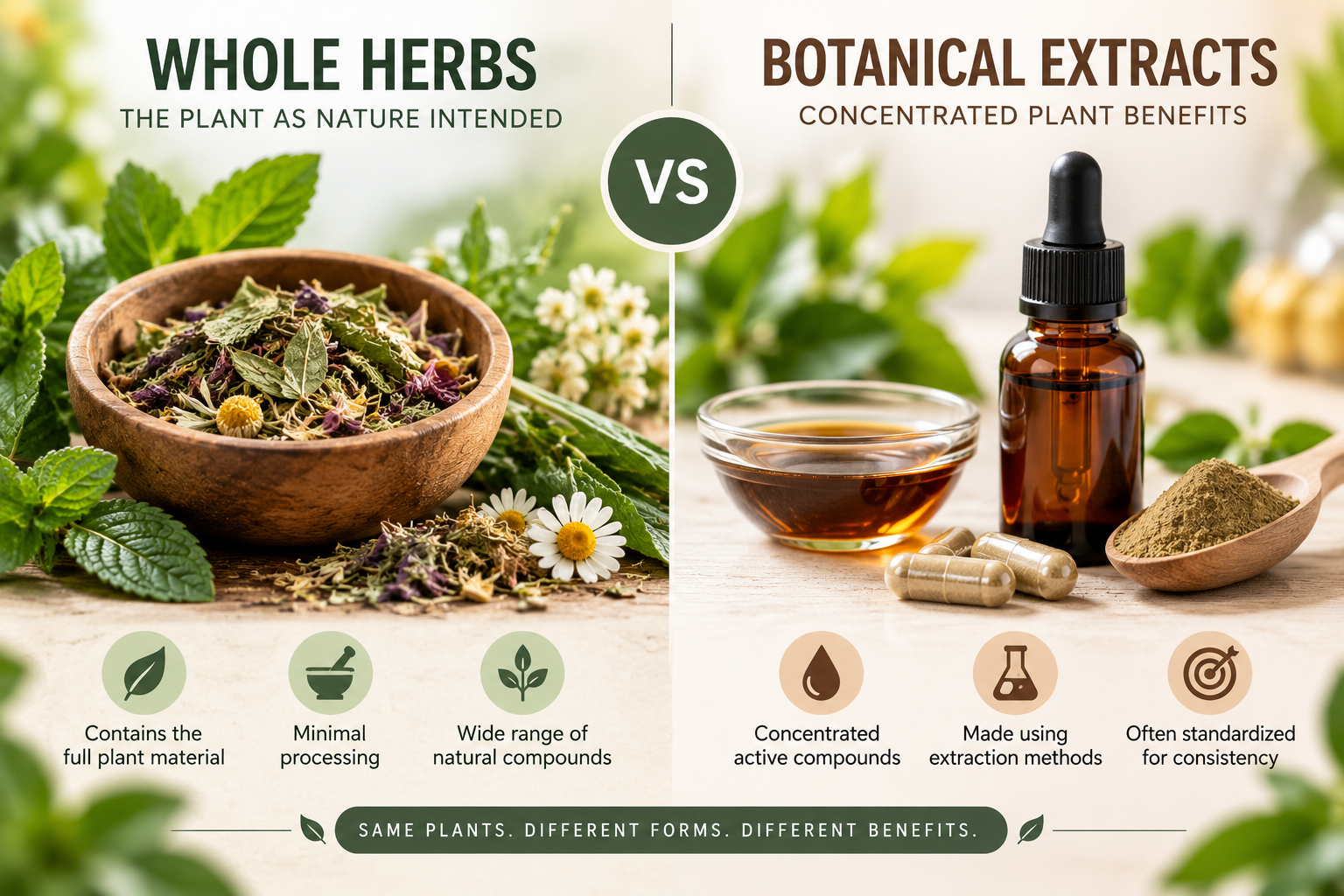
How Botanical Extracts Differ From Whole Herbs
Understanding how extracts differ from whole herbs can make it easier to interpret supplement labels, compare products, and evaluate claims about herbal ingredients.
Read article
What Is the Difference Between Water-Soluble and Fat-Soluble Vitamins
Understanding this basic distinction can make it easier to interpret nutrition information, evaluate supplements, and make informed decisions about dietary intake.
Read article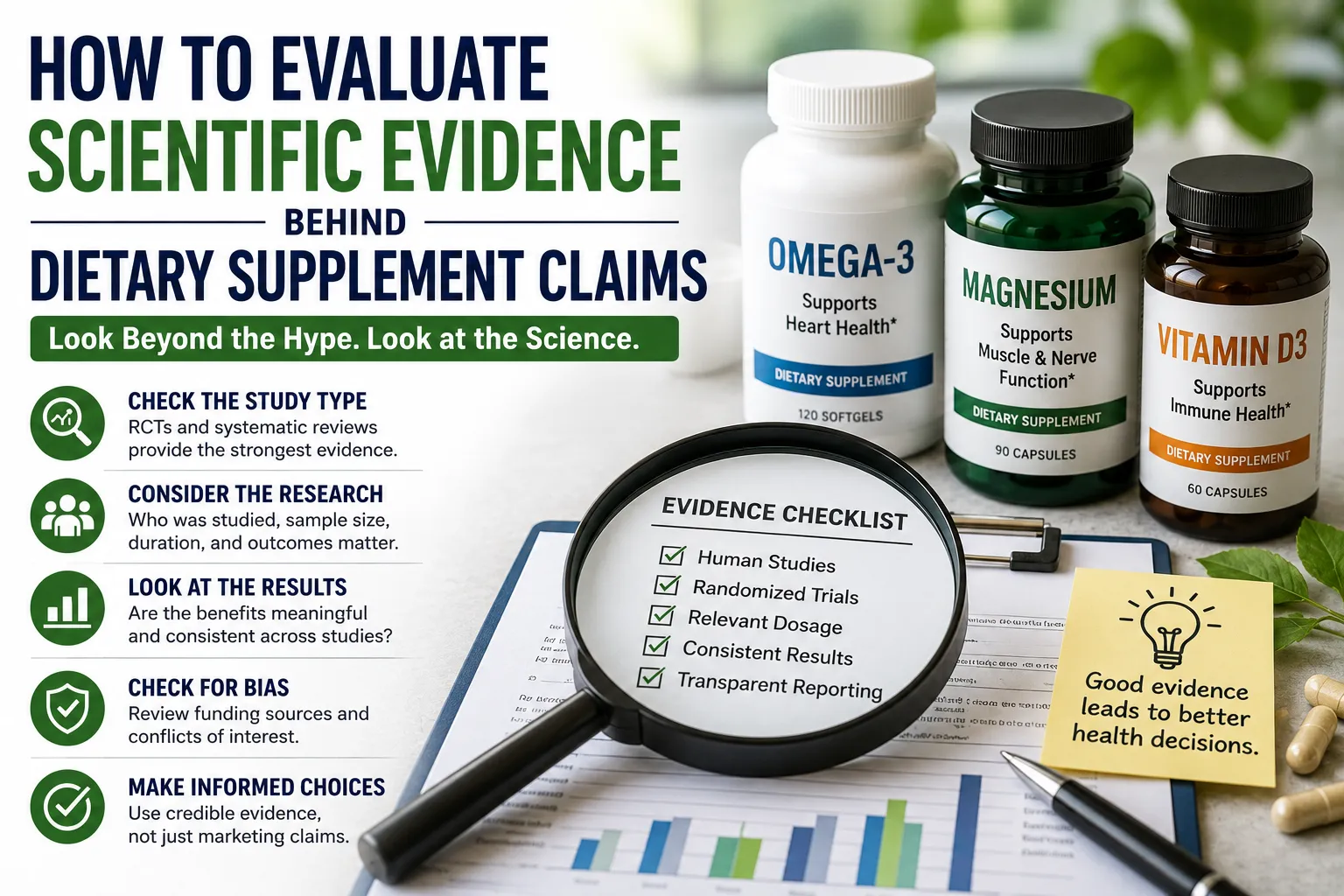
How to Evaluate Scientific Evidence Behind Dietary Supplement Claims
Learning how to evaluate the evidence can help consumers distinguish genuine scientific findings from exaggerated marketing claims.
Read article

Join 10,000+ Readers Building Healthier Habits
Get actionable wellness tips every week plus our newest articles delivered straight to your inbox.