How Botanical Extracts Differ From Whole Herbs
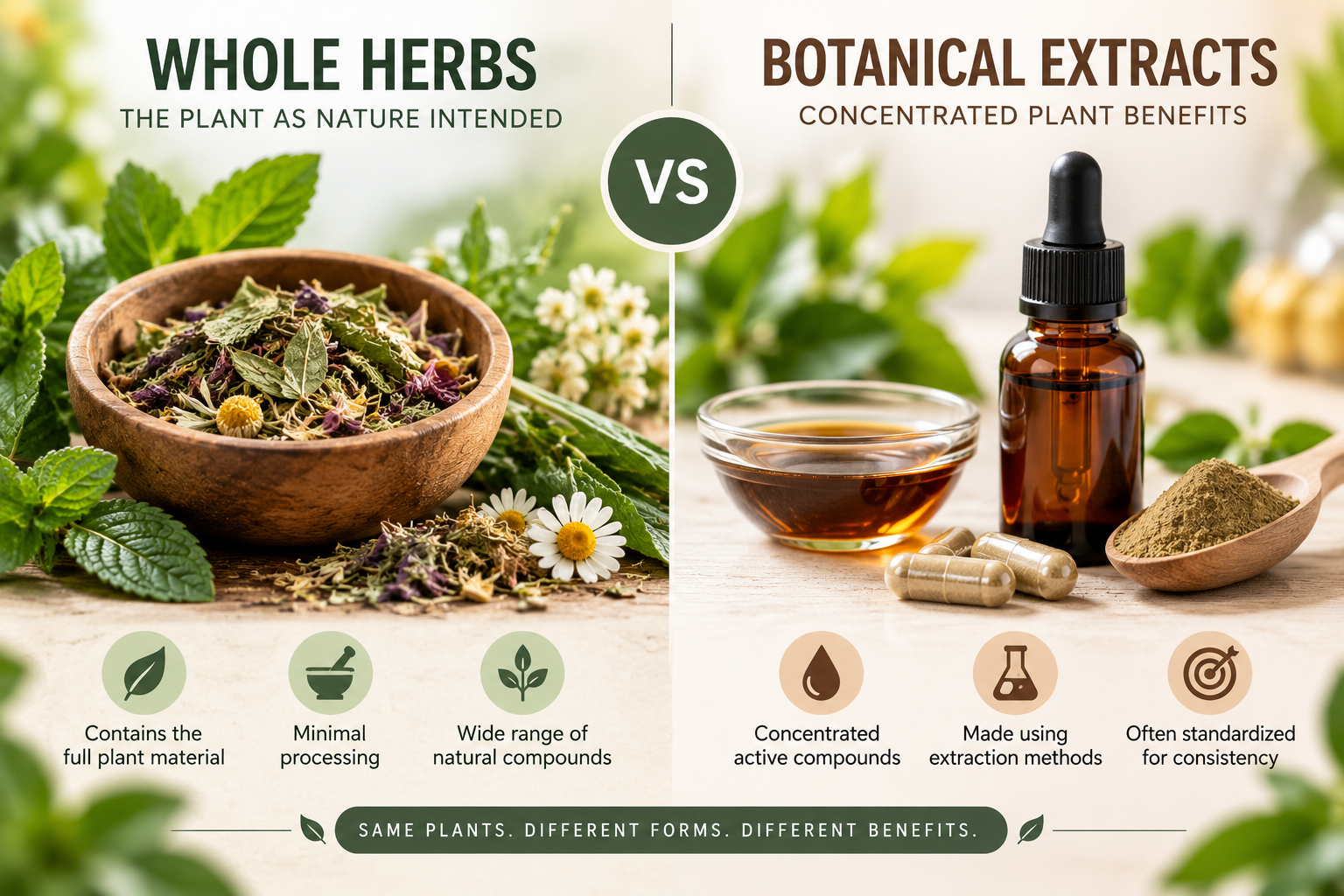
Botanical extracts and whole herbs both come from plants, but they are not the same type of ingredient. The difference can affect their composition, concentration, preparation, labeling, and how they are used in supplements and herbal products.
A whole herb generally contains the plant material in a relatively unprocessed or simply processed form. A botanical extract, by contrast, is produced by using a process designed to remove and concentrate some of the plant’s constituents.
That distinction matters when comparing herbal supplements. Two products may carry the same plant name on their labels while containing very different amounts and combinations of plant compounds.
Understanding how extracts differ from whole herbs can make it easier to interpret supplement labels, compare products, and evaluate claims about herbal ingredients.
What Is a Whole Herb?
A whole herb is plant material used with relatively little separation of its naturally occurring constituents.
Depending on the product, the material might include the plant’s:
- Leaves
- Flowers
- Stems
- Roots
- Rhizomes
- Seeds
- Bark
- Fruits
The plant material may be dried and ground into a powder, cut into pieces, or otherwise prepared for use in teas, capsules, tablets, or other products.
The term “whole herb” does not necessarily mean that a plant has undergone no processing. Drying, grinding, milling, and other preparation methods can alter the physical form of plant material without turning it into a concentrated extract.
What Is a Botanical Extract?
A botanical extract is produced by processing plant material to transfer certain compounds from the plant into another medium.
Manufacturers may use water, alcohol, glycerin, or other solvents depending on the plant and the desired constituents. After extraction, the resulting material can be concentrated or otherwise processed into a liquid, powder, or other form.
The objective is generally to obtain particular groups of compounds in a more concentrated or standardized form than they would occur in the original plant material.
This means an extract is not simply a whole herb in a smaller package. Its chemical composition can be substantially different.
The Main Difference Is Concentration
One of the most important distinctions between whole herbs and extracts is concentration.
A capsule containing powdered plant material may contain a particular amount of the dried herb itself. An extract may have been made from a larger quantity of plant material and then concentrated into a smaller amount.
For example, a product might state that an extract was produced from several grams of a particular plant and then concentrated into a much smaller quantity of extract.
However, the ratio alone does not tell the entire story.
The extraction process determines which compounds are transferred from the plant into the final product. Consequently, two extracts made from the same amount of starting material can have different chemical profiles.
Extraction Methods Matter
The method used to produce an extract can influence what ends up in the final ingredient.
Different compounds have different chemical properties. Some dissolve more readily in water, while others are more soluble in alcohol or other solvents.
Manufacturers therefore select extraction methods according to the characteristics of the plant and the compounds they want to obtain.
Common approaches include:
Water Extraction
Water can extract many water-soluble plant constituents. Teas and infusions are familiar examples of preparations based on water extraction.
Alcohol Extraction
Alcohol can dissolve certain compounds that are less readily extracted by water. Liquid herbal preparations such as tinctures may use alcohol as an extraction medium.
Hydroalcoholic Extraction
Some products use a combination of water and alcohol to extract a broader range of compounds with different solubility characteristics.
Other Extraction Techniques
Commercial manufacturing can involve additional solvents or specialized processes. The resulting extract may subsequently be dried, concentrated, filtered, or standardized.
Because extraction conditions influence composition, knowing that a product is an “extract” is not enough to determine exactly what it contains.
Whole Herbs Contain a Broader Plant Matrix
Whole-herb preparations can contain a wider range of naturally occurring plant material because the starting material has not been selectively extracted to the same degree.
This may include fiber and various plant constituents that are present in the original plant.
An extract can contain a narrower selection of constituents depending on the extraction method.
This difference is sometimes described in terms of the plant’s broader chemical profile. However, it is important not to assume that a broader profile automatically makes one preparation better.
The appropriate form depends on the intended use, the available evidence, product quality, and individual circumstances.
Extracts Can Be Standardized
Some botanical extracts are standardized to contain a specified amount or range of a particular constituent or group of constituents.
Standardization can make products easier to compare when the declared marker compounds are meaningful and reliably measured.
For example, a label might identify a specific percentage of a plant constituent rather than simply stating the weight of the extract.
However, standardization does not automatically establish that a product is effective or safe. It describes a characteristic of the product rather than proving a health outcome.
This is one reason evidence needs to be evaluated separately from marketing claims.
The Complete Guide to Natural Remedies Evidence provides useful context for understanding how evidence surrounding natural remedies should be interpreted.
Whole Herbs and Extracts Can Have Different Labels
The label can reveal important differences between apparently similar products.
A whole-herb supplement might list the amount of powdered plant material, while an extract could specify:
- The extract ratio
- The extraction solvent
- A standardized constituent
- The plant part used
- The concentration
- Serving size
- Other ingredients
Consumers should avoid assuming that two products with the same botanical name are equivalent.
The details of preparation can matter just as much as the name of the plant itself.
The Plant Part Makes a Difference
Another important consideration is which part of the plant is used.
A root extract is not necessarily equivalent to a leaf preparation from the same species. Different parts of a plant can contain different concentrations and combinations of chemical constituents.
Labels should therefore be examined for information about the plant part.
Terms such as “root,” “leaf,” “flower,” “bark,” or “seed” can provide important information about the source material.
This is particularly relevant when comparing research studies with commercial supplements. A study involving a specific plant part or extract cannot automatically be assumed to apply to every preparation made from the same plant.
Botanical Names Can Help Identify Ingredients
Common names can refer to different plants, depending on the country or region.
Scientific botanical names can provide greater specificity by identifying the plant genus and species.
A quality product label may provide information such as:
- Botanical genus
- Species
- Plant part
- Extract type
- Amount per serving
- Standardized constituents, when applicable
Accurate identity is particularly important because substitution or misidentification of plant materials can affect both quality and safety.
For a broader explanation of herbal products, the Herbal Medicine Explained guide explores how herbs are prepared and used in traditional and modern contexts.
Extract Ratios Need Careful Interpretation
Some botanical products use terms such as “10:1 extract” or similar ratios.
An extract ratio generally describes the relationship between the amount of starting plant material and the amount of resulting extract. It can provide useful information about manufacturing, but it should not automatically be interpreted as a measure of potency or effectiveness.
For example, a higher extraction ratio does not necessarily mean that one product contains proportionally more of every active compound.
The extraction method, solvent, plant part, processing conditions, and specific constituents all influence the final composition.
Whole Herb Does Not Mean Automatically Safer
It can be tempting to think that a whole herb is inherently safer because it is less concentrated.
That assumption is not necessarily justified.
Plants can contain biologically active compounds, and whole-herb products can still cause adverse effects or interact with medications. Concentration is only one factor affecting exposure and risk.
Similarly, an extract is not automatically dangerous simply because it is concentrated.
Safety depends on factors such as the plant, preparation, dose, quality, individual characteristics, and interactions with medicines or other substances.
Extracts May Deliver More Consistent Amounts of Certain Constituents
One potential advantage of a well-characterized extract is greater consistency in the amount of a selected constituent.
Natural plant material can vary because of:
- Growing conditions
- Soil
- Climate
- Plant variety
- Harvest timing
- Storage
- Processing
- Geographic origin
Manufacturing controls can reduce some of this variation.
However, consistency depends on the quality of the manufacturing process and the testing used to verify the finished product.
Quality Is Important for Both Forms
Whether a product contains whole herbs or extracts, quality can vary.
Consumers should consider whether the product provides clear information about its ingredients and manufacturing.
Useful label information can include:
- Full botanical identity
- Plant part
- Amount per serving
- Extraction method or ratio when relevant
- Standardized constituents when applicable
- Other ingredients
- Lot or batch information
- Manufacturer information
- Appropriate storage instructions
The guide to evaluating the quality, purity, identity and labeling of herbal products explains the key factors consumers can consider when assessing herbal products.
Research on an Extract Does Not Automatically Apply to Every Herb Product
This is an important distinction when reading claims about herbal supplements.
Suppose a clinical study evaluates a particular standardized extract. The findings cannot necessarily be transferred directly to a capsule containing powdered whole herb.
The products may differ in:
- Chemical composition
- Concentration
- Plant part
- Extraction method
- Dose
- Standardization
- Manufacturing process
The same principle works in reverse. Evidence involving a whole-herb preparation does not necessarily establish the effects of a concentrated extract.
When evaluating research, the specific preparation used in the study should be compared with the product being considered.
Safety Considerations Apply to Both
Both whole herbs and botanical extracts can have pharmacological effects.
Potential concerns may include allergic reactions, gastrointestinal effects, interactions with medications, effects on blood clotting, changes in blood pressure or blood sugar, and other product-specific risks.
Extracts can sometimes provide higher concentrations of certain compounds, making the amount consumed particularly important.
People taking prescription medicines, preparing for surgery, pregnant or breastfeeding individuals, and people with specific health conditions may need professional guidance before using certain herbal products.
The Natural Remedies Safety Guide covers broader considerations involving risks, interactions, and responsible use of natural remedies.
Why “Natural” Does Not Mean Identical
Two products can both be described as natural while being chemically different.
A whole herb preserves much of the original plant material, whereas extraction selectively transfers some compounds into a separate preparation.
Even among extracts, products can differ according to extraction solvent, plant part, extraction ratio, standardization, and manufacturing process.
This is why the word “natural” provides very little information about whether two products are equivalent.
How to Compare a Whole Herb With an Extract
When comparing products, consumers can work through a straightforward checklist.
1. Identify the Plant
Check the common and botanical names where available.
2. Check the Plant Part
Determine whether the product uses the root, leaf, flower, seed, bark, fruit, or another part.
3. Determine the Form
Establish whether the product contains whole-herb powder, an extract, or a combination.
4. Examine the Amount
Look at the amount per serving rather than comparing capsule sizes alone.
5. Check Extraction Information
For extracts, look for information about extraction ratios, solvents, or standardized constituents when provided.
6. Consider the Evidence
Determine whether research exists for the specific preparation rather than simply the plant name.
7. Assess Quality Information
Look for clear labeling and credible quality controls.
8. Consider Safety
Review potential adverse effects and interactions relevant to the particular ingredient and the person using it.
This approach provides a more meaningful comparison than simply asking which product contains “more herb.”
Choosing Between Whole Herbs and Extracts
There is no universal rule that one form is better than the other.
Whole-herb products may appeal to people who prefer preparations that retain more of the original plant material. Extracts can be useful when a manufacturer wants to concentrate or characterize particular constituents.
The most appropriate choice depends on the specific botanical, the purpose of use, the evidence available, the product’s quality, and individual safety considerations.
A carefully labeled, well-characterized product is generally easier to evaluate than one that provides little information about what it contains.
Reading Herbal Supplement Claims More Carefully
Marketing language can make botanical products appear simpler than they really are.
Words such as “pure,” “potent,” “full spectrum,” “standardized,” and “high strength” can describe product characteristics, but they do not by themselves establish effectiveness.
Consumers should look beyond promotional language and examine the actual composition of the product.
The most useful questions are straightforward: What plant is present? Which part was used? How was it prepared? How much is provided? What evidence supports this specific preparation? And what safety considerations apply?
The Difference Comes Down to Preparation and Composition
Whole herbs and botanical extracts originate from the same basic source—the plant—but the way that material is processed can create substantially different products.
A whole herb generally retains a broader portion of the original plant material, while an extract is produced to transfer and potentially concentrate selected constituents. Extraction method, plant part, concentration, standardization, and manufacturing quality can all influence the final product.
Understanding those differences helps consumers look beyond the botanical name on a label. Rather than assuming that every product made from the same herb is interchangeable, it is better to examine exactly what the product contains, how it was prepared, what evidence exists for that preparation, and what safety considerations apply.
Continue Reading
Similar Posts
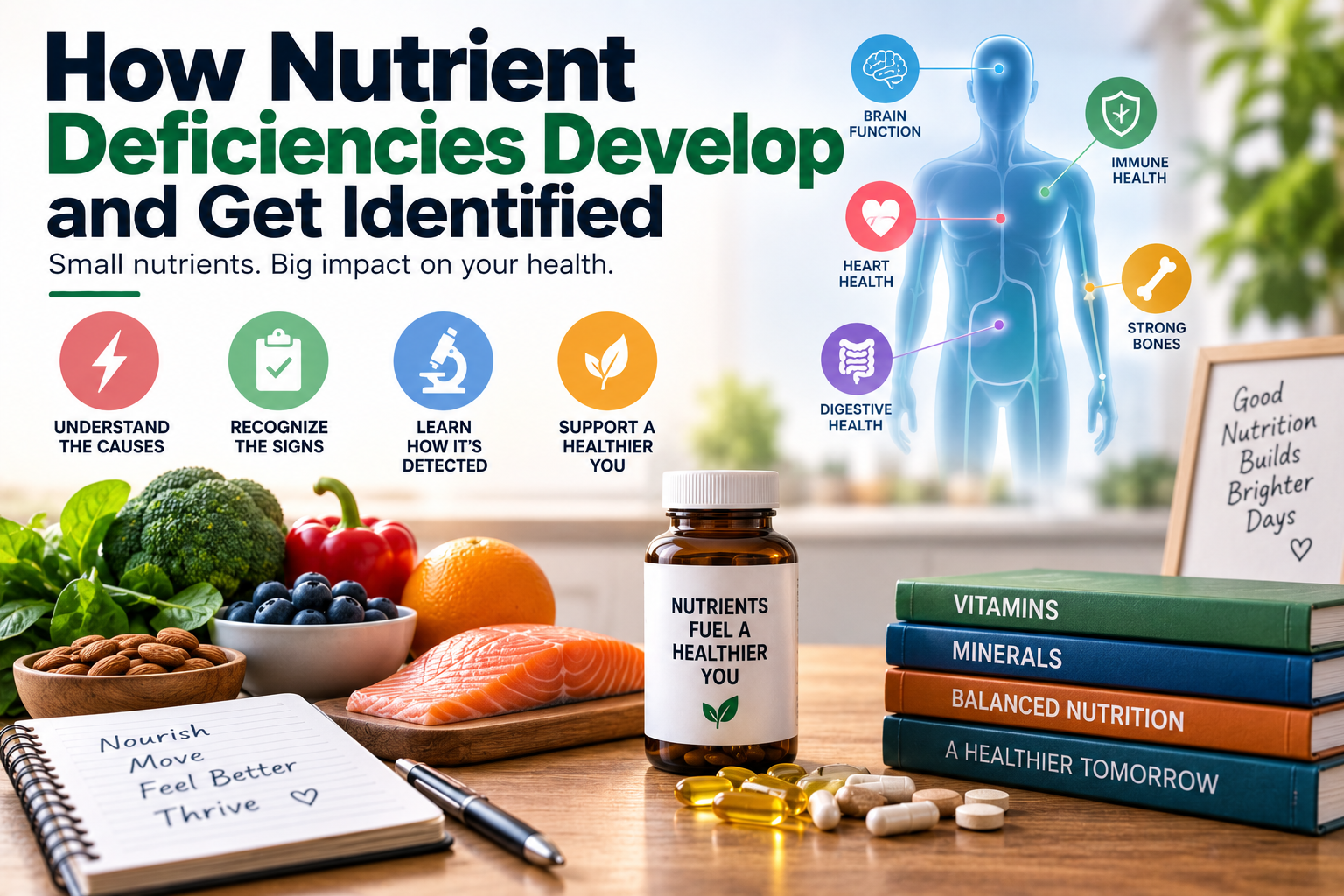
How Nutrient Deficiencies Develop and Get Identified
Understanding how nutrient deficiencies develop—and how healthcare professionals identify them—can make it easier to recognize potential problems before they become more serious.
Read article
What Is the Difference Between Water-Soluble and Fat-Soluble Vitamins
Understanding this basic distinction can make it easier to interpret nutrition information, evaluate supplements, and make informed decisions about dietary intake.
Read article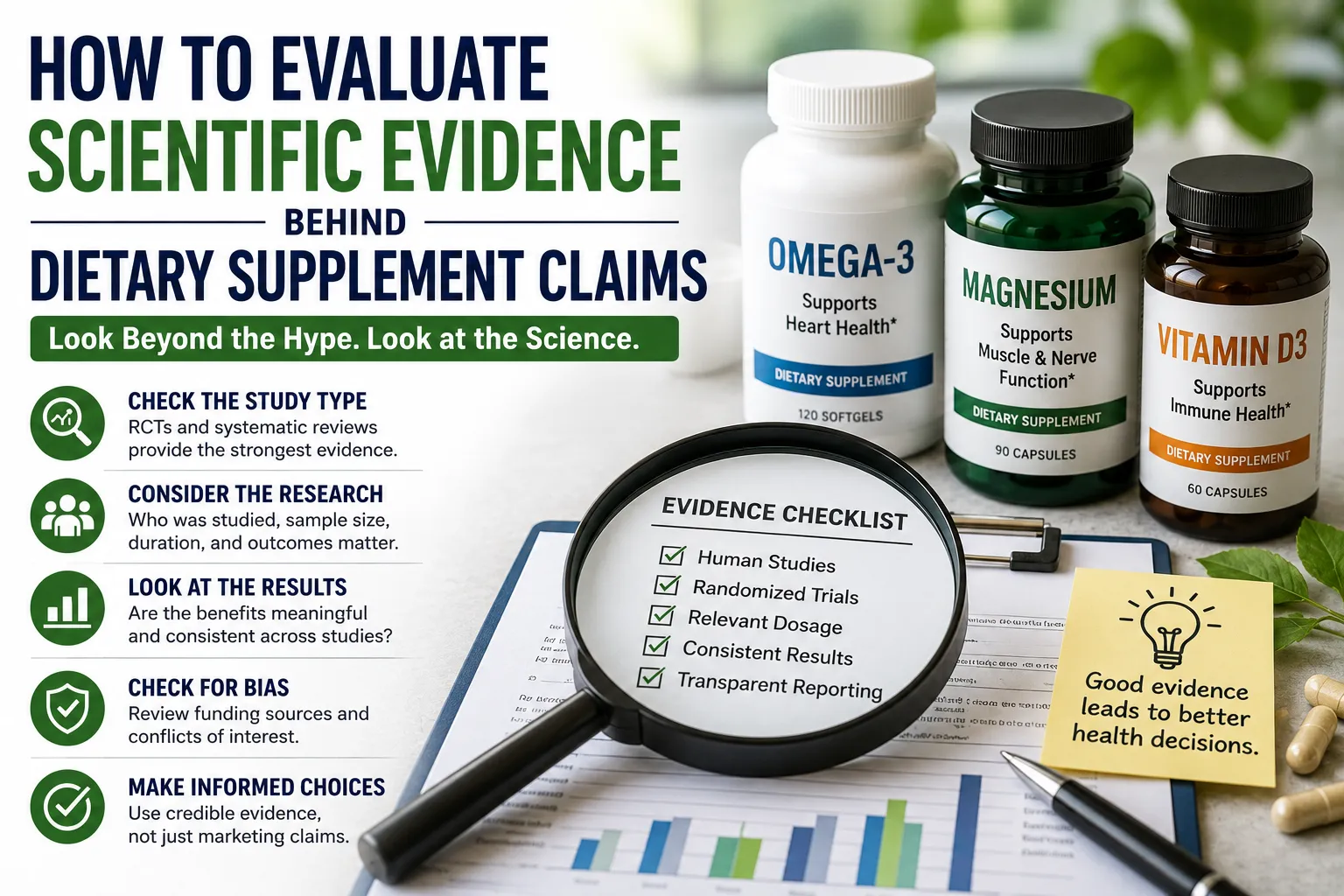
How to Evaluate Scientific Evidence Behind Dietary Supplement Claims
Learning how to evaluate the evidence can help consumers distinguish genuine scientific findings from exaggerated marketing claims.
Read article

Join 10,000+ Readers Building Healthier Habits
Get actionable wellness tips every week plus our newest articles delivered straight to your inbox.