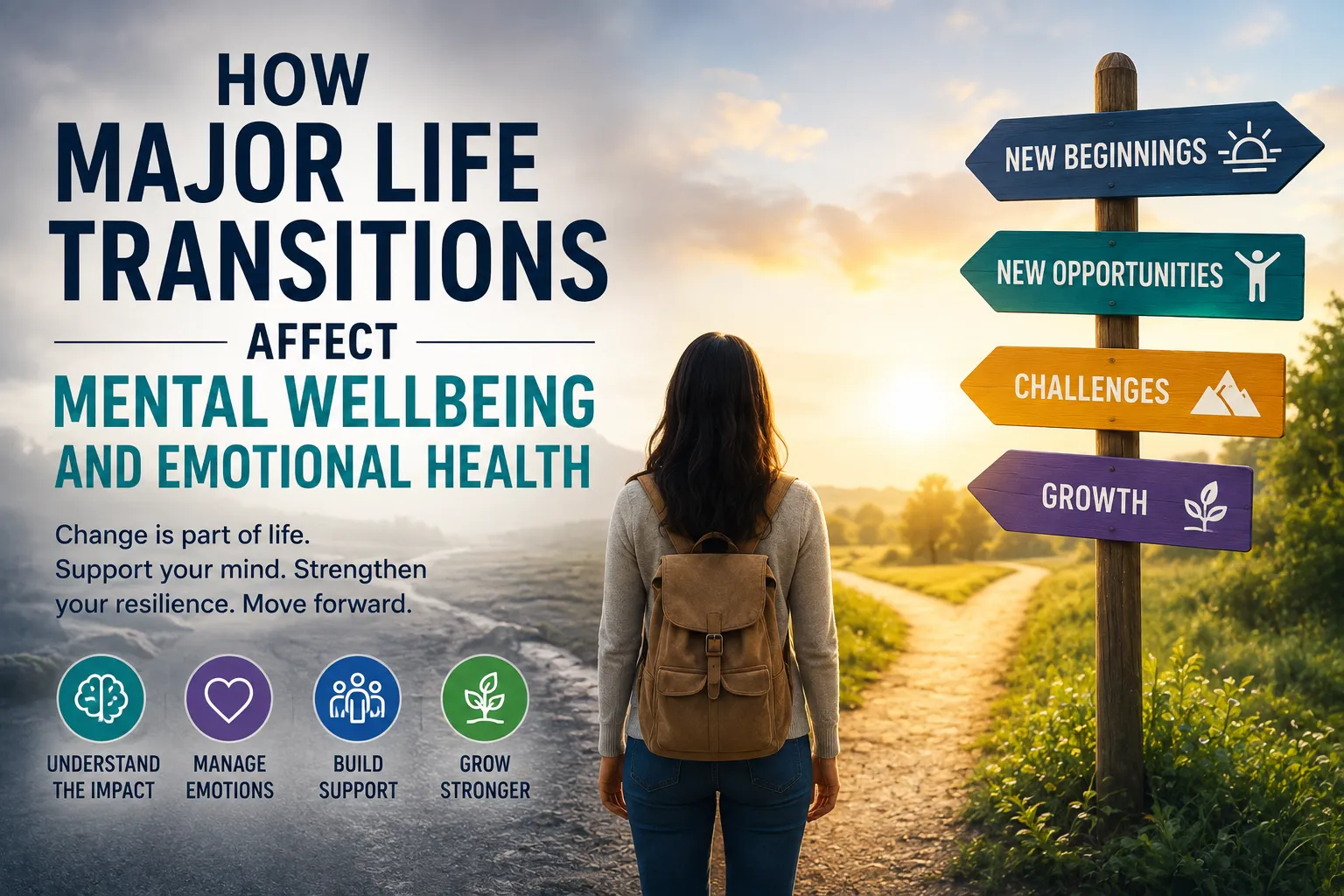

How Major Life Transitions Affect Mental Wellbeing and Emotional Health
Life rarely follows a perfectly predictable path. People change jobs, move to new places, start or end relationships, become parents, lose loved ones, retire, begin new studies or take on responsibilities they never expected.
These major life transitions can be exciting, meaningful and even long-awaited. At the same time, they can create uncertainty, stress and emotional strain.
A significant change often requires people to adjust not only to a new situation but also to a different sense of identity, routine and expectations. Even positive changes can temporarily disrupt emotional stability.
Understanding how transitions affect mental wellbeing can make it easier to recognize normal adjustment difficulties, develop healthier coping strategies and know when additional support may be useful. These changes are also part of the broader picture described in The Complete Guide to Emotional Well-Being.
What Counts as a Major Life Transition?
A life transition is a significant change that alters a person’s circumstances, responsibilities, relationships or daily routines.
Some transitions are expected, while others happen suddenly.
Common examples include:
- Starting a new job
- Losing employment
- Moving to a new city or country
- Getting married
- Ending a relationship
- Having a child
- Children leaving home
- Starting university
- Graduating from school
- Retirement
- Caring for an aging family member
- Experiencing the death of someone close
- Recovering from a major setback
- Taking on new financial responsibilities
Not every transition is negative. Marriage, graduation, a promotion or the birth of a child can bring happiness while still requiring substantial emotional adjustment.
The important factor is that the person’s familiar way of living has changed.
Why Change Can Be Emotionally Difficult
People generally develop routines that provide a sense of predictability.
Daily habits, familiar surroundings, relationships and responsibilities create a framework for life. A major transition can suddenly change that framework.
Someone starting a new job, for example, may need to learn unfamiliar systems, meet new colleagues, adjust to different expectations and reconsider how they organize their day.
Even when the change is desirable, the brain and body still need time to adapt.
This is one reason people can experience mixed emotions during major transitions. Happiness and anxiety, excitement and sadness, or confidence and uncertainty can exist at the same time.
The Stress of Uncertainty
Uncertainty is one of the most common sources of emotional pressure during periods of change.
People may not know what their new circumstances will look like or whether they will be able to manage them successfully.
Questions can begin to dominate their thoughts:
- Will I succeed?
- Will I fit in?
- Will things get better?
- Have I made the right decision?
- What happens if something goes wrong?
- How will this affect my relationships?
- Can I afford this change?
Some uncertainty is unavoidable.
Learning to tolerate a reasonable degree of uncertainty can therefore be an important part of adapting to a new stage of life. Practical approaches to managing pressure can also help, including strategies covered in The Complete Guide to Stress Management.
Positive Changes Can Still Create Stress
It is easy to assume that stress only comes from unpleasant events.
In reality, positive changes can also require significant psychological adjustment.
A promotion may bring greater income and professional recognition but also longer hours and greater responsibility.
Having a baby can be deeply meaningful while simultaneously changing sleep patterns, routines, relationships and personal priorities.
Moving into a new home can be exciting while creating financial and logistical pressure.
This is why emotional difficulty during a positive transition does not necessarily mean that something is wrong.
Adjustment takes energy regardless of whether the change was wanted.
Major Transitions Can Affect Identity
Some life changes challenge a person’s sense of identity.
A person who has spent decades defining themselves through a particular career may struggle emotionally after retirement.
Someone who has always identified strongly as a student may feel uncertain after graduation.
A parent may experience changes in identity as children become independent.
A relationship ending can also affect how someone understands themselves and their future.
These experiences can create a period of questioning.
People may need time to develop a new understanding of who they are within their changed circumstances.
Relationships Often Change During Transitions
Major life events can affect relationships with family members, friends, partners and colleagues.
Moving away may reduce everyday contact with people who were previously part of a person’s routine.
Starting a demanding job may leave less time for social activities.
Marriage or parenthood can change existing friendships and introduce new responsibilities.
Retirement may reduce regular contact with colleagues.
Some transitions can strengthen relationships, while others expose tensions that were previously less visible.
Maintaining meaningful connections can provide an important source of emotional stability during these periods. For a closer look at the relationship between connection and mental wellbeing, see How Loneliness and Social Connection Affect Mental Wellbeing.
Grief Is Not Limited to Death
Grief can accompany many types of life transitions.
People can grieve the loss of a relationship, career, home, routine, independence or imagined future.
Someone who moves to a different country, for example, may experience sadness about leaving behind familiar places and relationships even while being excited about the opportunities ahead.
Similarly, retirement can involve grieving the loss of a professional identity or familiar workplace community.
Recognizing this form of grief can help people understand why a seemingly positive transition may still feel emotionally complicated.
The emotional effects of loss are explored further in How Grief Affects Emotional Well-Being and Everyday Life.
Financial Pressure Can Increase Emotional Strain
Many major life changes have financial consequences.
Moving, starting a family, losing a job, pursuing education or retiring can affect income and expenses.
Financial uncertainty can contribute to worry and make an already difficult transition feel more overwhelming.
Creating a realistic budget, understanding available resources and addressing financial problems early can reduce some of this pressure.
It can also help to distinguish between problems that can be solved immediately and uncertainties that require more time.
Routines Provide Emotional Stability
When everything else is changing, familiar routines can provide a sense of continuity.
Simple habits such as maintaining regular sleep and meal schedules, exercising, preparing meals or taking a daily walk can help create structure.
Routines do not need to be elaborate.
The objective is to preserve some predictable elements of everyday life while other areas are being reorganized.
A stable routine can make a period of uncertainty feel more manageable. Developing healthy everyday habits can also support mental wellness more broadly, as discussed in How Positive Habits Support Mental Wellness.
Sleep and Mental Wellbeing Are Closely Connected
Major transitions can disrupt sleep.
People may stay awake thinking about financial concerns, work responsibilities, relationship changes or future decisions.
Poor sleep can then make emotional regulation more difficult.
People may become more irritable, less focused or more sensitive to everyday problems.
Protecting sleep as much as possible can therefore be an important part of coping with change.
Maintaining consistent sleep and wake times, limiting stimulating activities before bed and creating a comfortable sleeping environment may help support healthier sleep habits.
Physical Activity Can Support Emotional Health
Physical activity can also play a role in managing stress during periods of transition.
Walking, cycling, swimming, strength training or other forms of movement can provide a break from worrying and support general physical health.
Exercise can also introduce structure into an otherwise disrupted routine.
The goal does not have to be an intense fitness program.
Regular movement that is realistic for the person’s circumstances can be valuable.
Social Connection Matters
Isolation can make major life changes harder to manage.
Talking with trusted friends, family members, colleagues or community members can provide emotional support and perspective.
Social connection does not necessarily require discussing the transition in depth.
Simply maintaining contact with people who provide companionship can help prevent someone from feeling that they are facing everything alone.
For people who have moved to a new location, joining community groups, clubs or other activities can also create opportunities to build new relationships.
Self-Compassion Can Make Adjustment Easier
People often expect themselves to adapt immediately.
When adjustment takes longer than expected, they may interpret normal uncertainty as personal failure.
Self-compassion involves recognizing that major changes require time and effort.
Instead of asking, “Why can’t I handle this better?” a person might ask, “What would make this period a little easier right now?”
This shift can reduce unnecessary self-criticism.
Progress during a transition is rarely perfectly linear. Some days may feel manageable while others feel unexpectedly difficult.
Decision Fatigue Can Become a Problem
Major transitions often involve many decisions.
Someone moving to a new city may need to choose housing, transportation, schools, services and social activities.
Someone changing careers may need to consider training, applications, finances and new professional expectations.
Constant decision-making can become exhausting.
Where possible, simplifying minor choices can preserve mental energy for more important decisions.
Creating routines, using checklists and making decisions in stages can reduce the feeling that everything has to be solved at once.
Not Every Problem Needs to Be Solved Immediately
During a major transition, people sometimes feel pressure to figure out their entire future.
That can create unnecessary anxiety.
A more manageable approach is to divide the transition into smaller periods.
Instead of asking, “How will my entire life look now?” someone might focus on:
What do I need to handle this week?
Breaking a major change into smaller tasks can make an overwhelming situation feel more achievable.
Long-term plans can then evolve as the new circumstances become clearer.
Technology Can Help or Hurt
Digital technology can provide valuable support during periods of change.
People can use messaging applications to stay connected, calendars to organize responsibilities, financial tools to track expenses and online communities to find people experiencing similar transitions.
However, constant exposure to social media can also increase comparison and anxiety.
Seeing other people’s carefully selected highlights may make someone believe that everyone else is handling life perfectly.
During emotionally demanding periods, taking intentional breaks from social media can help create more mental space.
Professional Support Can Be Valuable
Friends and family can provide important emotional support, but some transitions may benefit from professional guidance.
A mental health professional can help someone understand persistent emotional difficulties, develop coping strategies and work through complicated changes.
Seeking support does not mean a person has failed to cope.
Professional help can be useful even when someone is not experiencing a diagnosed mental health condition.
It can provide a structured environment for understanding emotions and making decisions during a challenging period. Developing practical coping strategies can also be useful, particularly during periods when circumstances feel difficult to control.
When Emotional Distress Should Not Be Ignored
Temporary stress is a normal part of many life transitions.
However, persistent or worsening symptoms deserve attention.
Someone may benefit from professional support if they experience ongoing:
- Feelings of hopelessness
- Severe anxiety
- Social withdrawal
- Difficulty functioning at work or school
- Major changes in sleep
- Significant changes in appetite
- Loss of interest in previously enjoyable activities
- Difficulty concentrating
- Persistent feelings of worthlessness
If someone is experiencing thoughts of suicide or self-harm, they should seek immediate help from local emergency services, a crisis service or a trusted person who can help them access urgent support.
Children and Young Adults May Experience Transitions Differently
Major changes can be particularly significant during childhood and early adulthood.
Starting a new school, moving, parental separation, leaving home or beginning university can affect a young person’s sense of security and identity.
Young people may not always have the vocabulary to explain what they are experiencing.
Changes in behavior, sleep, school performance or social engagement can sometimes signal that a young person is struggling with an adjustment.
Supportive communication and a stable environment can make a significant difference.
Older Adults Face Their Own Transitions
Later life can involve substantial changes as well.
Retirement, changes in physical independence, relocation, bereavement and changing family roles can all affect emotional wellbeing.
Retirement in particular can require a major adjustment to daily structure and identity.
Maintaining social connections, developing new interests and creating meaningful routines can help make this transition more manageable.
Resilience Can Develop Through Change
A difficult transition does not necessarily produce lasting emotional harm.
People can develop resilience by learning how to cope with uncertainty, solve problems and adapt to unfamiliar circumstances.
Past experiences of successfully navigating change can also provide confidence during future transitions.
Resilience does not mean never feeling stressed or upset.
It means having the ability to experience difficult emotions while gradually finding ways to move forward. For a broader look at this capacity, see The Complete Guide to Building Resilience.
Preparation Can Reduce the Emotional Impact
Not every transition can be predicted, but preparation can make some changes easier.
Before a major move, career change or retirement, people can consider practical questions about finances, housing, social connections and daily routines.
Preparing emotionally can also help.
It may involve acknowledging that the transition will probably include both positive and difficult experiences.
Having realistic expectations can reduce the shock that sometimes occurs when a long-awaited change proves more complicated than expected.
Give Yourself Time to Adapt
One of the most important parts of navigating major life changes is accepting that adjustment takes time.
There is no universal timetable for feeling comfortable in a new situation.
One person may adapt quickly to a new job, while another may need months to develop confidence.
One person may feel ready to move forward after a relationship ends, while another may require considerably longer.
Comparing personal progress with someone else’s timeline can create unnecessary pressure.
The more useful question is whether things are gradually becoming more manageable.
Finding Meaning in a New Chapter
Major life transitions can disrupt emotional wellbeing, but they can also create opportunities for growth.
A career change can encourage someone to reconsider what they value. Moving can lead to new relationships and experiences. Retirement can create space for interests that were previously postponed. Difficult personal changes can sometimes reveal strengths that were not previously recognized.
This does not mean that every difficult experience has to be viewed positively.
Some losses are genuinely painful, and people should not feel pressured to find a lesson in everything that happens.
But over time, people can often develop new routines, relationships and sources of meaning that make their changed circumstances feel more familiar.
Building Stability While Life Changes
Major life transitions affect mental wellbeing because they challenge the routines, relationships, expectations and identities that give everyday life structure.
The emotional response can include excitement, anxiety, sadness, uncertainty, relief or several of these feelings at once.
What matters is not avoiding every difficult emotion but developing healthy ways to navigate the period of adjustment.
Maintaining supportive relationships, protecting sleep, staying physically active, creating manageable routines and addressing practical problems can provide a foundation for emotional stability. When distress becomes persistent or interferes significantly with daily life, professional support can offer another important layer of help.
A major transition does not have to be handled perfectly. Adapting is a process, not a single decision, and giving yourself room to adjust can be one of the most important forms of emotional care during a new chapter of life.
Continue Reading
Similar Posts
How to Provide Emotional Support to Others
Good emotional support is also about respecting boundaries. People need different kinds of help at different times. Some may want to talk, while others may need practical assistance, quiet companionship, or simply reassurance that someone cares.
Read article
How Stress Affects Concentration and Memory
Understanding the connection between stress, concentration and memory can help explain why the mind sometimes feels less efficient during stressful periods—and why managing stress can be an important part of maintaining overall mental well-being.
Read article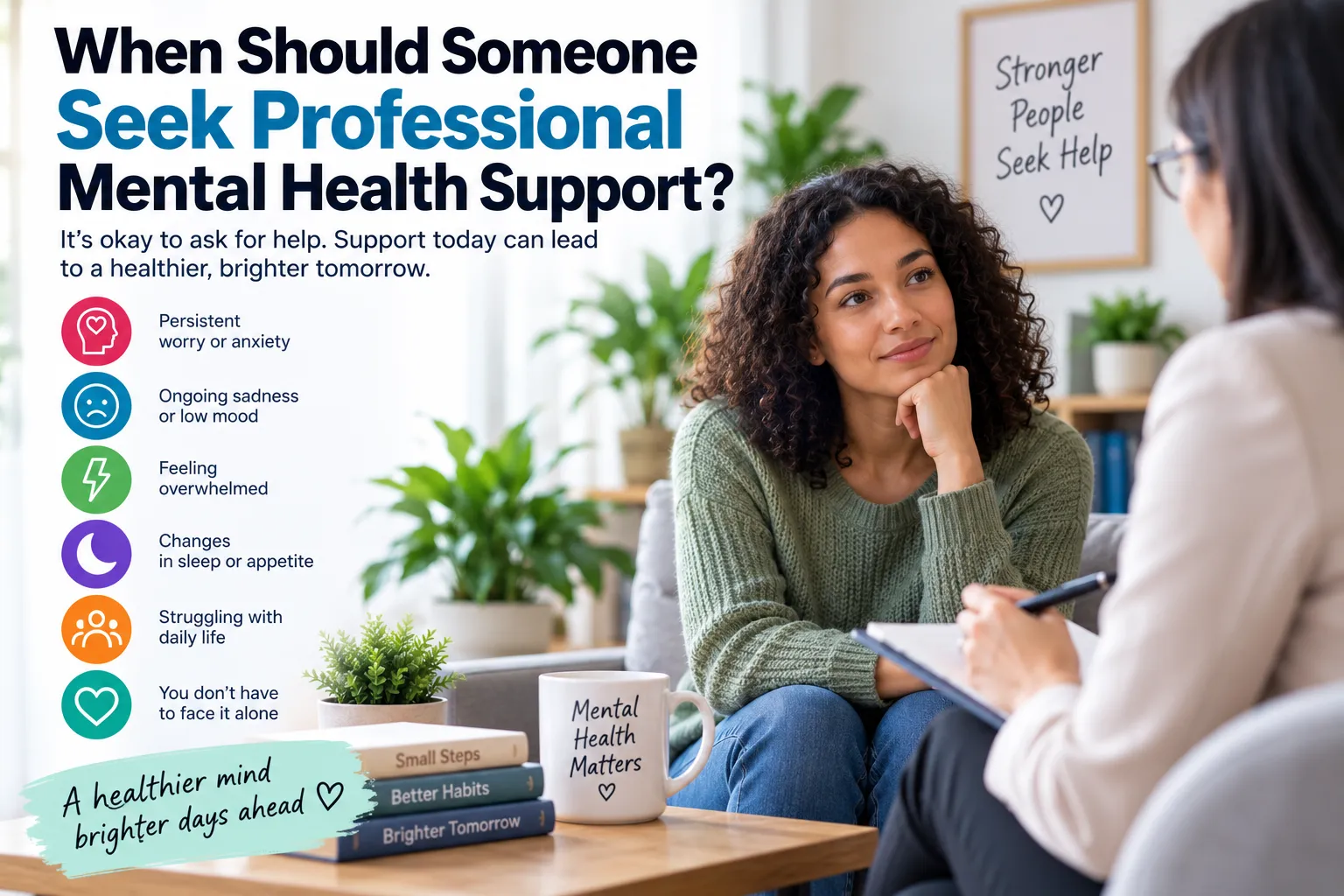
When Should Someone Seek Professional Mental Health Support
Understanding **what mental wellness means** is a useful starting point. Mental wellness involves more than simply being happy or avoiding mental illness. It includes the ability to manage emotions, handle challenges, maintain relationships, make decisions, and function in everyday life.
Read article

Join 10,000+ Readers Building Healthier Habits
Get actionable wellness tips every week plus our newest articles delivered straight to your inbox.