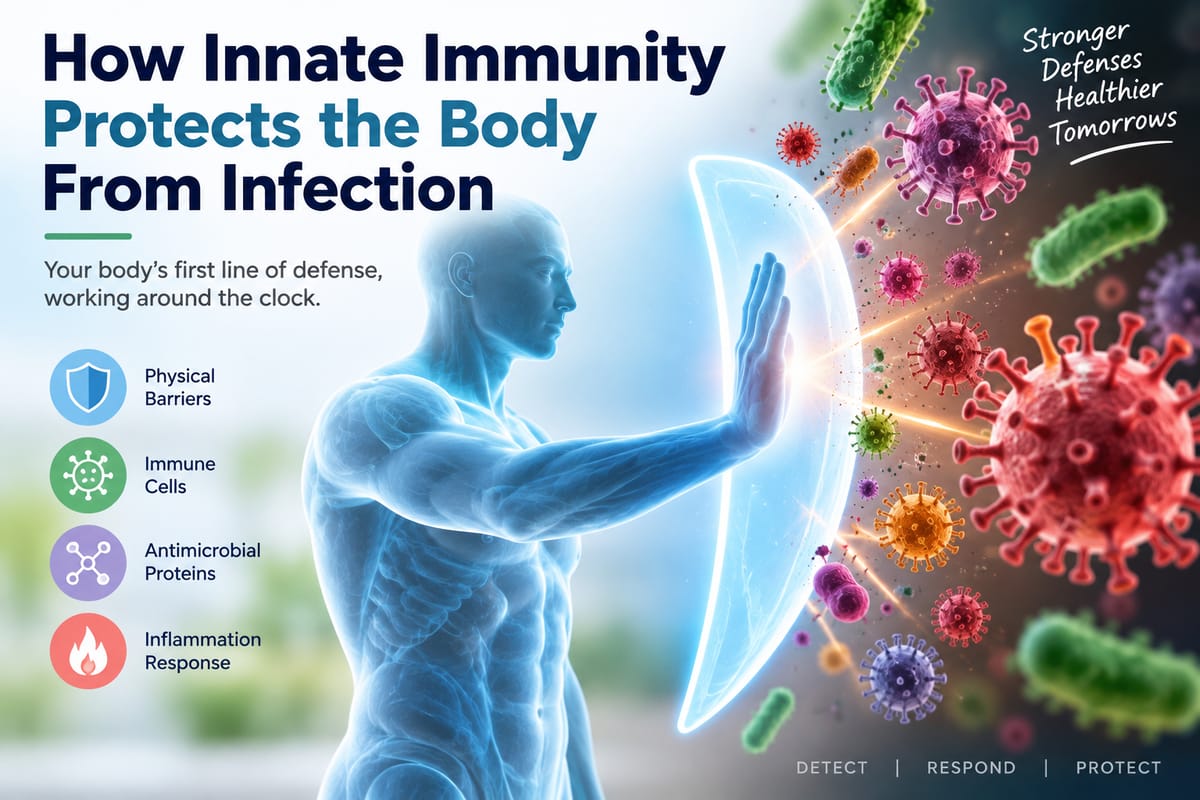

**How Innate Immunity Protects the Body From Infection
The human body is exposed to microorganisms every day. Bacteria, viruses, fungi, and other potentially harmful organisms can enter through the air we breathe, the food and water we consume, or breaks in the skin. Yet most exposures do not result in serious illness because the body has several layers of defense that respond before many infections can become established.
One of the most important of these defenses is innate immunity. It is the immune system’s rapid, built-in response to potentially harmful organisms. Unlike adaptive immunity, which develops highly specific responses after exposure to particular pathogens, innate immunity is present from birth and responds to broad features associated with infection or tissue damage.
Innate immunity does not work alone. It forms the body’s first major line of biological defense and helps activate and direct the more specialized adaptive immune response.
Understanding this system provides an important foundation for understanding the Immune System Guide and how the body’s different immune defenses work together.
What Is Innate Immunity?
Innate immunity is the body’s immediate defense system against potential threats.
It includes physical barriers, chemical defenses, immune cells, proteins, and inflammatory responses. These components recognize general patterns associated with pathogens or damaged cells rather than identifying every microorganism with the precision of the adaptive immune system.
The response can begin within minutes or hours of a threat being detected.
Some important components of innate immunity include:
- The skin
- Mucous membranes
- Stomach acid
- Antimicrobial substances
- Complement proteins
- Natural killer cells
- Neutrophils
- Macrophages
- Dendritic cells
- Inflammatory responses
- Fever and other systemic responses
Together, these defenses make it more difficult for pathogens to enter, survive, multiply, and spread through the body.
The Skin Creates a Physical Barrier
The skin is one of the body’s most important defenses against infection.
Its continuous outer layer creates a physical barrier that prevents many microorganisms from reaching deeper tissues. Regular shedding of skin cells can also help remove microorganisms from the body’s surface.
The skin has chemical defenses as well. Substances produced by skin glands can create an environment that is less favorable to some microorganisms.
A break in the skin, such as a cut or wound, removes part of this protective barrier. This is one reason damaged skin can provide an opportunity for pathogens to enter tissues where they may encounter more vulnerable cells.
Mucous Membranes Help Trap Invaders
Many areas of the body that come into contact with the outside environment are lined with mucous membranes.
The respiratory, digestive, and other passages produce mucus that can trap particles and microorganisms. In the airways, microscopic hair-like structures called cilia help move mucus and trapped material toward areas where it can be expelled or swallowed.
Coughing and sneezing can also help remove foreign particles from the respiratory system.
These mechanisms demonstrate that innate immunity is not limited to immune cells. The body uses physical processes and specialized tissues to prevent potential pathogens from gaining access to deeper parts of the body.
Chemical Defenses Make the Body Less Hospitable
The body also uses chemical conditions to discourage microorganisms.
Stomach acid, for example, creates a highly acidic environment that destroys or inhibits many microorganisms that are swallowed with food and water.
Other body fluids contain antimicrobial substances that can interfere with microbial survival. Enzymes and specialized proteins found in places such as tears and saliva can contribute to the body’s protective environment.
These defenses operate continuously, often without producing any noticeable symptoms.
Innate Immune Cells Detect Potential Threats
If a pathogen gets past the body’s external barriers, specialized immune cells can detect signs associated with infection.
Innate immune cells use receptors that recognize broad molecular patterns commonly found on groups of microorganisms. They can also detect signals associated with damaged or stressed cells.
This allows the immune system to react quickly without needing prior exposure to a particular pathogen.
Among the important cells involved are neutrophils, macrophages, dendritic cells, and natural killer cells.
Each performs different functions, but together they contribute to detecting threats, containing infections, removing damaged material, and coordinating additional immune responses.
Neutrophils Respond Quickly to Infection
Neutrophils are among the immune system’s rapid-response cells.
They can move from the bloodstream into tissues where infection or inflammation is occurring. Once there, they can engulf and destroy many microorganisms.
This process, called phagocytosis, involves surrounding and taking in particles or microorganisms so they can be broken down.
Neutrophils are particularly important during many acute infections because they can reach affected tissues relatively quickly.
Their activity can also contribute to inflammation, which is a key part of the body’s response to infection.
Macrophages Help Remove Threats
Macrophages are immune cells found in many tissues throughout the body.
They can engulf microorganisms, damaged cells, and cellular debris. They also produce signaling molecules that influence inflammation and communicate with other immune cells.
Macrophages can remain in tissues for relatively long periods, allowing them to contribute to both surveillance and responses to infection.
Their role illustrates an important feature of innate immunity: immune defense is not simply about destroying pathogens. It also involves identifying damage, coordinating responses, and helping tissues begin the recovery process.
Natural Killer Cells Target Infected Cells
Some viruses can hide inside the body’s own cells, making them difficult for immune defenses to attack directly.
Natural killer (NK) cells are part of innate immunity and can recognize certain abnormal or stressed cells, including some virus-infected cells and tumor cells.
When activated, NK cells can release substances that cause targeted cells to undergo programmed cell death.
This helps limit the ability of certain infections to use the body’s cells as sites for replication.
Natural killer cells therefore provide an important defense against threats that cannot always be dealt with simply by attacking microorganisms outside cells.
Inflammation Helps Contain Infection
Inflammation is one of the most recognizable features of the innate immune response.
When tissues detect infection or damage, signaling molecules can cause nearby blood vessels to change and increase the movement of immune cells and fluid into the affected area.
This can produce familiar signs such as:
- Redness
- Warmth
- Swelling
- Pain
Although inflammation can be uncomfortable, it serves important defensive purposes. It helps bring immune components to the affected area and can contribute to containing and removing the source of damage.
Inflammation must also be carefully regulated. An immune response that is excessive or continues after the original threat has been controlled can cause additional tissue damage.
Complement Proteins Strengthen Innate Defense
The complement system is a network of proteins found in blood and other body fluids.
When activated, complement proteins can contribute to several aspects of immune defense. They can help identify microorganisms for destruction, attract immune cells to sites of infection, and, in some circumstances, directly damage the membranes of certain pathogens.
Complement also interacts with the adaptive immune system.
This illustrates how the body’s immune mechanisms are interconnected rather than functioning as completely separate systems.
How Innate Immunity Communicates With Adaptive Immunity
Innate immunity plays an important role in activating the adaptive immune response.
Dendritic cells are particularly important in this process. After encountering material associated with pathogens, they can process it and present specific antigen information to cells involved in adaptive immunity.
This helps initiate a more targeted response.
The adaptive immune system can subsequently produce highly specific defenses against the pathogen. These include antibodies and specialized immune cells.
The relationship between these systems is important because innate immunity provides an early response while adaptive immunity can develop a more targeted and lasting defense.
Where Antibodies Fit Into the Immune Response
Antibodies belong primarily to the adaptive immune system rather than innate immunity.
They are produced by specialized B cells and can recognize specific targets on pathogens or harmful substances.
Once antibodies are available, they can help prevent pathogens from attaching to cells, mark them for destruction, and activate other immune mechanisms.
For a closer look at this process, How Antibodies Help the Immune System Fight Infection explains how these specialized proteins contribute to protection against infection.
The distinction between antibodies and innate defenses is important: innate immunity provides broad, rapid protection, while antibodies are part of a more specific immune response.
Innate Immunity and Fever
Fever can occur as part of the body’s response to infection.
During certain infections, immune signaling molecules can influence the body’s temperature-regulation system. A higher body temperature can affect the environment in which some microorganisms reproduce and can alter aspects of immune activity.
However, fever is a symptom rather than an infection itself, and its presence or absence does not by itself identify a particular cause.
Very high temperatures, persistent fever, or fever accompanied by concerning symptoms may require medical evaluation, particularly in vulnerable individuals.
Why Innate Immunity Matters Before Symptoms Appear
Innate defenses are constantly operating, even when a person feels completely healthy.
A microorganism may encounter the skin, mucus, antimicrobial substances, or other barriers before it ever reaches vulnerable tissues. If it does enter the body, innate immune cells and proteins can respond quickly.
In many situations, these defenses help control an exposure without producing obvious illness.
When an infection does become established, the innate response can help limit its spread while the adaptive immune system develops a more specialized response.
Supporting Infection Prevention
A healthy immune system is only one part of preventing infectious disease.
Everyday measures such as hand hygiene, safe food handling, appropriate sanitation, respiratory precautions when warranted, and avoiding unnecessary exposure to infectious material can reduce opportunities for pathogens to enter the body.
The Guide to Infectious Disease Prevention provides a broader look at practical strategies that can reduce the risk of infection.
Vaccination is another important layer of protection. Vaccines train components of adaptive immunity to recognize specific pathogens or pathogen-derived targets, allowing the body to respond more effectively if exposure occurs later.
The relationship between vaccination and immune protection is explained in How Vaccines Help Prevent Infectious Diseases.
What Makes Innate Immunity Different?
The key characteristic of innate immunity is speed and breadth.
It does not need to develop a new, highly specific response every time the body encounters a different microorganism. Instead, it relies on defenses that recognize broad characteristics of potential threats.
Adaptive immunity works differently. It can generate highly specific responses and develop immunological memory, which can produce faster and stronger responses to some pathogens during subsequent exposures.
The two systems therefore complement one another.
Innate immunity can act first, while adaptive immunity develops a more targeted response.
A Defense System That Works Around the Clock
Innate immunity is a remarkably broad network of defenses rather than a single mechanism. The skin and mucous membranes help keep pathogens out, chemical defenses create hostile environments, immune cells detect and attack threats, complement proteins strengthen the response, and inflammation helps organize activity at sites of infection.
Just as importantly, innate immunity helps communicate with the adaptive immune system, connecting the body’s immediate defenses with more specialized responses.
This layered approach gives the body multiple opportunities to stop an infection before it becomes serious. While no immune defense can prevent every infection, innate immunity provides the rapid, continuous protection that forms the foundation of the body’s response to the microbial world.
Continue Reading
Similar Posts

How Vector Control Prevents Infectious Diseases
Vector control includes a wide range of measures designed to reduce contact between people and disease-carrying organisms.
Read article
How Sun Exposure Affects Skin Cancer Risk
Understanding how sun exposure affects the skin can make prevention more practical. Protection is not about avoiding daylight altogether. Instead, it involves reducing unnecessary ultraviolet exposure and recognizing situations when the skin is particularly vulnerable.
Read article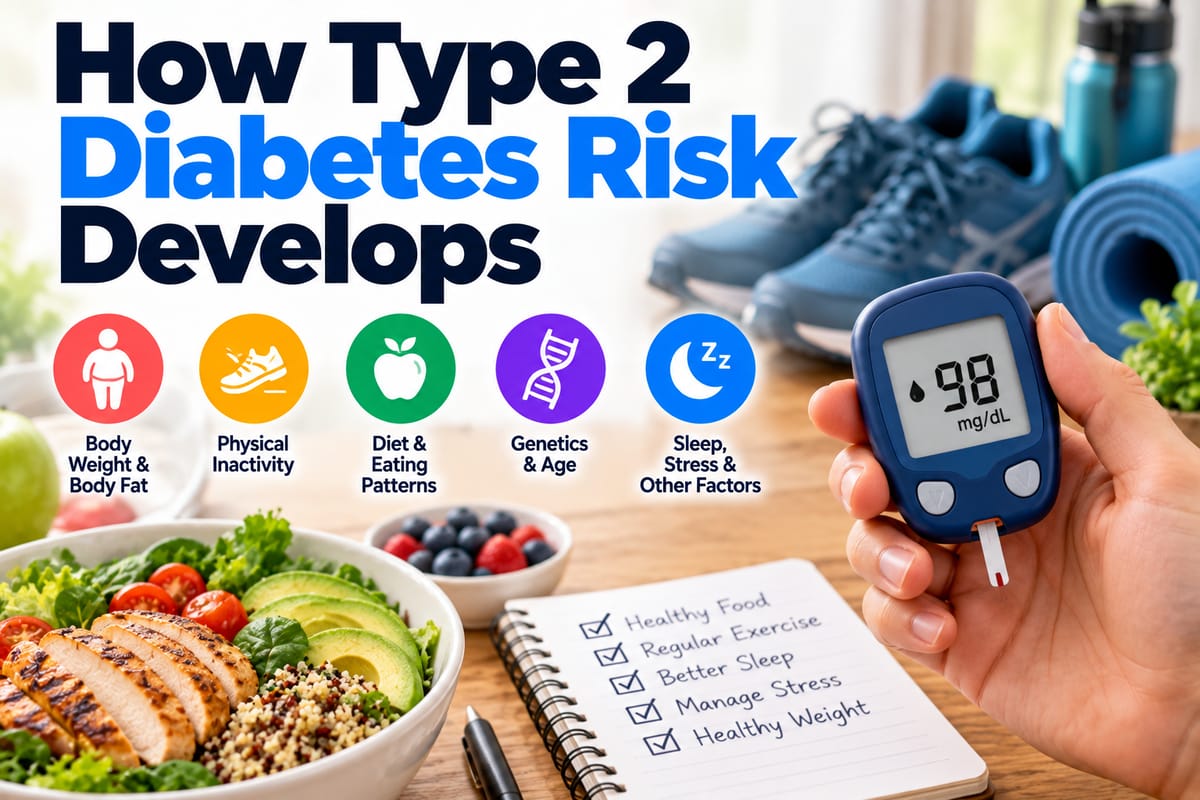
How Type 2 Diabetes Risk Develops
Understanding how type 2 diabetes risk develops can make the condition easier to prevent or manage. Risk factors do not guarantee that someone will develop diabetes, and some people develop the condition without having an obvious single cause. Instead, risk tends to emerge from the interaction of several factors over time.
Read article

Join 10,000+ Readers Building Healthier Habits
Get actionable wellness tips every week plus our newest articles delivered straight to your inbox.