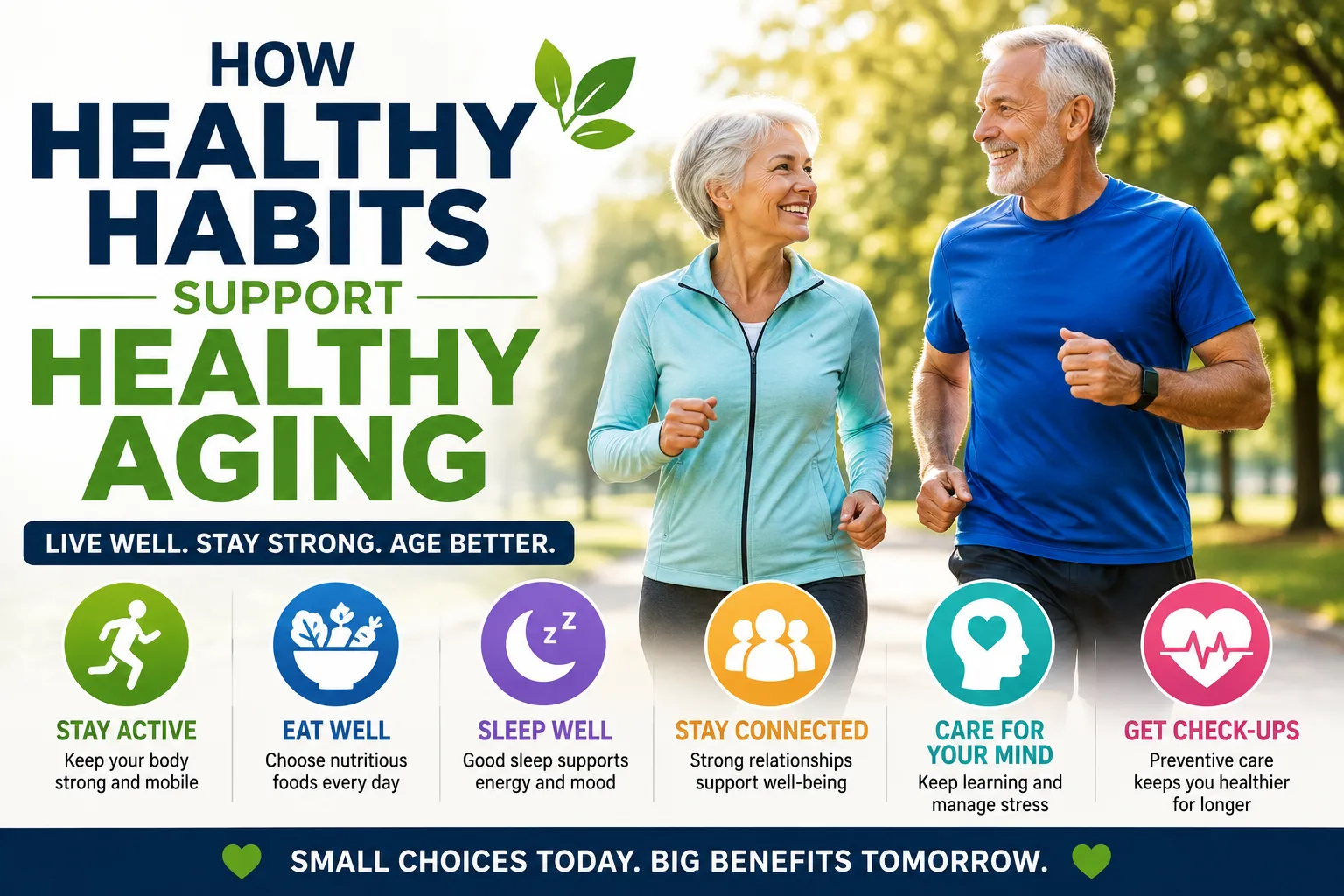

How Healthy Habits Support Healthy Aging
Aging is a natural part of life, but getting older does not automatically mean losing independence, strength, or quality of life.
While genetics, environment, medical history, and socioeconomic circumstances all influence how people age, many factors are also shaped by everyday behavior. Regular physical activity, nutritious food, adequate sleep, social connection, preventive healthcare, and avoiding tobacco can all support healthier aging over time.
Healthy aging is therefore less about trying to stop the aging process and more about maintaining physical and mental capacity for as long as possible.
What Does Healthy Aging Mean?
Healthy aging is broader than simply avoiding disease.
The World Health Organization describes healthy aging as the process of developing and maintaining the functional ability that enables well-being in older age. That includes being able to move around, maintain relationships, make decisions, participate in society, and carry out activities that are meaningful to you.
This distinction matters because two people of the same age can have very different levels of physical and mental capability.
Some older adults remain highly active and independent, while others experience substantial limitations much earlier. WHO emphasizes that there is no single typical older person and that aging experiences vary considerably between individuals.
Healthy habits cannot eliminate every age-related change, but they can help people improve their chances of remaining functional and independent.
Why Everyday Habits Matter
Healthy aging is not created by one decision or one particular food.
Instead, it develops through patterns of behavior repeated over many years.
The National Institute on Aging identifies several areas that can support healthy aging, including physical activity, healthy eating, adequate sleep, mental health, preventive healthcare, avoiding tobacco, and maintaining social connections.
These habits can also influence one another.
For example:
- Physical activity can support better sleep.
- Social activities can encourage people to remain physically active.
- Healthy food choices can support energy for exercise.
- Good sleep can improve mood and concentration.
- Preventive healthcare can identify health problems before they become more difficult to manage.
The goal is therefore not perfection. It is to create a sustainable lifestyle in which several healthy behaviors reinforce one another.
This broader approach is consistent with the principles of healthy living and long-term wellness.
Regular Physical Activity Helps Preserve Function
Physical activity is one of the most important components of healthy aging.
As people get older, maintaining muscle strength, cardiovascular fitness, balance, flexibility, and mobility becomes increasingly important.
Regular activity can help people remain capable of performing everyday tasks such as:
- Walking
- Climbing stairs
- Carrying groceries
- Getting up from a chair
- Gardening
- Playing with children or grandchildren
- Traveling
- Participating in hobbies
The National Institute on Aging notes that physical activity can contribute to longer and healthier lives and recommends incorporating a variety of activities as part of an active lifestyle.
Importantly, activity does not have to happen entirely in a gym.
Walking, gardening, dancing, household chores, cycling, swimming, and other forms of movement can all contribute to an active lifestyle.
Strength Training Becomes Particularly Important
Muscle strength can decline with age, making resistance exercise an important part of maintaining physical function.
Strength-focused activities can involve:
- Bodyweight exercises
- Resistance bands
- Free weights
- Weight machines
- Certain forms of functional training
For older adults, strength training can be particularly useful because everyday independence often depends on having enough strength to perform ordinary tasks.
Exercise programs should be appropriate for an individual’s fitness level and health circumstances. Someone who has been inactive for a long time or has a chronic health condition may benefit from professional guidance before beginning vigorous exercise.
Balance and Flexibility Matter Too
Healthy aging is not just about cardiovascular fitness.
Balance and flexibility also contribute to mobility and independence.
Activities such as:
- Tai chi
- Yoga
- Stretching
- Balance exercises
- Controlled strength exercises
may be incorporated into an overall activity routine.
Maintaining physical capability across several areas can help people remain active rather than focusing exclusively on one measure of fitness.
The National Institute on Aging recommends engaging in a variety of activities as part of staying active as you age.
Healthy Eating Supports the Aging Body
Nutrition plays a central role throughout life.
As people age, food provides the nutrients needed to maintain muscles, bones, immune function, energy, and other aspects of health.
The World Health Organization identifies adequacy, balance, moderation, and diversity as core principles of a healthy diet. It also emphasizes the importance of a variety of minimally processed and unprocessed foods while limiting excessive unhealthy fats, free sugars, and sodium.
A healthy eating pattern can include foods such as:
- Vegetables
- Fruits
- Whole grains
- Beans and lentils
- Nuts and seeds
- Fish
- Lean protein sources
- Dairy or suitable alternatives
- Healthy sources of unsaturated fats
The exact dietary pattern should reflect individual nutritional needs, culture, food availability, and medical circumstances.
Protein Can Become Especially Important
Maintaining muscle is an important part of healthy aging.
Adequate protein intake, combined with appropriate physical activity, can help support muscle maintenance.
The National Institute on Aging recommends incorporating protein-rich foods such as seafood, dairy or fortified soy products, beans, peas, and lentils into meals for older adults.
However, nutritional needs vary.
People with kidney disease or other medical conditions may require individualized dietary advice, so major changes in protein intake should be discussed with a healthcare professional when appropriate.
Healthy Weight Is About More Than Appearance
Weight is often treated as the primary measure of health, but healthy aging involves much more than the number on a scale.
Physical fitness, muscle strength, nutrition, metabolic health, mobility, sleep, mental well-being, and social connection can all matter.
The National Institute on Aging specifically notes that eating well and exercising are not solely about weight. Physical activity can provide important benefits even when body weight does not change.
This is one reason a healthy-aging approach should focus on function and well-being rather than appearance alone.
Good Sleep Supports Physical and Cognitive Health
Sleep becomes another important part of healthy aging.
The National Institute on Aging notes that adults, including older adults, generally need around seven to nine hours of sleep, although individual needs vary. Poor-quality sleep can affect mood, memory, concentration, and daytime functioning.
Helpful sleep habits can include:
- Keeping a consistent sleep schedule
- Creating a comfortable sleep environment
- Staying physically active during the day
- Limiting activities that interfere with sleep
- Addressing persistent sleep problems with a healthcare professional
Sleep problems should not simply be dismissed as an unavoidable part of getting older.
Persistent insomnia, excessive daytime sleepiness, loud snoring, or other unusual sleep symptoms can sometimes indicate an underlying medical issue.
Staying Socially Connected Matters
Healthy aging also has a social dimension.
Relationships with family, friends, neighbors, colleagues, community groups, and other people can contribute to emotional well-being and quality of life.
The World Health Organization says high-quality social connections are important to physical and mental health and identifies social isolation and loneliness as significant public-health concerns.
Social connection can take many forms:
- Spending time with family
- Joining a walking group
- Volunteering
- Participating in community organizations
- Taking classes
- Maintaining friendships
- Pursuing hobbies with other people
- Staying connected through technology
The goal is not to maintain a huge social circle.
A few meaningful relationships can be extremely valuable.
Mental Health Is Part of Healthy Aging
Physical health and mental health cannot easily be separated.
Stress, loneliness, depression, anxiety, grief, and other emotional challenges can affect how people experience aging.
WHO identifies social support, meaningful social activities, and healthy behaviors as important components of supporting mental health in older adults.
Mental well-being can be supported through activities such as:
- Staying socially connected
- Exercising regularly
- Maintaining hobbies
- Learning new skills
- Spending time outdoors
- Practicing relaxation techniques
- Seeking professional support when needed
There is no need to accept persistent depression, anxiety, or loneliness as an inevitable consequence of growing older.
Keep Challenging the Brain
The brain changes throughout life, but staying mentally engaged can help support cognitive health.
Learning something new, reading, solving problems, playing music, taking classes, or developing new hobbies can provide opportunities for mental stimulation.
The National Institute on Aging recommends activities such as learning something new and joining clubs or groups as part of healthy aging.
The important point is not that a particular puzzle or brain-training product can guarantee protection against cognitive decline.
Rather, maintaining an active and engaged life can contribute to overall cognitive and social well-being.
Avoiding Tobacco Has Benefits at Any Age
Smoking is one of the major preventable threats to health.
Importantly, quitting can still provide meaningful benefits even after many years of smoking.
The National Institute on Aging notes that quitting at any age can lower risks associated with conditions including cancer, heart attack, stroke, and lung disease, while also improving circulation and the ability to exercise.
This means it is never reasonable to assume that quitting is pointless simply because someone has smoked for many years.
Professional support, medications, counseling, and other evidence-based cessation strategies can improve the chances of successfully quitting.
Be Thoughtful About Alcohol
Alcohol can also affect healthy aging.
Excessive alcohol consumption can contribute to a range of health problems and can interact with medications.
The safest amount varies depending on individual circumstances, and some people should avoid alcohol altogether.
For people who drink, discussing alcohol use with a healthcare professional can be particularly important if medications, chronic conditions, or other health considerations are involved.
For a broader look at this topic, see how alcohol affects long-term health.
Preventive Healthcare Helps Find Problems Earlier
Healthy habits should not replace medical care.
Regular healthcare appointments can provide opportunities to:
- Check blood pressure
- Monitor relevant health markers
- Review medications
- Discuss vaccinations
- Address new symptoms
- Assess risk factors
- Receive recommended screenings
The appropriate schedule depends on age, sex, medical history, family history, and country-specific recommendations.
Preventive care is particularly valuable because some health problems develop without obvious symptoms.
The role of routine health screenings for men and women is therefore closely connected to healthy aging.
Healthy Habits Can Support Brain Health
Researchers continue to investigate the relationship between lifestyle and cognitive decline.
The National Institute on Aging notes that factors such as physical activity, healthy eating, good sleep, blood-pressure management, and social connection may help address risk factors associated with dementia. However, no lifestyle strategy can guarantee that an individual will avoid dementia.
This distinction is important.
Healthy habits should be viewed as ways to support overall health and potentially reduce certain risks, not as guaranteed protection against specific diseases.
Small Changes Can Be More Sustainable
One of the biggest challenges with healthy living is consistency.
People sometimes attempt to change everything at once:
- Completely redesign their diet
- Start exercising every day
- Eliminate every unhealthy food
- Change their sleep schedule
- Start several supplements
- Adopt multiple new routines
That approach can be difficult to maintain.
A more practical strategy is to introduce changes gradually.
For example:
Week 1: Add a short daily walk.
Week 2: Add vegetables to one additional meal.
Week 3: Establish a consistent bedtime.
Week 4: Add two strength-training sessions.
Small changes can eventually become normal parts of daily life.
NIA-supported research on behavior change emphasizes the importance of strategies that help people adopt and maintain healthy behaviors over time.
Consistency Matters More Than Perfection
Healthy aging does not require a perfect lifestyle.
People will occasionally eat less nutritious meals, miss workouts, sleep poorly, or experience periods of stress.
The goal is to return to healthy behaviors rather than abandoning them after one setback.
A sustainable lifestyle might look like:
Mostly healthy choices + regular movement + adequate sleep + meaningful relationships + preventive healthcare.
That is considerably more realistic than attempting to maintain perfect habits every day.
A Simple Healthy-Aging Framework
A practical framework for healthy aging can be built around several areas:
| Area | Everyday Focus |
|---|---|
| Movement | Walk, exercise, strengthen muscles and maintain balance |
| Nutrition | Eat a varied, nutrient-dense diet |
| Sleep | Maintain regular, sufficient sleep |
| Mental health | Manage stress and seek support when needed |
| Social connection | Maintain meaningful relationships |
| Tobacco | Avoid or quit smoking |
| Alcohol | Avoid excessive consumption |
| Healthcare | Keep up with appropriate preventive care |
| Cognitive activity | Continue learning and engaging with life |
These areas overlap.
For example, walking with a friend combines physical activity and social connection.
Cooking a nutritious meal with family combines nutrition and social engagement.
Gardening can combine movement, outdoor time, mental stimulation, and social interaction.
Healthy living does not have to mean adding dozens of separate tasks to an already busy schedule.
Healthy Aging Starts Before Old Age
It is easy to think about healthy aging only after someone reaches retirement age.
In reality, many of the behaviors that influence later-life health are developed much earlier.
WHO notes that health in older age is influenced substantially by lifestyles established during adulthood and youth, while continued physical activity and diet remain important later in life.
That makes healthy aging a lifelong process.
Someone in their 30s does not need to follow the same routine as someone in their 70s, but both can benefit from staying active, eating well, sleeping adequately, maintaining relationships, avoiding tobacco, and taking care of their health.
Building a Healthier Future One Habit at a Time
Healthy aging is not about finding a single food, supplement, exercise, or treatment that can stop the effects of time.
It is about preserving the ability to live a meaningful and independent life for as long as possible.
Regular movement helps maintain physical capacity. Nutritious food provides the building blocks the body needs. Good sleep supports physical and cognitive health. Social connections contribute to emotional well-being, while preventive healthcare helps identify problems that may otherwise go unnoticed.
None of these habits guarantees a particular outcome, and people cannot control every factor that influences aging.
But healthy choices can improve the odds of entering later life with greater strength, resilience, independence, and quality of life.
The most useful time to build those habits is not someday in the future. It is through the ordinary choices made today—and repeated tomorrow.
Continue Reading
Similar Posts

How Your Environment Affects Everyday Health
Understanding these connections can help people make practical changes that support healthier daily living.
Read article
How Aerobic Exercise Supports Cardiovascular Health
Understanding how aerobic exercise affects cardiovascular health can make it easier to choose activities that are enjoyable, sustainable, and appropriate for your fitness level.
Read article
What Is the Gut Microbiome and Why Does It Matter
Understanding how this ecosystem works can make it easier to understand why diet, lifestyle, medications, and other factors can influence digestive health.
Read article

Join 10,000+ Readers Building Healthier Habits
Get actionable wellness tips every week plus our newest articles delivered straight to your inbox.