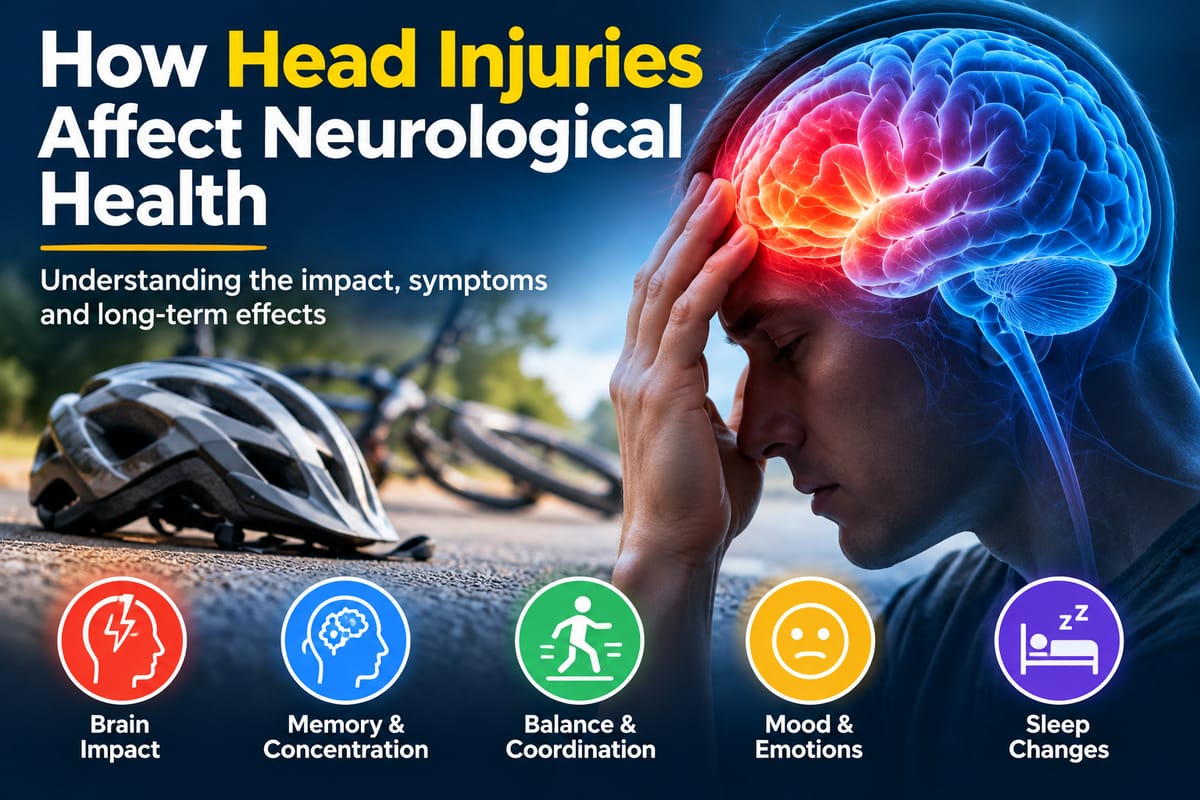

How Head Injuries Affect Neurological Health
Head injuries can affect the brain, spinal cord, nerves, and other parts of the nervous system in different ways. Some injuries are relatively mild and resolve with appropriate care, while more serious injuries can cause lasting changes in movement, memory, concentration, speech, mood, or other neurological functions.
A head injury does not always produce obvious symptoms immediately. Some problems can appear or become more noticeable hours or days after an injury, which is why recognizing warning signs and seeking appropriate medical evaluation can be important.
Understanding how head injuries affect neurological health can help people recognize potential complications, understand recovery, and take steps to reduce the risk of future injury.
What Is a Head Injury?
A head injury occurs when an external force affects the head, scalp, skull, or structures inside the skull.
Head injuries can happen because of:
- Falls
- Motor vehicle crashes
- Sports injuries
- Workplace accidents
- Bicycle or motorcycle collisions
- Physical assaults
- Recreational activities
- Objects striking the head
The severity can range from a minor bump or bruise to a serious traumatic brain injury.
Importantly, the appearance of an injury does not always indicate its severity. A person can have a significant brain injury without having a large visible wound.
What Is a Traumatic Brain Injury?
A traumatic brain injury, commonly called TBI, occurs when an external force disrupts normal brain function.
A TBI can be classified in different ways depending on its severity and characteristics. Concussion is one type of traumatic brain injury and can occur even when there is no obvious structural damage visible from the outside.
More serious injuries can involve bleeding, swelling, bruising, or damage to brain tissue.
The neurological effects depend on factors such as the location and severity of the injury and whether complications develop.
How the Brain Can Be Damaged During an Injury
The brain is protected by the skull and surrounded by fluid, but it can still be affected when the head experiences sudden movement or impact.
During some injuries, the brain can move within the skull. Rapid acceleration, deceleration, rotation, or direct impact can place stress on brain tissue and its connections.
Potential mechanisms include:
- Direct impact
- Rapid acceleration and deceleration
- Rotational forces
- Penetrating injuries
- Bleeding inside the skull
- Swelling
- Disruption of normal brain signaling
Different mechanisms can produce different neurological effects.
Why Concussions Can Affect Brain Function
A concussion is generally considered a mild traumatic brain injury, but “mild” refers primarily to the initial clinical classification and does not mean that symptoms should be ignored.
A concussion can temporarily affect how the brain functions.
Possible symptoms include:
- Headache
- Dizziness
- Confusion
- Difficulty concentrating
- Memory problems
- Sensitivity to light or noise
- Balance problems
- Fatigue
- Sleep changes
- Nausea
- Mood changes
Symptoms can vary considerably from one person to another.
Physical Effects of Head Injuries
Neurological problems following a head injury can affect physical abilities.
Depending on the affected areas of the nervous system, a person may experience:
- Weakness
- Poor coordination
- Balance difficulties
- Changes in walking
- Tremors
- Numbness
- Altered sensation
- Problems with fine motor control
The severity and duration of these effects can vary.
Some people recover relatively quickly, while others require longer-term rehabilitation.
Effects on Memory and Concentration
The brain plays a central role in learning, memory, attention, and problem-solving.
Following a head injury, some people may notice:
- Forgetfulness
- Difficulty concentrating
- Slower information processing
- Trouble learning new information
- Difficulty organizing tasks
- Problems following conversations
- Increased mental fatigue
These changes can interfere with school, work, driving, household activities, and other everyday responsibilities.
Persistent cognitive symptoms deserve medical attention, particularly when they interfere with normal activities.
Head Injuries and Emotional Changes
Neurological injuries can sometimes affect mood and emotional regulation.
A person may experience:
- Irritability
- Anxiety
- Depression
- Mood swings
- Reduced emotional control
- Frustration
- Changes in motivation
Emotional symptoms can arise from changes in brain function, but they can also be influenced by the stress of recovering from an injury.
Recognizing these changes is important because emotional and cognitive recovery can be just as significant as physical recovery.
Effects on Sleep
Sleep can change after a head injury.
Some people may sleep more than usual, while others can experience:
- Difficulty falling asleep
- Frequent waking
- Daytime sleepiness
- Changes in sleep schedules
- Reduced sleep quality
Sleep problems can also worsen concentration, fatigue, mood, and other symptoms.
Persistent changes in sleep should be discussed with a healthcare professional, particularly when they occur alongside other neurological symptoms.
Warning Signs That Require Urgent Attention
Some symptoms following a head injury can indicate a potentially serious problem.
Urgent medical evaluation is important when a person develops concerning symptoms such as:
- Increasing or severe headache
- Repeated vomiting
- Seizures
- Increasing confusion
- Significant changes in alertness
- Difficulty waking
- New weakness or numbness
- Problems speaking
- Major changes in coordination
- Unequal pupils
- Loss of consciousness
- Clear fluid or blood coming from the nose or ears
Symptoms can vary depending on the injury, so uncertainty after a significant head impact is itself a reason to seek medical advice.
Why Some Problems Appear Later
Not every complication becomes obvious immediately.
Bleeding, swelling, or other changes inside the skull can develop or become more noticeable over time. Symptoms can therefore change after the initial injury.
This is one reason people should follow medical instructions after a significant head injury and monitor for new or worsening symptoms.
Head Injuries and Long-Term Neurological Health
Most people with mild head injuries do not necessarily develop permanent neurological problems, but some injuries can have lasting effects.
Long-term consequences can include persistent problems involving:
- Memory
- Attention
- Balance
- Movement
- Speech
- Sensory processing
- Mood
- Sleep
- Executive function
The risk and type of long-term effects depend on the nature and severity of the injury, as well as other individual factors.
The broader topic of neurological health is covered in How to Protect Neurological Health and Reduce Brain Disease Risk, which discusses everyday factors that can support brain and nervous-system health.
Repeated Head Injuries
Repeated head injuries deserve particular attention.
Multiple injuries can create additional health concerns, especially when another injury occurs before a previous injury has fully recovered.
This is particularly relevant in activities and sports where falls, collisions, or impacts can occur.
Anyone recovering from a concussion or other brain injury should follow appropriate medical guidance about returning to sports, work, driving, and other activities.
Head Injuries and Children
Children can experience head injuries during falls, sports, playground activities, bicycle accidents, and other situations.
Recognizing symptoms can sometimes be more difficult in younger children because they may have difficulty describing what they are experiencing.
Changes that deserve attention can include:
- Unusual irritability
- Changes in behavior
- Excessive sleepiness
- Vomiting
- Problems with balance
- Difficulty concentrating
- Changes in eating or sleeping
- Loss of previously acquired skills
Children with significant head injuries should be evaluated according to the circumstances and symptoms.
Head Injuries in Older Adults
Older adults can face particular risks from falls and head injuries.
Age-related changes, balance problems, medications, vision difficulties, and other factors can increase the likelihood of falls or complicate recovery.
A head injury in an older adult can also be more concerning when the person takes medications that affect blood clotting.
Medical evaluation should be considered after significant head trauma, particularly when there are new or worsening symptoms.
Head Injuries and Other Health Conditions
Neurological symptoms can have many possible causes, and not every memory problem, headache, or balance issue is necessarily related to a previous head injury.
Other neurological, cardiovascular, metabolic, infectious, and psychological conditions can produce overlapping symptoms.
The Complete Guide to Common Health Conditions provides broader information about health conditions and the importance of recognizing symptoms in context.
For persistent or unexplained neurological changes, professional evaluation can help determine the underlying cause.
Can Head Injuries Increase Dementia Risk?
Research has examined associations between traumatic brain injuries and later neurological conditions, including some forms of dementia.
However, a history of head injury does not mean that a person will develop dementia.
Risk can depend on factors such as injury severity, number of injuries, age, genetics, other health conditions, and overall health.
The Complete Guide to Dementia Risk Reduction provides broader information about factors associated with brain health and dementia risk.
Why Preventing Head Injuries Matters
Preventing head injuries is an important part of protecting neurological health.
Practical measures can include:
- Wearing appropriate helmets during activities where they are recommended
- Using seat belts
- Making homes safer to reduce fall risks
- Following workplace safety procedures
- Using appropriate protective equipment
- Addressing vision and balance problems
- Following sports safety guidelines
- Avoiding impaired driving
- Using age-appropriate safety equipment for children
No prevention strategy can eliminate every risk, but reducing exposure to preventable hazards can lower the likelihood of injury.
Protecting the Home From Falls
Falls are an important source of head injuries, particularly among children and older adults.
Home safety measures can include:
- Removing loose rugs
- Keeping walkways clear
- Improving lighting
- Installing handrails where appropriate
- Using non-slip surfaces
- Keeping stairs in good condition
- Securing electrical cords
- Cleaning up spills promptly
Regular maintenance can also reduce environmental hazards that contribute to falls.
The Role of Health Screening
Routine health care can help identify conditions that may affect neurological health or increase the risk of accidents.
For example, vision problems, balance difficulties, cardiovascular conditions, and certain medications can influence fall risk.
The Essential Health Screenings for Men and Women guide provides broader information about preventive health evaluations and why routine health care can be important.
Screening does not prevent every neurological condition, but identifying certain health problems early can provide opportunities for appropriate management.
Recovery After a Head Injury
Recovery depends on the type and severity of the injury.
For some people, symptoms improve over days or weeks. Others may experience symptoms for longer and require additional support.
Recovery can involve:
- Medical monitoring
- Gradual return to normal activities
- Physical therapy
- Occupational therapy
- Speech and language therapy
- Cognitive rehabilitation
- Psychological support
- Treatment of specific symptoms
The appropriate approach depends on the individual’s injury and medical needs.
Why Returning to Activities Too Quickly Can Be a Problem
After a concussion or other brain injury, the brain may need time to recover.
Returning immediately to demanding physical, cognitive, or recreational activities without appropriate guidance can make recovery more difficult for some people.
Return-to-activity decisions should therefore be based on the individual’s symptoms and appropriate medical advice, particularly for athletes and people participating in activities where another head impact could occur.
Head Injury Symptoms Should Not Be Ignored
A head injury does not always produce an obvious external wound. Neurological symptoms can sometimes be the most important indication that the brain or nervous system has been affected.
New or worsening headaches, confusion, vomiting, seizures, weakness, changes in consciousness, speech problems, or significant behavioral changes after an injury warrant prompt medical attention.
Even when an injury initially appears minor, following appropriate medical guidance and monitoring symptoms can help identify complications early.
Protecting Brain Health After an Injury
Head injuries can affect neurological health through changes in brain function, physical abilities, cognition, mood, sleep, and other nervous-system processes. The effects can be temporary or, in some cases, persistent.
The best approach combines injury prevention, appropriate evaluation after significant trauma, careful attention to warning signs, and proper recovery support.
Protecting neurological health is not limited to what happens immediately after an injury. Avoiding repeated trauma, addressing other health risks, maintaining a safe environment, and seeking medical attention when symptoms persist can all contribute to better long-term care of the brain and nervous system.
Continue Reading
Similar Posts

How Vector Control Prevents Infectious Diseases
Vector control includes a wide range of measures designed to reduce contact between people and disease-carrying organisms.
Read article
How Sun Exposure Affects Skin Cancer Risk
Understanding how sun exposure affects the skin can make prevention more practical. Protection is not about avoiding daylight altogether. Instead, it involves reducing unnecessary ultraviolet exposure and recognizing situations when the skin is particularly vulnerable.
Read article
How Type 2 Diabetes Risk Develops
Understanding how type 2 diabetes risk develops can make the condition easier to prevent or manage. Risk factors do not guarantee that someone will develop diabetes, and some people develop the condition without having an obvious single cause. Instead, risk tends to emerge from the interaction of several factors over time.
Read article

Join 10,000+ Readers Building Healthier Habits
Get actionable wellness tips every week plus our newest articles delivered straight to your inbox.