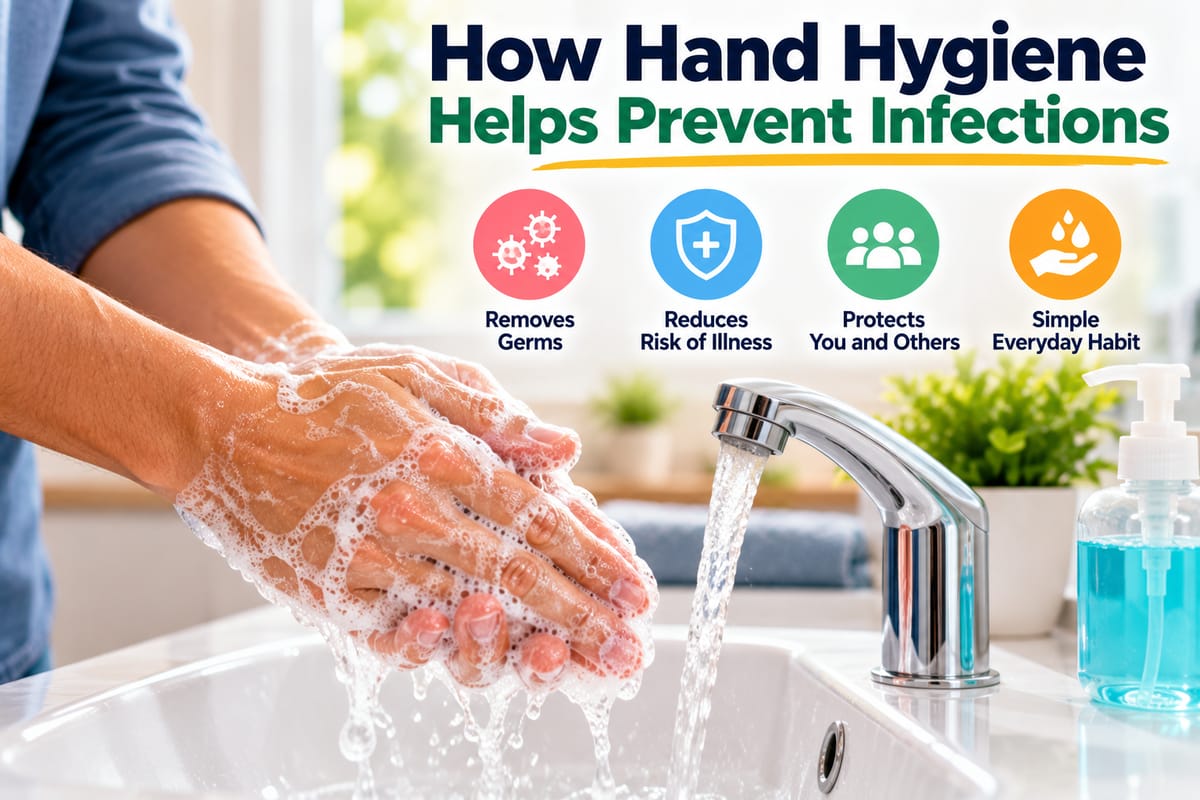

How Hand Hygiene Helps Prevent Infections
Hand hygiene is one of the simplest ways to reduce the spread of infectious diseases. Washing hands with soap and water can remove germs picked up from people, surfaces, food, animals, and other sources before those germs have an opportunity to enter the body or spread to someone else.
Although handwashing is a basic daily habit, its role in infection prevention is significant. Hands frequently come into contact with the face, food, household objects, phones, door handles, and other people. Without proper cleaning, microorganisms can travel easily from one place to another.
Understanding how hand hygiene works can make it easier to recognize when handwashing matters most and how to practice it effectively.
Why Hands Can Spread Infections
Hands interact with countless surfaces and objects throughout the day. Some of those surfaces may carry microorganisms, including bacteria, viruses, and other infectious agents.
A person can pick up germs after touching:
- Door handles
- Handrails
- Phones and keyboards
- Shared equipment
- Bathroom surfaces
- Raw food
- Waste
- Animals
- Another person’s hands or belongings
Touching the eyes, nose, or mouth afterward can provide a pathway for some germs to enter the body.
Hands can also transfer microorganisms to food, household surfaces, or other people. This makes hand hygiene important not only for protecting the individual washing their hands but also for reducing opportunities for infections to spread through a community.
How Handwashing Removes Germs
Soap and water work together to remove microorganisms and other contaminants from the hands.
Water helps rinse away loosened material, while soap helps break up oils and substances that allow dirt and microorganisms to remain attached to the skin. Rubbing the hands together creates friction that helps loosen contaminants from the skin’s surface.
The process is particularly effective when people clean all areas of their hands rather than quickly rinsing their palms.
Important areas include:
- Palms
- Backs of the hands
- Between the fingers
- Fingertips
- Around the nails
- Thumbs
- Wrists
Thorough cleaning helps reduce the number of potentially harmful microorganisms that remain on the hands.
When Hand Hygiene Is Especially Important
Handwashing can be useful throughout the day, but certain situations create particularly important opportunities for preventing infection.
These include:
- Before preparing food
- Before eating
- After using the toilet
- After changing diapers
- After caring for someone who is sick
- After coughing, sneezing, or blowing the nose
- After touching animals
- After handling waste
- After cleaning contaminated surfaces
- After returning from places where many people have shared surfaces
Hand hygiene is also important before touching wounds, medical devices, or other areas where microorganisms could potentially cause infection.
The broader principles behind these practices are covered in the Guide to Infectious Disease Prevention, which explains how everyday behaviors can reduce exposure to infectious organisms.
The Importance of Washing Before Eating and Preparing Food
Food provides another important reason to maintain clean hands.
Microorganisms transferred from hands can contaminate food during preparation. If contaminated food is consumed, some pathogens can cause gastrointestinal infections and other illnesses.
Washing hands before preparing meals and before eating can help interrupt this route of transmission.
Hand hygiene is particularly important after handling raw meat, poultry, seafood, eggs, or other foods that may carry microorganisms. Hands should be cleaned before moving from potentially contaminated food preparation to handling ready-to-eat foods.
Hand Hygiene and Respiratory Infections
Respiratory infections can spread through several pathways, including respiratory particles and contaminated hands and surfaces.
People frequently touch their faces without realizing it. A person who has contaminated their hands may transfer microorganisms to their eyes, nose, or mouth through these routine touches.
Regular hand hygiene can reduce the amount of contamination on the hands and therefore reduce one potential route by which infectious organisms reach the body.
Handwashing should complement other infection-prevention practices rather than being treated as the only protective measure.
Hand Hygiene Is Part of Personal Hygiene
Handwashing works best as part of a broader approach to cleanliness and disease prevention.
Other personal hygiene practices can help reduce exposure to microorganisms and prevent them from spreading between people.
The How Personal Hygiene Helps Prevent Illness guide explores how habits involving cleanliness, bathing, oral care, clothing, and other daily routines contribute to general infection prevention.
Together, these habits create multiple layers of protection.
How Long Should You Wash Your Hands?
Effective handwashing is not simply about putting soap on the hands and immediately rinsing it away.
A thorough routine generally involves:
- Wetting the hands with clean running water.
- Applying soap.
- Rubbing the hands together to create a lather.
- Cleaning the palms, backs of the hands, between the fingers, thumbs, fingertips, and around the nails.
- Continuing to scrub for sufficient time to clean the hands thoroughly.
- Rinsing well under clean running water.
- Drying the hands with a clean towel or another suitable drying method.
The mechanical action of rubbing is important because it helps loosen microorganisms and other contaminants from the skin.
What Happens When Hands Are Not Washed Properly?
Skipping handwashing or washing inadequately can leave microorganisms on the skin.
This can create several opportunities for transmission. A person may touch food, household objects, another person, or their own face before cleaning their hands.
The result is not necessarily that someone will become sick every time they skip washing. Infection depends on many factors, including the type and amount of microorganism involved, the route of exposure, and the individual’s susceptibility.
However, reducing unnecessary exposure is an important part of infection prevention.
Hand Sanitizer as an Alternative
Soap and water are not always immediately available.
In situations where hands are not visibly dirty and washing facilities are unavailable, an appropriate alcohol-based hand sanitizer can provide another way to reduce many types of microorganisms on the hands.
Hand sanitizer should be applied according to the product’s instructions and rubbed over all areas of the hands until they are dry.
It does not replace handwashing in every situation. For example, visibly dirty or greasy hands generally require soap and water for effective cleaning.
Some infectious organisms may also respond differently to alcohol-based sanitizers, which is another reason proper handwashing remains an important foundational practice.
Why Fingertips and Thumbs Matter
People sometimes focus on their palms while overlooking their fingertips and thumbs.
This can leave areas of the hands insufficiently cleaned.
Fingertips are particularly important because they frequently touch the face, phones, keyboards, utensils, and other objects. Thumbs also make extensive contact with surfaces but can be missed during a quick wash.
Paying attention to these areas makes hand hygiene more comprehensive.
Hand Hygiene in Healthcare Settings
Hand hygiene is especially important in healthcare because patients may be vulnerable to infections and healthcare workers frequently move between different people and environments.
Healthcare professionals use specific hand hygiene procedures before and after different types of patient contact. These practices are designed to reduce the transfer of microorganisms between healthcare workers, patients, equipment, and surrounding surfaces.
The principle is straightforward: cleaning hands at appropriate points can interrupt chains of transmission.
Children and Hand Hygiene
Children interact constantly with toys, playground equipment, classroom materials, food, animals, and other children. They may also touch their faces frequently.
Teaching children how and when to wash their hands can therefore establish an important infection-prevention habit early in life.
Adults can make the process easier by:
- Demonstrating proper handwashing
- Explaining why clean hands matter
- Encouraging handwashing before meals
- Reminding children to wash after using the bathroom
- Supervising younger children when necessary
- Making soap and clean water readily accessible
Consistent routines can help make hand hygiene a normal part of everyday life rather than something practiced only when illness is present.
Hand Hygiene and the Immune System
Hand hygiene and the immune system work at different stages of infection prevention.
Handwashing helps reduce exposure by removing microorganisms before they have an opportunity to enter the body. The immune system provides internal defenses that identify and respond to infectious threats that enter the body.
The Immune System Guide explains the broader role of the body’s immune defenses and how different components work together to protect against disease.
Reducing exposure through hand hygiene does not make the immune system unnecessary. Instead, it can reduce the number of potential exposures the body’s defenses must deal with.
How Antibodies Fit Into Infection Defense
Antibodies are another component of the body’s immune response. They can recognize specific foreign substances and help the immune system respond to particular infectious threats.
The relationship between hygiene and immune defenses can therefore be viewed as multiple layers:
Hand hygiene → reduced exposure → fewer opportunities for microorganisms to enter the body → immune defenses respond when necessary
The How Antibodies Help the Immune System Fight Infection article provides more detail about how antibodies participate in the body’s response to infection.
Common Hand Hygiene Mistakes
Even people who wash their hands regularly can miss important areas or use ineffective techniques.
Common mistakes include:
- Washing for only a few seconds
- Skipping soap
- Cleaning only the palms
- Ignoring the thumbs
- Not cleaning between the fingers
- Rinsing without sufficient rubbing
- Using visibly dirty towels
- Touching contaminated surfaces immediately after washing
- Failing to wash hands before food preparation
- Assuming hand sanitizer is appropriate for every situation
Improving technique can make an existing handwashing habit more effective.
Keeping Hand Hygiene Practical
Good hand hygiene does not need to be complicated.
Keeping soap near sinks, carrying hand sanitizer when appropriate, and making handwashing part of predictable daily routines can make the habit easier to maintain.
Homes, workplaces, schools, healthcare facilities, restaurants, and other shared environments can also support better hygiene by providing convenient access to clean water, soap, and suitable hand-drying options.
Making the healthy choice convenient can have a meaningful effect on everyday behavior.
Hand Hygiene as a Simple Layer of Protection
Hand hygiene is a small daily behavior with an important role in reducing the spread of infectious diseases. By removing microorganisms from the hands at appropriate times, people can interrupt some of the pathways through which germs move between surfaces, food, people, and the body.
It is not a guarantee against infection, and it works alongside other measures such as appropriate food safety, respiratory hygiene, vaccination where recommended, environmental cleaning, and staying home when sick.
Still, something as simple as washing hands thoroughly with soap and water can remove a significant opportunity for microorganisms to travel. Making that habit consistent is one of the most practical ways to support everyday infection prevention.
Continue Reading
Similar Posts

How Vector Control Prevents Infectious Diseases
Vector control includes a wide range of measures designed to reduce contact between people and disease-carrying organisms.
Read article
How Sun Exposure Affects Skin Cancer Risk
Understanding how sun exposure affects the skin can make prevention more practical. Protection is not about avoiding daylight altogether. Instead, it involves reducing unnecessary ultraviolet exposure and recognizing situations when the skin is particularly vulnerable.
Read article
How Type 2 Diabetes Risk Develops
Understanding how type 2 diabetes risk develops can make the condition easier to prevent or manage. Risk factors do not guarantee that someone will develop diabetes, and some people develop the condition without having an obvious single cause. Instead, risk tends to emerge from the interaction of several factors over time.
Read article

Join 10,000+ Readers Building Healthier Habits
Get actionable wellness tips every week plus our newest articles delivered straight to your inbox.