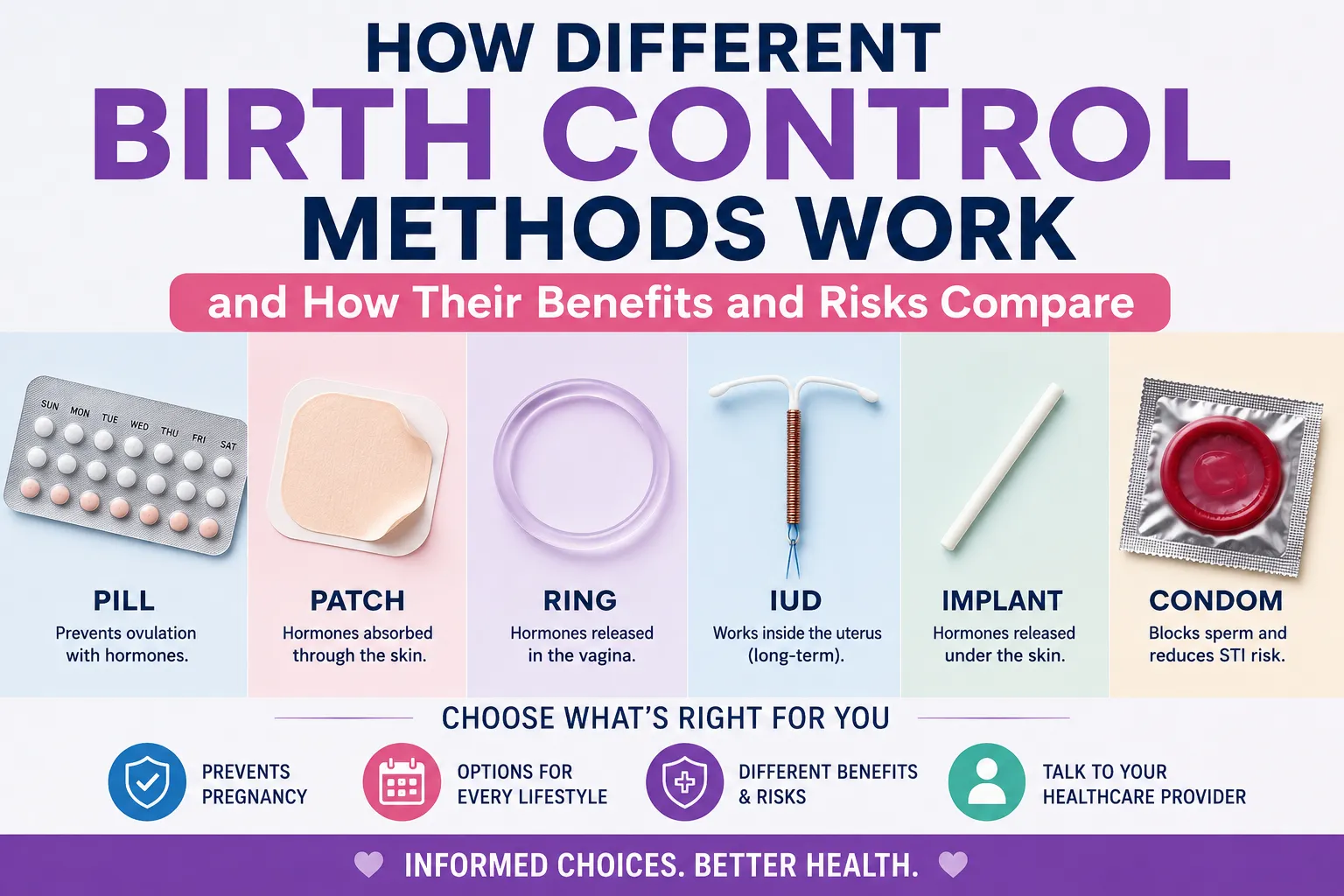

How Different Birth Control Methods Work and How Their Benefits and Risks Compare
Birth control gives people different ways to prevent pregnancy, but the options do not all work in the same way or offer the same balance of effectiveness, convenience, side effects and health considerations.
Some methods use hormones to prevent ovulation. Others create a physical barrier that keeps sperm from reaching an egg. Intrauterine devices (IUDs) work inside the uterus, while permanent contraception prevents pregnancy by surgically blocking the reproductive pathway.
Choosing between them is therefore not simply a question of which method is “best.” The right choice depends on a person’s health, reproductive plans, preferences, ability to use the method consistently and whether protection against sexually transmitted infections (STIs) is also needed. Voluntary, informed choice is an important part of selecting contraception.
For contraception to fit into a person’s broader health needs, it can also help to understand the wider factors covered in the complete guide to reproductive health, including reproductive planning, hormonal health and changes throughout life.
How Birth Control Prevents Pregnancy
Pregnancy generally requires sperm to reach and fertilize an egg, followed by implantation and continued development.
Different contraceptive methods interfere with this process in different ways.
They may:
- Prevent ovulation
- Thicken cervical mucus
- Prevent sperm from reaching an egg
- Alter the environment inside the uterus
- Prevent fertilization
- Permanently block the reproductive pathways
Understanding these differences makes it easier to compare methods.
Hormonal Birth Control
Hormonal contraception uses hormones, usually progestin, estrogen or a combination of both, to prevent pregnancy.
Common hormonal methods include:
- Birth control pills
- Hormonal patches
- Vaginal rings
- Hormonal IUDs
- Implants
- Birth control injections
- Progestin-only pills
Hormonal methods do not protect against STIs, so condoms may still be important when STI protection is needed.
Combined Birth Control Pills
Combined oral contraceptives contain estrogen and progestin.
They primarily prevent ovulation. They can also change cervical mucus and the uterine lining in ways that make pregnancy less likely.
With typical use, about 7 out of 100 users become pregnant during the first year, according to current contraceptive guidance.
Benefits
The combined pill can offer benefits beyond pregnancy prevention.
Depending on the formulation, it may:
- Make periods more predictable
- Reduce menstrual bleeding
- Reduce menstrual cramps
- Improve acne
- Reduce menstrual migraine frequency
- Lower the risk of certain cancers, including ovarian cancer
Combined hormonal methods can also reduce unwanted hair growth and improve some menstrual symptoms.
Risks and disadvantages
The pill requires regular use, which means forgetting doses can reduce its effectiveness.
Possible side effects include:
- Nausea
- Headaches
- Breast tenderness
- Breakthrough bleeding
Because combined hormonal contraception contains estrogen, it is not appropriate for everyone. It can increase the risk of blood clots and is generally unsuitable for certain people with a history of blood clots, stroke, certain cardiovascular conditions or migraine with aura. Smoking at age 35 or older is another important consideration.
A healthcare professional can assess individual risk factors before prescribing an estrogen-containing method.
Progestin-Only Pills
Progestin-only pills contain progestin without estrogen.
Depending on the formulation, they primarily work by preventing ovulation and/or thickening cervical mucus.
Guidance estimates that about 7 out of 100 users become pregnant during the first year with typical use.
Benefits
Progestin-only pills can be useful for people who should avoid estrogen-containing contraception.
They may:
- Reduce menstrual bleeding
- Make periods lighter
- Stop periods in some users
- Avoid estrogen-related risks
They are also an option for many people shortly after childbirth, including during breastfeeding, depending on individual circumstances.
Drawbacks
Some formulations require very consistent daily timing.
Possible side effects include:
- Irregular bleeding
- Headaches
- Nausea
- Breast tenderness
Some medical conditions and medications can make particular progestin-only pills unsuitable, so product-specific guidance matters.
Birth Control Patch
The contraceptive patch delivers estrogen and progestin through the skin.
It works similarly to combined hormonal pills, primarily by preventing ovulation.
The patch is changed on a regular schedule rather than taken every day.
Benefits
For someone who finds daily pills difficult to remember, a weekly routine may be easier.
It also does not interfere with sexual activity.
Drawbacks
Possible side effects are similar to other combined hormonal methods, including headaches, breast tenderness and irregular bleeding.
Because the patch contains estrogen, it also carries estrogen-related risks and is not suitable for everyone.
Vaginal Ring
The vaginal ring is another combined hormonal method.
It releases hormones inside the vagina and is generally replaced according to a monthly or extended-use schedule depending on the product and regimen.
Benefits
The ring:
- Does not require daily action
- Can make periods lighter and more predictable
- May reduce menstrual cramps
- Can sometimes be used continuously to avoid periods
Drawbacks
Some people dislike inserting or removing a vaginal device.
It can also cause side effects associated with hormonal contraception and is not appropriate for everyone who should avoid estrogen.
Hormonal IUD
An IUD is a small device placed inside the uterus by a healthcare professional.
Hormonal IUDs release levonorgestrel, a type of progestin. They primarily thicken cervical mucus and can also suppress ovulation to varying degrees depending on the product.
Hormonal IUDs are among the most effective reversible contraceptive options. Fewer than 1 in 100 IUD users becomes pregnant during the first year with typical use.
Benefits
Hormonal IUDs can:
- Provide contraception for several years, depending on the product
- Require little ongoing effort after insertion
- Be removed when pregnancy is desired
- Reduce heavy menstrual bleeding
- Reduce menstrual pain
Many users eventually have very light periods or no menstrual bleeding.
Risks and disadvantages
Insertion can be uncomfortable or painful.
Other possible issues include:
- Spotting
- Irregular bleeding, especially during the first few months
- Cramping
- Expulsion, meaning the device comes out
- Rare complications involving infection or injury
Serious complications are uncommon.
The IUD does not protect against STIs.
Copper IUD
The copper IUD is a nonhormonal contraceptive option.
Instead of releasing hormones, it uses copper to create an environment that interferes with sperm and prevents fertilization.
Like hormonal IUDs, it is highly effective. Fewer than 1 pregnancy per 100 users occurs during the first year with typical use.
Benefits
The copper IUD:
- Contains no hormones
- Provides long-term contraception
- Is reversible
- Requires little daily attention
- Can also be used as emergency contraception when inserted within the appropriate timeframe
Drawbacks
The major disadvantage for some users is its effect on menstruation.
Copper IUDs can cause:
- Heavier bleeding
- More menstrual cramping
- Spotting between periods
These effects are often most noticeable during the first several months.
For someone who already has very heavy or painful periods, another option may be more comfortable.
Birth Control Implant
The contraceptive implant is a small flexible rod placed under the skin of the upper arm.
It releases progestin and provides long-acting contraception without requiring daily action.
Benefits
The implant:
- Is highly effective
- Lasts for years depending on the product
- Does not interfere with sex
- Can be removed
- Requires little maintenance after insertion
The implant is an effective long-acting option that can be used by people of many ages.
Drawbacks
The most common concern is unpredictable bleeding.
Some users experience:
- Spotting
- Irregular periods
- Longer or shorter bleeding
- Heavier or lighter bleeding
- No periods
Other possible side effects include headaches, acne and mood changes.
Birth Control Injection
The contraceptive injection, commonly known as DMPA, delivers a progestin injection about every three months.
It prevents ovulation and provides contraception without requiring daily or weekly action.
Benefits
The injection:
- Requires attention only every few months
- Does not interfere with sex
- Can reduce or stop menstrual bleeding in some users
Drawbacks
Possible disadvantages include:
- Irregular bleeding
- Headaches
- Weight changes
- Delayed return to fertility after stopping
- Temporary bone-density loss
Bone loss can occur with DMPA use and some or all of the lost bone is generally regained after stopping.
The injection also requires returning to a healthcare provider for each dose.
Condoms
Condoms are barrier methods that prevent sperm from entering the reproductive tract.
External condoms are worn over the penis, while internal condoms are placed inside the vagina.
External condoms have a particularly important advantage: they can help reduce the risk of many STIs as well as pregnancy.
Benefits
Condoms:
- Are widely accessible
- Do not contain reproductive hormones
- Are used only when needed
- Can help protect against STIs
- Can be combined with another contraceptive method
Drawbacks
Their effectiveness depends heavily on correct and consistent use.
The estimated typical-use failure rate is 13% for external condoms and 21% for internal condoms.
Condoms can also break or slip, although correct use can reduce these problems.
Diaphragms, Cervical Caps and Sponges
These methods are placed inside the vagina and work by preventing sperm from reaching the cervix, usually with spermicide or another sperm-inhibiting substance.
They require more preparation than long-acting methods.
Typical-use failure rates are approximately:
- 17% for diaphragms
- 22% for cervical caps
- 17% for contraceptive sponges
Benefits
These methods:
- Are hormone-free
- Are controlled by the user
- Can be used only when needed
- Do not require a long-term commitment
Drawbacks
They generally require planning around sexual activity and are less effective with typical use than IUDs or implants.
Some people can also experience irritation or urinary tract infections, depending on the method.
Fertility Awareness-Based Methods
Fertility awareness methods involve identifying the days when pregnancy is most likely and avoiding unprotected sex or using a barrier method during those days.
Different approaches track different signs, including:
- Menstrual cycles
- Cervical mucus
- Basal body temperature
- Other fertility indicators
Effectiveness varies considerably depending on the specific method and how consistently it is followed.
For example, about 13 out of 100 users of the Standard Days Method become pregnant during the first year with typical use.
For people interested in understanding fertility more broadly, contraception can also be considered alongside understanding fertility for women and men.
Benefits
These approaches:
- Use no hormones
- Require no prescription
- Can help people understand their fertility patterns
- Can be used to either avoid or achieve pregnancy
Drawbacks
They require careful tracking and cooperation.
They may also be less suitable for people whose menstrual cycles are unpredictable or for those who do not want to avoid unprotected sex during fertile periods.
They do not protect against STIs.
Withdrawal
Withdrawal involves removing the penis from the vagina before ejaculation.
It requires precise timing and does not provide STI protection.
It is generally less reliable than many other contraceptive methods because pregnancy can occur if sperm enters the vagina before or during withdrawal.
The method can be used without medication or equipment, but its dependence on consistent behavior is an important limitation.
Lactational Amenorrhea Method
Breastfeeding can temporarily suppress ovulation, but using breastfeeding as contraception requires specific conditions.
The lactational amenorrhea method (LAM) works when:
- The baby is under six months old
- Menstrual periods have not returned
- Breastfeeding is exclusive or nearly exclusive with frequent feeding
LAM is temporary and depends on frequent breastfeeding.
Once the conditions no longer apply, another contraceptive method is needed.
This is particularly relevant when contraception is being considered alongside broader postpartum health, because reproductive changes and healthcare needs can continue to evolve after childbirth.
Permanent Birth Control
For people who are certain they do not want future pregnancies, permanent contraception is another option.
There are two major approaches:
Tubal Sterilization
The fallopian tubes are surgically blocked, cut or otherwise interrupted so sperm and egg cannot meet.
Vasectomy
A vasectomy prevents sperm from entering semen by interrupting the sperm-carrying tubes.
Both are highly effective permanent methods. Typical-use pregnancy rates are approximately 0.5% for tubal surgery and 0.15% for vasectomy during the first year.
Benefits
Permanent contraception:
- Does not require ongoing contraception
- Does not depend on remembering pills or appointments
- Is highly effective
Risks
Surgery can involve risks such as:
- Infection
- Bleeding
- Pain
- Other procedural complications
Most importantly, sterilization should be considered permanent. Reversal procedures are not guaranteed to restore fertility.
Emergency Contraception
Emergency contraception is designed to reduce the chance of pregnancy after unprotected sex or contraceptive failure.
Options include:
- Emergency contraceptive pills
- Copper IUD placement
Emergency contraception is different from ongoing birth control.
It is intended for situations such as:
- A condom breaking
- Missing contraceptive doses
- Unprotected sex
- Sexual assault
The copper IUD is particularly effective as emergency contraception and can then provide ongoing contraception.
Comparing Birth Control Methods
| Method | Hormonal? | Typical-use pregnancy risk | Long-acting? | STI protection? |
|---|---|---|---|---|
| Hormonal IUD | Yes | <1% | Yes | No |
| Copper IUD | No | <1% | Yes | No |
| Implant | Yes | Very low | Yes | No |
| Combined pill/patch/ring | Yes | ~7% | No | No |
| Progestin-only pill | Yes | ~7% | No | No |
| External condom | No | ~13% | No | Yes, reduces STI risk |
| Internal condom | No | ~21% | No | Can reduce STI risk |
| Diaphragm | No | ~17% | No | No |
| Cervical cap | No | ~22% | No | No |
| Standard Days Method | No | ~13% | No | No |
| Tubal sterilization | No | ~0.5% | Permanent | No |
| Vasectomy | No | ~0.15% | Permanent | No |
The figures above are U.S. estimates for typical use and are useful for broad comparison. Actual effectiveness can vary by individual method, product, use patterns and circumstances.
Why Typical Use Matters
There is an important distinction between perfect use and typical use.
Perfect use describes how well a method works when it is used exactly as directed every time.
Typical use reflects what happens in real life, where people may:
- Forget pills
- Apply a patch late
- Miss an appointment
- Use condoms inconsistently
- Miscalculate fertile days
Long-acting methods such as IUDs and implants largely eliminate the need for daily user action, which is one reason their typical-use effectiveness is so high.
Which Methods Are Most Convenient?
Convenience is highly personal.
Someone who dislikes taking medication every day may prefer:
- An IUD
- An implant
- An injection
- A ring
- A patch
Someone who wants complete control over when contraception is used may prefer condoms or another barrier method.
There is no universal definition of convenience.
Which Methods Have No Hormones?
People who prefer to avoid hormonal contraception can consider:
- Copper IUD
- External condoms
- Internal condoms
- Diaphragm
- Cervical cap
- Sponge
- Fertility awareness methods
- Withdrawal
- Sterilization
The copper IUD is particularly effective among nonhormonal reversible options.
Which Methods Can Help With Period Problems?
Some hormonal methods can make periods lighter, shorter or less painful.
Combined hormonal contraception can help regulate menstrual bleeding and reduce cramps. Hormonal IUDs can significantly reduce heavy bleeding and menstrual pain for many users.
By contrast, the copper IUD can initially make bleeding heavier and cramps stronger.
This difference can be important when choosing between the two types of IUD.
For people who are also evaluating menstrual patterns, symptoms and hormonal changes, understanding menstrual health and cycles can provide useful context when discussing contraceptive choices with a healthcare professional.
Birth Control and Breastfeeding
Contraception after childbirth requires additional consideration because fertility can return relatively soon after delivery.
Some methods can be started shortly after childbirth, while estrogen-containing contraception may need to be delayed in certain postpartum situations.
Progestin-only methods and IUDs may be suitable for many people during the postpartum period, but timing depends on the method and individual circumstances.
Anyone who has recently given birth should discuss contraception with a healthcare professional, particularly if breastfeeding or if there are medical risk factors.
Birth Control and Health Conditions
A method that is appropriate for one person may not be appropriate for another.
Healthcare professionals consider factors such as:
- Age
- Smoking
- Blood pressure
- Migraine history
- Cardiovascular disease
- History of blood clots
- Breast cancer history
- Liver disease
- Postpartum status
- Breastfeeding
- Medications
- Other medical conditions
Contraceptive options are categorized according to individual health circumstances, ranging from methods with no restriction to situations where a method should not be used.
This is why choosing contraception based solely on a friend’s experience or an online recommendation can be risky.
Birth Control Does Not Protect Against Every Sexual Health Risk
Most contraceptive methods prevent pregnancy but do not prevent STIs.
Hormonal pills, IUDs, implants, patches, rings, injections and sterilization do not provide STI protection.
Condoms are different because they can reduce the risk of many STIs when used correctly and consistently.
For people who need protection against both pregnancy and STIs, using a condom alongside another effective contraceptive method can provide two layers of protection.
There Is No Single “Best” Birth Control Method
A method’s effectiveness is only one part of the decision.
Someone may prioritize:
- Avoiding hormones
- Avoiding estrogen
- Having lighter periods
- Avoiding daily medication
- Maintaining fertility
- STI protection
- Privacy
- Low cost
- Few appointments
- Long-term protection
- Easy discontinuation
These priorities can lead different people to completely different choices.
A highly effective method that someone dislikes and stops using may be less useful to them than another method they can comfortably use consistently.
Choosing Contraception Around Your Own Priorities
Birth control has evolved into a broad range of options rather than a single standard approach. IUDs and implants offer highly effective, long-lasting protection with little ongoing effort, pills, patches and rings provide reversible hormonal options that users can control, and condoms remain especially important for STI protection. Barrier methods and fertility awareness approaches offer hormone-free alternatives, while sterilization provides a permanent option for people who are certain they do not want future pregnancies.
The most appropriate choice depends on the individual’s health, reproductive goals, preferences and circumstances. A healthcare professional can help weigh benefits, side effects, contraindications and interactions before starting or switching methods.
Most importantly, contraception should be an informed choice rather than a one-size-fits-all decision. The method that works best is ultimately the one that is medically appropriate, acceptable to the person using it and practical enough to use consistently.
Continue Reading
Similar Posts

How Communication Supports Sexual Health
Whether people are discussing contraception, sexual preferences, STI testing, fertility, consent, or changes in their health, clear communication can play an important role in making sexual relationships safer and healthier.
Read article
Why Health History Matters for Women
For women, keeping an accurate health history can be especially valuable because health needs can change significantly throughout different stages of life.
Read article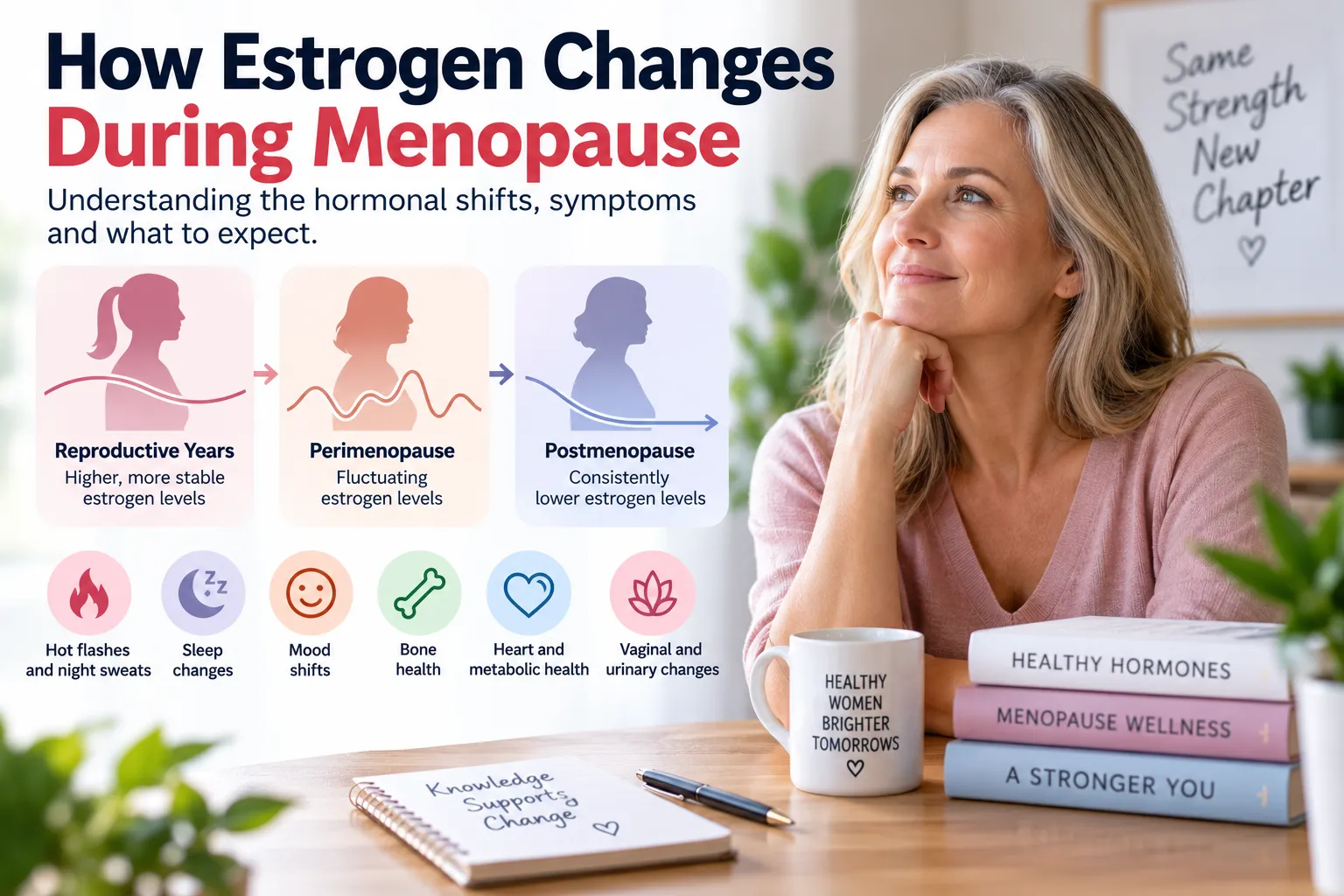
How Estrogen Changes During Menopause
Understanding how estrogen changes can make many of the physical and emotional changes associated with this stage of life easier to recognize and discuss with a healthcare professional.
Read article

Join 10,000+ Readers Building Healthier Habits
Get actionable wellness tips every week plus our newest articles delivered straight to your inbox.