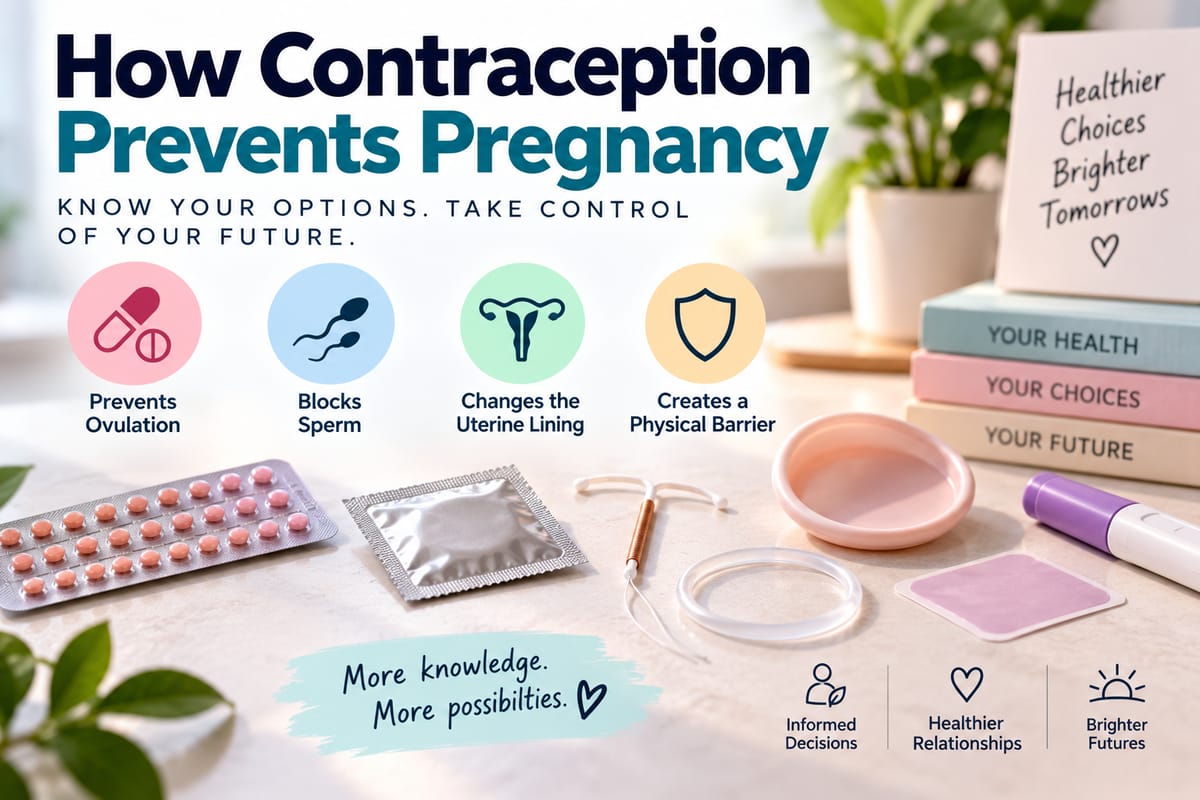

How Contraception Prevents Pregnancy
Contraception is a broad term for methods used to prevent pregnancy. These methods work in different ways, from stopping the release of an egg to preventing sperm from reaching an egg or creating conditions that make fertilization or pregnancy unlikely.
Understanding how contraception works can make it easier to distinguish between the many options available. Methods vary in effectiveness, duration, hormones, side effects, reversibility, and protection against sexually transmitted infections.
Contraception is also an important part of reproductive health because pregnancy involves several biological steps. Preventing any one of these steps can reduce the possibility of conception.
What Happens Before Pregnancy?
For pregnancy to occur, sperm generally needs to reach and fertilize an egg, followed by implantation of the resulting embryo in the uterus.
The process involves several stages:
- An ovary releases an egg during ovulation.
- Sperm enters the reproductive tract.
- Sperm travels toward the fallopian tubes.
- Fertilization may occur if sperm meets an egg.
- The fertilized egg develops and travels toward the uterus.
- Implantation can occur in the uterine lining.
Contraceptive methods are designed to interfere with one or more parts of this process.
For a broader overview of reproductive health and the systems involved, The Complete Guide to Reproductive Health provides additional context.
How Hormonal Contraception Works
Hormonal contraception uses hormones to prevent pregnancy. Depending on the method, these hormones can interfere with ovulation, thicken cervical mucus, or change the uterine lining.
Common hormonal methods include:
- Birth control pills
- Hormonal patches
- Vaginal rings
- Hormonal injections
- Hormonal implants
- Hormonal intrauterine devices
Different hormonal methods use different combinations or types of hormones, and they do not all work in exactly the same way.
Preventing Ovulation
Some hormonal contraceptives primarily work by preventing ovulation.
Ovulation is the release of an egg from an ovary. Without an egg being released, sperm has no egg to fertilize.
Hormonal contraceptives can alter the signals between the brain and reproductive organs that normally coordinate ovulation.
This mechanism is particularly important for several commonly used hormonal methods.
Thickening Cervical Mucus
Some hormonal contraception also makes cervical mucus thicker.
Cervical mucus is produced around the cervix and changes throughout the menstrual cycle. Thicker mucus can make it more difficult for sperm to move through the cervix and into the reproductive tract.
This creates another barrier between sperm and an egg.
Changing the Uterine Lining
Certain hormonal methods also alter the lining of the uterus.
The uterine lining naturally changes throughout the menstrual cycle in preparation for a possible pregnancy. Hormonal contraception can change this environment as part of its overall contraceptive effect.
The exact contribution of this mechanism varies by contraceptive method.
How Birth Control Pills Prevent Pregnancy
Birth control pills contain hormones that can prevent ovulation and produce other changes that reduce the likelihood of pregnancy.
There are different types of birth control pills, including combined pills containing estrogen and progestin and progestin-only pills.
The precise way each pill works depends on its formulation.
Taking pills according to their instructions is important because missed or incorrectly timed doses can reduce contraceptive protection for some types of pills.
How Hormonal Implants Work
A contraceptive implant is a small device placed under the skin, usually in the upper arm, that releases a hormone over an extended period.
The hormone primarily works by preventing ovulation and also changes cervical mucus.
Because the implant provides contraception without requiring a daily action, it can be useful for people who prefer a long-acting method.
The implant must be inserted and removed by a trained healthcare professional.
How Hormonal Injections Work
Hormonal contraceptive injections provide a dose of contraceptive hormone at scheduled intervals.
The hormone can suppress ovulation and produce changes in cervical mucus and the uterine lining.
Because injections are not taken every day, they remove the need to remember a daily contraceptive pill. However, they require repeat appointments or administration according to the specific product’s schedule.
Fertility may also take some time to return after stopping certain injectable contraceptives.
How Intrauterine Devices Prevent Pregnancy
Intrauterine devices, commonly called IUDs, are small devices placed inside the uterus by a healthcare professional.
There are two broad categories:
- Hormonal IUDs
- Copper IUDs
Hormonal IUDs release a progestin hormone. They primarily work by thickening cervical mucus and also produce changes in the uterine environment. Ovulation may also be suppressed in some users depending on the specific device and individual circumstances.
Copper IUDs do not contain hormones. Copper released by the device interferes with sperm movement and function, making fertilization much less likely.
Both types are long-acting and reversible.
How Condoms Prevent Pregnancy
Condoms work differently from hormonal contraception.
Instead of changing reproductive hormones, a condom creates a physical barrier that helps prevent sperm from entering the reproductive tract.
External condoms are worn over the penis, while internal condoms are placed inside the vagina.
When used correctly and consistently, condoms can help prevent pregnancy. They also have an important additional role: condoms can reduce the risk of transmitting many sexually transmitted infections.
This makes condoms different from most other contraceptive methods, which are designed primarily to prevent pregnancy rather than sexually transmitted infections.
How Diaphragms and Cervical Barriers Work
Barrier methods can also include devices such as diaphragms and cervical caps.
These devices are positioned over or around the cervix to help prevent sperm from entering the uterus. Some are used with spermicide, a substance designed to reduce sperm activity.
Barrier methods generally require correct placement and use each time they are needed.
Their effectiveness can therefore depend substantially on how consistently and correctly they are used.
How Spermicides Work
Spermicides contain chemicals designed to interfere with sperm.
They may be available in forms such as gels, creams, films, foams, or suppositories, depending on the product and location.
Spermicide can be used alone in some circumstances, but it is also commonly associated with barrier methods.
Because effectiveness varies and frequent use of some spermicide products may increase the risk of certain irritation or infections, users should follow product instructions and discuss appropriate use with a healthcare professional.
How Fertility Awareness Methods Work
Fertility awareness-based methods involve identifying days when pregnancy is more likely and avoiding unprotected sex during the fertile window or using a barrier method during that period.
These approaches can involve tracking:
- Menstrual cycles
- Cervical mucus
- Basal body temperature
- Other fertility indicators
The underlying principle is based on understanding when ovulation is likely to occur.
However, the fertile window can vary between individuals and from cycle to cycle. Effectiveness therefore depends heavily on accurate tracking, appropriate instruction, and consistent use.
Understanding the biology behind fertility can provide useful context. Understanding Fertility for Women and Men explores the reproductive factors that influence conception.
How Permanent Contraception Prevents Pregnancy
Permanent contraception is designed to provide a long-term or permanent method of preventing pregnancy.
For people with ovaries and fallopian tubes, a procedure commonly known as tubal sterilization can block or otherwise interrupt the fallopian tubes so sperm and egg are much less likely to meet.
For people with testes, vasectomy involves cutting or blocking the tubes that carry sperm from the testes.
These procedures are intended as permanent contraception, although some procedures may sometimes be surgically reversed. Reversal is not guaranteed to restore fertility.
Emergency Contraception
Emergency contraception is used after unprotected sex or when regular contraception may have failed.
Depending on the method, emergency contraception can involve medication or a copper IUD.
Emergency contraceptive pills work primarily by delaying or preventing ovulation. They do not terminate an established pregnancy.
The copper IUD can also be used as emergency contraception when inserted within the appropriate time period and can then continue to provide ongoing contraception.
Because timing matters, people considering emergency contraception should seek appropriate medical or pharmacy advice as soon as possible.
Contraception Does Not Usually Prevent Sexually Transmitted Infections
One important distinction is that most contraceptive methods do not protect against sexually transmitted infections.
Birth control pills, implants, injections, IUDs, and sterilization are designed primarily to prevent pregnancy.
Condoms are different because they can provide protection against many sexually transmitted infections when used correctly and consistently.
For broader information about sexual health, including prevention and safer sexual practices, the Sexual Health Guide provides additional information.
Why Contraceptive Effectiveness Varies
No contraceptive method works perfectly in every circumstance.
Effectiveness can differ between perfect use and typical use.
Perfect use refers to following a method exactly as instructed every time. Typical use reflects how the method tends to perform in real-world conditions, where missed pills, incorrect condom use, delayed injections, or other mistakes can occur.
Long-acting methods such as implants and IUDs generally remove many opportunities for user error because they continue working after being properly placed.
Methods that require an action every day or every time sex occurs may depend more heavily on consistent use.
Choosing Between Different Contraceptive Methods
There is no single contraceptive method that is appropriate for everyone.
People may consider different factors, including:
- Effectiveness
- Duration of protection
- Whether hormones are desired
- Possible side effects
- Reversibility
- Convenience
- Cost and availability
- Personal preferences
- Future pregnancy plans
- Protection against sexually transmitted infections
- Medical history and individual circumstances
A healthcare professional can help someone evaluate these factors and determine which options are medically appropriate.
A detailed comparison of mechanisms and trade-offs can be found in How Different Birth Control Methods Work and How Their Benefits and Risks Compare.
What Happens When Contraception Is Stopped?
Most reversible contraceptive methods allow fertility to return after they are discontinued or removed, although the timing can vary.
For some methods, fertility can return quickly. For others, particularly certain injectable contraceptives, the return to previous fertility patterns may take longer.
Permanent contraception is different because it is intended to provide lasting prevention of pregnancy.
Understanding whether a method is short-term, long-acting, or permanent is therefore an important part of making a contraceptive decision.
Contraception and Reproductive Planning
Contraception gives people options for deciding whether and when they want to become pregnant.
Its role extends beyond simply preventing fertilization. Different methods can influence menstrual patterns, convenience, sexual health planning, and how much control a person has over the timing of pregnancy.
Because contraceptive technologies work through different biological mechanisms, understanding those mechanisms can help people have more informed conversations with healthcare professionals.
Whether the method involves hormones, a physical barrier, an intrauterine device, fertility awareness, or permanent contraception, the central goal is to reduce the likelihood that sperm and egg will successfully meet and lead to pregnancy.
Continue Reading
Similar Posts

How Gender Can Influence Health Outcomes
Understanding these influences can help explain why some health conditions affect women and men differently and why healthcare cannot always take a one-size-fits-all approach.
Read article
How Period Pain Differs From Severe Pain
Understanding the difference between typical menstrual cramps and pain that may be unusually severe can help people recognize when symptoms deserve additional attention.
Read article
How Fetal Development Progresses During Pregnancy
Understanding the general stages of fetal development can make pregnancy easier to understand and can provide useful context for prenatal care, pregnancy planning, and discussions with healthcare professionals.
Read article

Join 10,000+ Readers Building Healthier Habits
Get actionable wellness tips every week plus our newest articles delivered straight to your inbox.