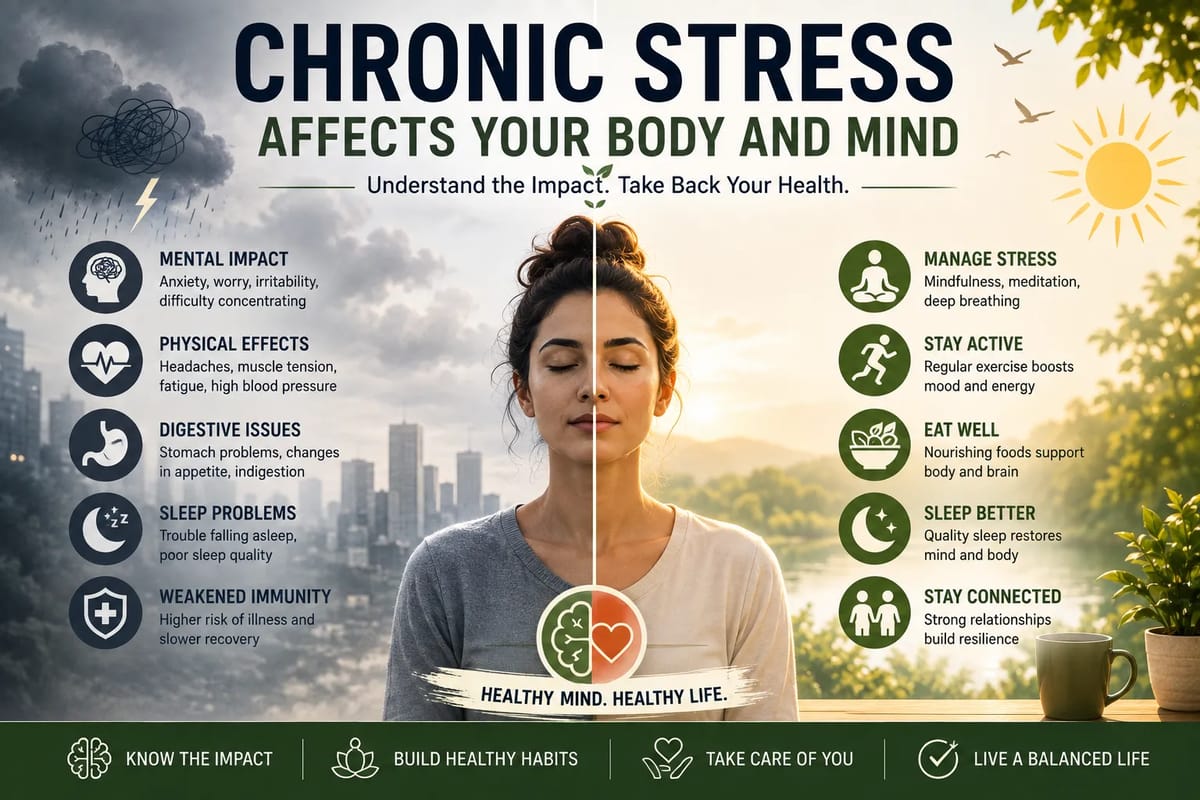

How Chronic Stress Affects Your Body and Mind
Stress is a natural part of life. It helps us react quickly to danger, meet deadlines, and adapt to new challenges. In small amounts, stress can even improve focus and motivation. However, when stress becomes chronic—lasting for weeks, months, or even years—it can take a serious toll on both physical and mental health.
Modern life exposes many people to ongoing stress from work, finances, relationships, health concerns, and constant digital connectivity. While the body is designed to handle short bursts of stress, it is not built to remain in a constant state of high alert. Over time, chronic stress can affect nearly every organ system, increasing the risk of numerous health problems.
This guide explores what chronic stress is, how it affects the body and mind, common warning signs, and practical strategies for managing stress and improving overall well-being. For a broader look at managing stress and protecting emotional well-being, see The Complete Guide to Emotional Well-Being.
What Is Chronic Stress?
Chronic stress occurs when the body’s stress response remains activated for extended periods.
Unlike short-term stress—which resolves once a challenge passes—chronic stress continues even after the immediate problem is gone or when stressful situations become a regular part of life.
Common sources include:
- Workplace pressure
- Financial difficulties
- Family responsibilities
- Relationship problems
- Long-term illness
- Caregiving responsibilities
- Major life changes
- Ongoing uncertainty
Without healthy coping strategies, chronic stress can gradually affect both physical and emotional health.
How the Body Responds to Stress
When faced with a stressful situation, the brain signals the release of stress hormones, primarily:
- Cortisol
- Adrenaline
These hormones prepare the body for the “fight-or-flight” response by:
- Increasing heart rate
- Raising blood pressure
- Boosting energy availability
- Heightening alertness
- Redirecting blood flow to muscles
This response is helpful during emergencies but becomes harmful when activated continuously.
The Physical Effects of Chronic Stress
Long-term stress can influence nearly every body system.
Heart and Blood Vessels
Chronic stress may contribute to:
- Elevated blood pressure
- Faster heart rate
- Increased inflammation
- Greater strain on the cardiovascular system
Maintaining heart health becomes increasingly important when stress persists.
Immune System
High stress levels can interfere with normal immune function.
People experiencing chronic stress may notice:
- More frequent colds
- Slower recovery from illness
- Reduced ability to fight infections
A healthy immune system relies on adequate rest, nutrition, and stress management.
Digestive System
Stress often affects digestion.
Common symptoms include:
- Upset stomach
- Indigestion
- Bloating
- Appetite changes
- Nausea
Some people eat more during stressful periods, while others lose their appetite.
Muscles
Stress causes muscles to tighten as part of the body’s protective response.
Persistent muscle tension may contribute to:
- Neck pain
- Shoulder pain
- Back discomfort
- Headaches
- Jaw tension
Relaxation techniques can help reduce prolonged muscle tightness.
Sleep
Quality sleep often suffers during periods of chronic stress.
People may experience:
- Difficulty falling asleep
- Frequent waking
- Restless sleep
- Feeling tired after sleeping
Poor sleep can, in turn, make stress more difficult to manage, creating a cycle that affects overall well-being.
The Mental and Emotional Effects
Stress influences emotional health as much as physical health.
Common effects include:
- Feeling overwhelmed
- Increased irritability
- Difficulty concentrating
- Persistent worry
- Mental fatigue
- Reduced motivation
- Emotional exhaustion
Everyone responds differently, and the intensity of these effects can vary.
How Stress Affects the Brain
The brain continuously adapts to stress.
Prolonged stress may affect:
- Memory
- Attention
- Decision-making
- Emotional regulation
- Learning ability
Many people report feeling forgetful or mentally “foggy” during prolonged stressful periods.
Recognizing the Signs of Chronic Stress
Early recognition makes stress easier to manage.
Common warning signs include:
Physical
- Frequent headaches
- Fatigue
- Muscle aches
- Digestive discomfort
- Sleep disturbances
Emotional
- Anxiety
- Irritability
- Mood changes
- Feeling overwhelmed
- Low motivation
Behavioral
- Overeating or undereating
- Social withdrawal
- Increased screen time
- Reduced physical activity
- Difficulty relaxing
These signs do not necessarily indicate a medical condition, but persistent symptoms deserve attention.
Healthy Ways to Manage Stress
Managing stress involves building habits that support both physical and emotional health.
Exercise Regularly
Physical activity can help:
- Improve mood
- Increase energy
- Reduce muscle tension
- Promote better sleep
Even moderate activities such as walking or cycling can be beneficial.
Prioritize Sleep
Good sleep supports emotional regulation and recovery.
Helpful habits include:
- Maintaining a consistent bedtime
- Limiting screen time before sleep
- Creating a comfortable sleep environment
- Avoiding excessive caffeine late in the day
Eat a Balanced Diet
Nutritious meals provide the energy and nutrients needed to support both body and brain.
Aim to include:
- Fruits
- Vegetables
- Whole grains
- Lean proteins
- Healthy fats
- Plenty of water
Practice Mindfulness
Mindfulness encourages awareness of the present moment.
Common techniques include:
- Deep breathing
- Meditation
- Yoga
- Gentle stretching
- Guided relaxation
These practices may help reduce feelings of stress and improve emotional balance. The Complete Guide to Mindfulness and Present-Moment Awareness provides additional information about these practices.
Stay Connected
Supportive relationships are an important source of resilience.
Talking with trusted friends, family members, or community groups can provide:
- Encouragement
- Perspective
- Emotional support
- Practical assistance
Social connection helps many people cope more effectively with life’s challenges.
Take Breaks
Continuous work without rest can increase stress.
Short breaks throughout the day can help:
- Improve concentration
- Reduce fatigue
- Boost productivity
- Refresh mental focus
Simple activities such as walking outdoors or stretching can be restorative.
Set Realistic Expectations
Trying to accomplish too much at once often increases stress.
Helpful strategies include:
- Prioritizing important tasks
- Breaking large projects into smaller steps
- Accepting that perfection is rarely possible
- Learning to say no when necessary
Healthy boundaries protect both time and energy. Learning healthy coping skills can also make it easier to respond to difficult situations without relying on harmful habits.
The Role of Technology
Technology can both reduce and increase stress.
Positive uses include:
- Guided meditation apps
- Fitness tracking
- Online support communities
- Digital calendars
- Relaxation music
However, excessive screen time, constant notifications, and information overload may contribute to ongoing stress.
Creating healthy digital habits can improve overall well-being. Learn more about how digital habits and screen time affect mental wellness.
Building Long-Term Resilience
Resilience is the ability to adapt to challenges and recover from setbacks.
Ways to strengthen resilience include:
- Maintaining healthy routines
- Practicing gratitude
- Developing problem-solving skills
- Staying physically active
- Building supportive relationships
- Learning healthy coping strategies
Resilience develops gradually through consistent habits.
For a deeper look at this topic, explore the Complete Guide to Building Resilience.
When to Seek Professional Support
Everyone experiences stress, but persistent emotional difficulties should not be ignored.
Consider speaking with a qualified healthcare or mental health professional if stress:
- Persists for several weeks
- Interferes with work or relationships
- Causes significant sleep problems
- Feels difficult to manage
- Leads to ongoing emotional distress
Seeking support is a proactive step toward improving health and well-being.
Common Myths About Stress
| Myth | Reality |
|---|---|
| Stress is always harmful. | Short-term stress can sometimes improve focus and performance. |
| Everyone reacts to stress the same way. | Stress responses vary widely between individuals. |
| Ignoring stress makes it disappear. | Unmanaged chronic stress may worsen over time. |
| Being busy means you’re productive. | Constant busyness without recovery can contribute to burnout. |
| Only adults experience chronic stress. | People of all ages can experience ongoing stress. |
Frequently Asked Questions
What is chronic stress?
Chronic stress is a prolonged state in which the body’s stress response remains active for an extended period.
Can stress affect physical health?
Yes. Long-term stress can influence sleep, digestion, muscle tension, immune function, cardiovascular health, and overall well-being.
What are common signs of chronic stress?
Common signs include fatigue, headaches, irritability, poor sleep, digestive discomfort, muscle tension, and difficulty concentrating.
How can I reduce everyday stress?
Regular exercise, quality sleep, balanced nutrition, mindfulness, social support, time management, and healthy boundaries can all help manage stress.
When should I seek professional help?
If stress becomes persistent, overwhelming, or significantly interferes with daily life, consulting a qualified healthcare or mental health professional is recommended.
Building a Healthier Response to Chronic Stress
Chronic stress is more than simply feeling busy or overwhelmed—it is a prolonged state that can affect nearly every aspect of physical and mental health. While occasional stress is a normal part of life, ongoing exposure without adequate recovery may contribute to fatigue, sleep disturbances, emotional strain, and reduced overall well-being.
Fortunately, small, consistent lifestyle changes can make a meaningful difference. Prioritizing quality sleep, staying physically active, eating a balanced diet, practicing mindfulness, maintaining supportive relationships, and creating healthy daily routines can all help strengthen resilience and improve emotional balance.
Managing stress is an ongoing process rather than a one-time solution. By recognizing the warning signs early and taking proactive steps to care for both body and mind, individuals can build healthier habits that support long-term wellness and a better quality of life.
Continue Reading
Similar Posts

How Meal Planning Supports Healthy Eating
Meal planning does not require complicated recipes, strict diets, or preparing every meal days in advance. It can be as simple as deciding on several meals, creating a shopping list, and making sure the kitchen has the ingredients needed to prepare balanced options.
Read article
How Dehydration Affects the Body
Understanding how dehydration affects the body can make it easier to recognize early signs, understand when fluid needs increase, and take practical steps to maintain adequate hydration.
Read article
How Heat and Climate Affect Hydration
Understanding these relationships can make it easier to adapt fluid intake to changing conditions rather than relying on the same hydration habits throughout the year.
Read article

Join 10,000+ Readers Building Healthier Habits
Get actionable wellness tips every week plus our newest articles delivered straight to your inbox.