
How Acute and Chronic Diseases Differ
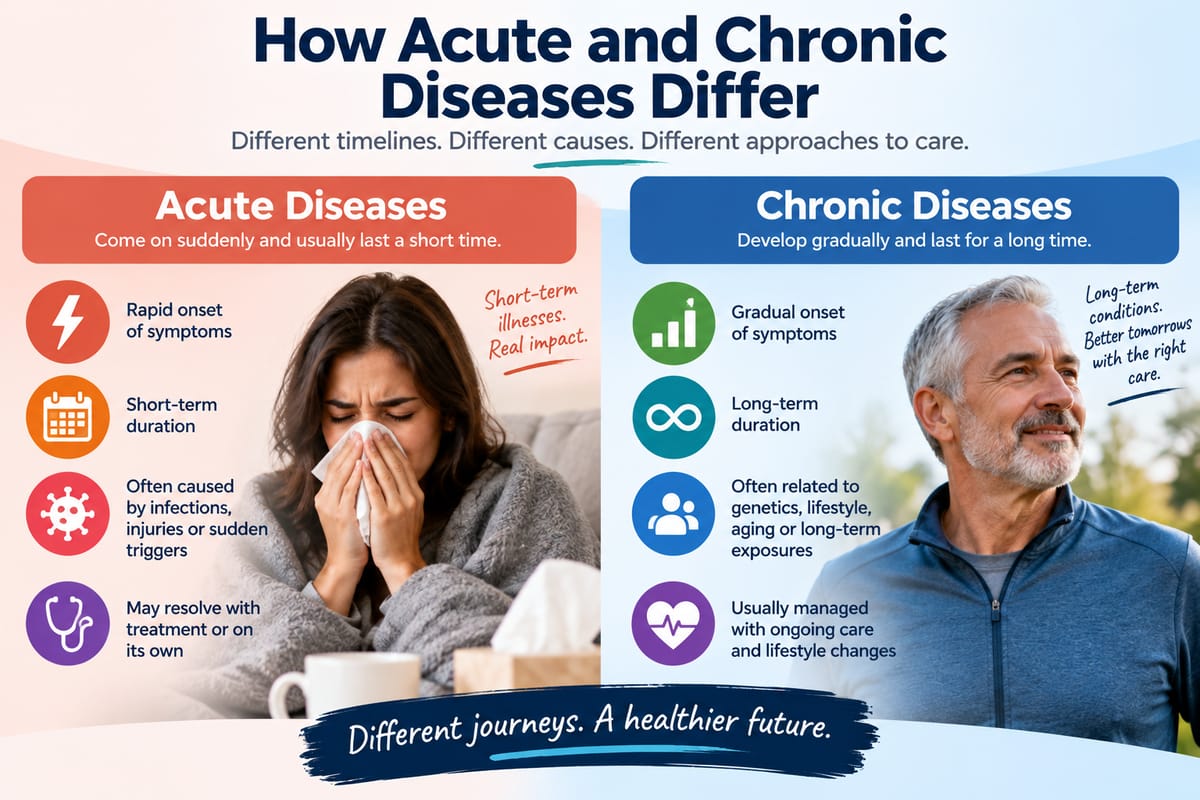
Not all diseases affect the body in the same way. Some conditions appear suddenly and last for a relatively short period, while others develop gradually and continue for months or years. This distinction is commonly described using the terms acute and chronic.
Understanding the difference between acute and chronic diseases can help explain why symptoms may develop differently, why some conditions require immediate treatment, and why others involve long-term monitoring and management.
The distinction is not always absolute. Some conditions can begin acutely and later become chronic, while chronic diseases can experience sudden episodes in which symptoms become significantly worse.
What Is an Acute Disease?
An acute disease generally develops quickly and lasts for a limited period.
The condition may appear suddenly, with symptoms becoming noticeable over hours or days. Some acute illnesses resolve on their own, while others require medication, medical procedures, or urgent treatment.
Examples of conditions that can be acute include:
- Influenza
- Common respiratory infections
- Food poisoning
- Some injuries
- Appendicitis
- Certain allergic reactions
- Some cases of pneumonia
The duration varies considerably depending on the underlying condition.
An acute illness is not necessarily mild. Some acute conditions can become medical emergencies, while others are relatively minor and resolve with basic care.
What Is a Chronic Disease?
A chronic disease is generally a condition that persists for a long period, often months or years.
Some chronic diseases develop gradually and may not produce obvious symptoms during their early stages. Others can produce ongoing symptoms from the beginning.
Examples include:
- Diabetes
- Asthma
- Arthritis
- Chronic kidney disease
- Heart disease
- Chronic obstructive pulmonary disease
- Some autoimmune diseases
Chronic conditions may be managed successfully for long periods, but many require continued monitoring and treatment.
The Complete Guide to Common Health Conditions provides a broader overview of different types of health conditions and how they can affect the body.
Acute Does Not Always Mean Severe
The word “acute” describes the time course of a condition rather than necessarily describing its severity.
For example, a relatively mild infection can be acute because it develops and resolves over a short period.
At the same time, some serious medical emergencies are acute because they occur suddenly.
This distinction is important because “acute” should not automatically be interpreted as “dangerous,” and “chronic” should not automatically be interpreted as “severe.”
The underlying condition, its symptoms, and the individual’s circumstances determine the seriousness.
Chronic Does Not Always Mean Constant Symptoms
Chronic disease does not necessarily mean that symptoms are present at the same intensity every day.
Many chronic conditions have periods when symptoms are minimal and other periods when they become more noticeable.
For example, someone with asthma may experience relatively few symptoms for extended periods but have episodes of breathing difficulty. Someone with an inflammatory condition may experience periods of increased disease activity followed by periods of improvement.
The pattern depends on the particular disease.
How Acute Diseases Often Begin
Acute diseases can develop after a relatively short interval between exposure and symptoms.
An infection may cause symptoms within days of exposure, while an injury can produce symptoms almost immediately.
Some acute conditions may have an identifiable trigger, such as:
- Exposure to an infectious organism
- Physical injury
- Allergens
- Food contamination
- Sudden blockage
- Medication reaction
Other acute conditions can occur without an obvious immediate cause.
How Chronic Diseases Can Develop
Chronic diseases can arise through several different pathways.
Some develop gradually as a result of long-term biological changes. Others may begin after an acute event and persist afterward.
Potential contributors can include:
- Genetic factors
- Aging
- Long-term exposure to certain environmental factors
- Lifestyle factors
- Infections
- Autoimmune processes
- Metabolic changes
- Previous injuries or illnesses
The causes differ substantially between diseases.
A person’s risk factors can increase the likelihood of developing a condition without guaranteeing that the condition will occur.
Acute and Chronic Symptoms Can Look Different
The pattern of symptoms is often one of the most noticeable differences.
Acute conditions may produce symptoms that develop quickly, such as:
- Fever
- Sudden pain
- Vomiting
- Diarrhea
- Cough
- Shortness of breath
- Swelling
- Sudden weakness
Chronic conditions may produce symptoms that persist or recur, such as:
- Ongoing fatigue
- Persistent pain
- Long-term breathing difficulties
- Recurrent digestive problems
- Changes in blood pressure
- Reduced mobility
- Changes in blood sugar
However, these symptoms overlap considerably. A particular symptom cannot reliably determine whether a condition is acute or chronic without considering the underlying cause.
Some Diseases Can Have Both Acute and Chronic Features
The distinction between acute and chronic is not always straightforward.
A person can have a chronic disease and experience an acute episode.
For example, someone with a long-term respiratory condition may experience a sudden worsening of symptoms. A person with chronic inflammatory disease may experience a flare.
Likewise, an acute illness can sometimes lead to longer-lasting complications.
This means the terms describe aspects of how a disease behaves rather than placing every illness into two completely separate categories.
Diagnosis Can Be Different
Acute conditions may be diagnosed based on symptoms, physical examination, medical history, and targeted testing.
Because the condition develops quickly, healthcare professionals may focus on identifying the immediate cause and determining whether urgent treatment is necessary.
Chronic conditions can require a longer diagnostic process.
A healthcare professional may evaluate symptoms over time, perform repeated tests, review family and medical history, and monitor how the condition changes.
Some chronic diseases are also identified through routine screening before significant symptoms appear.
Why Early Detection Matters for Chronic Disease
Many chronic diseases can develop silently or produce subtle symptoms in their early stages.
A person may not realize that something is wrong until the condition has progressed or begins interfering with everyday activities.
Possible warning signs can include:
- Persistent fatigue
- Unexplained changes in weight
- Repeated pain
- Changes in thirst or urination
- Persistent digestive symptoms
- Ongoing shortness of breath
- Changes in vision
- Recurring headaches
- Persistent changes in blood pressure
The Early Warning Signs of Chronic Disease guide provides additional context on symptoms that may warrant discussion with a healthcare professional.
These signs are not specific to chronic disease, however, and can have many different causes.
Treatment for Acute Diseases
Treatment for acute conditions depends on the underlying cause.
Some illnesses require little more than rest, hydration, symptom management, and monitoring.
Others require specific treatment.
For example, bacterial infections may sometimes be treated with antibiotics when appropriate, while viral infections generally require different approaches. Injuries may require immobilization, surgery, physical therapy, or other interventions depending on their severity.
Some acute conditions require emergency care.
The appropriate treatment should therefore be based on the specific diagnosis rather than simply on whether a condition is classified as acute.
Treatment for Chronic Diseases
Chronic disease management often focuses on controlling symptoms, slowing progression, preventing complications, and maintaining quality of life.
Treatment can involve:
- Prescription medications
- Physical activity
- Dietary changes
- Physical therapy
- Regular monitoring
- Medical procedures
- Lifestyle adjustments
- Management of related conditions
Some chronic conditions can be effectively controlled even though they cannot currently be cured.
The treatment plan may also change over time as the person’s condition, symptoms, or response to treatment changes.
Prevention Can Help With Some Chronic Diseases
Not every chronic disease can be prevented.
Genetic factors and other influences that cannot be changed can contribute to disease risk. However, certain preventive measures can reduce the likelihood of some chronic conditions or help detect them earlier.
Depending on the condition, preventive strategies may include:
- Avoiding tobacco
- Eating a balanced diet
- Staying physically active
- Maintaining a healthy weight where appropriate
- Limiting harmful alcohol use
- Getting recommended vaccinations
- Managing blood pressure
- Monitoring blood sugar when indicated
- Participating in recommended screening
- Getting adequate sleep
Prevention should be tailored to the person’s age, health circumstances, family history, and individual risk factors.
The How Disease Prevention Works and How to Reduce Health Risks guide provides a broader look at prevention and risk reduction.
Acute Illnesses Can Complicate Chronic Conditions
An acute infection or other sudden illness can sometimes create additional challenges for someone already living with a chronic disease.
For example, an acute infection may temporarily worsen symptoms of an existing respiratory condition. A sudden illness may also affect blood sugar levels or make it harder for someone to follow an established treatment routine.
People with chronic conditions may therefore receive specific instructions from their healthcare professionals about what to do when they become acutely ill.
Chronic Diseases Often Require Ongoing Monitoring
Long-term monitoring helps healthcare professionals understand how a chronic condition is progressing and whether treatment remains appropriate.
Depending on the disease, monitoring may involve:
- Blood tests
- Imaging
- Blood pressure measurements
- Blood sugar measurements
- Lung function tests
- Medication reviews
- Physical examinations
- Symptom tracking
Regular monitoring can also help identify complications before they become more serious.
Lifestyle Changes Can Play a Role
Lifestyle changes may be part of managing some chronic diseases.
For example, physical activity can be incorporated into treatment plans for certain conditions, while dietary changes may help manage others.
However, lifestyle recommendations should not be treated as universal substitutes for medical treatment.
A person with a chronic disease should discuss major changes to exercise, diet, medication, or other aspects of their treatment with an appropriate healthcare professional.
Acute Conditions May Require Immediate Attention
Some acute symptoms can signal a medical emergency.
Urgent medical attention may be appropriate for symptoms such as:
- Severe difficulty breathing
- Sudden loss of consciousness
- New severe chest pain
- Sudden weakness or difficulty speaking
- Severe bleeding
- A serious allergic reaction
- Major injuries
- Sudden severe neurological symptoms
The appropriate response depends on the circumstances and location. When a potentially life-threatening emergency occurs, local emergency medical services should be contacted.
Disease and Disorder Are Not Exactly the Same Terms
Health terminology can sometimes be confusing.
The words disease, disorder, condition, and illness are often used in overlapping ways, but they can have different meanings depending on context.
A disease generally refers to a specific abnormal process or pathology affecting the body. A disorder can describe a disturbance in normal structure or function.
For a closer look at the terminology, What Is the Difference Between Disease and Disorder? explores how these terms are commonly distinguished.
Understanding the language can make medical information easier to interpret.
Acute and Chronic Disease Can Affect Daily Life Differently
A short-term illness may temporarily interfere with work, school, exercise, sleep, or household responsibilities.
Chronic disease can have a different type of impact because management may become part of everyday life.
People may need to:
- Take medication regularly
- Attend medical appointments
- Monitor symptoms
- Adjust activities
- Manage dietary requirements
- Plan around treatment
- Learn how to recognize changes in their condition
The effects can vary considerably from one person to another.
Why Knowing the Difference Matters
Understanding whether a condition is acute or chronic helps explain what type of healthcare approach may be required.
Acute conditions often involve identifying and addressing a relatively immediate problem. Chronic conditions frequently require longer-term monitoring, treatment, and prevention of complications.
But the categories can overlap. Chronic diseases can have acute episodes, and acute illnesses can sometimes produce lasting consequences.
The most important consideration is therefore not simply the label. It is understanding the specific disease, how it affects the individual, what warning signs require attention, and what treatment or preventive measures are appropriate.
Recognizing the Different Timelines of Disease
Acute and chronic diseases represent two different patterns in how health conditions develop and persist.
Acute diseases generally appear over a relatively short period and may resolve after treatment or natural recovery. Chronic diseases persist for longer periods and often require continuing management.
Neither category automatically determines how serious a condition is.
For individuals, understanding these differences can make health information easier to interpret and can encourage appropriate attention to persistent or rapidly developing symptoms. When symptoms are unexplained, severe, worsening, or interfering with everyday life, discussing them with a qualified healthcare professional can help determine what is happening and what steps should come next.
Continue Reading
Similar Posts

How Vector Control Prevents Infectious Diseases
Vector control includes a wide range of measures designed to reduce contact between people and disease-carrying organisms.
Read article
How Sun Exposure Affects Skin Cancer Risk
Understanding how sun exposure affects the skin can make prevention more practical. Protection is not about avoiding daylight altogether. Instead, it involves reducing unnecessary ultraviolet exposure and recognizing situations when the skin is particularly vulnerable.
Read article
How Type 2 Diabetes Risk Develops
Understanding how type 2 diabetes risk develops can make the condition easier to prevent or manage. Risk factors do not guarantee that someone will develop diabetes, and some people develop the condition without having an obvious single cause. Instead, risk tends to emerge from the interaction of several factors over time.
Read article

Join 10,000+ Readers Building Healthier Habits
Get actionable wellness tips every week plus our newest articles delivered straight to your inbox.