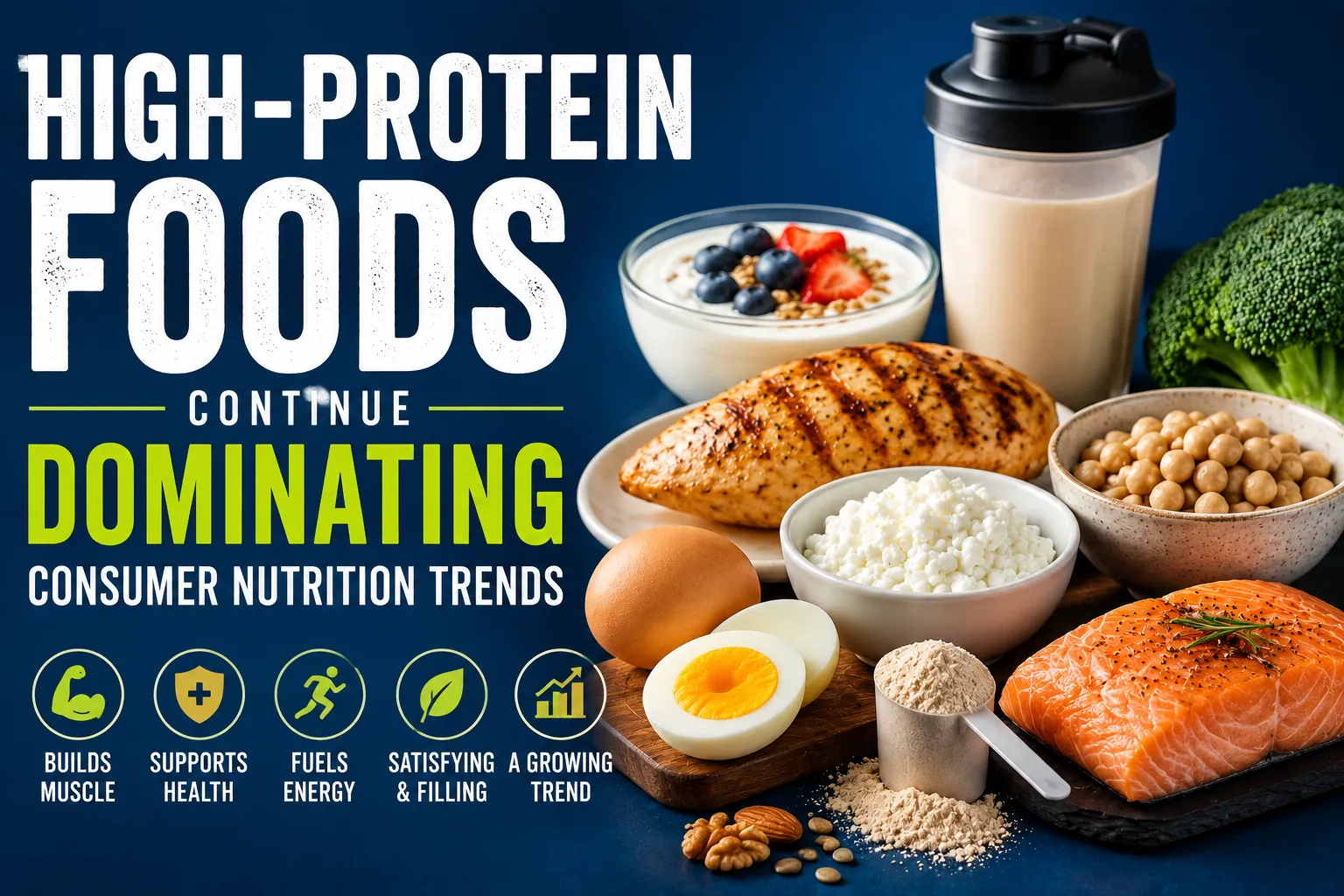

High-Protein Foods Continue Dominating Consumer Nutrition Trends
Protein has moved well beyond the gym and bodybuilding aisle. In 2026, consumers are increasingly encountering protein-focused foods across breakfast, snacks, beverages and everyday meals, as food companies respond to growing interest in nutrition, satiety, fitness and convenient meal options.
Recent consumer research suggests the interest is substantial. A March 2026 survey of 3,000 U.S. consumers found that 54% said they were actively trying to consume more protein, rising to 65% among Gen Z and Millennials.
The trend is also showing up in how shoppers evaluate packaged foods. An April 2026 International Food Information Council survey found that consumers are paying attention to protein information on food labels, with protein sources and amounts among the details shoppers consider most useful.
The broader nutritional context is explored in this complete guide to healthy eating and balanced nutrition, which places protein alongside the other components of a balanced eating pattern.
Why Protein Has Become Such a Powerful Nutrition Trend
Protein has several characteristics that make it particularly appealing to consumers.
It is essential for maintaining and repairing tissues and is involved in the formation of enzymes, hormones and other important biological structures. Protein foods can also provide nutrients such as iron, zinc, magnesium, vitamin B vitamins and, in the case of some seafood, omega-3 fatty acids.
That nutritional importance has made protein an easy concept for consumers to understand. Unlike more complicated nutrition claims, “more protein” is relatively straightforward to identify on a food label.
The growing interest is also connected to broader consumer goals, including maintaining muscle, supporting active lifestyles and making meals more filling.
Protein Is Moving Into More Everyday Foods
One of the most noticeable changes is the expansion of protein beyond traditional sources such as meat, eggs, fish and dairy.
Food manufacturers have increasingly incorporated additional protein into products that consumers already recognize, including:
- Breakfast foods
- Snack bars
- Yogurt
- Baked goods
- Pasta
- Tortillas
- Cereals
- Ready-to-eat meals
- Beverages
- Plant-based foods
This approach makes protein part of an existing eating routine rather than requiring consumers to completely change how they eat.
For shoppers, that can make the trend particularly convenient. Adding a protein-rich food to breakfast or choosing a higher-protein snack may feel easier than redesigning an entire diet.
Consumers Are Paying More Attention to Protein Labels
The increased focus on protein is also influencing how shoppers read packaging.
According to the 2026 IFIC survey, two-thirds of Americans said they look for some type of nutrition information on the front of food packaging, while eight in ten look at nutrition information on the back or side. Among consumers who seek protein information, protein sources and amounts were considered particularly useful.
That creates an important distinction between seeing a protein claim and understanding the nutritional value of a product.
A food can contain additional protein without necessarily being the healthiest choice overall.
Consumers still need to consider factors such as:
- Added sugars
- Sodium
- Saturated fat
- Fiber
- Overall calorie content
- Ingredient quality
- Portion size
- Degree of processing
The protein number is only one part of the nutrition picture.
Whole Foods Still Matter
The popularity of protein-fortified foods should not obscure the importance of conventional protein sources.
The U.S. Department of Agriculture’s MyPlate guidance includes seafood, meat, poultry, eggs, beans, peas, lentils, nuts, seeds and soy products among protein foods. It recommends varying protein choices because different foods provide different combinations of nutrients.
That variety can make a diet more nutritionally useful.
For example, beans and lentils provide protein alongside fiber, while nuts and seeds provide protein and unsaturated fats. Seafood can provide protein along with nutrients such as EPA and DHA omega-3 fatty acids.
The result is a broader lesson: protein quality and the overall food matter, not simply the number printed on the package.
This is particularly important because protein and fiber play different roles in a healthy diet. A meal can be high in protein while still falling short on fiber and other nutrients supplied by plant foods.
Plant-Based Protein Remains Part of the Conversation
The protein trend is not limited to animal products.
Beans, peas, lentils, nuts, seeds, tofu and other soy foods can all contribute protein to a diet. MyPlate specifically identifies these foods as protein options for vegetarians and notes that vegetarians can obtain adequate protein through appropriate variety and amounts.
This gives consumers considerable flexibility.
Someone might get protein from eggs and yogurt at breakfast, lentils or beans at lunch, and fish, tofu or poultry at dinner. Snacks can add foods such as nuts, seeds or yogurt.
The broader movement toward protein therefore does not necessarily point toward one particular diet. It can fit into a variety of eating patterns.
More Protein Does Not Automatically Mean Better Nutrition
The enthusiasm surrounding protein can sometimes create the impression that more is always better.
That is an oversimplification.
The current U.S. Dietary Guidelines for Americans emphasize diets built around whole, nutrient-dense foods, including protein foods alongside vegetables, fruits, dairy, healthy fats and whole grains. The guidelines also call for reducing highly processed foods containing excessive refined carbohydrates, added sugars, sodium and unhealthy fats.
This matters as manufacturers add protein to increasingly diverse products.
A protein cookie, cereal or snack may provide additional protein, but consumers should still evaluate the entire nutritional profile.
A product should not automatically be considered healthy simply because its packaging prominently displays the word “protein.”
Convenience Is Driving the Trend
Convenience appears to be another important reason for protein’s continued popularity.
Consumers often have limited time to prepare meals, making portable and ready-to-eat foods attractive. Protein-fortified products allow shoppers to combine convenience with a nutritional characteristic they increasingly value.
This helps explain why protein has expanded into snacks and other foods traditionally associated more with convenience than nutrition.
The result is a shift in the way consumers think about food. Instead of viewing protein as something reserved for a post-workout shake, shoppers increasingly see it as a consideration for every meal and snack.
The Role of Fitness and Muscle Health
Fitness culture remains an important part of the protein conversation, but it is no longer the only driver.
Protein is essential for maintaining muscle tissue, making it relevant to people who exercise as well as those simply interested in maintaining physical function.
This broader understanding has helped protein move into mainstream wellness discussions.
However, nutrition needs vary considerably depending on factors such as age, body size, physical activity, health status and overall diet. People with specific medical or nutritional needs should seek individualized guidance from an appropriately qualified healthcare professional or registered dietitian.
For a deeper look at why the body requires protein beyond exercise and bodybuilding, see Why Does the Body Need Protein Every Day?.
The Protein Trend Is Changing Food Shopping
The rise of protein-focused products is influencing not only what people eat but also what they look for when shopping.
Consumers increasingly compare products based on:
- Protein content
- Protein source
- Ingredient lists
- Sugar content
- Fiber
- Calories
- Price
- Convenience
- Taste
This creates more sophisticated purchasing decisions.
Instead of simply asking whether a product is “healthy,” shoppers are increasingly asking whether it provides the particular nutritional characteristics they want at a reasonable price.
That shift could have a lasting influence on how food companies develop and market products.
What Shoppers Should Look For
For consumers trying to make sensible choices within the high-protein trend, a few basic principles can help.
Start With the Whole Diet
Look at protein as part of an overall eating pattern rather than as an isolated target.
Choose Variety
Rotate between different protein sources instead of relying heavily on one food.
Read the Entire Label
Protein content should be considered alongside sugar, sodium, saturated fat, fiber and calories.
Favor Nutrient-Dense Foods
Foods that provide protein alongside other useful nutrients can offer more nutritional value than products that simply have protein added.
Consider Convenience Without Ignoring Quality
Protein-rich convenience foods can have a place in a balanced diet, particularly when they help people make practical choices during busy days.
Be Skeptical of Health Halos
A product marketed as “high protein” is not automatically a nutritionally superior choice.
Why the Protein Boom Could Have Staying Power
Unlike many food trends, protein is built around a nutrient that has a fundamental role in human nutrition.
That gives the trend a stronger foundation than purely novelty-driven products.
Consumer interest is also being reinforced by multiple factors at once: fitness, muscle health, convenience, changing eating habits and increased attention to nutrition labels. Recent survey data indicates that many younger consumers are actively trying to increase their protein intake, suggesting that the behavior is not limited to a small niche of athletes.
At the same time, the continued popularity of protein does not mean every high-protein product will succeed. Taste, price, convenience and overall nutritional quality remain important considerations for shoppers. The IFIC research found that price and taste continue to dominate food choices, with health and nutrition information playing important secondary roles.
Protein’s Next Chapter Is About Quality and Balance
The growing popularity of high-protein foods represents more than another supermarket trend. It reflects a broader shift toward consumers thinking more deliberately about the nutritional role of everyday foods.
But the strongest approach is unlikely to be simply adding as much protein as possible.
Instead, consumers can benefit from focusing on variety, nutrient density, food quality and overall dietary balance. Protein-rich foods can be an important part of that approach, whether they come from seafood, poultry, eggs, dairy, legumes, soy, nuts, seeds or other foods.
As protein continues appearing across more areas of the grocery aisle, the most useful question may not be “How much protein does this contain?” but rather “What else does this food offer?”
That broader perspective can help turn the protein boom from a marketing trend into a more informed approach to everyday nutrition.
Continue Reading
Similar Posts

Broccoli Sprouts Linked to Multistate Salmonella Outbreak: What Consumers Need to Know
For consumers, the most important step is to determine whether recalled broccoli sprouts are in the refrigerator, freezer, or kitchen and to avoid eating, serving, or selling them.
Read article
Fibermaxxing Is Taking Over Social Media: How Much Fiber Is Actually Too Much
More is not automatically better. Increasing fiber too rapidly or consuming very large amounts can cause bloating, gas, abdominal discomfort, constipation, or changes in bowel habits.
Read article
Salmonella Outbreak Linked to Broccoli Sprouts: What Consumers Need to Know
For consumers, the most important issue right now is knowing what products are affected, what symptoms to watch for, and how to reduce the risk of foodborne illness.
Read article

Join 10,000+ Readers Building Healthier Habits
Get actionable wellness tips every week plus our newest articles delivered straight to your inbox.