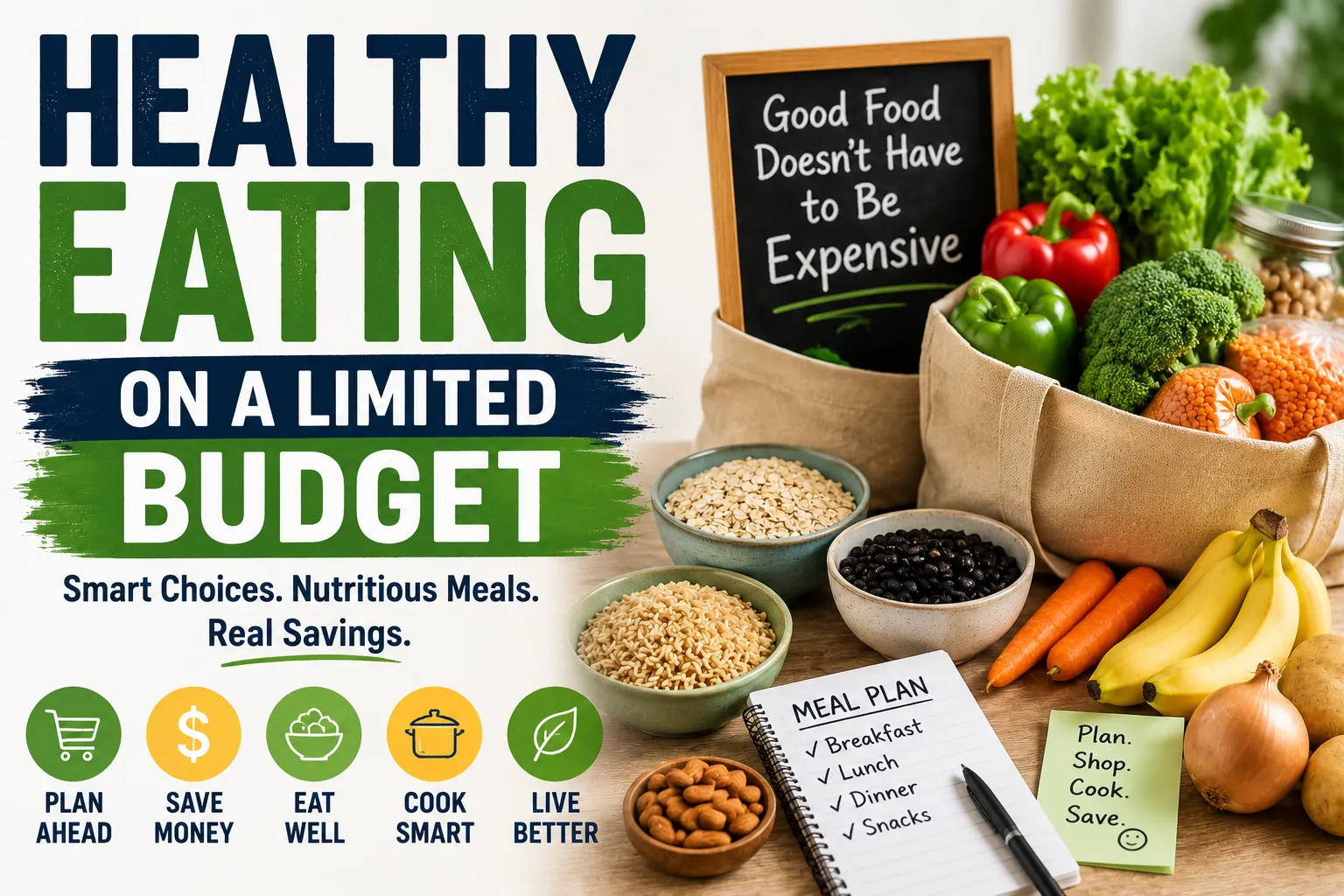

Healthy Eating on a Limited Budget
Eating well does not have to mean spending a fortune at the grocery store. With some planning, flexible food choices, and a willingness to cook simple meals, it is possible to build nutritious meals while keeping costs under control.
A healthy diet generally includes a variety of fruits, vegetables, grains, protein foods, and dairy or fortified alternatives. The challenge for many households is finding affordable ways to include those foods consistently.
The good news is that healthy eating and budget-conscious shopping can work together. Planning meals, checking what you already have, using leftovers, comparing food options, and considering fresh, frozen, and shelf-stable foods can all help make nutritious eating more affordable. These strategies are part of the broader principles covered in the complete guide to healthy eating and balanced nutrition.
Start With a Realistic Food Budget
Before changing what you buy, determine how much you can realistically spend on groceries.
A useful starting point is to look at your recent grocery receipts and identify where most of your money goes. You may discover that convenience foods, drinks, snacks, impulse purchases, or frequent small shopping trips are consuming more of the budget than expected.
Once you know your spending pattern, create a weekly or monthly grocery target.
The goal should not be to spend as little as possible. Extremely restrictive food budgets can make it difficult to buy enough variety and nutrition.
Instead, aim to get the greatest nutritional value from the money you have available.
Plan Meals Before Shopping
One of the simplest ways to reduce grocery spending is to decide what you will eat before going to the store.
Check your refrigerator, freezer, and pantry first, then plan meals around what you already have.
A basic weekly plan might include:
- Several inexpensive breakfasts
- A few simple lunches
- Three or four main dinner recipes
- Planned leftovers
- Affordable snacks
- Flexible ingredients that can be used in multiple meals
Meal planning also reduces the temptation to buy ingredients for recipes that will only be used once.
Build Meals Around Affordable Staples
Some foods are naturally useful for budget-conscious cooking because they are versatile, filling, or easy to store.
Examples include:
- Oats
- Rice
- Potatoes
- Whole-grain pasta
- Beans
- Lentils
- Eggs
- Peanut butter
- Canned fish
- Frozen vegetables
- Frozen fruit
- Carrots
- Onions
- Bananas
- Plain yogurt
Foods such as oats, rice, beans, lentils, potatoes, carrots, onions, eggs, peanut butter, tofu, canned tuna, frozen vegetables, and milk or fortified alternatives can all be useful lower-cost choices.
These ingredients can form the foundation of many different meals.
Choose Foods That Work in Multiple Meals
A particularly effective budgeting strategy is to buy ingredients that can be used several ways.
For example, a large bag of rice could accompany:
- Beans and vegetables
- Chicken and vegetables
- Lentil curry
- Stir-fried vegetables
- Egg and vegetable bowls
Similarly, a container of oats can become breakfast porridge, overnight oats, or part of a homemade snack.
When one ingredient works across several meals, there is less risk of food sitting unused in the refrigerator.
Fresh, Frozen, and Canned Can All Fit
Healthy eating does not require buying everything fresh.
Fresh, frozen, and shelf-stable fruits and vegetables can all be part of a healthy eating pattern.
Frozen vegetables can be particularly useful because they can be stored for longer and portioned as needed.
Canned foods can also be practical. When choosing packaged fruits and vegetables, compare labels and consider options lower in sodium, saturated fat, and added sugars.
The best option depends on price, availability, storage space, and how quickly the food will be eaten.
Buy Seasonal Produce When Practical
Fresh produce can vary significantly in price depending on location, season, and availability.
When a particular fruit or vegetable is expensive, consider alternatives that provide similar nutritional value at a lower price.
For example, instead of building your entire meal plan around one expensive type of produce, rotate between whatever affordable options are available.
Frozen and canned alternatives can also help maintain variety when fresh produce is costly.
Compare Prices, Not Just Package Sizes
A large package is not automatically the cheapest option.
When shopping, compare the price per unit where possible rather than looking only at the total package price.
For example, two products may look similar in size but have very different costs per kilogram, liter, or individual serving.
Also consider whether you will actually use the larger quantity.
Buying a large amount of an inexpensive food is not a bargain if half of it eventually gets thrown away.
Buy in Bulk Selectively
Bulk purchasing can make sense for foods that store well and are regularly used.
Foods such as rice, oats, dried beans, and lentils can be useful bulk purchases, along with larger packages of suitable frozen or shelf-stable foods.
However, bulk buying should be strategic.
Good bulk purchases tend to be:
- Shelf-stable
- Frequently used
- Easy to store
- Unlikely to spoil before being consumed
Avoid buying large quantities simply because the price per unit looks attractive.
Make Leftovers Part of the Plan
Leftovers can turn one cooking session into several meals.
Instead of thinking of leftovers as food you might eat if nothing else is available, deliberately plan meals around them.
For example:
Day 1: Roast chicken with vegetables and rice
Day 2: Chicken and vegetable wraps
Day 3: Rice bowl with remaining vegetables and protein
Planning how leftovers will be reused and storing portions for future meals or transforming them into a different dish can reduce both food waste and cooking time.
Cook Larger Batches When It Makes Sense
Cooking a larger quantity can be more efficient than preparing a completely different meal every day.
Consider preparing batches of:
- Beans
- Lentils
- Rice
- Pasta
- Roasted vegetables
- Soups
- Stews
- Sauces
Portion what you expect to eat soon and refrigerate or freeze the remainder appropriately.
Batch cooking works particularly well when the same base ingredients can be combined differently throughout the week.
Use Affordable Sources of Protein
Protein does not have to come exclusively from expensive cuts of meat.
Depending on dietary preferences and availability, affordable protein options can include:
- Beans
- Lentils
- Eggs
- Peanut butter
- Tofu
- Canned fish
- Yogurt
- Milk
- Chicken
- Other locally available protein foods
For a broader look at protein’s role in a balanced diet, see why the body needs protein every day.
The most affordable choice will vary by location and store, so compare prices rather than assuming one category is always cheaper.
Don’t Forget Whole Grains
Grains can provide an economical foundation for meals.
Oats, brown rice, whole-grain bread, whole-wheat pasta, and other grain foods can be combined with vegetables and protein sources to create filling meals.
Choosing affordable whole-grain options can help add variety without making every meal expensive.
Make Water Your Default Drink
Beverages can quietly increase a grocery budget.
Soft drinks, sweetened beverages, specialty coffees, energy drinks, and bottled drinks can add considerable cost over time.
For many people, making water the everyday default can simplify both the grocery bill and beverage choices.
That does not mean every other beverage needs to disappear. The practical goal is to avoid spending a significant part of the food budget on drinks that provide little nutritional value.
Reduce Food Waste
Food that gets thrown away is money that never becomes nourishment.
A simple food-waste strategy is to organize your kitchen around what needs to be eaten first.
Keep an eye on:
- Produce approaching the end of its usable life
- Leftovers
- Opened packages
- Dairy products
- Bread
- Cooked grains
- Fresh herbs
Using foods already available at home and incorporating leftovers into the weekly plan can help reduce unnecessary spending.
Freezing appropriate foods before they spoil can also extend their usefulness.
Make Simple Meals Taste Better
Budget meals do not have to be boring.
Herbs, spices, garlic, onions, ginger, citrus, vinegar, and other inexpensive flavoring ingredients can make basic foods more enjoyable.
Keeping dried herbs and spices available can add flavor to affordable staple foods.
A few versatile seasonings can transform the same basic ingredients into completely different meals.
Shop With a List
A shopping list provides a simple barrier against impulse purchases.
Before leaving home:
- Check your pantry.
- Check your refrigerator.
- Check your freezer.
- Choose the week’s meals.
- Write down only the ingredients you need.
- Remove items you already have.
Create a grocery list based on the meals you plan to prepare and cross off ingredients already available at home.
Be Flexible With Your Meal Plan
A meal plan should be a guide, not a rigid contract.
If the vegetables you planned to buy are unusually expensive, substitute another affordable option.
If chicken is on sale but another protein is not, adjust your recipes.
If you have extra vegetables at home, build a meal around them instead of buying more.
Flexibility can prevent a healthy eating plan from becoming unnecessarily expensive.
A Simple Budget-Friendly Meal Formula
You do not need an elaborate recipe for every meal.
A simple formula is:
Protein + grain or starchy food + vegetables + flavor
For example:
- Beans + rice + mixed vegetables + spices
- Eggs + whole-grain toast + spinach + tomatoes
- Lentils + potatoes + carrots + herbs
- Chicken + rice + frozen broccoli + garlic
- Tofu + noodles + mixed vegetables + ginger
The exact foods can change according to your budget, culture, dietary needs, and local availability.
Healthy Eating on a Tight Budget
When money is particularly tight, prioritize foods that provide substantial nutrition for their cost.
Consider building meals around staples such as:
- Beans and lentils
- Oats
- Rice
- Potatoes
- Eggs
- Frozen vegetables
- Seasonal produce
- Whole-grain staples
- Peanut butter
- Plain yogurt
- Canned fish where affordable
Combining affordable staples with fresh, frozen, and shelf-stable foods can create varied meals.
If access to adequate food is a serious concern, community food programs, food banks, school meal programs, and other local assistance programs may also be important resources.
Common Budget-Eating Mistakes
Shopping Without a Plan
Walking into a grocery store without knowing what you need can lead to unnecessary purchases.
Buying Only the Cheapest Foods
The cheapest item is not automatically the best nutritional choice. Look at the overall meal and its nutritional value.
Buying Too Much Fresh Food
Fresh produce is valuable, but buying more than you can use can increase waste.
Ignoring Frozen and Canned Options
Limiting yourself to fresh foods can unnecessarily increase costs and reduce flexibility.
Cooking Completely Different Meals Every Day
Using overlapping ingredients can reduce both food waste and preparation costs.
Treating Leftovers as an Afterthought
Planning leftovers from the beginning can make them far more useful.
A One-Week Budget-Friendly Strategy
A practical weekly routine might look like this:
Weekend: Check what you already have and plan several meals.
Shopping day: Buy only the ingredients needed to complete the plan.
First cooking session: Prepare one or two large batches of staple foods.
Midweek: Use remaining ingredients and repurpose leftovers.
End of week: Identify foods that need to be used before shopping again.
This system creates a continuous cycle rather than starting from scratch every time you need groceries.
Healthy Eating Can Be Affordable and Practical
Eating well on a limited budget is less about finding one magical “cheap healthy food” and more about consistently making practical decisions.
Plan before shopping. Build meals around versatile staples. Compare prices. Use fresh, frozen, and shelf-stable foods strategically. Cook enough for planned leftovers. Reduce waste. And remain flexible when prices or availability change.
Most importantly, healthy eating does not have to look perfect. A sustainable approach is one that fits your household’s budget, schedule, culture, preferences, and access to food.
Making Every Grocery Trip Count
A limited budget does not eliminate the possibility of nutritious meals. It simply makes planning more important.
By turning inexpensive staples into varied meals, using food efficiently, and focusing spending on foods that provide real nutritional value, households can make their grocery money go further without abandoning healthy eating.
Continue Reading
Similar Posts

How Your Environment Affects Everyday Health
Understanding these connections can help people make practical changes that support healthier daily living.
Read article
How Aerobic Exercise Supports Cardiovascular Health
Understanding how aerobic exercise affects cardiovascular health can make it easier to choose activities that are enjoyable, sustainable, and appropriate for your fitness level.
Read article
What Is the Gut Microbiome and Why Does It Matter
Understanding how this ecosystem works can make it easier to understand why diet, lifestyle, medications, and other factors can influence digestive health.
Read article

Join 10,000+ Readers Building Healthier Habits
Get actionable wellness tips every week plus our newest articles delivered straight to your inbox.