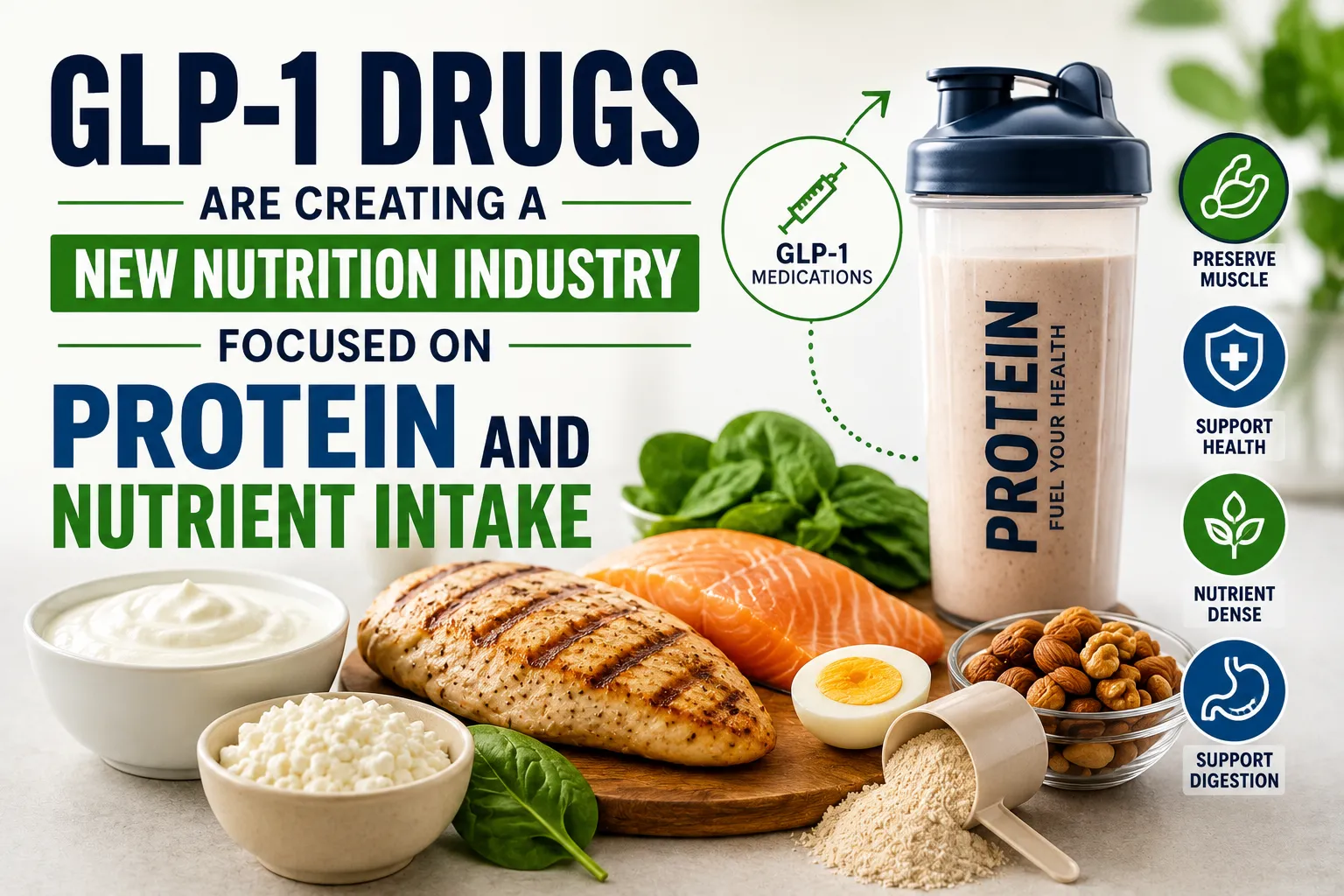

GLP-1 Drugs Are Creating a New Nutrition Industry Focused on Protein and Nutrient Intake
The rapid growth of GLP-1 medications is changing more than the way people approach weight management. It is also beginning to reshape the food and nutrition business.
Drugs such as semaglutide and tirzepatide can substantially reduce appetite and food intake. That creates a new challenge for people taking them: when overall food consumption falls, each meal may need to provide more nutritional value.
That shift is attracting food manufacturers, nutrition companies and health professionals. Instead of simply developing products designed to contain fewer calories, companies are increasingly looking at foods and drinks that deliver protein, vitamins, minerals and other nutrients in smaller portions.
Recent industry moves illustrate the scale of the opportunity. Nestlé, for example, says it is developing products specifically for people using GLP-1 medications, including high-protein and collagen-containing products, while using nutritional research and artificial intelligence to explore new formulations.
The emerging market raises an important question: as appetite-suppressing medications become more common, will nutrition shift from eating more to getting more nutrition from every bite?
For context on the broader principles behind nutrient-dense eating, see this complete guide to healthy eating and balanced nutrition.
Why GLP-1 Medications Are Changing Eating Habits
GLP-1 receptor agonists and related medicines work partly by reducing appetite and increasing feelings of fullness.
A 2026 systematic review and meta-analysis found that GLP-1-based therapies substantially reduced energy consumed during standardized meals, although researchers noted that evidence about people’s everyday dietary intake and protein adequacy remains limited.
For someone accustomed to eating three substantial meals and several snacks, a significant reduction in appetite can therefore change the amount of food consumed throughout the day.
That can be beneficial when excessive calorie intake is contributing to obesity. But eating less also creates a nutritional challenge.
The body still needs protein, essential fats, carbohydrates, vitamins, minerals, fiber and fluids.
The result is a new nutritional calculation: how can someone consume enough essential nutrients when they have considerably less appetite?
Protein Has Become a Major Focus
Protein is at the center of much of the emerging GLP-1 nutrition conversation.
During weight loss, the body can lose both fat and lean tissue. Preserving muscle is important for physical function and long-term health, particularly among older adults and people who are physically inactive.
A 2026 review in Clinical Nutrition ESPEN noted that GLP-1-based therapies produce substantial weight loss while body-composition studies show clinically relevant reductions in absolute lean mass. The review also highlighted concerns about inadequate nutritional intake among some people receiving these medications.
That does not mean everyone taking a GLP-1 medication will experience problematic muscle loss.
It does mean that nutrition becomes an important part of the overall treatment strategy.
People interested in the broader nutritional importance of protein can also explore why the body needs protein every day.
Smaller Meals Put More Pressure on Nutrient Density
Imagine two meals containing the same number of calories.
One provides relatively little protein, fiber or micronutrients. The other provides substantial protein along with vegetables, fruit, whole grains or other nutrient-rich foods.
When appetite is high, someone may be able to consume enough total food to obtain adequate nutrients from a broader diet.
When appetite is substantially reduced, however, there may be less room for nutritionally weak foods.
This is driving interest in the concept of nutrient density.
The idea is straightforward: if people are eating less food overall, the nutritional quality of that food becomes increasingly important.
Industry analysts have described this as a broader challenge for food manufacturers, because products traditionally built around large portions, indulgence or relatively low nutritional value may become less attractive to consumers whose appetites have changed.
This broader emphasis on nutritional quality is also reflected in new research challenging how we judge healthy diets, particularly the growing discussion around evaluating foods by their overall nutritional contribution rather than relying on a single characteristic.
The Rise of GLP-1-Friendly Foods
Food companies are beginning to respond.
The emerging category includes products emphasizing:
- High protein
- Fiber
- Vitamins and minerals
- Smaller portions
- Lower calorie density
- Convenient preparation
- Easier digestion
- Nutrient-rich ingredients
Some companies are marketing products directly toward people using GLP-1 medications, while others are simply adjusting existing products to reflect the broader demand for protein and nutrient density.
This distinction matters.
Not every high-protein food is specifically designed for GLP-1 users. The same products may appeal to athletes, older adults, people trying to manage their weight and consumers generally interested in higher-protein diets.
In that sense, GLP-1 medications may accelerate an existing nutrition trend rather than create an entirely new one.
Nestlé Is Betting on a Specialized Nutrition Market
One of the clearest examples comes from Nestlé.
Reuters reported in August 2026 that the company is developing products for people taking GLP-1 medications, including high-protein formulations and products containing collagen. Nestlé is also exploring micronutrient combinations and using AI tools to analyze research and consumer behavior.
The company already has businesses operating in nutrition and health-related categories, giving it an existing platform from which to develop specialized products.
The strategy reflects a larger commercial opportunity.
If millions of people eventually use appetite-suppressing medications, companies could potentially sell products designed around the nutritional challenges associated with reduced food intake.
That could create an entirely new layer of competition in the nutrition market.
Protein Shakes Could Become More Specialized
Protein drinks are an obvious product category for this shift.
A liquid or semi-liquid product can provide protein and other nutrients without requiring someone to consume a large meal.
That can be particularly relevant when appetite is low or when certain foods are difficult to tolerate.
However, protein shakes should not automatically be viewed as superior to whole foods.
Foods such as eggs, dairy products, fish, poultry, soy, beans and other protein-rich options can provide protein alongside other nutrients.
The role of a supplement or nutrition drink is generally to help fill a nutritional gap when obtaining enough from ordinary meals is difficult.
Fiber Is Another Important Piece
Protein is receiving much of the attention, but fiber also matters.
A diet containing adequate fiber can support digestive health and contribute to normal bowel function.
This is especially relevant because gastrointestinal symptoms are common with GLP-1-based therapies.
A recent review on nutrition during GLP-1 therapy identified inadequate fiber intake alongside protein and micronutrient concerns as an issue that deserves attention.
The relationship between protein and fiber is part of a larger nutrition discussion. Research on protein and fiber intake highlights why emphasizing one nutrient should not come at the expense of overall dietary balance.
However, people experiencing gastrointestinal symptoms should not assume that simply adding large amounts of fiber will solve the problem.
Individual tolerance matters, and dietary changes may need to be discussed with a qualified healthcare professional.
Vitamins and Minerals Are Becoming Part of the Conversation
When food intake declines significantly, micronutrient intake can decline as well.
Potential concerns depend on an individual’s diet, health status and degree of reduced food intake.
Researchers have highlighted possible gaps involving micronutrients among people using GLP-1 therapies, particularly when appetite suppression is accompanied by nausea, vomiting or highly restricted eating.
This does not mean everyone taking a GLP-1 medication needs a collection of supplements.
In fact, unnecessary supplementation can create its own problems.
The more useful approach is to evaluate the overall diet and identify genuine nutritional gaps rather than assuming that every person taking a GLP-1 drug requires the same products.
The Risk of Eating Too Little
Reduced appetite is one of the intended effects of these medications, but there can be a point at which reduced intake becomes nutritionally inadequate.
A preliminary 2026 study of adults using GLP-1 or dual GIP/GLP-1 medications reported very low average energy and protein intake among its participants, with fewer than 10% meeting the study’s recommended protein intake. The researchers emphasized that the findings should be interpreted in light of the study’s design and population.
The study is not proof that everyone taking these medications will become malnourished.
Instead, it illustrates why nutritional monitoring has become an increasingly important subject as use expands.
Muscle Preservation May Become a Bigger Consumer Concern
Weight loss is often measured using a scale, but body weight does not tell the entire story.
Two people can lose the same amount of weight while experiencing different changes in fat mass and lean mass.
This is why nutrition professionals increasingly emphasize maintaining muscle during weight loss.
Adequate protein is one component. Resistance exercise is another.
Guidance published by the American Diabetes Association has emphasized adequate protein and vitamin intake alongside aerobic and resistance exercise for people with type 2 diabetes undergoing GLP-1 receptor agonist treatment and weight loss.
The broader lesson is that successful weight management involves more than making the number on the scale smaller.
Food Companies Are Learning a New Consumer Equation
Traditional food marketing often revolves around abundance.
Bigger portions, indulgence, convenience and low prices have historically been powerful selling points.
GLP-1 medications challenge some of those assumptions.
If consumers are less hungry, they may not want large portions.
Instead, they may prioritize:
More nutrition + smaller portions + convenient formats.
That could influence everything from supermarket products to restaurant menus.
Reuters recently reported that food companies are responding with smaller portions and higher-protein products as changing consumer preferences associated with GLP-1 medications reshape demand.
Restaurants Are Feeling the Shift Too
The effect is not limited to packaged food.
Restaurants may also need to reconsider portion sizes and menu composition.
People taking appetite-suppressing medications may prefer smaller meals, share dishes or choose foods based more heavily on protein and nutrient content.
Some restaurants have already begun observing customers ordering smaller portions, including children’s meals in some cases.
That does not mean restaurants will abandon traditional portions.
But if GLP-1 use continues to expand, restaurants could increasingly experiment with smaller serving sizes and meals designed around nutritional density.
The New Market Could Extend Beyond Food
The GLP-1 nutrition industry may eventually include much more than protein bars and shakes.
Potential categories include:
- High-protein snacks
- Fortified beverages
- Micronutrient products
- Fiber-rich foods
- Meal replacements
- Portion-controlled meals
- Hydration products
- Specialized supplements
- Clinical nutrition products
- Foods designed around gastrointestinal tolerance
The commercial opportunity is large because consumers may need support throughout different stages of treatment.
Someone starting medication may have different nutritional challenges from someone who has been taking it for a year.
But “GLP-1 Friendly” Does Not Automatically Mean Healthy
This could become one of the biggest challenges for consumers.
As demand grows, companies have an incentive to place GLP-1-related marketing on products.
That could create a new version of health-washing.
A product labeled “GLP-1 friendly” may still contain substantial amounts of added sugar, saturated fat or sodium, depending on its formulation.
The label itself does not establish nutritional quality.
Consumers should still examine:
- Protein content
- Fiber content
- Added sugars
- Saturated fat
- Sodium
- Vitamins and minerals
- Serving size
- Ingredient list
- Total calories
A specialized label should never replace reading the nutrition information.
Whole Foods Still Matter
The growth of specialized nutrition products should not obscure the importance of ordinary food.
A balanced diet can provide protein and micronutrients through foods such as:
- Eggs
- Fish
- Lean meats
- Yogurt
- Milk
- Beans
- Lentils
- Tofu
- Vegetables
- Fruits
- Whole grains
- Nuts and seeds
For many people, the best nutritional strategy may involve adjusting portions and meal composition rather than replacing most meals with commercial products.
Some individuals may benefit from specialized nutrition products, particularly when appetite is extremely low or dietary intake is difficult to maintain.
That decision is best made according to individual needs.
Medical Nutrition Support Could Become More Important
The emerging market also highlights a gap in healthcare.
GLP-1 medications are pharmaceutical treatments, but nutrition is an important part of managing the overall effects of reduced appetite and weight loss.
A 2026 expert consensus statement noted that gastrointestinal effects, nutritional insufficiencies and adherence challenges can complicate treatment and emphasized the importance of nutritional and lifestyle support alongside incretin-based therapies.
Researchers have similarly warned that rapid adoption of GLP-1 therapies has sometimes outpaced the development of adequate nutritional support systems.
That suggests a potential expansion of the role played by dietitians, clinicians and other qualified professionals.
The Industry Could Move From “Low Calorie” to “High Nutrition”
Perhaps the most significant change is philosophical.
For decades, weight-management products often emphasized what they removed:
- Fewer calories
- Less fat
- Less sugar
- Smaller portions
The GLP-1 era may place greater emphasis on what products provide.
That means:
- More protein
- More fiber
- More micronutrients
- Better nutrient density
- Convenient nutrition
- Appropriate portion sizes
The shift could influence product development far beyond the people currently taking these medications.
There Are Still Important Unknowns
The GLP-1 nutrition market is developing faster than the scientific evidence in some areas.
Researchers still need better data on long-term dietary patterns, optimal protein intake, body-composition changes and the effectiveness of different nutrition interventions.
A recent systematic review specifically noted that evidence about habitual real-world food intake and protein adequacy remains limited.
That means companies should be cautious about making strong health claims before sufficient evidence exists.
Consumers should be equally cautious about treating social-media nutrition advice as established medical guidance.
What This Means for Consumers
People taking GLP-1 medications should not feel pressured to buy specialized products simply because they are marketed toward them.
The fundamentals remain familiar:
- Eat enough to meet individual nutritional needs.
- Prioritize nutrient-rich foods.
- Include adequate protein.
- Pay attention to fiber and micronutrient intake.
- Stay adequately hydrated.
- Maintain appropriate physical activity, including resistance exercise when suitable.
- Discuss persistent gastrointestinal symptoms or nutritional concerns with a healthcare professional.
The exact nutritional requirements vary from person to person.
Someone with diabetes, kidney disease, gastrointestinal problems or another medical condition may have dietary considerations that differ substantially from those of another person taking the same medication.
A New Definition of “Healthy Convenience”
The growth of GLP-1 medications is forcing the food industry to reconsider what consumers actually need from convenient food.
If appetite is reduced, a snack cannot rely entirely on size, indulgence or impulse.
It needs to deliver something valuable.
That could mean protein-rich yogurt instead of a conventional dessert, a fortified drink instead of a low-nutrient beverage or a smaller meal designed around nutrient-dense ingredients.
The most successful products may not be those with the loudest GLP-1 marketing.
They may be the products that quietly solve the underlying problem: providing meaningful nutrition when people are eating less.
GLP-1s Could Reshape the Meaning of a “Good Meal”
The rise of GLP-1 medications is creating a new intersection between medicine, food and consumer nutrition.
As appetite-suppressing therapies become more widely used, the food industry has a reason to develop products that deliver greater nutritional value in smaller portions. Companies such as Nestlé are already investing in this opportunity, while researchers and health professionals are examining how best to protect protein intake, micronutrient adequacy and lean mass during treatment.
But the biggest opportunity may extend beyond specialized GLP-1 products.
The medications could accelerate a broader shift in consumer expectations—from eating more food to getting more value from the food people do eat.
If that shift continues, the next generation of nutrition products may compete less on how little they contain and more on how much essential nutrition they can deliver in every bite, sip and serving.
Continue Reading
Similar Posts

Broccoli Sprouts Linked to Multistate Salmonella Outbreak: What Consumers Need to Know
For consumers, the most important step is to determine whether recalled broccoli sprouts are in the refrigerator, freezer, or kitchen and to avoid eating, serving, or selling them.
Read article
Fibermaxxing Is Taking Over Social Media: How Much Fiber Is Actually Too Much
More is not automatically better. Increasing fiber too rapidly or consuming very large amounts can cause bloating, gas, abdominal discomfort, constipation, or changes in bowel habits.
Read article
Salmonella Outbreak Linked to Broccoli Sprouts: What Consumers Need to Know
For consumers, the most important issue right now is knowing what products are affected, what symptoms to watch for, and how to reduce the risk of foodborne illness.
Read article

Join 10,000+ Readers Building Healthier Habits
Get actionable wellness tips every week plus our newest articles delivered straight to your inbox.