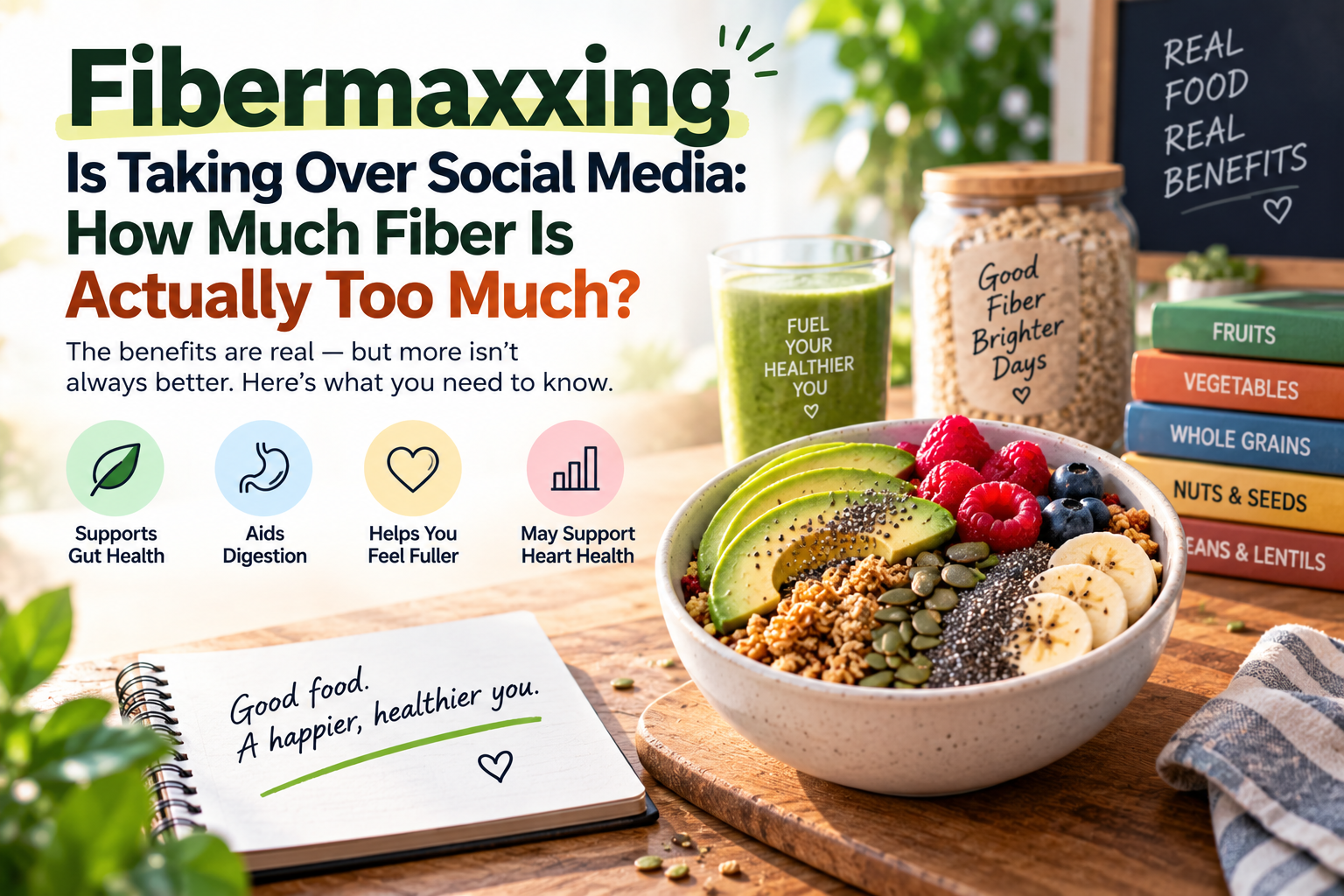

Fibermaxxing Is Taking Over Social Media: How Much Fiber Is Actually Too Much?
For years, nutrition conversations have revolved around protein, calories, carbohydrates, and fat. Now another nutrient is getting its moment online: fiber.
The latest social media trend, often called “fibermaxxing,” encourages people to deliberately increase their fiber intake through foods such as beans, lentils, oats, fruits, vegetables, nuts, seeds, and whole grains. Some versions of the trend promote very high daily intakes, sometimes far beyond conventional dietary recommendations.
There is a good reason fiber has attracted so much attention. Most people do not consume enough of it, and fiber is associated with digestive health, fullness, blood sugar regulation, cholesterol management, and a healthier gut microbiome.
But there is an important distinction between eating enough fiber and trying to eat as much fiber as possible.
More is not automatically better. Increasing fiber too rapidly or consuming very large amounts can cause bloating, gas, abdominal discomfort, constipation, or changes in bowel habits.
So how much fiber does the body actually need, and when does a healthy habit start becoming too much?
What Is Fibermaxxing?
“Fibermaxxing” is an informal social-media term describing efforts to maximize dietary fiber intake.
The trend typically involves deliberately adding fiber-rich foods to meals or snacks throughout the day. Popular examples include:
- Oatmeal topped with berries and seeds
- Chia seeds
- Lentils
- Beans
- Chickpeas
- Avocados
- Whole-grain cereals
- Vegetables
- Apples and pears
- Nuts
- Flaxseeds
- High-fiber breads and pastas
Some people also use fiber supplements or products containing added fibers to reach higher daily targets.
The basic idea is straightforward: because fiber is beneficial and many people do not get enough, increasing fiber should improve health.
That reasoning has some merit—but pushing the idea to an extreme can create a different set of problems.
Why Fiber Matters So Much
Fiber is a type of carbohydrate found primarily in plant foods that the body’s digestive enzymes do not completely break down.
Rather than being fully digested like many carbohydrates, different types of fiber interact with the digestive system in different ways.
Fiber can help:
- Promote regular bowel movements
- Increase feelings of fullness
- Support healthy gut bacteria
- Help regulate blood sugar
- Support healthy cholesterol levels
- Contribute to overall digestive health
Fiber-rich eating patterns have also been associated with broader health benefits.
For a wider look at how fiber fits into an overall nutritious diet, the Complete Guide to Healthy Eating and Balanced Nutrition provides a broader perspective on building a balanced eating pattern.
How Much Fiber Do Adults Actually Need?
There is no single fiber target that applies to every person.
A commonly used guideline is approximately 14 grams of fiber per 1,000 calories consumed. For many adults, that works out to roughly 25 grams per day for women and 38 grams per day for men, although recommended amounts vary with age and sex.
The National Academies’ calorie-based approach is useful because energy needs differ between individuals.
Someone who eats substantially more calories may need more fiber than someone with lower energy requirements.
The important point is that dietary recommendations are targets, not competitions.
Eating 40 grams instead of 25 grams is not automatically unhealthy. But deliberately trying to reach extremely high amounts does not necessarily provide additional benefits.
Is There Such a Thing as Too Much Fiber?
This is where fibermaxxing becomes more complicated.
Unlike some nutrients, fiber does not have a universally established official upper intake limit for healthy adults. However, that does not mean unlimited amounts are advisable.
Very high fiber intake can overwhelm the digestive system, particularly when the increase happens suddenly.
Health experts discussing the current trend generally emphasize that there is no proven advantage to pushing fiber intake dramatically beyond recommended levels, while excessive or rapidly increased intake can cause unpleasant digestive symptoms.
In practical terms, the question is often less about reaching a specific dangerous number and more about how much your individual digestive system can comfortably tolerate.
What Happens When You Eat Too Much Fiber?
A sudden increase in fiber can produce several digestive symptoms.
Bloating
Fiber can increase the amount of material moving through the digestive tract and may be fermented by gut bacteria.
When someone suddenly consumes much more fiber than their digestive system is accustomed to, this can result in noticeable bloating.
Gas
Certain fibers are fermented by bacteria in the colon, producing gases as part of the process.
Beans, lentils, some vegetables, and certain added fibers can be particularly noticeable for people who are not accustomed to large quantities.
Abdominal Discomfort
Rapidly increasing fiber may cause cramping or a feeling of fullness and discomfort.
Constipation
It may seem strange that fiber can contribute to constipation because fiber is commonly recommended to help prevent it.
But fiber works differently depending on the type, amount, fluid intake, and the individual’s digestive system.
A large increase in fiber without adequate fluid can make bowel movements difficult for some people. The National Institute of Diabetes and Digestive and Kidney Diseases recommends increasing fiber gradually and drinking enough liquids to help fiber work effectively.
Diarrhea or Loose Stools
Some people may experience the opposite problem, particularly when suddenly consuming large amounts of certain fermentable fibers or fiber-containing products.
The response can vary considerably between individuals.
Why Increasing Fiber Too Quickly Is a Problem
The digestive system can adapt to changes in dietary fiber, but that adaptation takes time.
Someone who normally eats relatively little fiber and suddenly adds large quantities of beans, bran, chia seeds, high-fiber cereal, vegetables, and fiber supplements in the same week may experience significant digestive discomfort.
The problem is not necessarily that any individual food is unhealthy.
The problem is the size and speed of the change.
A gradual increase gives the digestive system and gut microbes more time to adapt.
Fiber and the Gut Microbiome
One reason fiber has become such a major nutrition topic is its relationship with the gut microbiome.
The gut microbiome consists of a complex community of microorganisms living primarily in the digestive tract.
Some types of dietary fiber reach the colon relatively intact, where certain bacteria can ferment them.
This process can produce compounds that interact with the intestinal environment.
The relationship between fiber and gut microbes is complex, however. Different fibers feed different microorganisms, and individual microbiomes can respond differently to the same foods.
For a deeper explanation, What Is the Gut Microbiome and Why Does It Matter? explores why these microorganisms have become such an important part of modern nutrition research.
More Fiber Does Not Mean a Better Microbiome
This is one of the most important points to understand about fibermaxxing.
The gut microbiome is not simply a garden where adding more fiber automatically produces better results.
Different bacteria use different types of carbohydrates and fibers. Dietary diversity matters.
Eating a wide variety of plant foods may provide a broader range of fibers and other compounds than relying on one extremely high-fiber food or supplement.
Recent discussions around fibermaxxing have also highlighted the possibility that people with different baseline microbiomes may respond differently to very high-fiber diets.
That is another reason why there is no universal “maximum” amount that everyone should attempt to reach.
Whole Foods Should Usually Come First
One of the strongest arguments in favor of fibermaxxing is that it encourages people to eat more plant foods.
That can be a positive change.
A bowl of oatmeal with fruit and nuts does not just provide fiber. It can also provide vitamins, minerals, healthy fats, protein, and other plant compounds.
Beans and lentils provide fiber alongside protein and micronutrients.
Vegetables and fruits provide fiber alongside water, vitamins, minerals, and numerous bioactive compounds.
This makes whole foods a more comprehensive way to increase fiber than simply adding isolated fiber to everything you eat.
What About Fiber Supplements?
Fiber supplements can be useful in certain situations, but they are not automatically better than food.
Common supplemental fibers include ingredients such as psyllium, inulin, and other soluble or fermentable fibers.
Some people use supplements to help meet their fiber needs or manage specific digestive concerns.
However, supplements can make it surprisingly easy to increase fiber intake too quickly.
A person might consume a high-fiber breakfast, several servings of vegetables, beans at lunch, a fiber-enhanced snack, and a fiber supplement—without realizing how much fiber has accumulated over the course of the day.
For more information about the role of supplemental prebiotic fibers, see How Prebiotic Supplements Work for Gut Health.
Why Water Matters When Increasing Fiber
Fiber and fluids work together.
Some types of fiber absorb water and contribute to softer, bulkier stools. If fiber intake rises substantially while fluid intake remains low, digestive discomfort can become more likely.
This does not mean people should force themselves to drink excessive amounts of water.
Instead, adequate hydration should accompany a gradual increase in fiber.
The appropriate amount of fluid varies depending on factors such as body size, activity level, climate, diet, and health status.
How to Increase Fiber Without Overdoing It
A gradual approach is usually easier on the digestive system.
Instead of trying to add 20 or 30 grams of fiber overnight, introduce additional fiber-containing foods progressively.
For example:
Week-to-week approach
- Add fruit to breakfast.
- Replace some refined grains with whole grains.
- Add beans or lentils to one meal.
- Include vegetables with lunch and dinner.
- Add nuts or seeds to snacks.
- Increase portions gradually as tolerated.
The University of Utah Health suggests adding roughly five grams per day for several days and continuing gradually if symptoms remain manageable.
There is no need to follow that exact schedule, but the principle is useful: give your digestive system time to adapt.
High-Fiber Foods That Can Fit Into a Balanced Diet
There are many ways to increase fiber without turning meals into extreme fiber challenges.
Fruits
Good options include:
- Raspberries
- Pears
- Apples
- Oranges
- Berries
- Avocado
Vegetables
Examples include:
- Broccoli
- Carrots
- Green peas
- Brussels sprouts
- Sweet potatoes
- Leafy greens
Legumes
Beans, lentils, peas, and chickpeas can provide substantial amounts of fiber while also contributing plant protein.
Whole Grains
Examples include:
- Oats
- Brown rice
- Whole-wheat bread
- Barley
- Whole-grain pasta
Nuts and Seeds
Nuts, chia seeds, flaxseeds, and other seeds can add fiber while also contributing healthy fats and other nutrients.
The goal is variety rather than finding a single “superfood.”
Fibermaxxing and Weight Management
Fiber has become especially popular among people interested in weight management because high-fiber foods can contribute to fullness.
Foods such as beans, vegetables, fruits, whole grains, and certain seeds can make meals more filling.
That can be useful when building a sustainable eating pattern.
However, fiber is not a magic weight-loss nutrient.
Body weight is influenced by total energy intake, physical activity, sleep, genetics, medications, environment, and numerous other factors.
For a broader discussion, the Complete Guide to Healthy Weight Management explains why sustainable weight management involves much more than focusing on a single nutrient.
Fiber and Blood Sugar
Fiber can also influence how the body responds to carbohydrate-containing foods.
Certain soluble and viscous fibers can slow digestion and carbohydrate absorption, which may affect the rise in blood glucose following a meal.
This is one reason fiber-rich foods are commonly included in eating patterns designed to support metabolic health.
But again, the overall meal matters.
A fiber-rich food is not automatically a healthy choice simply because its fiber content is high. The rest of the nutritional profile and portion size still matter.
Are Fiber-Enhanced Foods the Same as High-Fiber Foods?
Not necessarily.
Food manufacturers can add isolated fibers to products such as cereals, snack bars, drinks, candies, baked goods, and other packaged foods.
These products may legitimately contain substantial amounts of fiber.
But a product with added fiber does not necessarily have the same nutritional profile as a whole plant food.
For example, a fiber-enhanced snack might contain added fiber while also containing substantial amounts of sugar, sodium, saturated fat, or other ingredients.
Reading the entire nutrition label is therefore more useful than focusing on one number.
The Problem With Turning Fiber Into a Competition
Social media encourages measurable challenges.
People can post how many grams of protein they eat, how many steps they take, how long they sleep, or how much fiber they consume.
That can make healthy habits engaging.
But nutrition is not necessarily improved by maximizing one metric.
Once fiber intake becomes a competition, people may start choosing foods primarily because they contain the highest possible amount of fiber rather than because they contribute to a balanced diet.
That can lead to unnecessarily restrictive or uncomfortable eating patterns.
Signs You May Be Increasing Fiber Too Quickly
Your body can provide useful feedback.
If a sudden increase in fiber is followed by:
- Persistent bloating
- Excessive gas
- Abdominal cramping
- Significant changes in bowel movements
- Constipation
- Diarrhea
- Persistent digestive discomfort
it may be worth slowing down rather than continuing to increase fiber.
If symptoms are severe, persistent, or concerning, a healthcare professional can help determine whether fiber intake is actually responsible.
Digestive symptoms can have many causes and should not automatically be blamed on diet trends.
Some People Need Individualized Advice
The general advice to increase fiber does not apply identically to everyone.
People with certain digestive conditions or dietary restrictions may need individualized guidance about the amount and types of fiber they consume.
Someone experiencing unexplained digestive symptoms should not assume that increasing fiber indefinitely will solve the problem.
Likewise, anyone making significant dietary changes because of a medical condition may benefit from speaking with a doctor or registered dietitian.
What “Enough Fiber” Actually Looks Like
For many people, getting enough fiber does not require an extreme diet.
A typical day could include:
Breakfast: Oatmeal with berries and nuts.
Lunch: A whole-grain sandwich with vegetables and a piece of fruit.
Snack: Apple with nut butter.
Dinner: Lentils or beans with vegetables and a whole grain.
This type of eating pattern can provide substantial fiber while also supplying protein, healthy fats, vitamins, minerals, and other nutrients.
The exact amount will depend on portions and individual needs.
The important point is that fiber can be built into ordinary meals without turning nutrition into a numbers game.
The Difference Between Fiber Goals and Fibermaxxing
There is an important distinction between setting a healthy fiber goal and trying to maximize fiber without a clear upper objective.
A sensible fiber goal might be:
“I want to consistently reach the recommended amount through a variety of plant foods.”
Fibermaxxing at its extreme can become:
“I want to consume as much fiber as possible.”
Those are very different approaches.
The first encourages nutritional adequacy.
The second can encourage unnecessary excess.
Is Fibermaxxing Actually Healthy?
The answer depends on what someone means by fibermaxxing.
If the term means replacing low-fiber foods with more vegetables, fruits, beans, whole grains, nuts, and seeds until a person reaches an appropriate intake, then the underlying behavior can be beneficial.
Most adults would likely benefit more from getting enough fiber consistently than from trying to push intake as high as possible.
If fibermaxxing means consuming extremely large amounts of fiber or relying heavily on supplements simply to reach an impressive number, the approach becomes much less compelling.
Health organizations and medical experts discussing the trend generally emphasize gradual increases, adequate fluids, and prioritizing whole-food sources rather than pursuing extreme amounts.
A Smarter Way to Think About Fiber
Instead of asking:
“How much fiber can I eat?”
a better question is:
“How can I consistently get an appropriate amount of fiber from a varied diet without causing digestive problems?”
That shift changes the goal from maximizing a number to improving overall nutrition.
Fiber is one component of a healthy diet—not the entire diet.
Protein, healthy fats, carbohydrates, vitamins, minerals, fluids, and overall food quality still matter.
Fiber Should Be a Foundation, Not a Competition
The popularity of fibermaxxing has done something useful: it has brought attention to a nutrient that many people overlook.
Fiber deserves that attention.
It supports digestive function, contributes to fullness, interacts with the gut microbiome, and can play a role in broader aspects of metabolic and cardiovascular health.
But the healthiest approach is unlikely to be the person consuming the largest number of grams.
For most people, the better goal is simpler: eat a varied selection of fiber-rich plant foods, increase intake gradually, drink enough fluids, and pay attention to how your body responds.
There is no prize for overwhelming your digestive system.
When it comes to fiber, enough is important—but more is not automatically better.
Continue Reading
Similar Posts

Broccoli Sprouts Linked to Multistate Salmonella Outbreak: What Consumers Need to Know
For consumers, the most important step is to determine whether recalled broccoli sprouts are in the refrigerator, freezer, or kitchen and to avoid eating, serving, or selling them.
Read article
Salmonella Outbreak Linked to Broccoli Sprouts: What Consumers Need to Know
For consumers, the most important issue right now is knowing what products are affected, what symptoms to watch for, and how to reduce the risk of foodborne illness.
Read article
New Research Raises Questions About Food Preservatives and Heart Health
The results are particularly notable because researchers attempted to measure exposure to individual additives rather than simply classifying foods as 'healthy' or 'unhealthy'.
Read article

Join 10,000+ Readers Building Healthier Habits
Get actionable wellness tips every week plus our newest articles delivered straight to your inbox.