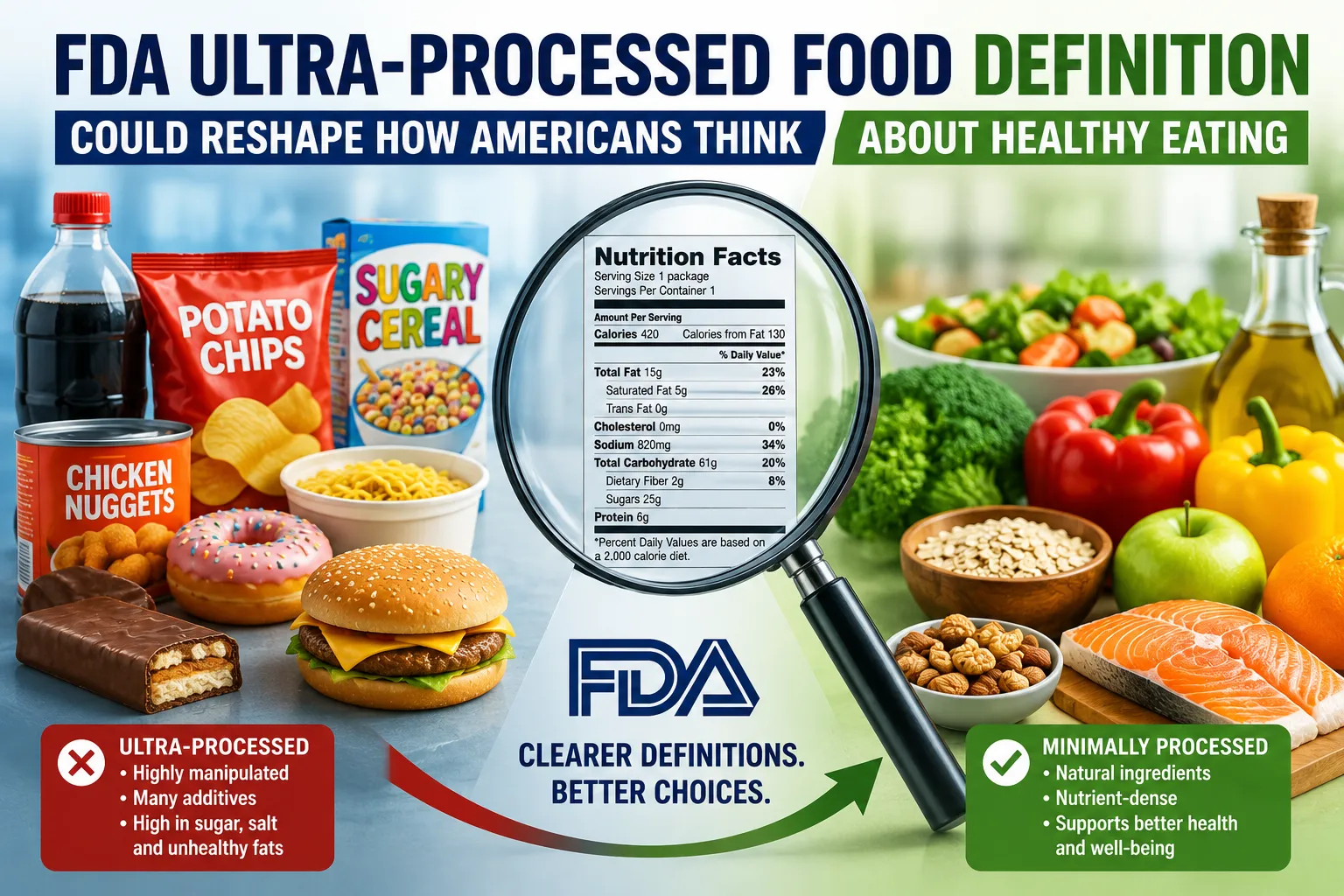

FDA Ultra-Processed Food Definition Could Reshape How Americans Think About Healthy Eating
The way Americans talk about healthy eating could be headed for a major shift as federal agencies work toward clearer definitions for ultra-processed foods, a category that has become increasingly important in nutrition research and public health discussions.
For years, shoppers have heard advice to “avoid processed foods,” but that phrase can be surprisingly difficult to apply. Nearly all foods undergo some form of processing before they reach a kitchen table. Frozen vegetables are processed. Pasteurized milk is processed. Canned beans are processed.
Ultra-processed foods are different.
The emerging debate centers on how to distinguish ordinary food processing from industrial formulations that are designed to be especially convenient, highly palatable, shelf-stable or easy to consume.
The U.S. Food and Drug Administration’s work on a formal definition could give consumers, researchers and policymakers a more consistent way to identify these products. It could also influence how Americans interpret nutrition labels, evaluate diets and think about what makes a food healthy.
These questions are part of the broader principles covered in this complete guide to healthy eating and balanced nutrition.
Why the Definition Matters
The phrase ultra-processed food, or UPF, is already common in nutrition research and public conversation.
However, there is no universally accepted definition that makes every product easy to classify.
Researchers frequently use the NOVA food-classification system, which groups foods according to their degree and purpose of processing. Under that framework, ultra-processed foods generally include industrial formulations containing multiple ingredients and substances rarely used in home cooking.
Examples can include:
- Packaged snack foods
- Sugary drinks
- Many ready-to-eat meals
- Some breakfast cereals
- Packaged desserts
- Processed meat products
- Instant noodles
- Certain sweetened dairy products
- Some packaged breads and baked goods
But classification can become complicated.
A food may contain ingredients that sound unfamiliar while still fitting within an otherwise nutritious diet.
That is why a standardized federal definition could matter.
Processing Is Not Automatically Unhealthy
One of the biggest misunderstandings surrounding the ultra-processed food debate is the idea that all processed food is bad for you.
Processing can make food safer, more convenient and more nutritious.
Pasteurization helps make milk safer.
Freezing can preserve fruits and vegetables.
Canning can extend the shelf life of beans and tomatoes.
Cooking itself is a form of processing.
Food manufacturers also use processing techniques to preserve products, improve texture, prevent spoilage and make certain nutrients more accessible.
The issue is therefore not simply whether a food has been processed.
The more complicated question is what kind of processing occurred, what ingredients were added and what role the resulting product plays in the diet.
What Makes a Food “Ultra-Processed”?
A formal definition could focus on characteristics that distinguish highly industrialized formulations from minimally processed foods.
These characteristics may include combinations of ingredients, additives, flavoring agents, colors, sweeteners and other substances used to create a particular product.
The manufacturing process itself can also be relevant.
For consumers, however, the most useful definition would ideally be one that can be applied in the real world.
People shopping in a supermarket should not need a graduate degree in food science to understand whether a product falls into a particular category.
The Ingredient List Could Become More Important
If federal guidance becomes more influential, Americans may pay greater attention to ingredient lists.
Nutrition Facts labels already provide information about:
- Calories
- Total fat
- Saturated fat
- Sodium
- Carbohydrates
- Added sugars
- Protein
- Certain vitamins and minerals
Ingredient lists provide a different type of information.
They show what a product contains and generally list ingredients by weight, with some exceptions and specific labeling rules.
A formal UPF framework could encourage consumers to consider both parts of the label rather than focusing exclusively on calorie counts.
For a broader explanation of how consumers can interpret the information provided on packaged foods, FDA Pushes New Nutrition Policies Targeting Ultra-Processed Foods examines the wider policy and labeling discussion.
Nutrition Quality Still Matters
A food’s processing category should not replace basic nutritional considerations.
A product can be highly processed and still provide useful nutrients.
Likewise, a minimally processed food can be high in calories, saturated fat or added sugar.
For example, nuts are minimally processed but energy-dense.
Fresh fruit contains natural sugars but also provides fiber and micronutrients.
A packaged food could contain substantial amounts of protein or fiber while also containing ingredients associated with ultra-processing.
This is why nutrition experts often emphasize overall dietary patterns rather than treating one characteristic as the sole measure of healthfulness.
The Bigger Question Is What Foods Replace Ultra-Processed Products
The health implications of reducing ultra-processed food may depend partly on what people eat instead.
Replacing sugary drinks with water is very different from replacing a convenient packaged meal with a highly refined alternative that is also high in sodium and saturated fat.
Similarly, replacing a packaged snack with fruit, nuts or another nutrient-rich food may produce a different nutritional outcome than replacing it with another highly processed snack.
The practical question is therefore not simply:
“Is this food ultra-processed?”
It is also:
“What role does this food play in my overall diet?”
Americans Already Eat a Large Amount of Processed Food
Ultra-processed foods are deeply integrated into the American food environment.
They are widely available, relatively convenient and often inexpensive compared with preparing meals entirely from basic ingredients.
For busy households, packaged foods can make it easier to get meals on the table.
They can also have long shelf lives, making them practical for people who have limited time for shopping or cooking.
That creates an important public-health challenge.
Telling consumers to “eat less ultra-processed food” is easier than explaining how to do that affordably and realistically.
Convenience Is Part of the Appeal
Food choices are not determined by nutrition alone.
People also consider:
- Price
- Time
- Taste
- Availability
- Cooking skills
- Storage
- Family preferences
- Work schedules
- Transportation
- Cultural habits
A parent working long hours may rely on packaged foods because they are fast.
A student may choose inexpensive instant meals because they fit a limited budget.
Someone living alone may prefer ready-to-eat products because cooking a large meal every day is impractical.
Any policy discussion about ultra-processed food needs to recognize those realities.
Food Companies Could Face Greater Pressure
A formal government definition could also affect food manufacturers.
Companies might face greater scrutiny over how their products are formulated and marketed.
Manufacturers could have incentives to reformulate products by changing:
- Sodium levels
- Added sugars
- Saturated fat
- Sweeteners
- Additives
- Portion sizes
- Ingredient combinations
However, reformulation is not necessarily simple.
Food manufacturers must consider taste, texture, shelf stability, cost and food safety alongside nutrition.
Changing one ingredient can affect several characteristics of a product.
Marketing Could Change Too
The debate could influence how food companies communicate with consumers.
Consumers increasingly encounter terms such as:
- Natural
- Whole grain
- High protein
- No artificial flavors
- Organic
- Plant-based
- Low sugar
- Clean label
Some of these claims can provide useful information, but none automatically guarantees that a product is nutritionally superior.
A formal definition of ultra-processed food could become another factor consumers consider when evaluating marketing claims.
It may also encourage more scrutiny of the difference between a product’s health-oriented marketing and its overall nutritional profile.
Ultra-Processed Food Research Has Raised Important Questions
Scientific interest in ultra-processed food has grown rapidly.
Observational studies have found associations between high consumption of ultra-processed foods and various adverse health outcomes.
Researchers have investigated possible relationships involving:
- Obesity
- Cardiovascular disease
- Type 2 diabetes
- Certain cancers
- Metabolic health
- Overall mortality
But associations do not automatically prove that processing itself causes those outcomes.
People who consume large amounts of ultra-processed food may also differ in other ways.
Their diets may contain fewer fruits and vegetables, less fiber or more added sugar and sodium. They may also have different levels of physical activity, income, sleep or other health-related factors.
Separating these influences is one of the central challenges in nutrition research.
A Controlled Trial Added to the Debate
One of the most widely discussed studies on the subject was a controlled feeding trial published in 2019.
Researchers at the National Institutes of Health compared diets made up of ultra-processed foods with diets based on minimally processed foods.
Participants were offered meals that were matched in several broad nutritional characteristics and were allowed to eat as much as they wanted.
The participants consumed more calories and gained weight during the ultra-processed diet period.
The study was relatively small and short, so it did not answer every question about long-term health.
But it strengthened interest in the possibility that characteristics beyond traditional nutrients could influence how much people eat.
Why Ultra-Processed Foods May Encourage Overeating
Researchers have proposed several possible mechanisms.
Ultra-processed foods can be:
- Easy to eat quickly
- Highly palatable
- Energy-dense
- Soft or easy to chew
- Convenient
- Strongly flavored
- Available in large portions
These characteristics may influence how quickly people consume food and how much they eat before feeling satisfied.
The combination of fat, carbohydrates, salt and flavoring may also affect food reward.
However, scientists are still investigating exactly how these factors interact.
The Eating Speed Question
One particularly interesting area is the relationship between processing and eating speed.
Some packaged foods require little chewing and can be consumed rapidly.
If people eat faster, they may consume more calories before their body’s satiety signals have enough time to influence behavior.
That does not mean every soft or convenient food causes overeating.
It does suggest that the physical structure of food could be relevant in addition to its nutrient composition.
Additives Are Part of the Discussion, But Not the Whole Story
Food additives are often central to conversations about ultra-processed foods.
Manufacturers use additives for legitimate technological purposes, including preserving food, controlling texture, preventing separation and maintaining consistency.
Some additives have been extensively studied and are permitted for use under food-safety regulations.
The presence of an additive does not automatically mean a product is unhealthy.
At the same time, researchers continue to investigate whether certain combinations of ingredients, additives and processing methods may affect appetite, metabolism or other biological processes.
A useful federal definition would need to distinguish between the existence of an unfamiliar ingredient and evidence of a meaningful health risk.
For more on the separate question of how food additives are evaluated, see FDA Food Additive Reviews Renew Focus on Ingredient Safety.
Sodium and Added Sugar Remain More Straightforward Concerns
Regardless of how the government defines ultra-processed food, established nutritional concerns remain important.
Many packaged foods can contribute substantial amounts of:
- Sodium
- Added sugars
- Saturated fat
- Refined carbohydrates
Excessive consumption of these nutrients can make it more difficult to maintain a balanced diet.
That is why consumers should not abandon traditional nutrition information simply because the ultra-processed food debate receives more attention.
Checking sodium, added sugar, fiber, protein and overall calorie content remains useful.
A Better Food Labeling Conversation Could Emerge
A federal definition could eventually contribute to a broader shift in how food is evaluated.
Instead of asking only:
“How many calories does this contain?”
Consumers might increasingly consider several questions:
- How nutritious is it?
- How processed is it?
- How much added sugar does it contain?
- How much sodium does it contain?
- How much fiber does it provide?
- How much protein does it provide?
- What portion size am I eating?
- What foods make up the rest of my diet?
This more comprehensive approach could produce better decisions than relying on any single number or label.
Healthy Eating Does Not Require Perfection
One risk of the ultra-processed food debate is that consumers could come away believing that every packaged product should be avoided.
That is unlikely to be realistic for most households.
A sustainable approach to nutrition generally allows room for convenience and enjoyment while emphasizing nutrient-rich foods.
Meals built around vegetables, fruits, whole grains, legumes, nuts, seeds, fish, eggs and other minimally processed foods can provide a strong foundation.
Packaged foods can still have a place.
The key is the overall pattern.
Why the Cost of Healthy Eating Matters
Affordability is another important part of the discussion.
Some minimally processed foods can be inexpensive, particularly staples such as beans, lentils, oats, rice, potatoes and seasonal produce.
But healthier options are not always equally accessible to every household.
Food prices, transportation, cooking equipment, storage space and time all influence what people can realistically purchase and prepare.
Public-health recommendations need to account for those factors.
Otherwise, advice about reducing ultra-processed food could become easier to follow for higher-income households than for families facing tighter budgets.
Children Could Be a Major Focus
Children’s diets are another reason the debate matters.
Young people are exposed to food marketing from an early age, including advertising for packaged snacks, sugary drinks and convenience foods.
Dietary habits developed during childhood can influence preferences later in life.
Understanding how heavily processed products fit into children’s diets could therefore become an important part of broader public-health strategies.
However, recommendations for children need to balance nutrition with normal growth, development, family circumstances and healthy relationships with food.
Parents Shouldn’t Have to Fear Every Packaged Food
For families, the most useful message is likely to be one of balance.
A packaged food does not automatically become harmful because it contains preservatives or because it was manufactured in a factory.
Parents can instead look at the broader nutritional picture.
A practical approach might involve prioritizing:
- Fruits and vegetables
- Whole grains
- Beans and legumes
- Nuts and seeds
- Protein-rich foods
- Water
- Foods with useful amounts of fiber
while keeping foods high in added sugars, sodium and other less beneficial ingredients from dominating the diet.
The Definition Could Help Researchers Compare Studies
A standardized definition would not only affect consumers.
It could also help scientists.
Nutrition research becomes more difficult to compare when different studies classify foods differently.
If one research group considers a particular packaged bread ultra-processed while another does not, their findings may not be directly comparable.
A more consistent definition could improve research by creating a common framework.
Scientists could then better examine whether health outcomes are associated with processing itself, specific ingredients, dietary patterns or other characteristics.
The Debate Will Continue Beyond the Label
Even with a federal definition, scientists will still need to answer difficult questions.
Does processing itself drive health risks?
Are certain additives more important than others?
Does the physical structure of food matter?
How much does eating speed influence calorie intake?
Are some ultra-processed foods substantially healthier than others?
Can reformulation reduce potential risks?
These questions cannot be answered by a definition alone.
A classification system can organize foods, but it cannot by itself establish cause and effect.
What Consumers Can Do Right Now
Americans do not necessarily need to wait for a new definition before making practical improvements to their diets.
A sensible approach is to focus on the overall quality of food choices.
That can include eating more:
- Vegetables
- Fruits
- Whole grains
- Beans
- Lentils
- Nuts
- Seeds
- Lean or otherwise nutrient-rich protein sources
It can also mean paying attention to products that are particularly high in added sugars, sodium or saturated fat.
Reading the Nutrition Facts label and ingredient list can provide useful information without requiring consumers to classify every food perfectly.
A More Nuanced Way to Think About Processed Food
The emerging federal conversation around ultra-processed foods could ultimately improve the way Americans discuss nutrition—provided the category is treated as one piece of the puzzle rather than a simple definition of “good” and “bad” food.
Processing exists on a spectrum.
A bag of frozen vegetables, a loaf of whole-grain bread and a packaged dessert may all undergo industrial processing, but they can have very different nutritional profiles and roles in a diet.
That distinction matters.
The most useful outcome of a clearer FDA definition may therefore be less about creating another food category and more about encouraging consumers to look beyond individual ingredients or marketing claims.
Healthy eating is ultimately shaped by the overall pattern of what people eat, how much they eat and how those foods fit into their lives. A clearer understanding of ultra-processed foods could give Americans another tool for making those choices—but it should complement, not replace, the broader principles of balanced nutrition.
Continue Reading
Similar Posts
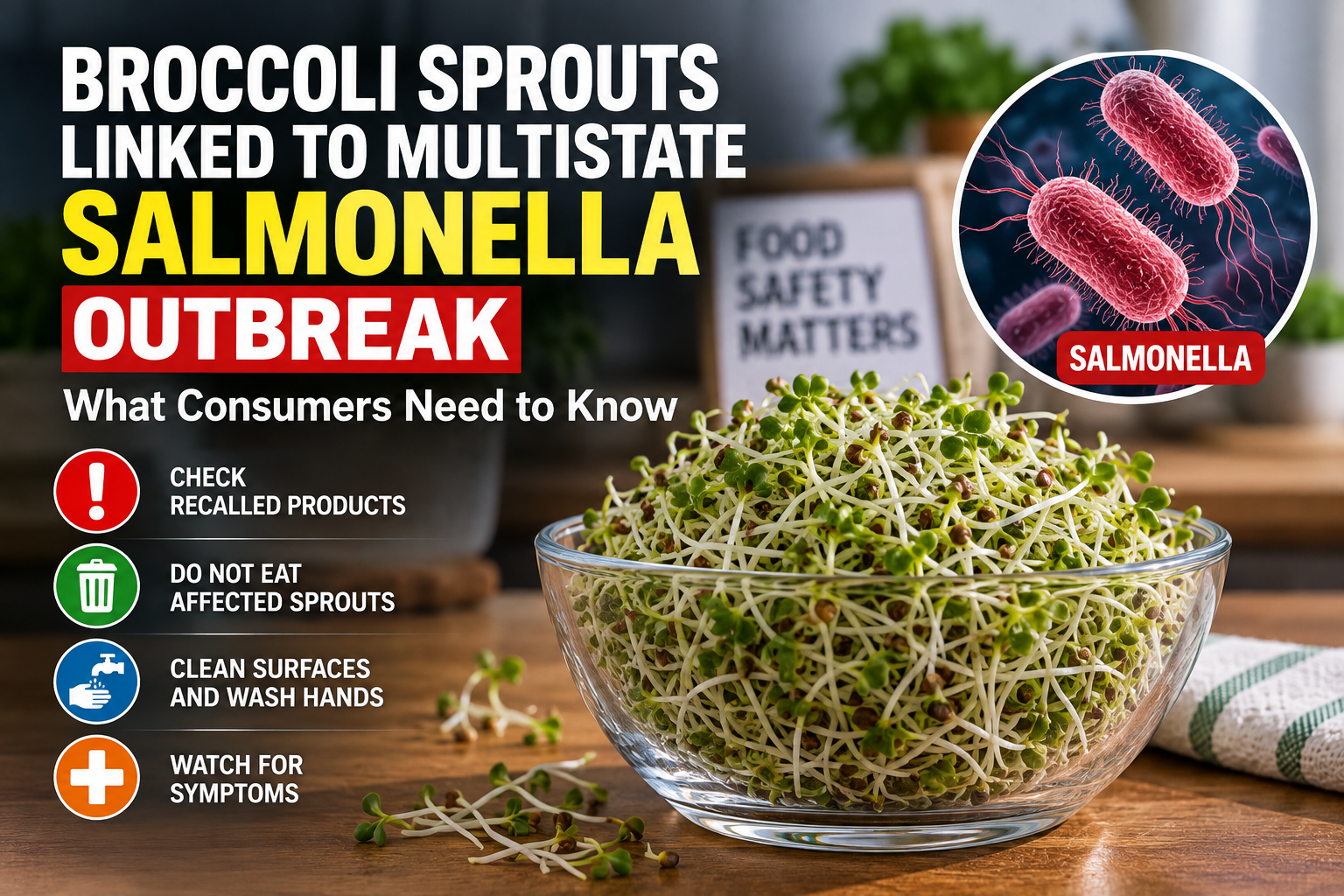
Broccoli Sprouts Linked to Multistate Salmonella Outbreak: What Consumers Need to Know
For consumers, the most important step is to determine whether recalled broccoli sprouts are in the refrigerator, freezer, or kitchen and to avoid eating, serving, or selling them.
Read article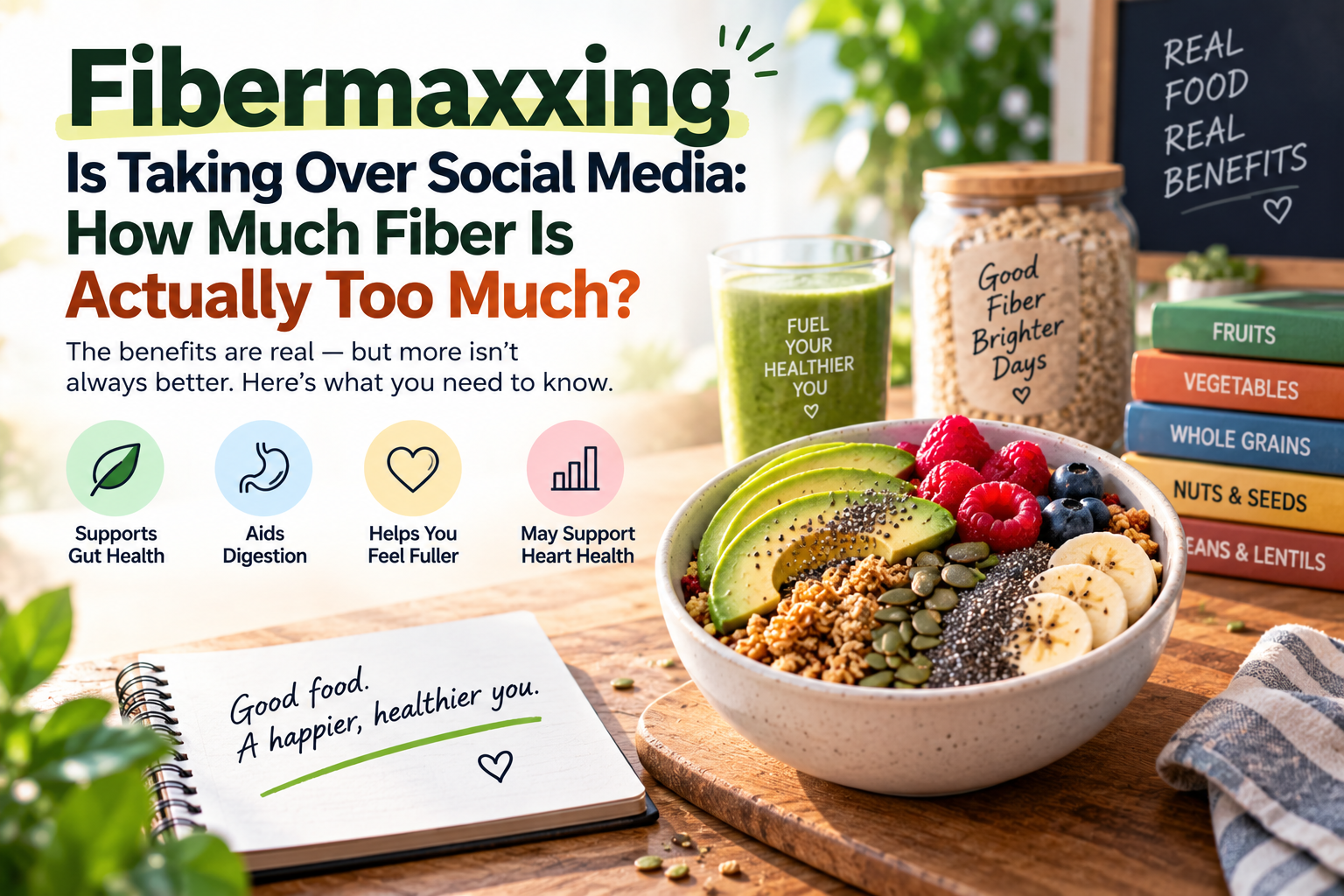
Fibermaxxing Is Taking Over Social Media: How Much Fiber Is Actually Too Much
More is not automatically better. Increasing fiber too rapidly or consuming very large amounts can cause bloating, gas, abdominal discomfort, constipation, or changes in bowel habits.
Read article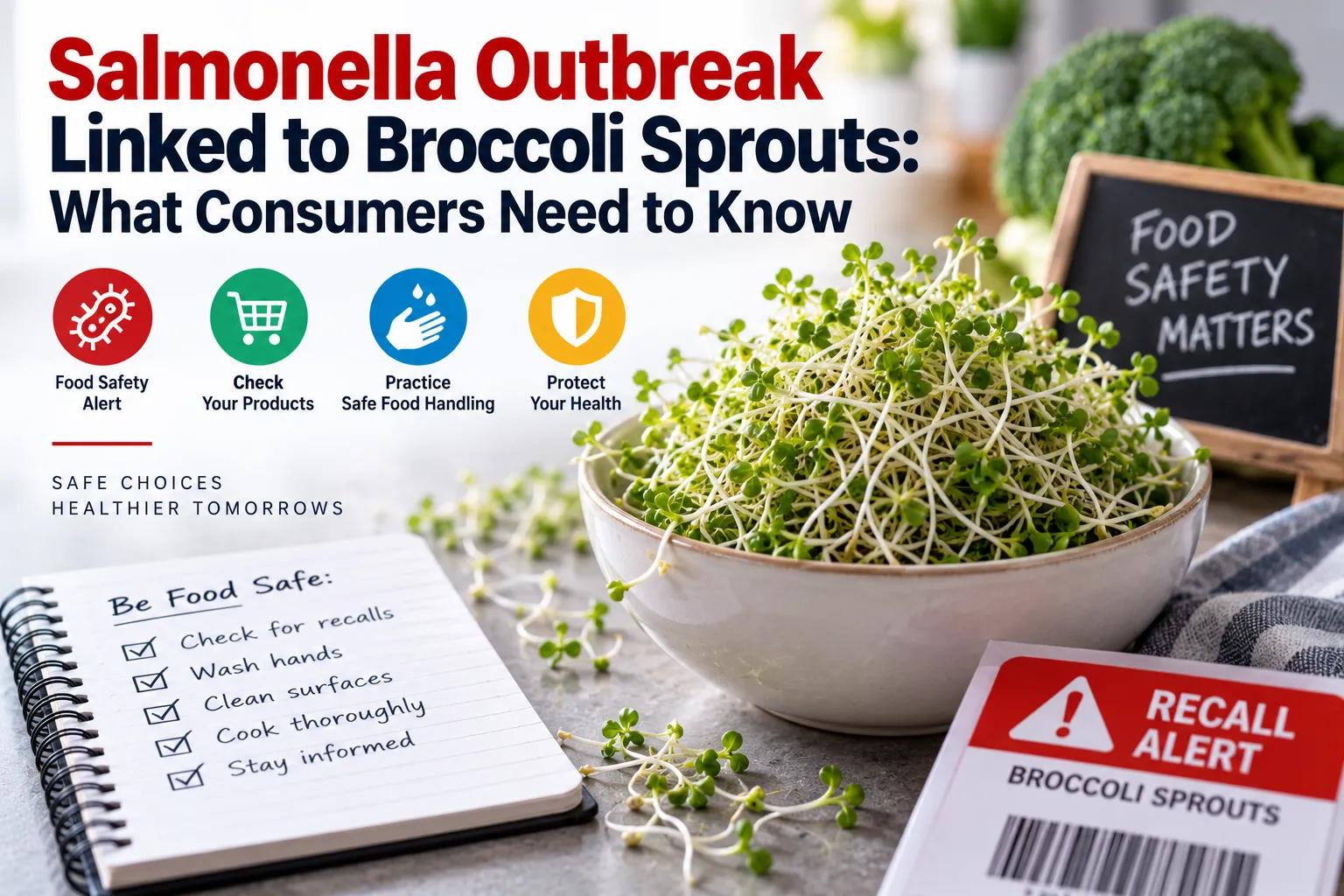
Salmonella Outbreak Linked to Broccoli Sprouts: What Consumers Need to Know
For consumers, the most important issue right now is knowing what products are affected, what symptoms to watch for, and how to reduce the risk of foodborne illness.
Read article

Join 10,000+ Readers Building Healthier Habits
Get actionable wellness tips every week plus our newest articles delivered straight to your inbox.