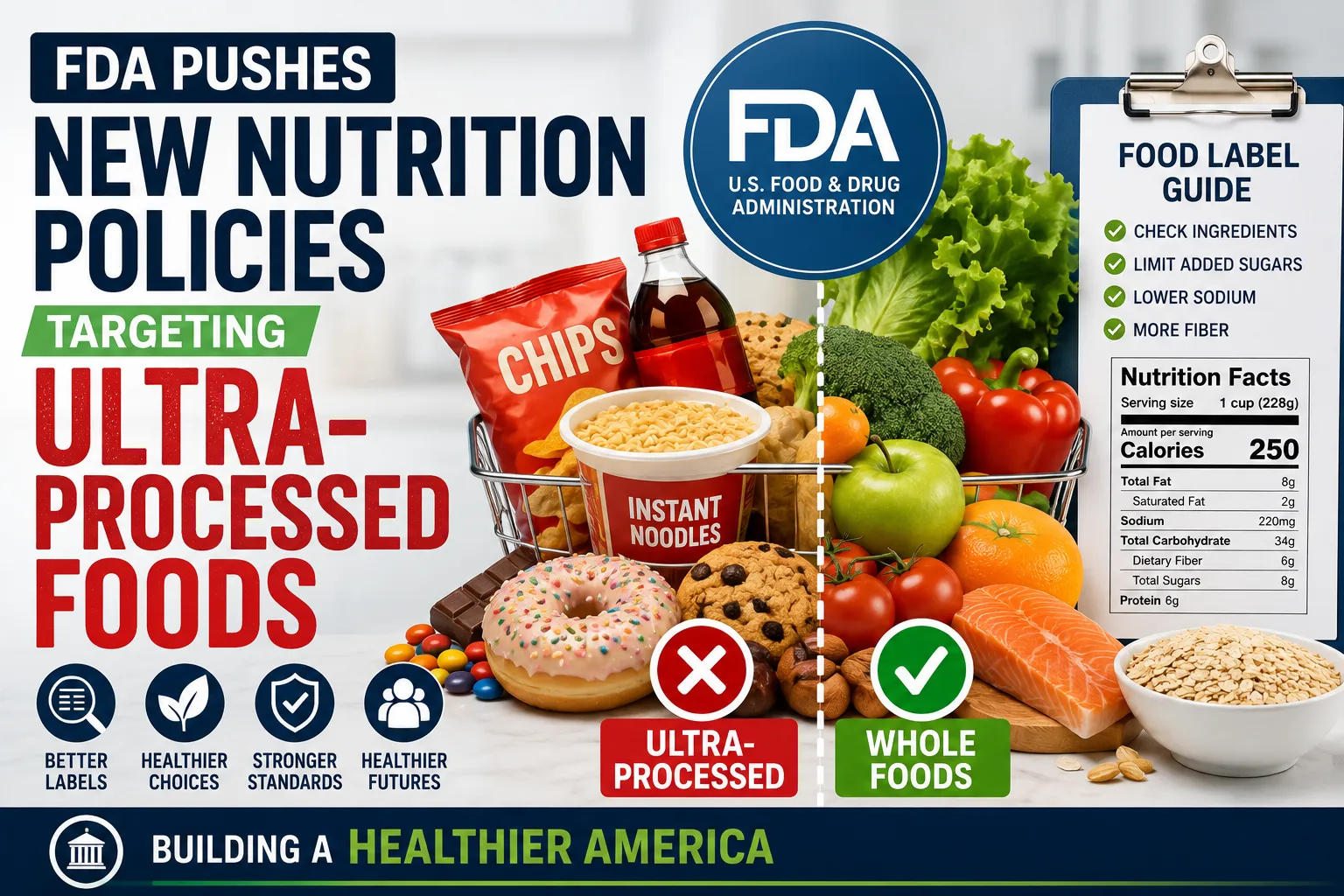

FDA Pushes New Nutrition Policies Targeting Ultra-Processed Foods
The U.S. Food and Drug Administration (FDA) is advancing new nutrition-focused initiatives aimed at improving the nation’s diet, with growing attention on the role of ultra-processed foods in chronic disease. As obesity, type 2 diabetes, heart disease, and other diet-related conditions continue to challenge public health, regulators are exploring policies designed to improve food transparency, encourage healthier product formulations, and help consumers make more informed choices.
The renewed focus reflects a broader movement among health authorities worldwide to examine how highly processed foods affect long-term health. While ultra-processed foods remain a convenient and affordable option for many households, nutrition experts continue to debate their overall impact and the best policy approaches to encourage healthier eating habits.
These developments are part of the broader principles discussed in this complete guide to healthy eating and balanced nutrition, which examines how food choices, nutritional quality, and dietary patterns contribute to overall health.
Growing Focus on Ultra-Processed Foods
Ultra-processed foods are industrially manufactured products that often contain refined ingredients, additives, flavor enhancers, preservatives, emulsifiers, sweeteners, and colorings that are rarely used in home cooking.
Common examples include:
- Sugary breakfast cereals
- Packaged snack foods
- Soft drinks
- Candy
- Instant noodles
- Processed meats
- Frozen ready-made meals
- Sweetened beverages
- Commercial baked goods
- Fast-food items
Not every processed food is considered ultra-processed. Many minimally processed foods, such as frozen vegetables, plain yogurt, or canned beans, can still be part of a balanced diet.
Why Regulators Are Paying Attention
Health officials are increasingly evaluating the relationship between dietary patterns and chronic illness.
Research has associated diets high in ultra-processed foods with increased risks of:
- Obesity
- Type 2 diabetes
- Cardiovascular disease
- High blood pressure
- Certain digestive disorders
- Excess calorie consumption
While many studies identify associations rather than direct cause-and-effect relationships, public health agencies continue to examine the evidence as nutrition science evolves.
Improving Food Transparency
One of the primary goals of emerging nutrition policies is to make food information easier for consumers to understand.
Potential areas of focus include:
- Clearer nutrition labeling
- Front-of-package nutrition information
- Ingredient transparency
- Added sugar disclosures
- Sodium awareness
- Saturated fat information
- Serving size consistency
Supporters believe simpler labeling can help consumers compare products more quickly while shopping.
Encouraging Healthier Food Choices
Rather than banning specific products, many nutrition initiatives aim to encourage healthier purchasing decisions through education and transparency.
Consumers may be better equipped to:
- Compare nutritional value
- Understand ingredient lists
- Reduce excess sugar intake
- Monitor sodium consumption
- Choose higher-fiber foods
- Increase whole-food consumption
Education remains a central component of long-term nutrition improvement.
Industry Response
Food manufacturers continue investing in product reformulation to meet changing consumer preferences and evolving regulatory expectations.
Many companies are exploring ways to:
- Reduce added sugars
- Lower sodium levels
- Improve fiber content
- Replace certain additives
- Offer smaller portion sizes
- Expand healthier product lines
These changes also reflect growing consumer demand for products perceived as healthier and more transparent.
The Role of Nutrition Labels
Nutrition labels have become one of the most important tools available to shoppers.
Key information typically includes:
- Calories
- Total fat
- Saturated fat
- Carbohydrates
- Added sugars
- Protein
- Sodium
- Vitamins and minerals
- Serving sizes
Understanding these labels can help individuals make informed dietary choices that align with their personal health goals.
What Are Ultra-Processed Foods?
Food processing exists on a spectrum.
For a deeper look at how regulators and consumers may define these products, see FDA Ultra-Processed Food Definition Could Reshape How Americans Think About Healthy Eating.
Minimally Processed Foods
Examples include:
- Fresh fruits
- Fresh vegetables
- Frozen vegetables
- Plain milk
- Eggs
- Whole grains
These foods undergo limited processing primarily for preservation or convenience.
Processed Foods
Examples include:
- Cheese
- Canned vegetables
- Whole-grain bread
- Canned fish
- Yogurt
These products often contain ingredients that extend shelf life or improve safety.
Ultra-Processed Foods
Ultra-processed foods typically involve multiple industrial processing steps and may contain ingredients not commonly found in home kitchens.
Examples include:
- Sweetened breakfast cereals
- Packaged desserts
- Energy drinks
- Snack cakes
- Flavored chips
- Sweetened beverages
The degree of processing—not simply the number of ingredients—is one factor researchers consider.
Public Health Goals
Nutrition policies generally seek to improve population health by encouraging dietary patterns associated with reduced chronic disease risk.
Public health objectives often include:
- Lower obesity rates
- Reduced diabetes risk
- Improved heart health
- Better childhood nutrition
- Greater nutrition awareness
- Healthier food environments
Achieving these goals typically requires collaboration between regulators, healthcare professionals, educators, manufacturers, and consumers.
Challenges Facing Policymakers
Designing effective nutrition policy is complex.
Key considerations include:
- Scientific evidence
- Consumer affordability
- Food accessibility
- Industry innovation
- Economic impact
- Cultural food preferences
- Nutrition education
- Individual choice
Balancing public health objectives with consumer freedom remains an ongoing policy discussion.
Consumer Tips
Regardless of future regulations, nutrition experts commonly recommend focusing on overall dietary patterns rather than individual foods.
Practical strategies include:
- Eat more fruits and vegetables.
- Choose whole grains when possible.
- Read nutrition labels carefully.
- Limit excessive added sugars.
- Reduce sodium intake when appropriate.
- Include lean sources of protein.
- Drink more water.
- Prepare meals at home more often.
- Practice portion awareness.
- Build sustainable eating habits.
Healthy eating is generally viewed as a long-term lifestyle rather than a short-term diet.
Looking Ahead
Nutrition policy continues to evolve as new research improves understanding of diet and health. Additional discussions may focus on food labeling, ingredient transparency, consumer education, and encouraging healthier food environments.
Food manufacturers are also expected to continue developing products that balance taste, convenience, affordability, and nutritional quality as consumer expectations shift.
The policy debate also extends beyond the broad category of ultra-processed foods. Ongoing attention to individual ingredients and additives has renewed interest in how food safety and nutrition standards are evaluated. FDA Food Additive Reviews Renew Focus on Ingredient Safety explores this related area in greater detail.
Research is also examining whether particular preservatives may have implications for long-term health. For example, New Research Raises Questions About Food Preservatives and Heart Health looks at the relationship between preservatives and cardiovascular health.
A More Transparent Future for Food Choices
The FDA’s renewed attention to ultra-processed foods reflects a broader effort to improve nutrition and address the growing burden of diet-related chronic diseases. While discussions surrounding food processing, labeling, and regulation continue, one objective remains consistent: helping consumers make informed decisions about what they eat.
As nutrition science advances, greater transparency, clearer labeling, and improved public education may play increasingly important roles in supporting healthier dietary choices. For consumers, understanding the difference between minimally processed, processed, and ultra-processed foods can be an important step toward building a balanced and sustainable eating pattern.
Continue Reading
Similar Posts

Broccoli Sprouts Linked to Multistate Salmonella Outbreak: What Consumers Need to Know
For consumers, the most important step is to determine whether recalled broccoli sprouts are in the refrigerator, freezer, or kitchen and to avoid eating, serving, or selling them.
Read article
Fibermaxxing Is Taking Over Social Media: How Much Fiber Is Actually Too Much
More is not automatically better. Increasing fiber too rapidly or consuming very large amounts can cause bloating, gas, abdominal discomfort, constipation, or changes in bowel habits.
Read article
Salmonella Outbreak Linked to Broccoli Sprouts: What Consumers Need to Know
For consumers, the most important issue right now is knowing what products are affected, what symptoms to watch for, and how to reduce the risk of foodborne illness.
Read article

Join 10,000+ Readers Building Healthier Habits
Get actionable wellness tips every week plus our newest articles delivered straight to your inbox.