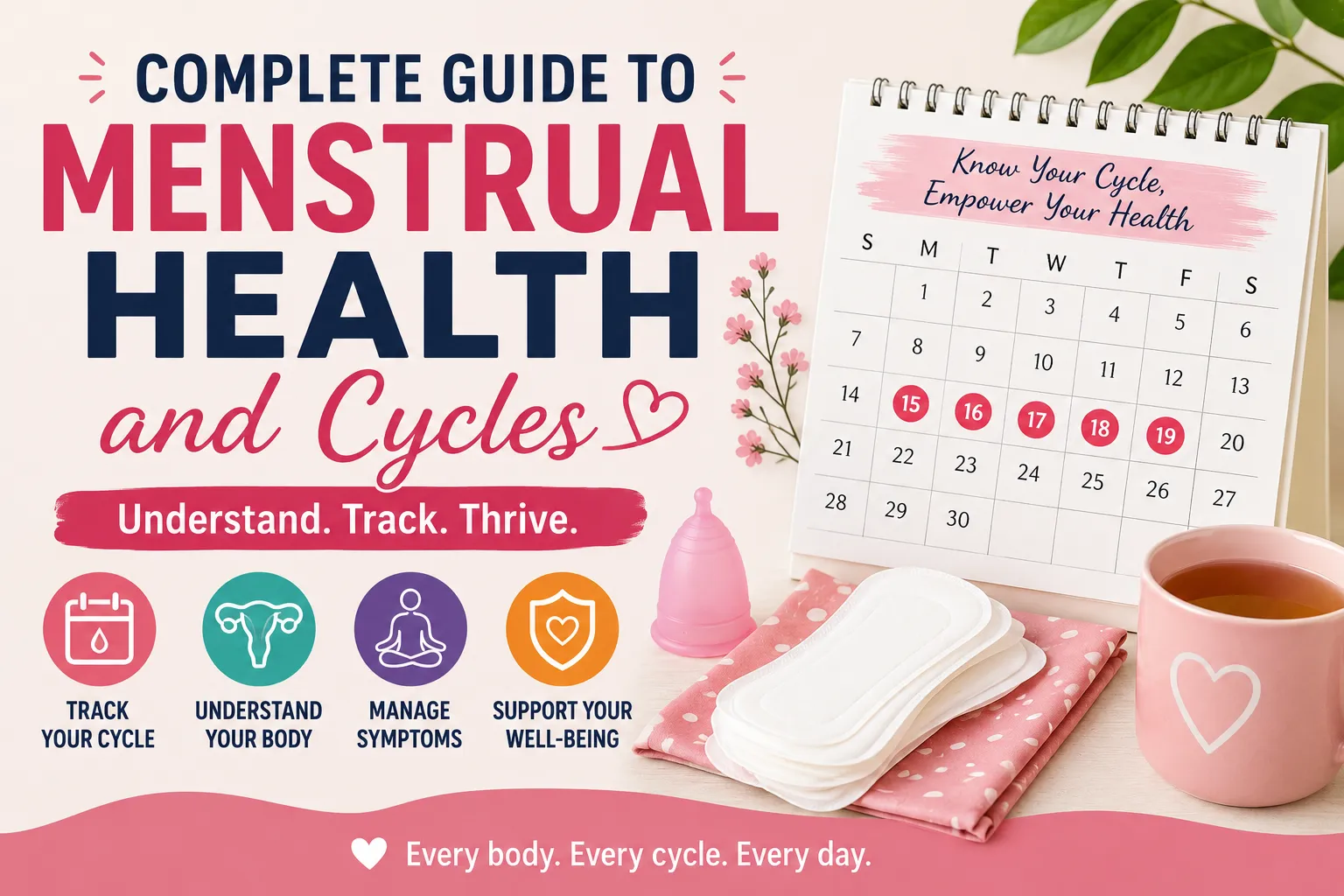

Complete Guide to Menstrual Health and Cycles
Menstruation is a normal biological process, but understanding what happens during the menstrual cycle can make it easier to recognize what is typical, track changes and know when medical advice may be appropriate.
The menstrual cycle is more than the days when bleeding occurs. Hormones coordinate changes involving the ovaries, uterus and other parts of the reproductive system throughout the cycle. These changes can influence bleeding, cervical mucus, energy, mood, appetite and other symptoms.
Menstrual experiences also vary widely. Some people have predictable cycles with few symptoms, while others experience cramps, headaches, heavy bleeding or significant changes in mood. The World Health Organization describes menstrual health as encompassing physical, mental and social well-being in relation to the menstrual cycle—not simply the absence of a medical disorder.
Health note: This article provides general educational information and is not a diagnosis or substitute for individualized medical care. If you experience unusually heavy bleeding, severe pain, unexplained changes in your cycle, pregnancy-related concerns or other worrying symptoms, speak with a qualified healthcare professional.
For a broader overview of how menstrual health fits into lifelong reproductive wellness, see the Complete Guide to Reproductive Health.
What Is the Menstrual Cycle?
The menstrual cycle is the recurring sequence of hormonal and reproductive changes that prepares the body for a possible pregnancy.
Day 1 is the first day of menstrual bleeding. The cycle continues until the day before the next period begins.
A commonly cited average cycle is about 28 days, but there is considerable normal variation. The NHS describes cycles between 21 and 35 days as normal for many adults, while ACOG notes that cycles in adolescents can be wider as the reproductive system matures.
The cycle can be divided into four broad phases:
- Menstruation
- Follicular phase
- Ovulation
- Luteal phase
These phases overlap in terms of hormonal activity and do not necessarily feel identical from one person to another.
What Happens During Menstruation?
Menstruation is the phase when the uterine lining is shed and leaves the body through the vagina as menstrual blood and tissue.
The first day of bleeding is considered cycle day 1.
A period commonly lasts several days. The NHS states that periods usually last 2 to 7 days, while ACOG notes that up to 7 days is typical when discussing menstruation in adolescents.
Some people experience:
- Lower-abdominal cramps
- Lower-back discomfort
- Breast tenderness
- Headaches
- Fatigue
- Bloating
- Mood changes
- Nausea
- Diarrhea
Symptoms vary considerably between individuals.
The Follicular Phase Explained
The follicular phase begins on the first day of menstruation and continues until ovulation.
During this phase, follicles in the ovaries develop. One follicle typically becomes dominant and prepares to release an egg.
At the same time, estrogen levels rise and help the lining of the uterus thicken in preparation for a possible pregnancy.
The follicular phase can vary substantially in length, which is one reason menstrual cycles do not all last exactly 28 days.
Ovulation Explained
Ovulation is the release of an egg from an ovary.
It does not necessarily happen on day 14 for everyone.
ACOG explains that ovulation typically occurs approximately 14 days before the next period, meaning the timing can shift depending on the overall cycle length.
For example, someone with a 28-day cycle might ovulate around day 14, while someone with a 35-day cycle may ovulate considerably later.
This is why the idea that everyone ovulates on exactly day 14 is misleading.
Signs of Ovulation
Some people notice physical changes around ovulation.
These may include:
- Changes in cervical mucus
- A feeling of increased vaginal moisture
- Mild pelvic discomfort
- Changes in libido
- Breast tenderness
- Subtle changes in body temperature
Cervical mucus can become thinner, clearer and more slippery around the fertile part of the cycle.
ACOG notes that monitoring cervical mucus can be useful when identifying ovulation.
However, no single symptom can guarantee that ovulation has occurred.
The Luteal Phase
After ovulation, the body enters the luteal phase.
The follicle that released the egg changes into a structure called the corpus luteum, which produces hormones including progesterone.
Progesterone helps maintain the uterine lining in preparation for a possible pregnancy.
If pregnancy does not occur, hormone levels eventually decline. The uterine lining then breaks down, triggering the next menstrual period.
The cycle begins again.
Menstrual Cycle Hormones
Several hormones coordinate the menstrual cycle.
Important hormones include:
- Follicle-stimulating hormone (FSH)
- Luteinizing hormone (LH)
- Estrogen
- Progesterone
Their levels rise and fall at different points in the cycle.
These hormonal changes influence the ovaries, uterine lining and reproductive processes.
Understanding these changes can also help explain why symptoms may vary at different times of the month.
What Is a Normal Period?
There is no single “perfect” period.
Normal menstrual characteristics vary from person to person.
Generally, a healthy cycle may involve:
- Predictable bleeding
- Several days of menstruation
- Mild to moderate discomfort, or no pain
- Some variation between cycles
- Changes that remain relatively consistent for that individual
A cycle does not need to be exactly 28 days to be healthy.
Your personal pattern can be more informative than comparing yourself with someone else’s cycle.
How Much Period Blood Is Normal?
It can be difficult to estimate menstrual blood loss accurately.
What looks like a large amount may not always represent unusually heavy bleeding.
Instead of trying to measure blood volume at home, pay attention to practical indicators such as:
- How frequently you need to change menstrual products
- Whether bleeding interferes with normal activities
- Whether bleeding lasts longer than usual
- Whether you regularly experience flooding or leakage
- Whether you feel unusually tired, weak or dizzy
Very heavy bleeding can contribute to iron-deficiency anemia and deserves medical evaluation. WHO identifies heavy menstrual bleeding as a concern that can contribute to iron-deficiency anemia.
Period Pain: What Is Normal?
Mild cramping is common during menstruation.
Period cramps are associated with contractions of the uterus and can range from barely noticeable to uncomfortable.
Some people also experience:
- Back pain
- Headaches
- Nausea
- Diarrhea
- Fatigue
However, severe pain should not simply be dismissed as something everyone has to endure.
ACOG recommends speaking with a doctor when menstrual pain does not improve with treatment or prevents someone from attending school or carrying out normal activities.
What Can Help Period Cramps?
Several approaches may help manage ordinary menstrual discomfort.
Heat
A heating pad or warm compress applied to the lower abdomen or back can provide relief.
Physical Activity
Gentle exercise may help some people feel better during their period.
Pain Relief Medicines
Over-the-counter medicines such as ibuprofen or naproxen can help menstrual cramps for many people, provided they are medically appropriate.
Always follow the product instructions and check with a healthcare professional or pharmacist if you have conditions or take medicines that could make these drugs unsuitable.
When Period Pain May Need Investigation
Pain that is unusually severe, worsening or interfering substantially with everyday life deserves attention.
Potential causes of significant menstrual or pelvic pain can include conditions such as:
- Endometriosis
- Adenomyosis
- Fibroids
- Pelvic inflammatory disease
- Ovarian conditions
A healthcare professional can determine whether further examination or testing is appropriate.
Heavy Menstrual Bleeding
Heavy menstrual bleeding is more than simply having a heavier day or two.
Warning signs can include:
- Frequently changing pads or tampons because they are saturated
- Bleeding for longer than usual
- Repeatedly soaking through clothing or bedding
- Passing unusually large clots
- Fatigue or weakness
- Shortness of breath related to anemia
ACOG advises seeking medical attention when bleeding is so heavy that a pad or tampon needs to be changed every 1–2 hours, or when bleeding lasts more than 7 days. Immediate medical attention is particularly important when heavy bleeding is accompanied by light-headedness, dizziness or a racing pulse.
What Causes Irregular Periods?
Irregular cycles can have many causes.
Some common factors include:
- Puberty
- Perimenopause
- Pregnancy
- Hormonal contraception
- Stress
- Major changes in weight
- Excessive exercise
- Polycystic ovary syndrome
- Thyroid disorders
- Certain medications
- Other medical conditions
The NHS notes that irregular periods are particularly common when menstruation first begins and as menopause approaches.
An occasional variation does not necessarily mean something is wrong.
A persistent change from your usual pattern, however, is worth discussing with a healthcare professional.
Polycystic Ovary Syndrome and Menstrual Cycles
Polycystic ovary syndrome (PCOS) is a common hormonal disorder that can affect menstruation and ovulation.
WHO reports that PCOS affects an estimated 10–13% of reproductive-aged women and can cause irregular menstrual periods, abnormal ovulation, acne, excess facial or body hair and fertility difficulties.
Not everyone with irregular periods has PCOS, and PCOS can present differently between individuals.
A healthcare professional can evaluate symptoms and determine whether testing is appropriate.
Missed Periods
A missed period can happen for many reasons.
Possible causes include:
- Pregnancy
- Stress
- Significant weight changes
- Excessive exercise
- Hormonal contraception
- PCOS
- Thyroid problems
- Perimenopause
- Certain medications
- Other medical conditions
If pregnancy is possible, taking an appropriate pregnancy test is an important first step.
ACOG recommends medical evaluation when someone who previously menstruated goes without a period for more than three months without an explanation.
Periods and Pregnancy
Menstruation generally does not occur during pregnancy.
However, bleeding during pregnancy can have different causes and should not automatically be assumed to be a period.
Anyone who is pregnant or could be pregnant and experiences vaginal bleeding should seek appropriate medical guidance, particularly if bleeding is heavy or accompanied by pain, dizziness or other concerning symptoms.
Menstrual Cycles and Fertility
The menstrual cycle is closely connected with fertility because ovulation involves releasing an egg that may be fertilized.
The fertile window includes the days around ovulation when pregnancy is possible.
However, predicting ovulation from calendar dates alone can be unreliable, particularly when cycles are irregular.
ACOG notes that ovulation typically occurs about 14 days before the next period, rather than necessarily occurring on day 14 of every cycle.
People trying to avoid pregnancy should use an appropriate contraceptive method rather than relying on assumptions about a “safe” day.
For a broader understanding of fertility, including factors affecting both women and men, see Understanding Fertility for Women and Men.
Tracking Your Menstrual Cycle
Tracking your cycle can help you understand your personal pattern.
You can record:
- First day of bleeding
- Last day of bleeding
- Bleeding intensity
- Cramps
- Headaches
- Mood changes
- Breast tenderness
- Medication use
- Other unusual symptoms
ACOG recommends marking the first day of bleeding as day 1 and continuing to count until the day before the next period.
You can use:
- A paper calendar
- A notebook
- A spreadsheet
- A period-tracking app
What Period Tracking Can Tell You
Over several months, tracking may reveal patterns such as:
- Your typical cycle length
- How long your period usually lasts
- When cramps occur
- Whether bleeding is becoming heavier
- Whether cycles are becoming irregular
- Whether symptoms occur at particular points in the cycle
Tracking is not a diagnostic tool, but it can give you useful information to share with a healthcare professional.
How Accurate Are Period-Tracking Apps?
Period apps can help organize information, but predictions are estimates.
An app may predict your next period based on previous cycle lengths. It cannot always know exactly when you ovulated.
Predictions can become less reliable when cycles are irregular or when factors such as illness, stress, hormonal contraception or major lifestyle changes alter the usual pattern.
Menstrual Hygiene
Good menstrual hygiene involves having access to appropriate products, clean water, sanitation and private facilities.
Common menstrual products include:
- Disposable pads
- Tampons
- Menstrual cups
- Period underwear
- Reusable cloth pads
The best option depends on individual preference, access, comfort and circumstances.
WHO emphasizes that menstrual health includes access to appropriate menstrual materials, water, sanitation and hygiene facilities, accurate information and timely healthcare.
How to Use Menstrual Products Safely
Follow the manufacturer’s instructions for whichever product you use.
For reusable products:
- Clean them according to instructions.
- Allow them to dry appropriately.
- Store them in a clean place.
- Replace damaged products.
For disposable products:
- Change them regularly.
- Dispose of them appropriately.
- Wash your hands before and after changing products when possible.
There is no single product that is best for everyone.
Can You Exercise During Your Period?
Yes.
Menstruation does not automatically mean you need to stop exercising.
Depending on how you feel, you may choose:
- Walking
- Stretching
- Yoga
- Cycling
- Swimming
- Strength training
- Running
- Sports
Some people feel energetic during their period, while others need more rest.
Listening to your body is important.
If you experience severe pain, dizziness, unusually heavy bleeding or other concerning symptoms, stop exercising and seek appropriate medical advice.
Nutrition and Menstrual Health
A balanced diet supports overall health throughout the menstrual cycle.
Important nutrients include:
- Iron
- Protein
- Calcium
- Vitamin D
- Folate
- Vitamin B12
- Magnesium
Iron deserves particular attention for people with heavy menstrual bleeding because repeated blood loss can contribute to iron deficiency.
Good dietary sources of iron include:
- Beans
- Lentils
- Meat
- Fish
- Eggs
- Fortified cereals
- Dark leafy vegetables
If you suspect iron deficiency, speak with a healthcare professional rather than automatically taking high-dose iron supplements.
Menstrual Health and Mental Well-Being
Hormonal changes around the menstrual cycle can coincide with emotional and psychological symptoms.
Some people experience:
- Irritability
- Low mood
- Anxiety
- Mood swings
- Fatigue
- Difficulty concentrating
Mild changes may be manageable, but severe or recurring symptoms deserve attention.
Persistent depression, severe anxiety or thoughts of self-harm should never be dismissed as “just PMS.”
What Is PMS?
Premenstrual syndrome (PMS) refers to physical and emotional symptoms that occur before menstruation and improve after the period begins.
Symptoms can include:
- Mood changes
- Irritability
- Bloating
- Breast tenderness
- Headaches
- Fatigue
- Food cravings
- Sleep changes
Symptoms vary widely.
Keeping a symptom diary for several cycles can help identify whether symptoms consistently follow a menstrual pattern.
What Is PMDD?
Premenstrual dysphoric disorder (PMDD) is a more severe condition involving significant emotional and physical symptoms during the premenstrual period.
Symptoms may include severe:
- Irritability
- Depression
- Anxiety
- Mood changes
- Difficulty concentrating
- Feelings of being overwhelmed
PMDD can significantly affect relationships, work, school and daily life.
It deserves professional assessment and treatment rather than being dismissed as ordinary PMS.
Menstrual Health During Puberty
The first period is called menarche.
Periods commonly begin during adolescence, but the timing varies.
ACOG states that most girls begin menstruating between ages 12 and 13, although earlier or later onset can occur.
During the first several years, cycles may be irregular as the reproductive system matures.
Young people benefit from accurate, age-appropriate information before their first period so menstruation does not become an unexpected or frightening experience.
Menstrual Health During Perimenopause
As menopause approaches, menstrual cycles often change.
Perimenopause can involve:
- Longer or shorter cycles
- Missed periods
- Heavier or lighter bleeding
- Changes in bleeding patterns
- Hot flashes
- Sleep difficulties
- Mood changes
WHO describes perimenopause as the transition leading to menopause and notes that it can affect physical, emotional, mental and social well-being.
Although changes are common during this stage, unusual bleeding should still be evaluated.
For a dedicated overview of this transition, see the Complete Guide to Menopause and Perimenopause.
What Is Menopause?
Menopause marks the end of menstrual periods and reproductive years.
Natural menopause is generally considered to have occurred after 12 consecutive months without menstruation when there is no other obvious cause.
WHO reports that most women experience natural menopause between approximately 45 and 55 years.
Bleeding after menopause should not be considered a normal menstrual period and requires medical assessment.
When Should You See a Doctor About Your Period?
Consider medical evaluation if:
- Your previously regular cycles suddenly become irregular.
- You regularly have cycles shorter than 21 days or longer than 35 days.
- Your period consistently lasts longer than about 7 days.
- Bleeding is unusually heavy.
- You have severe menstrual pain.
- Pain prevents normal activities.
- You bleed between periods.
- You bleed after sex.
- You stop having periods unexpectedly.
- You experience bleeding after menopause.
- Your menstrual symptoms significantly affect your quality of life.
ACOG specifically recommends discussing changes such as persistent irregular cycles, very heavy bleeding and significant pain with a healthcare professional.
Bleeding Between Periods
Spotting between periods can have many possible causes.
These may include:
- Hormonal contraception
- Ovulation
- Infections
- Polyps
- Fibroids
- Pregnancy-related causes
- Other reproductive-health conditions
ACOG notes that bleeding or spotting between periods or after sex is not considered normal and should be evaluated.
The appropriate evaluation depends on your age, medical history, contraception, pregnancy possibility and symptoms.
What Does Menstrual Health Really Mean?
Menstrual health is broader than simply managing bleeding.
WHO’s definition includes the ability to access accurate information, appropriate menstrual products and hygiene facilities, healthcare for menstrual difficulties, freedom from stigma and the ability to participate in daily life throughout the menstrual cycle.
This means menstrual health also involves:
- Education
- Dignity
- Access to healthcare
- Mental well-being
- Social support
- Workplace and school accommodations
- Affordable menstrual products
- Safe sanitation
Breaking the Stigma Around Periods
Menstruation is a normal biological process, yet embarrassment and misinformation can prevent people from seeking help when something is wrong.
Open conversations can make it easier for people to:
- Ask questions
- Seek medical care
- Access menstrual products
- Support family members
- Understand changes in their bodies
- Recognize concerning symptoms
Menstrual health education should be accurate, respectful and appropriate for different ages.
A Simple Menstrual Health Checklist
| Area | Healthy Practice |
|---|---|
| Tracking | Record cycle dates and unusual symptoms |
| Hygiene | Use clean, appropriate menstrual products |
| Nutrition | Eat a varied, nutrient-rich diet |
| Activity | Stay active according to how you feel |
| Pain | Address persistent or severe pain |
| Bleeding | Monitor unusually heavy or prolonged bleeding |
| Mental health | Take significant mood changes seriously |
| Fertility | Understand that ovulation timing varies |
| Healthcare | Discuss persistent changes with a professional |
| Education | Learn what is normal for your own body |
Understanding Your Own Cycle
The menstrual cycle is a dynamic biological process, not a rigid 28-day schedule.
For many adults, cycles somewhere between 21 and 35 days can be normal, while the duration and pattern may vary during adolescence, after hormonal changes and during the transition toward menopause.
The most useful approach is to understand your own baseline, track meaningful changes and avoid assuming that severe symptoms are simply part of being a person who menstruates.
Menstrual pain that repeatedly disrupts daily life, very heavy bleeding, persistent irregularity, bleeding between periods or bleeding after menopause deserves professional attention.
Good menstrual health ultimately means having the knowledge, products, support and healthcare access needed to manage menstruation with comfort, dignity and confidence. It is a normal part of reproductive health—and changes that cause significant pain or disruption should be treated as health concerns worth discussing, not problems that must simply be endured.
Continue Reading
Similar Posts
How Communication Supports Sexual Health
Whether people are discussing contraception, sexual preferences, STI testing, fertility, consent, or changes in their health, clear communication can play an important role in making sexual relationships safer and healthier.
Read article
Why Health History Matters for Women
For women, keeping an accurate health history can be especially valuable because health needs can change significantly throughout different stages of life.
Read article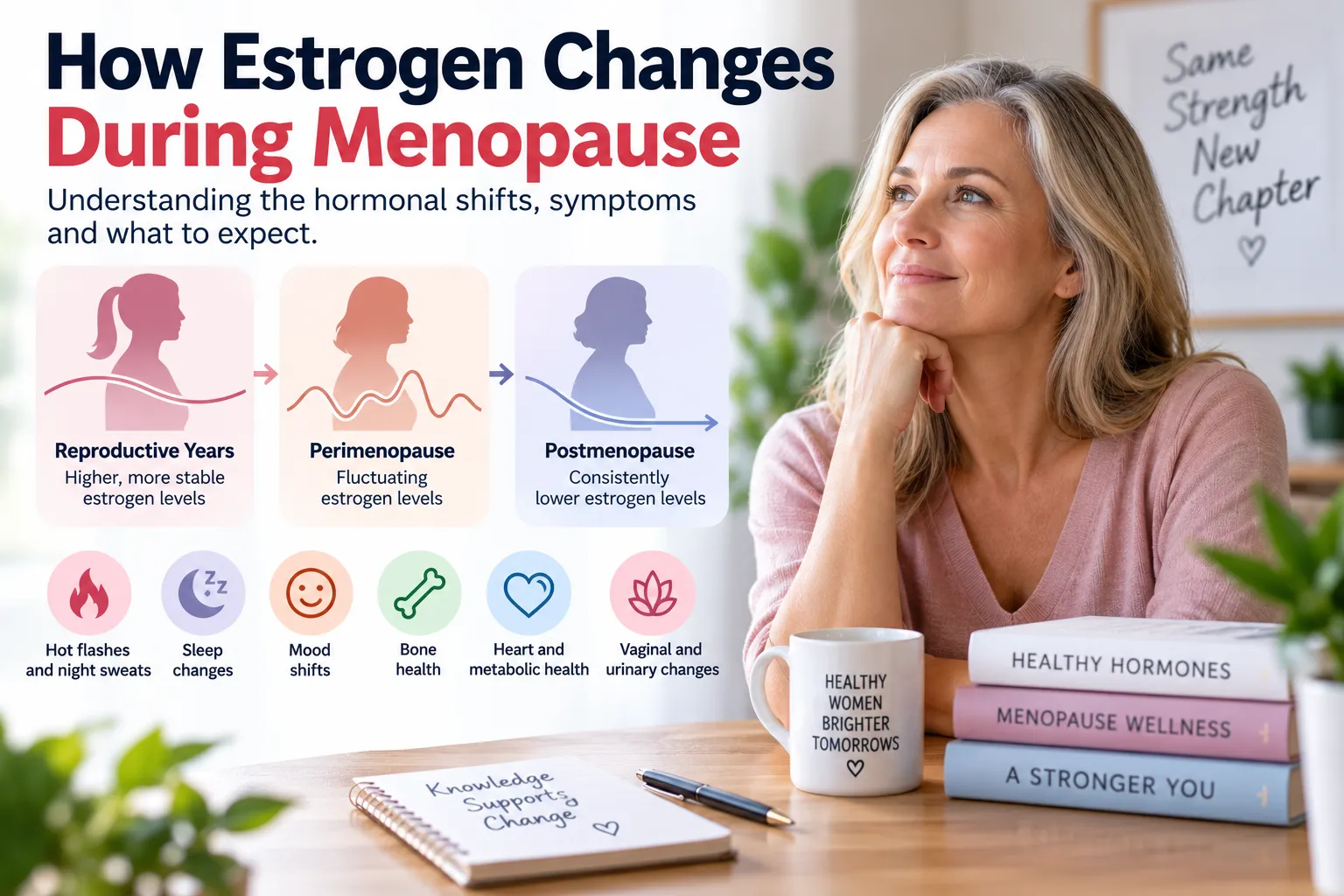
How Estrogen Changes During Menopause
Understanding how estrogen changes can make many of the physical and emotional changes associated with this stage of life easier to recognize and discuss with a healthcare professional.
Read article

Join 10,000+ Readers Building Healthier Habits
Get actionable wellness tips every week plus our newest articles delivered straight to your inbox.