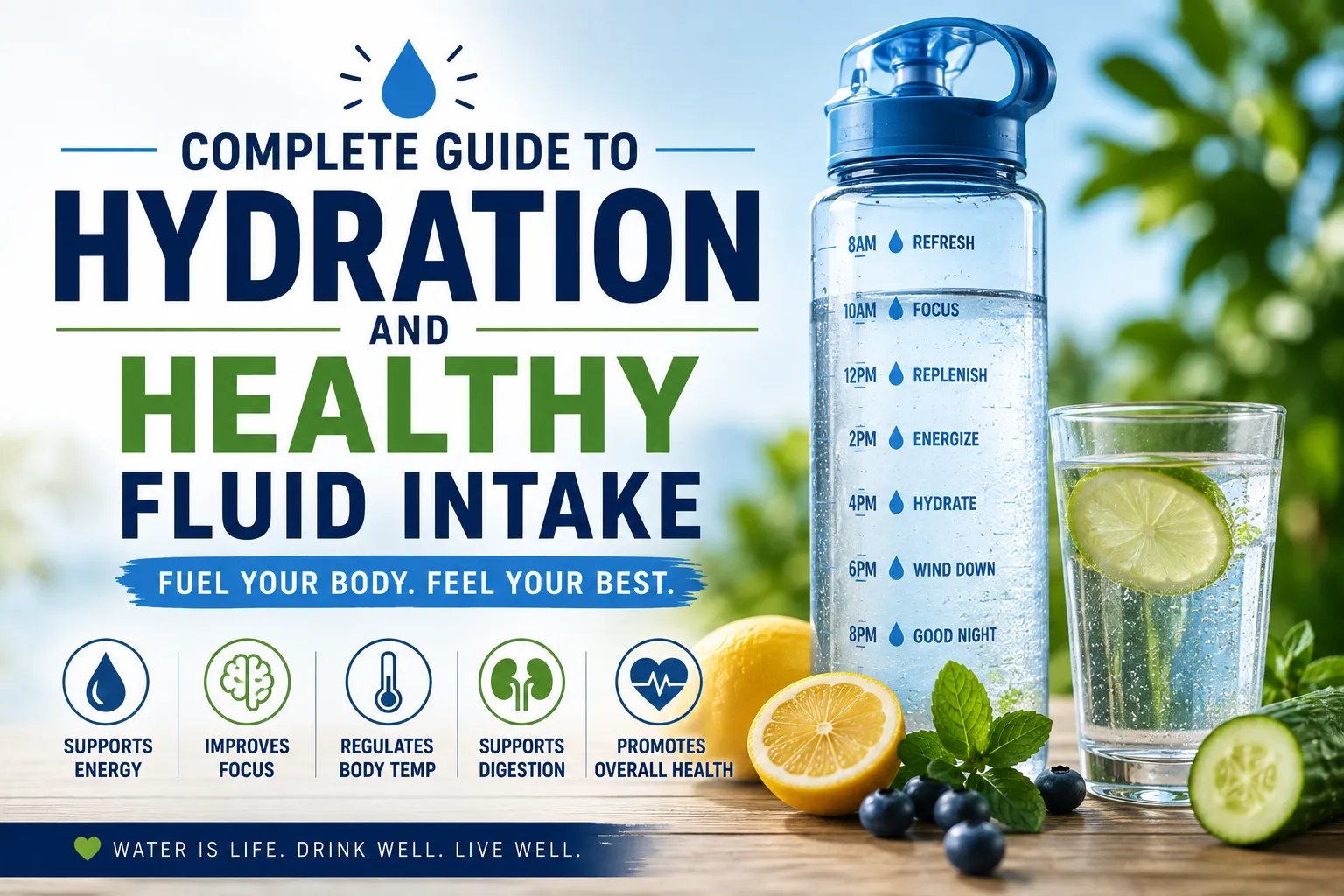

Complete Guide to Hydration and Healthy Fluid Intake
Water is easy to overlook because drinking it is such a routine part of everyday life. Yet adequate hydration is essential for the body to function properly, from regulating temperature and supporting circulation to helping the kidneys remove waste.
While the familiar advice to “drink eight glasses of water a day” can be a useful reminder, there is no single amount that works for everyone. Fluid needs vary according to factors such as age, body size, physical activity, climate, illness and pregnancy.
Understanding how hydration works—and recognizing when your body needs more fluids—can make it easier to maintain healthy fluid intake without becoming overly focused on a specific daily number.
What Is Hydration?
Hydration refers to maintaining an appropriate amount of water and other fluids in the body.
Water is the body’s largest single component and plays an important role in cellular processes, transporting substances through the body, regulating temperature and removing waste.
The body continuously loses water through:
- Urination
- Sweating
- Breathing
- Bowel movements
Those losses need to be replaced through food and beverages.
Hydration is therefore not something that happens only when you drink a glass of water. It is an ongoing balance between the fluids your body takes in and the fluids it loses.
Why Does the Body Need Water?
Water supports many essential functions.
Regulating Body Temperature
When the body becomes warm, sweating helps release heat from the skin. That process involves fluid loss, making adequate fluid intake particularly important during hot weather and physical activity.
Supporting Blood Circulation
Water contributes to the fluid environment in which blood and other body fluids operate. Maintaining adequate body water helps support normal circulation and delivery of nutrients to tissues.
Removing Waste
The kidneys use water as part of the process of producing urine and removing waste from the body. Water is also involved in normal bowel function.
Supporting Digestion
Water is involved in digestive processes and can help soften stool. Drinking water with meals does not interfere with normal digestion.
Supporting Physical and Mental Function
Even relatively modest fluid deficits can affect how a person feels and performs. Dehydration may contribute to tiredness, dizziness, headaches and difficulty performing physical activities.
How Much Water Should You Drink?
There is no universal daily water target that applies equally to every person.
The National Academies’ reference values for healthy adults estimate adequate total water intake at about 3.7 liters per day for men and 2.7 liters per day for women. Importantly, these figures refer to total water from all sources, including drinking water, other beverages and water contained in food.
Healthy adults may obtain adequate hydration from roughly 2.7 to 3.7 liters of total fluid per day, although individual needs can vary substantially.
These numbers should not be interpreted as rigid requirements.
Someone exercising heavily in hot weather may need substantially more fluid than someone spending the day indoors in a cool environment. Conversely, certain medical conditions may require fluid restrictions.
Does Food Count Toward Hydration?
Yes.
Hydration does not come exclusively from beverages. Foods contain water, and water from food contributes to total water intake.
Fruits and vegetables can contain particularly large amounts of water. Examples include:
- Watermelon
- Strawberries
- Cantaloupe
- Cabbage
- Squash
- Cucumbers
- Tomatoes
- Oranges
Eating a varied diet can therefore contribute meaningfully to daily fluid intake.
Is Water the Best Drink for Hydration?
For most people, plain water is an excellent everyday choice.
It provides fluid without added sugar or calories, making it a practical replacement for many sugar-sweetened drinks.
However, water is not the only beverage that contributes to hydration.
Milk, tea, coffee and other beverages also contribute fluid. The nutritional quality of those drinks is a separate consideration. A beverage can contribute to hydration while also containing significant amounts of sugar, calories or sodium.
For everyday hydration, choosing water frequently can make it easier to keep fluid intake high without adding unnecessary calories.
How to Recognize Dehydration
Dehydration occurs when the body loses more fluid than it takes in.
Common signs in adults can include:
- Increased thirst
- Dark-colored urine
- Urinating less frequently
- Fatigue
- Dizziness
- Headache
- Confusion in more serious cases
Thirst can be useful, but it is not always a reliable early warning sign. Older adults, in particular, may not feel thirsty until dehydration has already developed.
Urine color can also provide a practical clue. Light-colored urine generally suggests adequate hydration, while dark urine can be a sign that more fluids may be needed.
These signs are not diagnostic on their own, however, because urine color and frequency can be affected by factors other than hydration.
When Do You Need More Fluids?
Your fluid requirements can increase when you lose more water than usual.
During Exercise
Physical activity increases fluid loss through sweating.
Drinking before, during and after exercise can help replace fluids lost through physical activity. The amount required depends on exercise intensity, duration, temperature and individual sweat rate.
In Hot or Humid Weather
Heat and humidity can increase sweating, which can increase fluid requirements.
People working or exercising outdoors may need to pay particular attention to regular fluid intake.
During Illness
Vomiting, diarrhea and fever can cause significant fluid losses.
Mild dehydration may sometimes be managed by increasing fluid intake, but illness accompanied by substantial fluid loss can require medical advice or oral rehydration solutions, depending on the situation.
During Pregnancy and Breastfeeding
Fluid requirements can change during pregnancy and breastfeeding. People in these stages should discuss individual hydration needs with their healthcare professionals when necessary.
Hydration and Exercise
Athletes and physically active people have different hydration considerations from sedentary individuals.
Sweating causes the body to lose both water and electrolytes. For shorter or less intense activities, ordinary water is often sufficient.
Long-duration or strenuous exercise, particularly in hot conditions, can create greater fluid and electrolyte losses. In some circumstances, drinks containing electrolytes and carbohydrates can be useful.
The goal should not be to consume as much water as possible.
Drinking excessive amounts of water during prolonged exercise can dilute sodium levels in the blood, causing a potentially dangerous condition called hyponatremia.
What Are Electrolytes?
Electrolytes are minerals that carry electrical charges in body fluids.
Important electrolytes include:
- Sodium
- Potassium
- Chloride
- Calcium
- Magnesium
They contribute to processes including fluid balance, nerve signaling and muscle function.
For most everyday activities, a balanced diet and ordinary fluids can provide electrolytes without requiring specialized sports drinks.
Electrolyte replacement becomes more relevant when fluid and mineral losses are unusually high, such as during prolonged strenuous exercise or certain illnesses.
Water, Coffee and Tea: Do They Count?
Yes.
Coffee and tea contribute to total fluid intake. The idea that caffeinated beverages automatically cause enough fluid loss to cancel out their hydration contribution is misleading for ordinary consumption.
The bigger consideration is what else is in the beverage.
A plain or lightly prepared drink may fit easily into a healthy diet, while heavily sweetened beverages can add substantial amounts of sugar and calories.
How to Drink More Water Naturally
People who struggle to drink enough fluids do not necessarily need complicated strategies.
Keep Water Accessible
Having a reusable bottle nearby can make drinking water more convenient.
Drink With Meals
A glass of water with meals is an easy way to add fluids throughout the day.
Add Natural Flavor
Some people find plain water easier to drink when it is flavored with ingredients such as:
- Lemon
- Lime
- Mint
- Cucumber
- Berries
- Orange slices
Eat More Water-Rich Foods
Including fruits and vegetables in meals and snacks can contribute to overall fluid intake.
Drink Around Exercise
Having fluids available before, during and after physical activity can help replace water lost through sweating.
Common Hydration Mistakes
Following the Eight-Glasses Rule Too Rigidly
Eight glasses can be a convenient reminder, but it is not a scientifically precise requirement for every individual.
Fluid needs vary considerably.
Waiting Until You Are Extremely Thirsty
Thirst can be a useful signal, but it may become less reliable with age or during certain situations.
Ignoring Hot Weather
People can lose significantly more water through sweating in hot or humid conditions.
Assuming Every Sports Drink Is Necessary
Sports drinks can have a role during prolonged strenuous activity, but they are not automatically required for ordinary daily hydration.
Drinking Excessive Amounts of Water
More water is not always better.
Excessive water consumption can lower blood sodium to dangerous levels, particularly under certain exercise conditions.
Can You Drink Too Much Water?
Yes.
Although excessive water intake is uncommon in healthy adults, drinking very large amounts can overwhelm the kidneys’ ability to remove excess water.
This can cause sodium levels in the blood to fall too low, a condition known as hyponatremia. Severe hyponatremia can be life-threatening.
This is one reason hydration should be approached as a balance rather than a competition to consume the largest possible amount of water.
Who Needs to Be Especially Careful About Hydration?
Certain groups have a higher risk of dehydration or may need individualized fluid guidance.
These include:
- Infants and young children
- Older adults
- People exercising heavily
- People working in hot environments
- People experiencing vomiting or diarrhea
- People with certain chronic health conditions
- People taking medications that affect fluid balance
Older adults may be particularly vulnerable because thirst can become less noticeable with age.
At the same time, some people with heart, kidney or liver disease may be advised to limit fluid intake rather than increase it. Anyone with such a condition should follow individualized guidance from their healthcare team.
When Dehydration Requires Medical Attention
Mild dehydration can often improve when a person replaces lost fluids.
Severe dehydration, however, can become a medical emergency.
Seek prompt medical attention when dehydration is accompanied by serious symptoms such as significant confusion, inability to keep fluids down, severe weakness or other concerning changes. Severe dehydration may require medical treatment and intravenous fluids.
Children, older adults and people with significant medical conditions may require particular caution.
A Practical Daily Hydration Routine
Instead of obsessing over one exact number, a simple routine can help:
Morning: Drink water after waking and with breakfast.
During the day: Keep water accessible and drink regularly.
With meals: Choose water frequently instead of sugar-sweetened beverages.
Before and during activity: Increase fluid intake when exercise or heat increases water loss.
After exercise: Replace fluids lost through sweating.
During illness: Pay closer attention to fluid losses from fever, vomiting or diarrhea and seek medical guidance when symptoms are significant.
This approach is flexible enough to accommodate changing conditions.
Hydration Is About Balance, Not Just Water
Healthy hydration is more nuanced than simply trying to drink a fixed number of glasses every day.
The body constantly loses water and replaces it through beverages and food. Individual needs change with activity, temperature, age, health status and other circumstances.
For most healthy people, water should form a major part of everyday fluid intake, while water-rich foods and other appropriate beverages can contribute as well.
Hydration also fits into the broader picture of healthy living, alongside nutrition, physical activity, sleep, hygiene and other everyday habits. For that wider perspective, see what healthy living is and what it includes.
Good hydration habits should focus on responding to your body’s changing needs rather than treating hydration as a rigid daily target. And when illness, strenuous exercise, extreme heat or a medical condition changes those needs, individualized professional advice becomes especially important.
Health note: This article is general educational information, not individualized medical advice. People with kidney, heart, liver or other conditions that affect fluid balance should follow their clinician’s guidance rather than applying general hydration targets.
Continue Reading
Similar Posts

How Your Environment Affects Everyday Health
Understanding these connections can help people make practical changes that support healthier daily living.
Read article
How Aerobic Exercise Supports Cardiovascular Health
Understanding how aerobic exercise affects cardiovascular health can make it easier to choose activities that are enjoyable, sustainable, and appropriate for your fitness level.
Read article
What Is the Gut Microbiome and Why Does It Matter
Understanding how this ecosystem works can make it easier to understand why diet, lifestyle, medications, and other factors can influence digestive health.
Read article

Join 10,000+ Readers Building Healthier Habits
Get actionable wellness tips every week plus our newest articles delivered straight to your inbox.