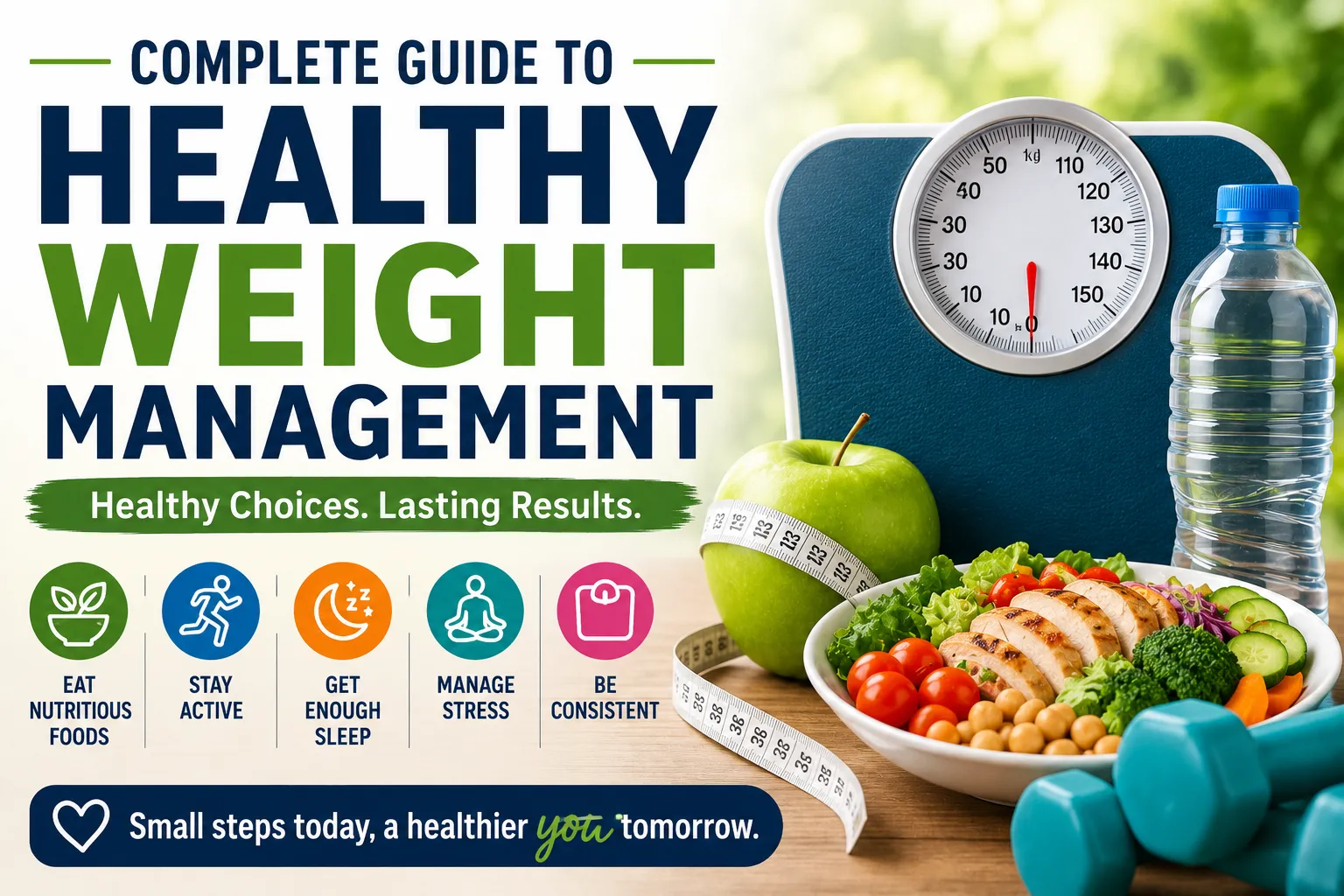

Complete Guide to Healthy Weight Management
Healthy weight management is about much more than trying to reach a particular number on a scale. A sustainable approach combines nutritious eating, regular physical activity, adequate sleep, realistic goals, stress management and habits that can fit into everyday life.
Weight is influenced by many factors, including eating patterns, activity, genetics, sleep, medications, health conditions, environment and socioeconomic circumstances. That means there is no single diet, exercise routine or target weight that works for everyone.
The most useful goal is usually not rapid weight loss. It is developing habits that support health and can be maintained over the long term.
Health note: This article provides general health information, not individualized medical advice. People who are pregnant, have an eating disorder, have a chronic medical condition, take medicines that affect weight, or are considering weight-loss medication or surgery should discuss appropriate options with a qualified healthcare professional.
What Is Healthy Weight Management?
Healthy weight management means maintaining, gaining or losing weight in a way that supports overall health rather than focusing exclusively on appearance.
For someone carrying excess weight, even relatively modest weight loss can sometimes improve health outcomes. An initial goal of around 5% of starting body weight over six months can be reasonable for some people who need to lose weight.
For example, someone weighing 100 kg would have a 5% goal of approximately 5 kg.
However, the appropriate goal varies between individuals.
Why Weight Management Matters
Excess body weight can be associated with an increased risk of several health conditions, including:
- Type 2 diabetes
- Cardiovascular disease
- Stroke
- Certain cancers
- Fatty liver disease
- Kidney disease
- Musculoskeletal problems
Obesity is a chronic, relapsing disease influenced by complex interactions involving genetics, biology, eating behavior, access to food, the environment and broader social and economic factors.
This is important because weight should not be treated simply as a matter of willpower.
For a broader look at how blood sugar disorders develop and how lifestyle and other factors can influence risk, see the complete guide to diabetes prevention and risk.
Understanding Your Healthy Weight
There is no single weight that is automatically healthy for every person.
Healthcare professionals may consider several factors, including:
- Height
- Weight
- Age
- Body composition
- Waist circumference
- Medical history
- Family history
- Blood pressure
- Blood glucose
- Cholesterol
- Physical activity
- Existing health conditions
What Is BMI?
Body mass index (BMI) is calculated using height and weight.
For adults, it can be useful as a screening measure, but it does not directly measure body fat.
For example, someone with substantial muscle mass may have a relatively high BMI without having excessive body fat.
BMI should therefore be interpreted alongside other health information rather than treated as a complete assessment of someone’s health.
Why Waist Size Can Matter
Where the body stores fat can also be relevant.
Excess fat around the abdomen is associated with higher risks of some weight-related health problems. Waist circumference can be considered alongside BMI when assessing health risks.
This is one reason why simply watching the number on the scale may not provide the complete picture.
Healthy Eating for Weight Management
A sustainable eating pattern should provide the nutrients your body needs while supporting an appropriate energy balance.
A healthy diet emphasizes adequacy, balance, moderation and diversity, along with a variety of minimally processed and unprocessed foods while limiting foods high in unhealthy fats, free sugars and sodium.
A practical eating pattern can include:
- Vegetables
- Fruits
- Whole grains
- Beans and other legumes
- Nuts and seeds
- Lean or minimally processed protein sources
- Appropriate amounts of healthy fats
- Water and other suitable beverages
The precise combination can vary according to culture, preferences, budget, availability and individual nutritional needs.
For a deeper look at the role physical activity can play in managing body weight, see exercise for weight management.
Focus on Food Quality, Not Just Calories
Calories are relevant to body weight, but nutrition involves more than calorie counting.
Two foods can contain similar amounts of energy while providing very different amounts of:
- Fiber
- Protein
- Vitamins
- Minerals
- Healthy fats
- Added sugars
- Sodium
Building meals around nutrient-dense foods can make it easier to support overall health while managing energy intake.
Increase Fruits and Vegetables
Fruits and vegetables provide important nutrients and dietary fiber.
A simple approach is to make vegetables or other nutrient-rich plant foods a regular part of meals.
Examples include:
- Leafy greens
- Tomatoes
- Carrots
- Cabbage
- Peppers
- Broccoli
- Green beans
- Pumpkin
- Bananas
- Oranges
- Apples
- Berries
Fresh, frozen or appropriately prepared options can all contribute to a healthy eating pattern.
Choose Whole Grains More Often
Whole grains generally contain more of the grain’s original components than refined grains.
Examples include:
- Oats
- Brown rice
- Whole-grain bread
- Whole-grain pasta
- Millet
- Sorghum
- Whole maize
- Barley
Choosing whole grains more often can increase dietary fiber intake.
Include Protein-Rich Foods
Protein contributes to many important functions in the body and can help make meals satisfying.
Depending on dietary preferences, protein sources can include:
- Beans
- Lentils
- Peas
- Eggs
- Fish
- Poultry
- Lean meats
- Milk
- Yogurt
- Nuts
- Seeds
- Soy foods
The best choices depend on individual nutritional needs and preferences.
Pay Attention to Portion Sizes
Healthy foods can still contribute substantial energy when consumed in very large quantities.
Portion awareness does not require weighing every meal.
Useful strategies include:
- Serving food onto a plate rather than eating directly from a large package
- Eating slowly
- Paying attention to hunger and fullness
- Using appropriately sized dishes
- Planning meals ahead
- Avoiding unnecessary second portions
Keeping food and beverage portions in check can help people reach or maintain a healthy weight.
Be Mindful of Liquid Calories
Some drinks can contribute substantial amounts of energy without providing the same level of fullness as solid foods.
These may include:
- Sugary soft drinks
- Sweetened juices
- Energy drinks
- Sweetened coffee beverages
- Some flavored drinks
Water is a simple option for staying hydrated without adding calories.
This does not mean every sweetened drink must be eliminated. The overall eating pattern matters more than treating individual foods as forbidden.
Reduce Excess Added Sugar
A diet high in free sugars can make it harder to maintain a healthy eating pattern.
Common sources include:
- Sugary beverages
- Sweets
- Cakes
- Cookies
- Desserts
- Sweetened breakfast products
Rather than relying on complete restriction, many people find it more sustainable to reduce how frequently and how much of these foods they consume.
Fiber and Healthy Weight Management
Fiber is found naturally in foods such as:
- Vegetables
- Fruits
- Beans
- Lentils
- Whole grains
- Nuts
- Seeds
High-fiber foods can contribute to fullness and are an important part of a nutritious eating pattern.
Increasing fiber gradually while drinking adequate fluids can make dietary changes more comfortable.
Physical Activity and Weight Management
Exercise is important for health whether or not someone needs to lose weight.
Regular physical activity can support:
- Cardiovascular health
- Muscle strength
- Bone health
- Mobility
- Mental well-being
- Blood-sugar regulation
- Long-term weight maintenance
Adults generally benefit from aiming for 150–300 minutes of moderate-intensity aerobic activity per week, or 75–150 minutes of vigorous activity, or an equivalent combination. Adults should also perform muscle-strengthening activities involving major muscle groups on at least two days per week.
Different approaches to exercise may work for different people. Research has explored whether combining aerobic and strength-based activity can offer particular benefits for metabolic health, including combining cardio and strength training for diabetes prevention.
You Do Not Have to Become a Gym Regular
Physical activity can take many forms.
Examples include:
- Brisk walking
- Cycling
- Dancing
- Swimming
- Hiking
- Running
- Sports
- Gardening
- Active household tasks
Physical activity can come from work, transportation, household tasks, sport and recreation.
The best activity is often one you enjoy enough to continue doing.
Start Slowly
If you have been inactive, suddenly attempting intense exercise can make injury or burnout more likely.
A gradual approach may be more sustainable.
For example:
Week 1: Take short walks several times during the week.
Week 2: Increase walking duration.
Week 3: Add another active day.
Later: Gradually introduce faster walking, cycling, jogging or strength exercises if appropriate.
Increasing activity progressively rather than making large changes immediately can make a new routine easier to maintain.
Strength Training Matters
Weight management is not only about burning calories.
Resistance or strength training can help maintain and build muscle while supporting strength and physical function.
Examples include:
- Bodyweight squats
- Push-ups
- Resistance bands
- Free weights
- Weight machines
- Functional strength exercises
Beginners should start at an appropriate level and increase difficulty gradually.
Sleep and Weight Management
Sleep is an important part of overall health and can influence behaviors related to food, activity and recovery.
Poor sleep can make it more difficult to maintain healthy routines.
A practical sleep routine can include:
- Keeping a consistent bedtime
- Limiting unnecessary late-night screen use
- Creating a comfortable sleeping environment
- Avoiding excessive caffeine late in the day
- Allowing enough time for sleep
People who consistently have difficulty sleeping should consider discussing the problem with a healthcare professional.
Stress and Weight Management
Stress can affect eating behavior, sleep and activity.
Some people eat less when stressed, while others experience increased cravings or emotional eating.
Healthy stress-management strategies can include:
- Walking
- Exercise
- Relaxation techniques
- Social connection
- Hobbies
- Journaling
- Spending time outdoors
- Structured routines
- Professional support when needed
Managing stress is not simply a weight-loss technique. It is part of maintaining overall well-being.
What Is Emotional Eating?
Emotional eating occurs when someone eats in response to emotions rather than primarily because of physical hunger.
Triggers can include:
- Stress
- Boredom
- Loneliness
- Sadness
- Anger
- Anxiety
- Fatigue
Occasional emotional eating is common. However, frequent episodes that feel uncontrollable or cause significant distress may warrant professional support.
Avoid Extreme Diets
Rapid weight-loss programs often promise dramatic results in a short period.
Be cautious of programs that:
- Promise effortless weight loss
- Guarantee a specific amount of weight loss
- Require severe food restriction
- Eliminate entire food groups without a clear medical reason
- Promote unregulated supplements
- Depend on expensive proprietary products
- Claim that exercise or healthy eating is unnecessary
- Use before-and-after images as their main evidence
Look for programs that support sustainable eating and physical-activity habits, provide ongoing support and use gradual weight-loss goals.
Why Rapid Weight Loss Can Be Problematic
Losing weight very quickly is not necessarily better.
Extreme restriction can be difficult to sustain and may increase the likelihood of regaining weight.
It can also make it harder to obtain adequate nutrition and maintain muscle mass.
A gradual approach is generally more compatible with building habits that can continue after an initial weight-loss period.
Set Realistic Weight Goals
A useful goal should be:
- Specific
- Measurable
- Realistic
- Relevant to your health
- Time-aware
Instead of:
“I want to get thin.”
A more useful goal might be:
“I will walk for 30 minutes five days a week.”
Or:
“I will include vegetables with lunch and dinner most days.”
Behavioral goals are often easier to control than a specific number on a scale.
Track More Than Your Weight
The scale is only one measurement.
Other indicators can include:
- Waist measurement
- Fitness level
- Walking ability
- Strength
- Energy levels
- Blood pressure
- Blood glucose
- Sleep quality
- Food habits
- Exercise consistency
Weight can fluctuate naturally because of factors such as hydration, food intake and other short-term changes.
Looking at longer-term trends can provide a more useful picture.
Weight Maintenance Is Part of the Process
Reaching a target weight does not mean the work is finished.
Weight maintenance involves continuing the behaviors that support your health.
These may include:
- Regular activity
- Balanced meals
- Portion awareness
- Adequate sleep
- Stress management
- Periodic self-monitoring
Long-term habits are an important part of maintaining weight and supporting overall health.
What If You Regain Some Weight?
Weight regain does not necessarily mean you have failed.
Body weight can change over time due to:
- Lifestyle changes
- Stress
- Illness
- Medication
- Aging
- Changes in activity
- Changes in food access
- Other biological factors
Instead of abandoning your efforts, examine what changed and identify one or two habits to rebuild.
Weight Management Across Different Life Stages
Weight needs and nutritional requirements change throughout life.
Young Adults
Building healthy eating, activity and sleep habits early can create a strong foundation.
Middle Adulthood
Changes in activity, work patterns and body composition can affect weight management.
Older Adults
Maintaining muscle strength, mobility and adequate nutrition becomes particularly important.
Older adults should avoid aggressive calorie restriction without appropriate professional guidance because preserving muscle and nutritional status matters.
Healthy Weight Management for Families
Healthy habits are easier to maintain when the household environment supports them.
Families can:
- Eat meals together when possible
- Keep nutritious foods readily available
- Encourage active recreation
- Limit excessive sugary drinks
- Make movement a normal part of daily life
- Avoid shaming people about weight
Children should not be placed on restrictive weight-loss diets without appropriate professional guidance.
Weight Management and Mental Health
Weight and mental health can influence each other.
Body-image concerns, weight stigma and repeated dieting can contribute to emotional distress.
A healthy approach should avoid:
- Shame
- Extreme restriction
- Constant weighing
- Negative self-talk
- Comparing your body with others
- Treating weight as a measure of personal worth
Health is broader than appearance.
Be Careful With Weight-Loss Supplements
“Natural” does not automatically mean safe.
Weight-loss supplements can contain ingredients that have side effects, interact with medications or have limited evidence of effectiveness.
Be particularly cautious of products promising:
- Rapid fat burning
- Effortless weight loss
- “Detox” effects
- Permanent appetite suppression
- Dramatic results without diet or exercise
Discuss supplements with a qualified healthcare professional before using them, particularly if you take medication or have an existing health condition.
When Medication May Be Appropriate
Lifestyle changes are an important part of weight management, but they are not the only treatment available.
For some people with overweight or obesity, healthcare professionals may consider prescription weight-management medicines based on factors such as health status, weight-related conditions and previous treatment attempts.
Weight-loss medicines and bariatric surgery can be useful for some people alongside lifestyle changes.
These treatments should be discussed with an appropriately qualified healthcare professional rather than self-prescribed.
Weight-Loss Surgery
Bariatric or metabolic surgery can be an option for some people with obesity.
It is a medical treatment, not a cosmetic shortcut.
Potential benefits and risks vary depending on the procedure and individual circumstances.
Anyone considering surgery should discuss:
- Eligibility
- Expected benefits
- Potential complications
- Nutritional requirements
- Long-term follow-up
- Lifestyle changes after surgery
with a qualified healthcare team.
When to Seek Professional Guidance
Consider speaking with a healthcare professional if:
- You have unexplained weight changes.
- You have difficulty losing or maintaining weight despite consistent efforts.
- You have diabetes or prediabetes.
- You have high blood pressure.
- You have symptoms of another medical condition.
- You take medications that may affect weight.
- You are considering weight-loss medication.
- You are considering bariatric surgery.
- Eating or weight concerns are causing significant emotional distress.
A healthcare professional can help determine whether an underlying medical or psychological issue needs attention.
A Practical Daily Weight-Management Framework
A sustainable routine might look something like this:
Morning
- Eat a nutritious breakfast if it fits your preferences.
- Drink water.
- Include some movement where practical.
During the Day
- Build meals around nutrient-rich foods.
- Pay attention to portions.
- Take opportunities to walk or move.
- Avoid prolonged sitting where possible.
Exercise
Aim toward the recommended weekly activity levels gradually.
Include both aerobic activity and strength training.
For people who find traditional long workouts difficult to fit into their schedules, shorter sessions may still provide useful opportunities to build activity into the week. Research has examined questions such as whether one workout a week can provide meaningful fitness benefits.
Evening
- Eat a balanced meal.
- Avoid unnecessary late-night snacking.
- Begin winding down before bedtime.
Weekly
Review your habits rather than judging yourself solely by your weight.
Ask:
What worked this week?
What made healthy choices difficult?
What small change can I make next week?
A Simple Healthy Weight Management Checklist
| Area | Practical Goal |
|---|---|
| Food | Eat a varied, nutrient-rich diet |
| Portions | Pay attention to serving sizes |
| Vegetables | Include them regularly |
| Fruit | Make fruit part of a balanced diet |
| Protein | Include appropriate protein sources |
| Whole grains | Choose them regularly where suitable |
| Drinks | Favor water and limit sugary drinks |
| Activity | Build toward 150–300 minutes of moderate activity weekly |
| Strength | Include muscle-strengthening activity at least twice weekly |
| Sleep | Maintain a consistent, adequate sleep routine |
| Stress | Use healthy coping strategies |
| Monitoring | Track useful habits and longer-term trends |
| Support | Seek professional guidance when needed |
Common Weight-Management Mistakes
Focusing Only on the Scale
Health cannot be reduced to one number.
Making Changes Too Quickly
Extreme routines can be difficult to maintain.
Eliminating Entire Food Groups Without Reason
Unnecessary restrictions can make a diet harder to sustain.
Exercising Only to Burn Calories
Physical activity provides benefits far beyond weight control.
Ignoring Sleep
Recovery and sleep are important parts of a healthy lifestyle.
Underestimating Drinks and Snacks
Small additions can accumulate over time.
Expecting Perfect Consistency
Occasional setbacks are normal.
Comparing Your Progress With Someone Else
Bodies, circumstances and starting points differ.
How to Make Healthy Habits Sustainable
The best plan is usually one that fits your actual life.
If you dislike running, you do not have to become a runner.
If you enjoy traditional foods from your culture, there is usually no reason to abandon them simply because a diet trend recommends something else.
Instead, look for practical improvements:
- Adjust portions
- Add more vegetables
- Choose whole grains more often
- Reduce sugary drinks
- Increase daily movement
- Improve sleep
- Prepare meals at home more often when practical
Small changes that become routine can be more valuable than ambitious plans that last only a few weeks.
Building a Healthier Relationship With Weight
Healthy weight management is best understood as a long-term health practice rather than a short-term diet.
A nutritious and varied eating pattern, regular movement, strength training, adequate sleep, stress management and realistic goals can provide a sustainable foundation.
Some people may also benefit from shorter, more intense forms of exercise. For example, research has examined whether once-a-week HIIT may help reduce body fat and whether short sprints can deliver major exercise benefits. These approaches do not replace the broader goal of developing a sustainable activity pattern, but they illustrate why exercise does not have to look the same for everyone.
Intermittent fasting is another approach that some people consider for weight or metabolic health. However, dietary strategies can affect blood sugar differently depending on the individual and the type of diabetes involved. Research into intermittent fasting and blood sugar control in type 1 diabetes highlights why people with diabetes should discuss significant dietary changes with an appropriate healthcare professional.
For people who need to lose weight, even an initial reduction of around 5% of starting body weight may be a meaningful health goal, although individual targets should be discussed with a healthcare professional.
Most importantly, weight does not determine a person’s value. The goal is not to pursue an ideal appearance at any cost. It is to build habits that support physical health, mental well-being, mobility, energy and quality of life over the long term.
Continue Reading
Similar Posts

How Your Environment Affects Everyday Health
Understanding these connections can help people make practical changes that support healthier daily living.
Read article
How Aerobic Exercise Supports Cardiovascular Health
Understanding how aerobic exercise affects cardiovascular health can make it easier to choose activities that are enjoyable, sustainable, and appropriate for your fitness level.
Read article
What Is the Gut Microbiome and Why Does It Matter
Understanding how this ecosystem works can make it easier to understand why diet, lifestyle, medications, and other factors can influence digestive health.
Read article

Join 10,000+ Readers Building Healthier Habits
Get actionable wellness tips every week plus our newest articles delivered straight to your inbox.