
CDC Nutrition Data Reveal How Many Americans Actually Eat Fruits and Vegetables
Americans are eating fruits and vegetables more often than one might expect, but new federal nutrition data reveal an important distinction between eating these foods at least occasionally and consuming enough of them as part of a healthy dietary pattern.
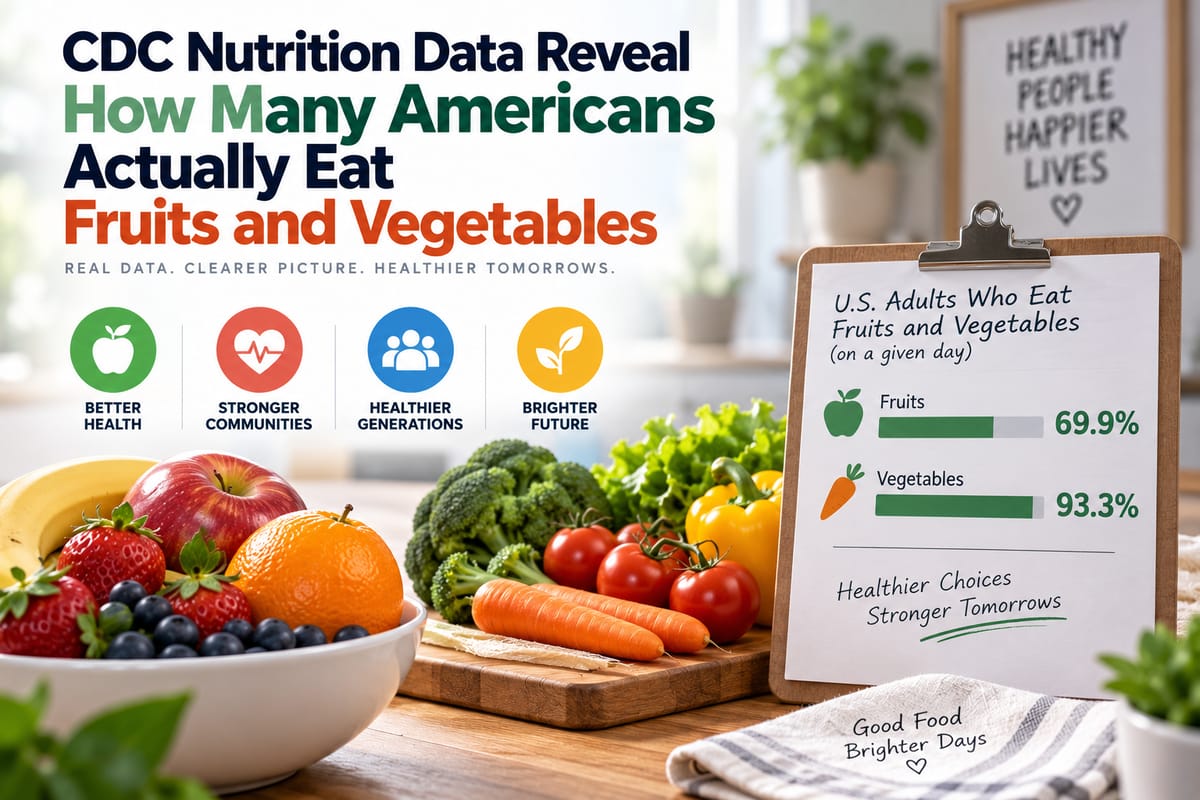
New data from the Centers for Disease Control and Prevention show that about 7 in 10 U.S. adults consumed some fruit on a given day, while more than 9 in 10 consumed some type of vegetable during the August 2021 through August 2023 period.
At first glance, those figures may seem encouraging. But they do not mean that most Americans are meeting recommended amounts of fruits and vegetables each day.
The difference matters because a person can eat a serving of fruit or vegetables without consuming the variety and quantity recommended as part of a balanced diet.
What the New CDC Data Actually Show
The latest findings come from the National Health and Nutrition Examination Survey, or NHANES, and cover adults ages 20 and older during August 2021 through August 2023.
According to the CDC’s National Center for Health Statistics, 69.9% of adults consumed some fruit on a given day. Fruit consumption was higher among women, at 73.5%, compared with 66.1% among men.
Vegetable consumption was considerably more widespread. 93.3% of adults consumed some vegetables on a given day, and the report found no meaningful difference between men and women in the overall percentage consuming vegetables.
The findings cover different categories of foods, including citrus, melons and berries, other whole fruits, dark green vegetables, red and orange vegetables, starchy vegetables and other vegetables.
That broader breakdown provides a more useful picture than simply asking whether someone ate a fruit or vegetable at some point during the day.
Eating Some Vegetables Is Not the Same as Eating Enough
One of the biggest takeaways from the data is that frequency alone does not tell the entire nutritional story.
The CDC’s latest report measures whether people consumed particular foods on a given day. It does not mean that everyone who reported eating vegetables consumed the amount recommended by federal dietary guidance.
Earlier CDC analysis illustrates the difference. Using 2019 Behavioral Risk Factor Surveillance System data, researchers estimated that only 12.3% of adults met federal fruit recommendations, while 10.0% met vegetable recommendations.
Those figures should not be directly combined with the newer NHANES percentages because the surveys, methods and measures are different. Instead, they demonstrate why “ate some” and “met the recommendation” are two different measurements.
This distinction is important when interpreting headlines about American eating habits.
Why Fruits and Vegetables Matter
Fruits and vegetables provide a wide range of nutrients, including vitamins, minerals, fiber and other compounds that contribute to a healthy dietary pattern.
The CDC notes that consuming fruits and vegetables is associated with health benefits and can help reduce the risk of several chronic diseases.
But healthy eating is not simply about adding one particular food to a meal.
A balanced dietary pattern involves a combination of foods that provide adequate nutrients while fitting a person’s energy needs, preferences and circumstances. The broader principles are explored in the Complete Guide to Healthy Eating and Balanced Nutrition.
That means someone who eats a small serving of vegetables every day may still have considerable room to improve the overall quality and variety of their diet.
Income Plays a Role in Fruit and Vegetable Consumption
The new CDC findings also highlight an important socioeconomic pattern.
Adults from higher-income families were more likely to consume fruit on a given day, including citrus, melons, berries and other whole fruits. Higher-income adults were also more likely to consume vegetables, including dark green, red and orange vegetables and other vegetable categories.
This does not mean income alone determines what someone eats. Food preferences, location, access to stores, cooking facilities, time, culture and other circumstances can all affect dietary choices.
However, the relationship between income and consumption reinforces the fact that healthy eating is not purely a matter of individual choice.
Price and availability can influence which foods are practical for households to purchase regularly.
The Cost of Healthy Food Can Be a Barrier
Fresh produce can sometimes be expensive, particularly when certain fruits and vegetables are out of season or when shoppers have limited access to affordable grocery stores.
That is one reason strategies for eating well on a budget are important.
Frozen and canned produce can provide alternatives to fresh foods, while seasonal produce, beans, lentils and other affordable ingredients can help build nutritious meals without requiring expensive specialty products.
Practical strategies for managing food costs are covered in Healthy Eating on a Limited Budget.
The goal does not have to be creating an expensive diet filled with premium health foods. A nutritious eating pattern can be built around ordinary foods that are affordable, accessible and used consistently.
Nutrient Density Matters More Than Food Labels Alone
Another issue raised by the CDC findings is the importance of considering what foods contribute nutritionally rather than simply counting how often they appear in a diet.
A diet can contain fruits and vegetables while still being relatively low in important nutrients if portions are small or food variety is limited.
Nutrient density offers another way to think about food choices. Foods that provide substantial amounts of vitamins, minerals, fiber and other beneficial components relative to their calories can make it easier to build a nutritionally adequate diet.
Understanding What Nutrient Density Means and How to Choose Nutrient-Dense Foods can help put the CDC findings into a broader context.
Rather than focusing on one “superfood,” the emphasis can be placed on variety and the overall nutritional contribution of meals.
Fruit Consumption Is More Uneven Than Vegetable Consumption
The difference between fruit and vegetable consumption is striking.
Nearly 93% of adults reported consuming some vegetables on a given day, compared with roughly 70% who consumed fruit.
The CDC also found differences in fruit consumption between men and women, with women more likely to report consuming fruit.
The gap may reflect differences in food preferences, meal patterns and other lifestyle factors, but the data alone do not establish why the differences exist.
The important point is that fruit consumption is considerably less universal than vegetable consumption in the latest national estimates.
Children Show a Similar Pattern
The CDC’s accompanying analysis of children and adolescents found that more than 7 in 10 children and teens consumed some fruit on a given day.
Among preschool-aged children, the figure was even higher, at about 91.8%, but fruit consumption declined as children got older.
About 9 in 10 children and adolescents consumed some vegetables on a given day.
The findings suggest that food habits can change considerably across childhood and adolescence. Establishing familiarity with different fruits and vegetables early in life may therefore be one part of developing healthier eating patterns.
Fiber Remains an Important Part of the Conversation
Fruits and vegetables are also important sources of dietary fiber, but they are not the only sources.
Whole grains, beans, peas, lentils, nuts and seeds can contribute substantially to fiber intake.
That becomes especially relevant as high-protein eating patterns receive increasing attention. A diet can be high in protein while still falling short on fiber if it does not contain enough plant foods.
The relationship between these priorities is explored in Protein Is Popular, But Are People Eating Enough Fiber?.
For consumers, the broader lesson is that emphasizing one nutritional goal should not automatically push other important nutrients out of the diet.
Why the CDC Numbers Need Careful Interpretation
The phrase “Americans eat fruits and vegetables” can mean several different things.
It could refer to whether someone consumed any fruit or vegetables during a particular day. It could mean whether they met federal recommendations. It could also refer to how many servings they consumed or whether their overall diet contained enough variety.
Those are different questions.
The newest NHANES data answer the first question particularly well: how many people consumed particular categories of fruits and vegetables on a given day. The older BRFSS analysis addressed whether adults met recommended intake levels.
Comparing the numbers without considering those methodological differences can create a misleading impression.
Access and Affordability Still Matter
Nutrition data also need to be considered alongside the environments in which people make food choices.
The CDC has identified access and affordability as important components of efforts to increase fruit and vegetable consumption. Its State Indicator Report examines measures related to the availability and accessibility of these foods across the United States.
A household may understand the importance of eating more produce but still face practical obstacles.
Those obstacles can include:
- Higher prices for certain foods
- Limited grocery options nearby
- Lack of transportation
- Limited refrigeration or cooking facilities
- Time constraints
- Food waste concerns
- Seasonal availability
- Competing household expenses
Addressing consumption therefore involves more than telling people to make healthier choices.
What the Data Mean for Everyday Eating
For consumers, the CDC findings offer a useful reason to look beyond simple food checklists.
Eating a banana one day, a salad the next and a small serving of vegetables with dinner does not necessarily mean someone is following an ideal dietary pattern. At the same time, someone does not need a perfect diet to make meaningful improvements.
Small changes can add up.
Adding fruit to breakfast, choosing vegetables as a side dish, including beans or lentils in meals, keeping frozen vegetables available and experimenting with different produce can all increase variety.
The emphasis should be on creating eating habits that are realistic enough to maintain.
A Bigger Picture of American Nutrition
The newest CDC data paint a more nuanced picture of American eating habits than a simple claim that people either do or do not eat fruits and vegetables.
Most adults consume some vegetables on a typical day, and about seven in ten consume some fruit. Yet earlier national analysis found that only a relatively small share of adults met recommended fruit and vegetable intake levels.
Together, those findings point to a gap between including healthy foods in the diet and consuming enough of them consistently.
That gap is likely to remain an important part of the U.S. nutrition conversation. The challenge is not simply getting Americans to eat a fruit or vegetable occasionally. It is making varied, nutritious foods affordable, accessible and practical enough to become a regular part of everyday meals.
Continue Reading
Similar Posts

Bettergoods Pasta Recalled Over Listeria Risk: What Consumers Need to Know
The recall originally covered two specific lots, but consumers should now treat the broader recall as applying to the product regardless of lot number.
Read article
GLP-1 Drugs and Nutritional Deficiencies: What New Research Says About Children
The findings do not prove that GLP-1 drugs directly caused the deficiencies. The study used administrative insurance claims rather than laboratory measurements or detailed clinical records, and the researchers themselves describe nutritional deficiencies as an under-recognized concern rather than establishing a direct causal relationship.
Read article
New Micronutrient Research Could Reshape How Experts Fight Vitamin and Mineral Deficiencies
The findings could influence how governments, nutrition organizations and food producers approach one of the world's most persistent nutrition problems.
Read article

Join 10,000+ Readers Building Healthier Habits
Get actionable wellness tips every week plus our newest articles delivered straight to your inbox.