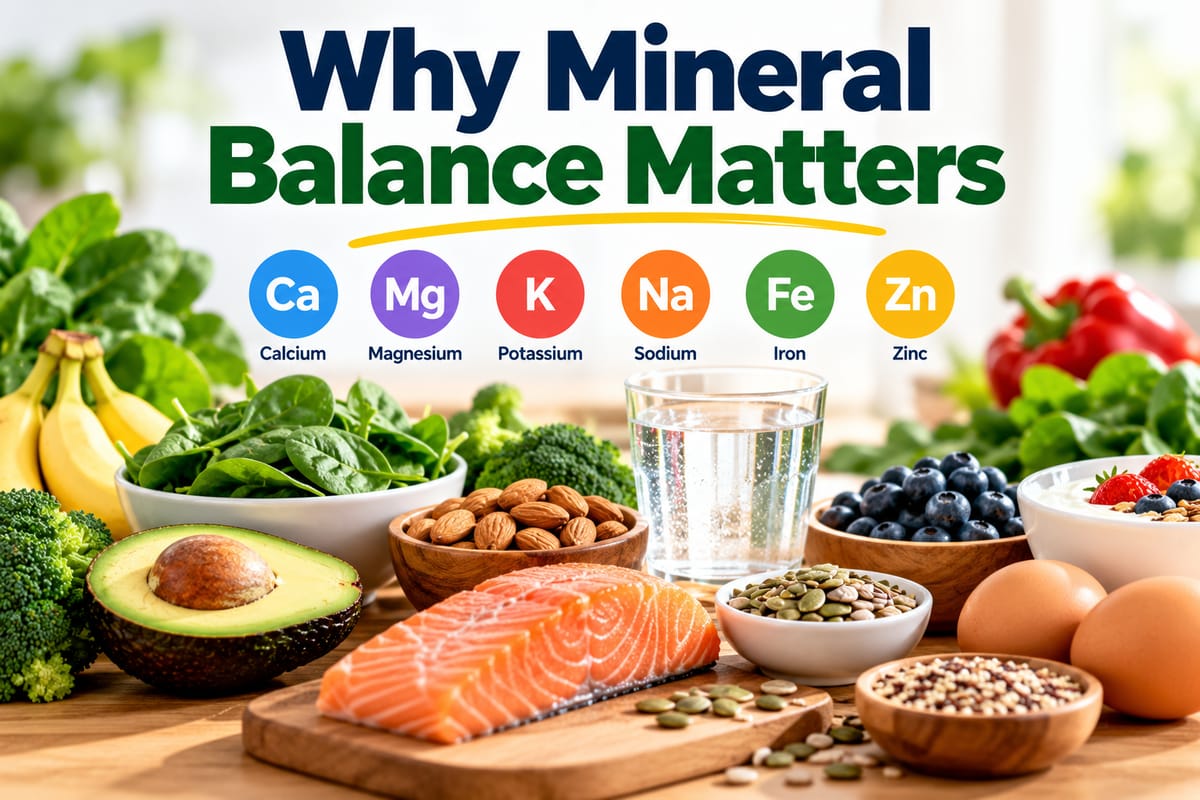

Why Mineral Balance Matters
Minerals are essential nutrients that help the body carry out many of its most basic functions. They support bones, muscles, nerves, fluid regulation, energy metabolism, blood production, and numerous chemical reactions that keep cells working properly.
But getting enough minerals is not simply about consuming as much as possible. The body needs minerals within appropriate ranges, and the balance between certain minerals can also matter. Too little of an essential mineral can cause problems, while excessive intake of some minerals can also be harmful.
This is why mineral balance is an important part of overall nutrition rather than a matter of focusing on one nutrient in isolation.
The Minerals Explained: Essential Nutrients Your Body Needs Every Day guide provides a broader look at the different minerals the body needs and the roles they play.
What Is Mineral Balance?
Mineral balance refers to maintaining appropriate amounts of essential minerals in the body.
The body regulates mineral levels through processes involving the digestive system, kidneys, hormones, bones, and other tissues. Minerals enter the body primarily through food and beverages, while excess amounts can be eliminated through urine, stool, sweat, and other pathways.
Different minerals also interact with one another.
For example, sodium and potassium both contribute to fluid and electrolyte regulation. Calcium and phosphorus are closely associated with bone structure and metabolism. Magnesium participates in numerous processes involving calcium and other nutrients.
Maintaining appropriate levels of these nutrients helps support normal physiological function.
Why Does the Body Need Minerals?
Minerals perform a wide range of functions.
Some contribute to the structure of bones and teeth, while others help regulate nerve signals, muscle contractions, fluid balance, oxygen transport, and enzyme activity.
Important minerals include:
- Calcium
- Phosphorus
- Magnesium
- Sodium
- Potassium
- Chloride
- Iron
- Zinc
- Copper
- Iodine
- Selenium
- Manganese
- Chromium
- Molybdenum
The amount needed varies considerably from one mineral to another.
Some are required in relatively large quantities and are often called major or macrominerals. Others are needed in much smaller amounts and are commonly described as trace minerals.
Calcium and Phosphorus Work Together
Calcium is widely recognized for its role in maintaining bones and teeth, but it also contributes to muscle function, nerve signaling, and other physiological processes.
Phosphorus is also important for bones and teeth and participates in energy metabolism and cell structure.
The two minerals are closely connected, particularly in skeletal health.
However, consuming excessive amounts of one mineral is not a substitute for obtaining a balanced diet containing both.
Magnesium Supports Many Body Processes
Magnesium participates in hundreds of biochemical reactions.
It contributes to normal muscle and nerve function, energy metabolism, protein production, and other cellular processes.
Good dietary sources can include nuts, seeds, legumes, whole grains, and some leafy green vegetables.
A varied diet can help provide magnesium alongside other nutrients rather than relying on a single food or supplement.
Sodium and Potassium Help Regulate Fluid Balance
Sodium and potassium are electrolytes that help regulate fluid balance and support nerve and muscle function.
Sodium is common in many foods, particularly processed and packaged foods. Potassium is found in foods such as potatoes, beans, fruits, vegetables, dairy products, and other foods depending on dietary patterns.
The two minerals have different roles but work within related physiological systems.
This is one reason overall dietary patterns are often more useful than focusing on a single mineral in isolation.
Iron and Oxygen Transport
Iron is essential for hemoglobin, the protein in red blood cells that helps transport oxygen throughout the body.
It is also involved in other biological processes.
Iron requirements can vary according to factors such as age, sex, pregnancy, and other individual circumstances.
Both insufficient and excessive iron can present problems. This is one reason taking high-dose iron supplements without an identified need may not be appropriate.
Zinc Supports Immune and Cellular Functions
Zinc contributes to normal immune function, wound healing, protein synthesis, DNA production, and other cellular processes.
It is found in foods including meat, seafood, dairy products, legumes, nuts, and seeds.
Although zinc is essential, more is not necessarily better. Excessive supplemental zinc can interfere with copper absorption and contribute to other problems.
This illustrates why mineral balance matters.
Iodine and Thyroid Function
Iodine is required for the production of thyroid hormones.
These hormones help regulate metabolism and support normal growth and development.
Iodized salt is an important dietary source of iodine in many populations, while seafood, dairy products, and some other foods can also provide it.
Both insufficient and excessive iodine intake can affect thyroid function, so supplementation should be approached carefully.
Selenium Is Needed in Small Amounts
Selenium is a trace mineral involved in antioxidant defense, thyroid hormone metabolism, and other biological functions.
Only relatively small amounts are required.
Because selenium is needed in small quantities, excessive supplementation can be problematic. Some foods, including certain nuts, seafood, meat, eggs, and grains, can provide selenium.
The concentration in plant foods can vary depending on the selenium content of the soil where they are grown.
Minerals and Hydration
Minerals are closely connected to hydration because several minerals function as electrolytes.
Sodium, potassium, chloride, magnesium, and calcium contribute to processes that help regulate fluid distribution and cellular function.
When the body loses substantial amounts of fluid through sweating, vomiting, diarrhea, or other causes, electrolyte losses can also occur.
However, most healthy people can maintain electrolyte balance through ordinary food and fluid intake.
The Complete Guide to Hydration and Healthy Fluid Intake provides broader information about fluid needs and hydration.
Why Electrolytes Matter During Exercise
Physical activity can increase fluid and electrolyte losses through sweat.
The amount of electrolyte loss varies significantly between individuals and depends on factors such as exercise intensity, duration, temperature, humidity, clothing, and individual sweat composition.
For ordinary, shorter-duration activities, regular meals and fluids are often sufficient for many people.
Long-duration or intense exercise, particularly in hot conditions, may require more deliberate attention to fluid and electrolyte replacement.
The appropriate approach depends on the circumstances rather than a universal formula.
Mineral Absorption Matters Too
Getting a mineral into the diet does not automatically mean that all of it will be absorbed.
Absorption can be influenced by the food source, digestive processes, overall diet, and interactions with other nutrients or substances.
For example, some plant foods contain compounds that can reduce the absorption of certain minerals. Food preparation and dietary combinations can influence how much of a nutrient becomes available to the body.
This is one reason nutritional adequacy is better evaluated across an overall eating pattern rather than by looking at isolated numbers.
Vitamin and Mineral Nutrition Are Connected
Minerals do not operate independently of other nutrients.
Vitamins and minerals often participate in related biological processes. Some vitamins influence the absorption or metabolism of minerals, while minerals are necessary for enzymes and reactions involved in nutrient metabolism.
For example, vitamin D plays an important role in calcium regulation and bone health.
The Complete Guide to Vitamins and Their Roles provides more information about how vitamins contribute to normal body functions.
Food Is Usually the Starting Point
A varied diet can provide many of the minerals needed for normal health.
Mineral-rich foods include:
- Leafy green vegetables
- Beans and lentils
- Nuts and seeds
- Whole grains
- Fruits
- Vegetables
- Dairy products
- Meat and poultry
- Fish and seafood
- Eggs
The best combination depends on individual dietary preferences, nutritional needs, and circumstances.
A balanced eating pattern can also provide protein, fiber, healthy fats, vitamins, and other nutrients alongside minerals.
Mineral Balance and a Balanced Diet
Mineral intake is part of a much larger nutritional picture.
A diet built around a variety of minimally processed foods can provide numerous nutrients at the same time. Fruits and vegetables contribute minerals, vitamins, fiber, and other compounds. Whole grains can provide magnesium and other nutrients. Legumes can supply minerals and plant-based protein.
The Complete Guide to Healthy Eating and Balanced Nutrition provides a broader framework for understanding how different food groups contribute to overall nutritional adequacy.
Can Mineral Deficiency Occur?
Mineral deficiencies can occur when a person’s intake is insufficient, absorption is impaired, requirements are increased, or losses are unusually high.
The risk varies by mineral and by individual.
For example, iron deficiency can occur in certain populations, while inadequate calcium or magnesium intake can also be a concern depending on dietary patterns and other factors.
Symptoms of nutritional deficiencies are not always specific. Fatigue, weakness, changes in physical performance, or other symptoms can have many possible causes.
For that reason, suspected deficiencies are best evaluated rather than assumed based on symptoms alone.
Can You Get Too Much of a Mineral?
Yes.
Although minerals are essential, excessive intake can be harmful.
High amounts may result from excessive supplementation, certain medications, fortified foods combined with supplements, or medical conditions that affect mineral metabolism.
For example, excessive supplemental iron can be dangerous, while too much zinc over time can interfere with copper status.
Some minerals can accumulate in the body more readily than others, making excessive intake particularly important to avoid.
Why Supplements Do Not Automatically Improve Mineral Balance
Mineral supplements can be useful in situations where dietary intake is insufficient or a healthcare professional has identified a specific need.
However, taking multiple supplements without considering their combined contents can increase the risk of excessive intake.
A multivitamin, mineral supplement, electrolyte product, fortified food, and individual mineral supplement could all contribute to the same nutrient.
Reading labels and considering total intake can help prevent unnecessary duplication.
Mineral Interactions Matter
Some minerals compete with or influence the absorption of other nutrients.
For example, high supplemental zinc intake can interfere with copper absorption. Calcium can also interact with the absorption of certain medications.
These relationships do not mean that people should avoid particular minerals. They demonstrate why nutrient intake should be considered within the broader context of diet, supplementation, and individual health needs.
How the Kidneys Help Maintain Mineral Balance
The kidneys play an important role in regulating the body’s internal environment.
They filter blood and help control the amounts of water and various dissolved substances that are retained or eliminated.
This includes several electrolytes and minerals.
Kidney function can therefore influence mineral balance. People with certain kidney conditions may need specific dietary or supplement recommendations because their ability to regulate particular minerals can be altered.
Mineral Balance Can Change With Life Stage
Nutritional needs are not identical throughout life.
Children and adolescents need nutrients to support growth and development. Adults have different requirements, while pregnancy and breastfeeding can increase the need for certain nutrients.
Older adults may also face changes in dietary intake, absorption, appetite, or medication use that can influence nutritional status.
This is why recommended intake levels are often presented according to age and life stage rather than as one universal target.
Physical Activity Can Influence Mineral Needs
Exercise can affect fluid and electrolyte balance, particularly when activity is prolonged or takes place in hot environments.
Sweating results in the loss of water and electrolytes, although the amount varies from person to person.
Athletes who train for long periods may therefore need to pay closer attention to hydration and electrolyte replacement than someone engaging in light daily activity.
Even in sports nutrition, however, consuming excessive amounts of electrolyte products is not automatically beneficial.
What About Mineral Water?
Mineral water naturally contains varying amounts of dissolved minerals.
Depending on the source, mineral water can contribute calcium, magnesium, sodium, and other minerals to the diet.
However, the mineral content can vary substantially between products.
Mineral water can contribute to overall intake, but it should generally be viewed as one potential dietary source rather than a replacement for a varied diet.
Reading Supplement Labels
People who use mineral supplements should pay attention to the amount provided per serving and the number of servings they consume.
Labels can also help identify whether multiple products contain the same mineral.
For example, someone taking a multivitamin, magnesium supplement, and electrolyte product may unintentionally consume more of a particular nutrient than expected.
Checking the full ingredient lists and serving sizes can make total intake easier to understand.
When Mineral Testing May Be Appropriate
Blood or other laboratory tests may be appropriate in some situations when a healthcare professional suspects a nutritional deficiency, excess, or disorder affecting mineral metabolism.
Testing is not necessarily required for everyone who wants to understand their nutritional status.
The appropriate test depends on the suspected problem, symptoms, medical history, diet, medications, and other circumstances.
Self-diagnosing a mineral deficiency and taking high-dose supplements based solely on symptoms can create unnecessary risks.
Signs That Nutrition May Need More Attention
Changes in energy, physical performance, appetite, or other aspects of health can sometimes be related to nutritional issues, but they are not specific indicators of mineral deficiency.
Persistent or unexplained symptoms should therefore not automatically be attributed to a lack of minerals.
A healthcare professional can help determine whether dietary assessment, laboratory testing, or another evaluation is appropriate.
Why Balance Is More Important Than Chasing Individual Nutrients
Nutrition can become confusing when individual nutrients are treated as isolated solutions.
One mineral may receive attention because of its connection to a particular health benefit, while another is overlooked because it receives less publicity.
The body, however, does not operate according to isolated nutrient trends.
Minerals interact with vitamins, proteins, carbohydrates, fats, water, hormones, enzymes, and other components of the diet and physiology.
A balanced eating pattern therefore provides a more useful foundation than continually adding individual supplements.
Building Better Mineral Intake Through Food
A practical approach to mineral nutrition is to increase dietary variety.
Different foods provide different combinations of nutrients. Including vegetables, fruits, legumes, whole grains, nuts, seeds, dairy or suitable alternatives, and protein-rich foods can create multiple opportunities to obtain essential minerals.
People following restricted diets may need additional planning to ensure adequate intake of particular nutrients.
For those with known deficiencies or increased requirements, targeted supplementation may be appropriate under professional guidance.
Why Mineral Balance Matters for Long-Term Nutrition
Minerals may be needed in relatively small quantities, but their roles extend across many systems of the body.
Calcium and phosphorus contribute to skeletal health. Magnesium supports numerous cellular reactions. Sodium and potassium participate in fluid and nerve regulation. Iron supports oxygen transport. Zinc contributes to immune and cellular functions. Iodine is necessary for thyroid hormone production, while selenium supports several important biological processes.
Maintaining appropriate mineral levels is therefore part of maintaining normal physiological function.
The goal is not to consume the highest possible amount of every mineral. It is to obtain appropriate amounts through a balanced diet and, when necessary, carefully selected supplementation.
Mineral balance is ultimately about meeting the body’s needs without creating unnecessary excess. A varied diet, sensible hydration, attention to food quality, and thoughtful use of supplements can all contribute to a nutritional pattern that provides essential minerals in appropriate amounts.
Continue Reading
Similar Posts

What Is Creatine and How Does It Work?
Understanding how that system works helps explain why creatine has become so closely associated with activities such as weightlifting, sprinting, and other forms of high-intensity exercise.
Read article
Why Excessive Vitamin Intake Can Be Harmful
Understanding the difference between adequate intake and excessive intake is an important part of using vitamin supplements responsibly.
Read article
How Dietary Supplements Can Cause Side Effects
Understanding why side effects happen can help people make more informed decisions about supplement use and recognize situations where professional guidance may be appropriate.
Read article

Join 10,000+ Readers Building Healthier Habits
Get actionable wellness tips every week plus our newest articles delivered straight to your inbox.