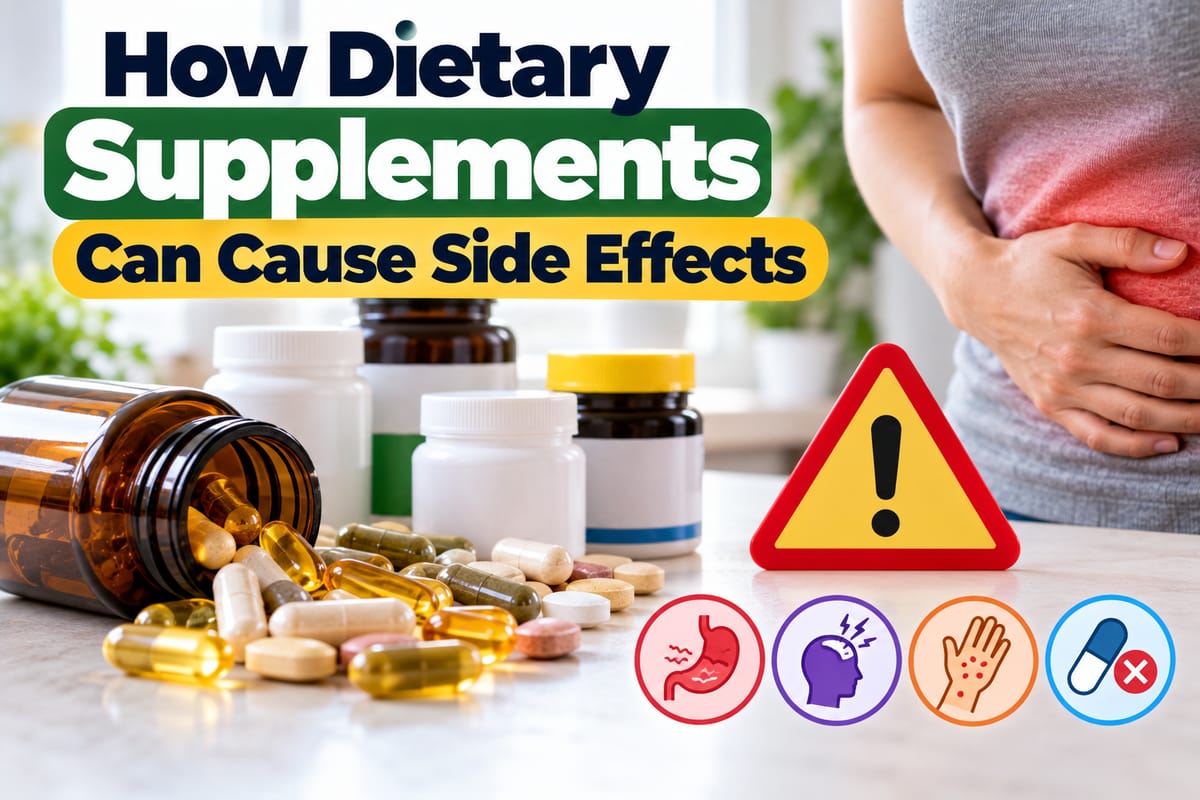

How Dietary Supplements Can Cause Side Effects
Dietary supplements are often used to add nutrients or other substances to a person’s diet. Vitamins, minerals, herbal products, amino acids, protein products, and many other supplements are widely available in stores and online.
Because many supplements are marketed around health and wellness, it can be easy to assume that they are automatically harmless. However, supplements can cause side effects, particularly when they are taken in large amounts, combined with certain medications or other supplements, or used by people with particular health conditions.
A supplement’s effects can also depend on the specific ingredient, dose, formulation, frequency of use, and individual circumstances. Something that is well tolerated by one person may cause an unwanted reaction in another.
Understanding why side effects happen can help people make more informed decisions about supplement use and recognize situations where professional guidance may be appropriate.
What Are Dietary Supplements?
Dietary supplements are products intended to supplement the diet with ingredients such as vitamins, minerals, herbs, amino acids, enzymes, or other substances.
They can come in many forms, including:
- Tablets
- Capsules
- Powders
- Liquids
- Gummies
- Softgels
- Lozenges
- Bars
- Packets
Some products contain a single ingredient, while others combine numerous ingredients in one formulation.
For a broader introduction to the different categories, uses, labels, and considerations surrounding these products, see The Complete Guide to Dietary Supplements.
Why Can Supplements Cause Side Effects?
The body responds to active substances regardless of whether they come from food, medication, or a supplement.
Vitamins and minerals, for example, have important biological functions, but the amount consumed can affect how the body responds. Some substances can influence digestion, metabolism, the nervous system, blood clotting, blood pressure, or other physiological processes.
Side effects can occur when a supplement:
- Is taken in excessive amounts
- Interacts with medication
- Interacts with another supplement
- Is poorly tolerated
- Contains ingredients that affect a person’s existing condition
- Is taken incorrectly
- Contains multiple active ingredients
- Is contaminated or inaccurately labeled
- Is used for longer than appropriate
The risk therefore depends on more than simply whether a product is classified as a supplement.
Dose Can Affect the Risk of Side Effects
One of the most important factors is dosage.
A nutrient may be necessary for normal body function at an appropriate intake but cause problems when consumed in excessive quantities.
This is one reason supplement labels should be read carefully. A person may unintentionally consume more of an ingredient than expected if several products contain the same nutrient.
For example, someone might take a multivitamin, a separate mineral supplement, and a fortified nutrition product without realizing that the same ingredient appears in all three.
The total intake matters, not just the amount provided by one product.
More Is Not Always Better
Supplement marketing sometimes creates the impression that larger amounts produce greater benefits. In reality, the body has physiological limits and requirements.
Taking substantially more than the amount needed does not necessarily provide additional benefits and may increase the likelihood of unwanted effects.
This is particularly important for nutrients that can accumulate in the body or have significant biological effects at high doses.
How Excessive Vitamin Intake Can Cause Problems
Vitamins are essential nutrients, but excessive intake of certain vitamins can cause adverse effects.
Some vitamins are water-soluble, while others are fat-soluble. These differences affect how the body handles and stores them.
Fat-soluble vitamins can be stored in body tissues, meaning excessive intake over time may present different concerns from excessive intake of nutrients that are more readily excreted.
People who regularly use multiple vitamin-containing products should therefore consider their total intake rather than looking at each product separately.
For a more detailed discussion of excessive vitamin intake, see How Can Excessive Vitamin Intake Cause Problems?.
Digestive Side Effects
Some of the most common supplement-related side effects involve the digestive system.
Depending on the ingredient and dose, a supplement may contribute to symptoms such as:
- Nausea
- Stomach discomfort
- Abdominal cramps
- Bloating
- Diarrhea
- Constipation
- Changes in bowel movements
- Heartburn
These effects can sometimes occur because a particular ingredient is difficult for an individual to tolerate.
Taking certain supplements on an empty stomach may also contribute to stomach discomfort, although whether food should be taken with a particular supplement depends on the product and ingredient.
If a supplement consistently causes digestive symptoms, it is worth reviewing the ingredient list, dose, timing, and other products being taken rather than simply assuming the reaction is unrelated.
Allergic and Sensitivity Reactions
Some people can experience allergic reactions or sensitivities to ingredients in supplements.
The active ingredient may not always be the only relevant component. Products can contain flavorings, colorings, preservatives, binders, sweeteners, botanical ingredients, or other substances.
Possible symptoms of an allergic reaction can include:
- Rash
- Itching
- Hives
- Swelling
- Breathing difficulties
Severe allergic reactions require urgent medical attention.
People who have known allergies should review supplement labels carefully and consider discussing unfamiliar products with an appropriate healthcare professional.
Supplement Interactions With Medications
Another important source of side effects is interaction with medication.
Some supplements can alter how medications are absorbed, metabolized, or eliminated. Others may affect the same physiological processes as a medication, potentially changing its effects.
For example, a supplement that influences blood clotting could be particularly relevant for someone taking medication that also affects clotting.
Similarly, substances that influence blood pressure, blood sugar, or the nervous system may have implications when combined with medications that affect those same systems.
This is why people who take prescription or over-the-counter medication should not assume that supplements are automatically compatible with their treatment.
A detailed look at this issue is available in Supplement Interactions.
Interactions Between Multiple Supplements
Supplement interactions do not only involve medications.
Two or more supplements can also contain overlapping ingredients or influence the body in similar ways.
For example, a person could take:
- A multivitamin
- A separate mineral product
- An herbal supplement
- A sports nutrition product
- A fortified protein powder
If several products contain the same nutrient or active ingredient, the combined intake may be considerably higher than expected.
Combining products can also make it difficult to identify which supplement is responsible if an unwanted effect develops.
Herbal Supplements Can Also Have Active Effects
The word “natural” does not mean that a substance has no biological effects.
Herbal supplements can contain compounds that interact with the body in meaningful ways. Some can affect enzymes, the nervous system, blood pressure, blood clotting, or other physiological processes.
Their effects can also vary depending on the plant species, preparation, concentration, and other ingredients in the product.
People should therefore approach herbal supplements with the same attention to dosage, interactions, and individual circumstances that they would apply to other active substances.
Why Existing Health Conditions Matter
A supplement that is appropriate for one person may not be appropriate for another because underlying health conditions can change how the body responds.
Certain ingredients may be particularly relevant to people with conditions affecting organs or systems involved in metabolism and elimination.
For example, people with kidney or liver problems may need to be especially cautious with products containing substances that depend on these organs for processing or elimination.
Other supplements may affect blood pressure, blood sugar, heart rhythm, or fluid balance.
Anyone with a significant health condition should consider discussing supplement use with a healthcare professional who knows their medical history.
Side Effects Can Depend on Individual Factors
There is no single response to every supplement.
Several individual factors can influence how someone reacts, including:
- Age
- Body size
- Diet
- Existing health conditions
- Medication use
- Other supplement use
- Pregnancy or breastfeeding
- Allergies
- Sensitivities
- Frequency of use
- Dose
This helps explain why personal experiences with the same product can differ.
One person may tolerate a supplement without noticeable problems while another develops an unwanted reaction.
Supplements With Multiple Ingredients
Products containing many ingredients can create additional challenges.
A single supplement may contain a mixture of vitamins, minerals, herbs, stimulants, amino acids, extracts, and other compounds.
If a side effect occurs, identifying the cause can become more difficult because there are multiple possible contributors.
Combination products can also increase the possibility of overlapping ingredients with other supplements.
Consumers should therefore look beyond the front of the package and examine the complete ingredient list and amounts provided.
Why Product Quality Matters
Side effects are not always caused by the intended active ingredient.
Product quality can also matter.
Manufacturing problems, contamination, inaccurate labeling, or differences between batches can potentially affect what a person actually consumes.
A product may contain more or less of an ingredient than expected, or it may contain substances that are not clearly represented on the label.
Quality-control practices, manufacturing standards, testing, storage, and sourcing can therefore all be relevant when evaluating a supplement.
Consumers should be cautious about products making extraordinary claims or providing little information about their ingredients and manufacturing practices.
The Importance of Reading Supplement Labels
A supplement label provides information that can help consumers understand what they are taking.
Important details may include:
- Serving size
- Number of servings
- Active ingredients
- Amount of each ingredient
- Other ingredients
- Directions for use
- Warnings
- Storage instructions
- Manufacturer information
The serving size deserves particular attention.
A label might list the amount of an ingredient per serving rather than per capsule or tablet. If someone takes multiple servings, the total intake can be significantly higher.
Why Combining Products Requires Extra Care
People sometimes use several products for different purposes without realizing that their ingredients overlap.
For example, a person interested in general nutrition might take a multivitamin while also using a specialized product containing several of the same vitamins and minerals.
A sports supplement could add additional ingredients to the daily total.
Before combining products, it can be useful to compare their labels and identify duplicate ingredients.
Keeping a simple list of all supplements and medications can also make it easier for a healthcare professional to evaluate potential interactions.
Common Signs That a Supplement May Not Be Well Tolerated
Not every symptom after taking a supplement necessarily means the supplement caused it. However, timing can provide useful information.
If a new symptom appears after starting a product and repeatedly occurs after taking it, the supplement may be worth considering as a possible contributor.
Potential warning signs can include:
- Persistent nausea
- New digestive problems
- Headaches
- Dizziness
- Skin reactions
- Unusual changes in heart rate
- Significant changes in blood pressure
- Unexpected bleeding
- Severe or persistent symptoms
People experiencing severe symptoms, difficulty breathing, loss of consciousness, severe allergic reactions, or other urgent symptoms should seek immediate medical care.
What to Do When Side Effects Occur
When someone suspects that a supplement is causing an adverse reaction, it is important to consider the situation carefully.
The first step may be reviewing the product label and identifying the active ingredients and dose.
It can also be useful to consider whether anything else changed around the same time, including:
- New medications
- New supplements
- Changes in dosage
- Changes in diet
- New foods
- Changes in exercise
- Changes in an existing health condition
For people taking medications or managing medical conditions, a healthcare professional or pharmacist can help evaluate potential interactions and determine appropriate next steps.
People should not discontinue prescribed medication without appropriate medical guidance simply because they suspect a supplement interaction.
How to Reduce the Risk of Supplement Side Effects
There are several practical steps that can help people use supplements more carefully.
Know Why You Are Taking the Product
Before starting a supplement, identify its intended purpose.
A clear reason makes it easier to determine whether the product is necessary and whether its ingredients overlap with other products.
Check the Dose
Do not assume that a larger serving is better.
Follow the product directions and consider the total amount consumed from all sources.
Review All Ingredients
Look beyond the main marketing claim.
Check the full ingredient list and serving information to identify substances that may be relevant to you.
Keep Track of Other Products
Maintain a current list of supplements and medications.
This can make it easier to identify duplicate ingredients and potential interactions.
Introduce Products Carefully
Starting several new supplements at the same time can make it difficult to determine which one is responsible if a side effect develops.
When appropriate, introducing changes individually can make the source of an unwanted reaction easier to identify.
Choose Products Carefully
Consider the manufacturer’s information, labeling, dosage instructions, and quality practices.
Be particularly cautious about products that make dramatic health claims or provide inadequate information about what they contain.
Who Should Be Especially Careful With Supplements?
Certain groups may need additional guidance before using supplements.
These can include:
- Children
- Older adults
- Pregnant people
- Breastfeeding people
- People taking prescription medications
- People with chronic health conditions
- People preparing for surgery
- People with known allergies
- People taking multiple supplements
The appropriate approach depends on the individual and the specific product.
For people in these groups, discussing supplement use with a healthcare professional can help identify potential risks before problems occur.
Supplements and Surgery
Supplement use can also become particularly important around the time of surgery.
Some ingredients may affect blood clotting, blood pressure, blood sugar, sedation, or other processes that matter during medical procedures.
For this reason, healthcare providers should be told about all supplements being used before surgery or other procedures.
A complete list should include herbal products, vitamins, minerals, sports supplements, and other non-prescription products.
Why Supplement Safety Requires More Than Reading the Front Label
Supplement packaging is often designed to communicate benefits quickly.
The front of a product may emphasize a particular nutrient, ingredient, or intended use. However, the information most relevant to safety may be located elsewhere on the label.
Consumers should examine the serving size, full ingredient list, warnings, directions, and other relevant information.
It is also important to consider the broader context: what other products are being taken, what medications are being used, and whether any health conditions could affect the response.
A supplement should be considered as part of a person’s overall health and medication picture rather than as an isolated product.
Building a Safer Supplement Routine
A thoughtful supplement routine starts with understanding what each product contains and why it is being used.
People can make this process more manageable by keeping a simple record that includes:
| Information | What to Record |
|---|---|
| Product name | The exact name of the supplement |
| Ingredients | Active ingredients and amounts |
| Serving size | Recommended amount per serving |
| Frequency | How often it is taken |
| Purpose | Why the product is being used |
| Other products | Other supplements and medications |
| Reactions | Any noticeable unwanted effects |
This information can be especially useful when discussing supplement use with a doctor, pharmacist, dietitian, or other qualified healthcare professional.
A More Informed Approach to Supplements
Dietary supplements can play a role in nutrition and wellness for some people, but they are biologically active products rather than risk-free additions to a daily routine.
Side effects can result from excessive doses, overlapping ingredients, medication interactions, individual sensitivities, existing health conditions, or product-quality problems. The risk is influenced by the specific substance and the circumstances in which it is used.
The safest approach is not to assume that every supplement is harmful or that every supplement is harmless. Instead, users should understand what they are taking, follow appropriate dosing instructions, consider the combined effects of multiple products, and seek professional guidance when medication use, health conditions, pregnancy, surgery, or significant symptoms are involved.
With careful label reading, thoughtful product selection, and awareness of potential interactions, supplement use can become a more informed part of an individual’s overall approach to health and nutrition.
Continue Reading
Similar Posts

What Is Creatine and How Does It Work?
Understanding how that system works helps explain why creatine has become so closely associated with activities such as weightlifting, sprinting, and other forms of high-intensity exercise.
Read article
Why Excessive Vitamin Intake Can Be Harmful
Understanding the difference between adequate intake and excessive intake is an important part of using vitamin supplements responsibly.
Read article
Supplement Safety Before Surgery Explained
Some supplements can affect how the body responds to medicines or procedures. Others may increase bleeding risk, alter blood pressure or blood sugar, or have effects that are difficult to predict because supplement products can contain multiple active ingredients.
Read article

Join 10,000+ Readers Building Healthier Habits
Get actionable wellness tips every week plus our newest articles delivered straight to your inbox.