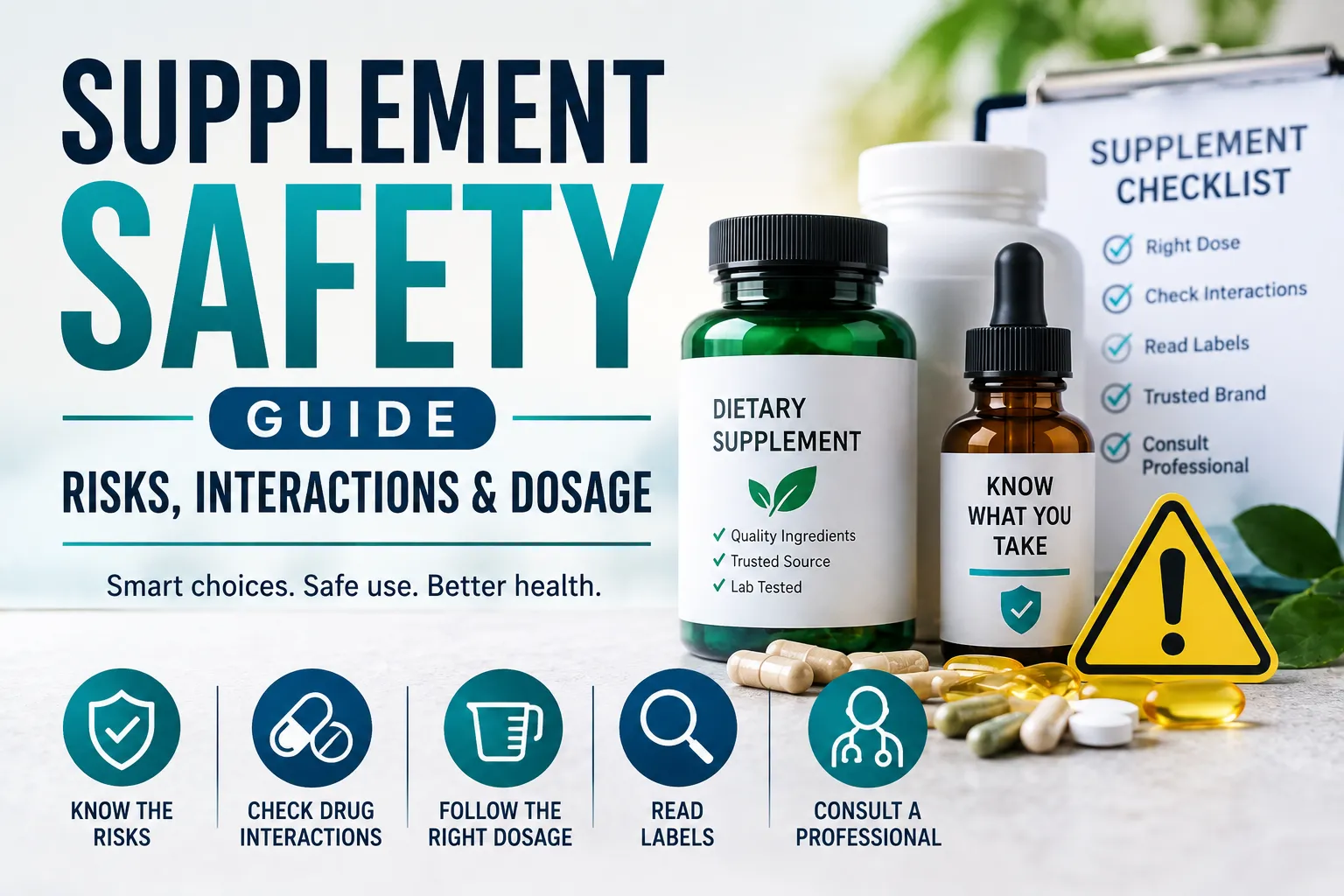

Supplement Safety Guide: Risks, Interactions and Dosage
Dietary supplements are everywhere. Vitamins, minerals, herbal products, amino acids, protein powders, probiotics and other supplements are sold in pharmacies, supermarkets, health stores and online.
Many can play a useful role in nutrition, particularly when someone has a documented nutrient deficiency or has increased nutritional needs. But the idea that supplements are automatically safe because they are sold without a prescription—or because a product is labeled “natural”—can be misleading.
Supplements can cause side effects, interact with medicines, interfere with medical procedures and become harmful when taken in excessive amounts. The U.S. Food and Drug Administration (FDA) specifically warns that problems can occur when people combine supplements, mix supplements with medicines or take too much of certain ingredients.
This guide explains the most important supplement-safety principles, including how to think about dosage, interactions, product quality and when professional advice is especially important. It forms part of the broader complete guide to dietary supplements.
Important: This is general health information, not individualized medical advice. The appropriate supplement and dose can depend on age, diet, medications, medical conditions and other factors. For a specific supplement or dosage, consult a doctor, pharmacist or registered dietitian.
What Are Dietary Supplements?
Dietary supplements are products intended to supplement the diet.
They can contain ingredients such as:
- Vitamins
- Minerals
- Herbs and botanicals
- Amino acids
- Enzymes
- Probiotics
- Protein
- Other substances
They come in many forms, including tablets, capsules, powders, gummies, liquids and fortified foods.
A supplement is not necessarily a medicine.
In the United States, for example, dietary supplements are regulated differently from prescription and over-the-counter drugs. The FDA does not generally approve dietary supplements for safety and effectiveness before they reach the market. Manufacturers and distributors are responsible for ensuring that products meet applicable safety and labeling requirements, while the FDA can take action against unsafe or improperly labeled products.
Regulatory systems differ between countries, so consumers should also understand the rules that apply where they live.
Why Supplement Safety Matters
The body needs certain vitamins and minerals, but more is not necessarily better.
Some nutrients can become harmful at high levels. The NIH Office of Dietary Supplements notes that many vitamins and minerals have a tolerable upper intake level (UL)—the highest average daily intake unlikely to cause adverse health effects for most people. Exceeding a UL does not automatically mean someone will become ill, but the risk of adverse effects increases.
The risk becomes more complicated when several products are combined.
For example, someone might take a multivitamin, a separate vitamin D supplement, a mineral product and a fortified beverage without realizing that the same nutrients appear in multiple products.
That is why supplement safety begins with understanding everything you are taking, not just one bottle.
The “Natural Means Safe” Myth
One of the most persistent supplement misconceptions is that natural products cannot be dangerous.
That is not true.
Plants and other naturally occurring substances can have powerful biological effects.
The NIH notes that some botanical products can cause significant harm, while the FDA warns that natural ingredients can interact with medications or cause dangerous effects.
The important question is not simply:
“Is this natural?”
Instead, ask:
“What does this ingredient do in the body, what dose am I taking, and could it interact with anything else?”
Understanding Dosage
Dosage is one of the most important parts of supplement safety.
A product label may list:
- Serving size
- Amount per serving
- Number of servings per container
- Individual ingredients
- Amount of each ingredient
- Suggested directions
The FDA requires dietary supplements to carry a Supplement Facts label that provides information such as serving size and the amounts of dietary ingredients per serving.
However, the amount printed on a label is not automatically the correct dose for every individual.
Your appropriate intake may depend on factors such as:
- Age
- Sex
- Diet
- Nutritional status
- Medications
- Medical conditions
- Pregnancy or breastfeeding
- Kidney or liver function
- Reason for taking the supplement
For that reason, avoid assuming that a higher dose will provide greater benefits.
Recommended Amount vs. Upper Limit
These two concepts are easy to confuse.
A recommended amount is an intake level intended to meet nutritional needs for a particular population or life stage.
A tolerable upper intake level is a maximum daily intake level unlikely to pose a risk of adverse effects for most healthy people.
They are not the same thing.
For some nutrients, the recommended amount may be substantially lower than the UL.
The NIH emphasizes that exceeding an upper limit can cause health problems for certain nutrients.
Importantly, upper limits can apply differently depending on whether a nutrient comes from food, supplements or fortified products.
Why “Double Dosing” Can Be Dangerous
Taking two supplements containing the same nutrient can unintentionally increase your total intake.
For example, someone might use:
- A multivitamin
- A standalone vitamin supplement
- A fortified drink
- A sports or wellness product
All four could contain overlapping ingredients.
The NIH specifically advises consumers to check labels and avoid “doubling up” on supplements unless a healthcare professional has recommended it.
Before adding a new product, compare its ingredients with everything you already take.
Supplements and Medication Interactions
One of the most important safety issues is interaction between supplements and medicines.
A supplement can sometimes change how a medicine is absorbed, metabolized or eliminated from the body. That can cause a medication to become less effective or, in some circumstances, more potent than expected.
This is why your doctor or pharmacist should know about all supplements you take—not only prescription medications.
Vitamin K and Blood Thinners
Vitamin K can interfere with the effectiveness of warfarin, a commonly used blood thinner.
People taking warfarin should discuss changes in vitamin K intake—including supplements—with their healthcare professional.
St. John’s Wort
St. John’s wort is a well-known example of an herbal supplement that can interact with numerous medicines.
The NIH and FDA note that it can affect the breakdown of various medicines and reduce their effectiveness, including some antidepressants, birth-control medicines, heart medicines, HIV medicines and transplant drugs.
Supplements That Affect Bleeding
Some supplements can affect blood clotting.
The FDA warns that combinations involving products such as warfarin, ginkgo, aspirin and vitamin E may increase bleeding risk.
This is especially important before surgery.
Supplements and Surgery
Some supplements can affect bleeding, blood pressure, heart rate or the response to anesthesia.
The FDA advises people who are preparing for surgery to tell their healthcare professionals about all supplements they use. Depending on the product and procedure, a healthcare professional may recommend stopping certain supplements before surgery.
Do not independently stop prescribed medication because you read that a supplement might interact with it.
Instead, provide your complete supplement list to the medical team and follow their instructions.
Supplements During Pregnancy and Breastfeeding
Pregnancy and breastfeeding require additional caution.
Some nutrients are essential during pregnancy, but excessive amounts can also be harmful.
The appropriate intake can differ substantially from the needs of a non-pregnant adult, and some ingredients may not have adequate safety information for pregnancy or breastfeeding.
If you are pregnant, planning pregnancy or breastfeeding, discuss supplements with a qualified healthcare professional before starting them.
The same principle applies to products marketed specifically for pregnancy. “Designed for pregnancy” on a label does not replace professional advice.
Supplements for Children
Children should not automatically receive adult supplements in smaller portions.
Children’s bodies and nutritional requirements differ from those of adults, and dosing can depend on age and body size.
The FDA specifically warns that children can be harmed by combinations of supplements and medicines.
Keep supplements stored securely and out of children’s reach.
Gummies can be particularly concerning because they may look like sweets.
People With Medical Conditions Need Extra Caution
A supplement can interact not only with a medication but also with an existing health condition.
This is one reason a product that is appropriate for one person may be unsuitable for another.
Extra caution may be appropriate for people with conditions affecting:
- The kidneys
- The liver
- The heart
- Blood clotting
- Blood pressure
- Hormone regulation
- The immune system
People preparing for surgery or undergoing treatment for serious illness should also disclose supplement use to their healthcare team.
Supplements and Laboratory Tests
Some supplements can interfere with laboratory tests.
This is another reason it is important to tell healthcare professionals what you are taking.
The FDA notes that dietary supplements can interfere with lab tests in some circumstances.
If you are having blood work or another medical test, ask whether any of your supplements could affect the results.
Do not stop a medically necessary product without professional guidance.
More Supplements Does Not Mean Better Health
The supplement industry can create the impression that optimal health requires a long list of products.
In reality, supplements are intended to supplement the diet—not replace a varied diet.
The NIH notes that multivitamin/mineral supplements cannot substitute for the range of nutrients and other beneficial components found in a variety of foods.
A supplement may be useful when there is a nutritional gap or a specific reason to use it.
But taking more products simply because they are available does not necessarily improve health.
Watch Out for Mega-Doses
High-dose supplements are often marketed as offering faster or stronger benefits.
That approach can be risky.
Some nutrients have relatively narrow safety margins, while others can accumulate in the body or cause adverse effects at excessive doses.
The NIH notes, for example, that very high vitamin B6 intake can cause severe nerve damage and excessive iron can be fatal.
This illustrates an important principle:
A nutrient can be essential at one intake level and harmful at another.
Fat-Soluble Vitamins Require Particular Attention
Vitamins are often divided into water-soluble and fat-soluble categories.
The fat-soluble vitamins—A, D, E and K—are stored in the body to a greater extent than water-soluble vitamins.
This means excessive intake can sometimes create problems.
Vitamin A is a particularly important example. The NIH notes that high amounts of preformed vitamin A can cause liver damage and birth defects during pregnancy.
The form of the vitamin matters as well, which is another reason not to assume that two products containing the same vitamin are interchangeable.
Minerals Can Also Become Harmful
Minerals are essential for numerous bodily processes, but excessive intake can cause problems.
Iron is a good example.
Iron is necessary for making hemoglobin and supporting oxygen transport, but taking large amounts without a demonstrated need can be dangerous.
The NIH advises discussing iron supplements with a healthcare professional rather than assuming that fatigue or other symptoms automatically mean an iron deficiency.
The same principle applies to minerals such as zinc, selenium, iodine, calcium and magnesium.
Magnesium Is a Good Example of Why the Source Matters
Magnesium naturally present in food is handled differently from magnesium obtained from supplements and medications.
The NIH notes that the upper limit for magnesium applies to magnesium from supplements and medications rather than magnesium naturally found in food.
This illustrates why dosage information needs context.
A number on a bottle cannot always be interpreted without considering the form of the nutrient and where the nutrient comes from.
How to Read a Supplement Label
Before buying or taking a supplement, examine the label carefully.
Look for:
Serving Size
Determine how much the manufacturer considers one serving.
Amount Per Serving
This tells you how much of each listed ingredient is contained in that serving.
Full Ingredient List
Look beyond the headline ingredient.
A product marketed as a single-nutrient supplement may contain additional compounds.
Directions
Check how the manufacturer instructs consumers to use the product.
Warnings
Read the warnings rather than assuming they are generic legal language.
Other Ingredients
These may include binders, flavorings, sweeteners, colors or other substances.
The label provides important information, but it does not replace individualized medical advice.
For a more detailed explanation of serving sizes, ingredient amounts, warnings, and other label information, see how to read supplement labels correctly.
Be Careful With Proprietary Blends
Some supplements use labels that group several ingredients together under a proprietary blend.
This can make it harder to determine exactly how much of each individual ingredient you are consuming.
If the exact quantity of an ingredient matters for safety, look for a product that provides clear amounts.
Transparency makes it easier for you and your healthcare professional to assess total intake.
Quality Matters
Two supplements containing the same headline ingredient are not necessarily identical.
Quality can vary based on:
- Manufacturing practices
- Ingredient identity
- Purity
- Contamination
- Storage
- Stability
- Label accuracy
The NIH notes that supplement labels alone do not necessarily indicate product quality.
Independent quality-testing programs can provide additional information about whether a product meets certain standards, although certification does not mean a supplement is automatically effective or appropriate for everyone.
Consumers interested in this part of supplement safety can learn more about how supplement quality and testing work.
Be Skeptical of Extraordinary Claims
Be cautious when a supplement promises to:
- Cure a serious disease
- Cause rapid weight loss
- Build muscle without training
- Reverse aging
- Replace prescription medication
- “Detox” the body
- Produce dramatic results without lifestyle changes
The FDA advises consumers to be wary of health claims that sound too good to be true and emphasizes that sound health advice generally relies on evidence accumulated over time rather than a single study.
A dramatic marketing claim deserves more scrutiny, not less.
“Clinical Strength” Does Not Automatically Mean Safer
Marketing terms can create an impression of medical authority.
Words such as:
- Clinical
- Professional
- Maximum strength
- Pharmaceutical grade
- Advanced
- Ultra
- Premium
do not automatically mean a product is safer or more effective.
Look at the actual ingredients, amounts, evidence and warnings.
For another useful safeguard, consumers should learn how to evaluate scientific evidence behind dietary supplement claims rather than relying on marketing language alone.
Keep a Supplement and Medication List
One of the simplest safety measures is maintaining a current list of everything you take.
Include:
- Product name
- Ingredient
- Dose
- Frequency
- Reason for use
- Prescription medicines
- Over-the-counter medicines
The NIH specifically recommends keeping a complete record and sharing it with healthcare providers.
Update the list whenever you start, stop or change a product.
Ask These Questions Before Starting a Supplement
Before taking a new supplement, ask:
- Why am I taking it?
- Is there evidence that it can help with my goal?
- Do I actually need it?
- What dose is appropriate for me?
- Could it interact with my medications?
- Could it interact with another supplement I take?
- Could it affect a medical condition I have?
- How long should I take it?
- What side effects should I watch for?
- Is the product from a trustworthy source?
These questions can prevent impulsive supplement purchases.
What to Do if You Experience Side Effects
Pay attention to changes that begin after starting a new supplement.
Possible adverse reactions can include:
- Nausea
- Vomiting
- Diarrhea
- Abdominal pain
- Headache
- Rash
- Dizziness
- Changes in heart rate
- Changes in mood
- Allergic reactions
More serious symptoms can include difficulty breathing, swelling of the lips or throat, chest pain, fainting, severe bleeding, significant changes in urination or yellowing of the skin or eyes.
If you experience a severe or potentially life-threatening reaction, seek urgent medical attention.
For a suspected supplement-related reaction, healthcare professionals can also help determine whether the product should be stopped and whether the event should be reported.
What to Do if You Accidentally Take Too Much
If you take substantially more than intended, do not assume that nothing will happen simply because the product is a vitamin or herbal supplement.
The risk depends on the ingredient, amount, formulation, age and other circumstances.
Contact a healthcare professional or an appropriate poison-information service for guidance, particularly when a child has ingested a supplement or a large amount has been taken.
Keep the product packaging available so you can provide the exact ingredient and strength.
Keep Supplements Away From Children
Store supplements in a secure location.
Do not leave bottles on kitchen counters, bedside tables or other places where children can easily access them.
Keep products in their original containers so that the ingredient information and warnings remain available.
If a supplement resembles candy, be particularly careful about storage.
Supplements and Exercise
Athletes and fitness enthusiasts are among the most frequent supplement users.
Protein powders, creatine, electrolyte products, pre-workout formulas and other supplements are widely marketed to people who exercise.
Some products may have legitimate uses, but more ingredients do not necessarily mean better performance.
Pre-workout products deserve particular attention because they may combine several stimulants or other active ingredients.
Always check the full ingredient list rather than focusing on the marketing headline.
Weight-Loss Supplements Require Extra Caution
Products marketed for rapid weight loss can carry particular risks.
Claims such as “fat burner,” “metabolism booster” or “natural appetite suppressant” can make a product sound harmless even when its ingredients have significant biological effects.
The FDA has repeatedly warned about products marketed as dietary supplements that contain undeclared or potentially dangerous ingredients. Its current supplement safety resources include alerts involving products found to pose health risks.
Rapid weight loss should not be pursued through an unknown or poorly characterized supplement.
Supplements Are Not a Replacement for Prescribed Treatment
One of the most dangerous supplement practices is replacing medical treatment with an unproven product.
A supplement may be marketed as a natural alternative to medication, but that does not mean it can safely perform the same function.
The FDA and NIH both caution consumers against using dietary supplements instead of prescribed medicines without professional guidance.
If you want to reduce or replace a medication, discuss the decision with the healthcare professional who manages your treatment.
When You Should Talk to a Healthcare Professional First
Professional advice is particularly important if you:
- Take prescription medication
- Take several supplements
- Are pregnant or breastfeeding
- Are planning surgery
- Have a chronic medical condition
- Have kidney or liver problems
- Are considering supplements for a child
- Want to take high doses
- Are treating a diagnosed deficiency
- Are undergoing cancer treatment
- Take blood-thinning medication
- Have experienced a reaction to a supplement before
A pharmacist can be especially useful for checking possible interactions between supplements and medications.
A Simple Supplement Safety Checklist
Before taking a new supplement, run through this checklist:
- I know why I am taking it.
- I have checked the active ingredients.
- I know the serving size.
- I have checked the amount per serving.
- I have compared it with my other supplements.
- I have considered my medications.
- I have checked for relevant warnings.
- I understand that “natural” does not necessarily mean safe.
- I am not exceeding an established upper limit without professional guidance.
- I have checked whether the product is appropriate for my age and circumstances.
- I know what side effects to watch for.
- I have told my healthcare professional about it when appropriate.
The Safest Approach to Supplement Use
Supplements can be useful tools, but they should be treated with the same respect given to any product capable of changing how the body works.
The safest approach is not to avoid every supplement or to take as many as possible. It is to use a purpose-driven approach: identify why a supplement is needed, choose an appropriate product, understand the dose, check for interactions and reassess whether continued use makes sense.
Remember that the label is only one part of the safety picture. Your medications, diet, health conditions and individual circumstances matter too.
The NIH Office of Dietary Supplements provides evidence-based fact sheets covering individual vitamins, minerals, herbs and other supplements, including safety, recommended amounts and medication interactions.
Smart Supplement Use Starts With the Full Picture
The biggest supplement mistake is often not taking one particular product—it is assuming that every supplement is harmless simply because it is available without a prescription.
A vitamin can be beneficial and harmful depending on the amount. An herb can be natural and still interact with medication. A familiar-looking multivitamin can contribute to excessive nutrient intake when combined with other fortified products. And a supplement that is appropriate for one person may be unsuitable for another.
Before adding another bottle to your routine, look at the whole picture: what you eat, what you already take, what medications you use, why you want the supplement and what evidence supports it.
When there is uncertainty—especially around dosage, medication interactions, pregnancy, surgery or an existing health condition—the safest next step is to ask a qualified healthcare professional rather than guessing.
Continue Reading
Similar Posts
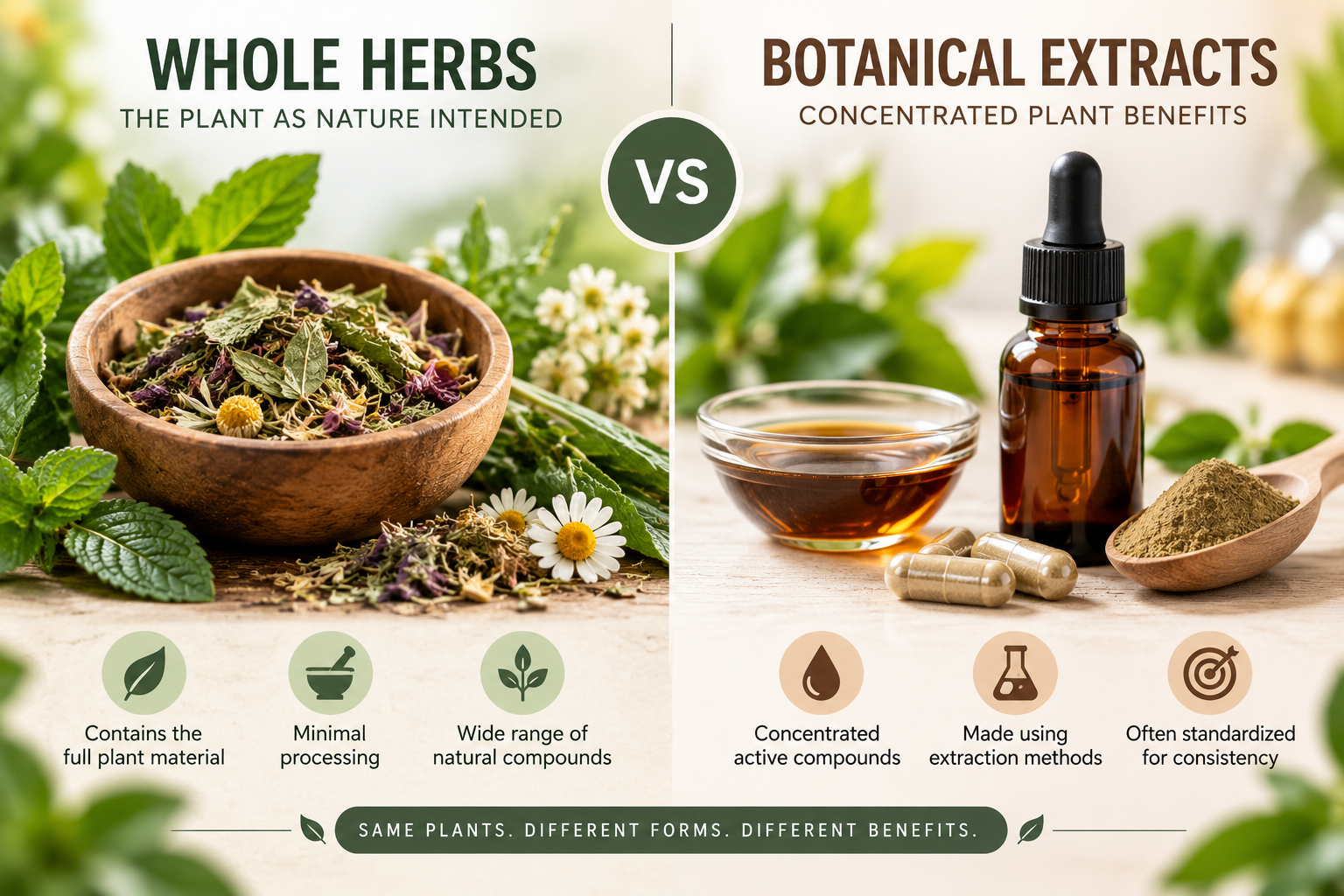
How Botanical Extracts Differ From Whole Herbs
Understanding how extracts differ from whole herbs can make it easier to interpret supplement labels, compare products, and evaluate claims about herbal ingredients.
Read article
How Nutrient Deficiencies Develop and Get Identified
Understanding how nutrient deficiencies develop—and how healthcare professionals identify them—can make it easier to recognize potential problems before they become more serious.
Read article
What Is the Difference Between Water-Soluble and Fat-Soluble Vitamins
Understanding this basic distinction can make it easier to interpret nutrition information, evaluate supplements, and make informed decisions about dietary intake.
Read article

Join 10,000+ Readers Building Healthier Habits
Get actionable wellness tips every week plus our newest articles delivered straight to your inbox.