
How Supplement Needs Change Across Life
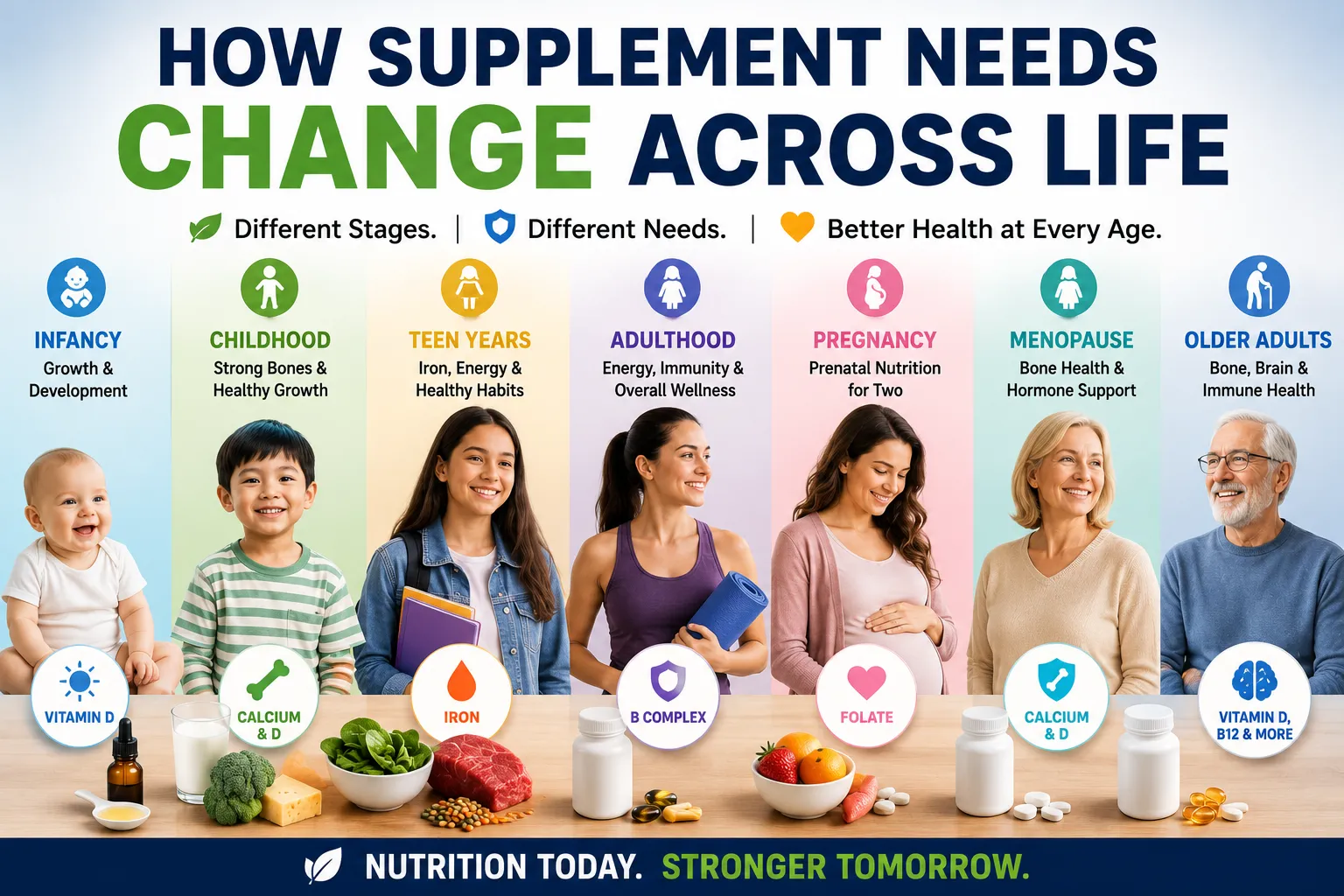
Nutritional needs do not remain the same throughout life. The body changes as people grow, reproduce, age and experience changes in diet, health, activity and medication use. As a result, the nutrients a person needs—and whether a supplement is useful—can change significantly from infancy through older adulthood.
That does not mean everyone needs a collection of supplements at every stage of life. In most cases, food remains the primary source of nutrients. Supplements can be useful when people cannot meet particular nutrient needs through food, including during certain life stages such as pregnancy.
The more useful way to think about supplements is therefore not “Which vitamins should everyone take?” but “What nutrients does this person need at this particular stage of life, and is supplementation actually necessary?”
For broader context on how supplements fit into overall nutrition, see the complete guide to dietary supplements.
Why Supplement Needs Change With Age
Nutrient requirements can change because of several factors, including:
- Growth and development
- Pregnancy and breastfeeding
- Menstruation
- Changes in appetite
- Dietary restrictions
- Changes in nutrient absorption
- Bone remodeling
- Changes in metabolism
- Medication use
- Chronic health conditions
- Reduced exposure to certain nutrient sources
For example, iron requirements are considerably higher for adolescent girls and adult women of reproductive age than for adult men, while iron requirements generally decrease after age 51.
Vitamin D requirements also change with age, rising from 600 IU per day for most adults through age 70 to 800 IU for adults 71 and older under U.S. dietary reference recommendations.
These differences illustrate why supplement recommendations should be based on life stage rather than a one-size-fits-all formula.
Infancy: Nutrition Is Closely Tied to Development
Infancy is a period of rapid growth.
The nutritional priorities during the first year of life are therefore different from those of older children and adults.
For infants, breast milk or an appropriate infant formula provides the foundation of nutrition, while specific supplementation may be recommended depending on feeding method and individual circumstances.
Vitamin D is one example. Recommendations list 400 IU (10 mcg) of vitamin D per day for infants from birth through 12 months.
However, parents should not automatically add multiple supplements to an infant’s diet.
Infants have different nutritional requirements from adults, and excessive amounts of certain vitamins or minerals can be harmful.
Pediatric guidance is particularly important during this stage.
Early Childhood: Growth Changes Nutrient Requirements
Children continue to develop rapidly after infancy.
Their nutrient requirements increase as their bodies grow, but requirements are still different from those of adults.
Calcium is particularly important because childhood and adolescence are critical periods for building bone.
Reference values list calcium needs increasing from 700 mg per day for children ages 1–3 to 1,000 mg for ages 4–8 and 1,300 mg for ages 9–18.
The emphasis should generally be on nutrient-rich foods rather than automatically giving children adult supplements.
Children’s multivitamins, when appropriate, are formulated differently from many adult products. Children’s multivitamins generally contain smaller amounts of nutrients suited to their age.
Adolescence Brings New Nutritional Demands
The teenage years bring rapid physical growth, hormonal changes and increasing independence around food choices.
Calcium and vitamin D remain important for bone development.
Iron can become particularly important for adolescent girls because menstruation increases iron losses.
Reference values list iron requirements of 11 mg per day for teenage boys and 15 mg for teenage girls ages 14–18.
Teenagers who follow restrictive diets, have very limited food choices or experience heavy menstrual losses may have different nutritional considerations.
That does not mean every teenager should take an iron supplement.
Iron can be harmful in excessive amounts, so supplementation should be based on dietary assessment, medical advice or appropriate testing when indicated.
Young Adulthood: Food Habits Become More Important
Young adulthood often brings major lifestyle changes.
People may move away from home, begin full-time work, attend university, change their eating patterns or adopt vegetarian or vegan diets.
These lifestyle changes can influence nutritional intake.
For most healthy adults, a varied diet can provide many of the nutrients required by the body.
A supplement may become useful when someone has a documented deficiency, follows a diet that makes obtaining certain nutrients difficult or has another reason that increases nutritional requirements.
The key is to identify the gap before trying to fill it.
Menstruation Can Influence Iron Needs
Iron is an important example of how biological differences affect nutritional requirements.
The body needs iron to produce hemoglobin, the protein in red blood cells that carries oxygen.
Reference values list 18 mg of iron per day for adult women ages 19–50, compared with 8 mg for adult men in the same age range.
Menstrual blood loss is one reason iron requirements are higher for many women of reproductive age.
However, iron supplements should not be treated as a routine wellness product for everyone.
Too much iron can be harmful, and fatigue has many possible causes.
People concerned about iron deficiency should discuss appropriate evaluation with a healthcare professional.
Pregnancy Creates Some of the Most Significant Changes
Pregnancy substantially changes nutritional requirements.
The developing fetus requires nutrients for growth and development, while the pregnant person’s body also undergoes major physiological changes.
Folate is particularly important.
Adequate folic acid intake before conception and during early pregnancy reduces the risk of neural tube defects. Recommendations from several major health organizations commonly call for 400–800 mcg of folic acid daily for people who can become pregnant, beginning before conception and continuing through early pregnancy.
Pregnancy also changes requirements for nutrients such as:
- Iron
- Iodine
- Folate
- Vitamin D
- Choline
- Calcium
Prenatal multivitamins may be necessary to help meet certain nutrient requirements during pregnancy, although some people may need additional nutrients based on their circumstances and healthcare provider’s advice.
Pregnancy is therefore one of the clearest examples of why supplement decisions should be individualized.
Why Prenatal Supplements Are Different
A prenatal supplement is not simply an ordinary multivitamin with a different label.
Prenatal products are formulated around the nutritional needs of pregnancy.
Some provide nutrients such as folic acid, iron and vitamin D in amounts intended to support pregnancy requirements.
However, formulations differ considerably.
Some prenatal supplements may contain little or no iodine or choline, while others provide them in different amounts. Healthcare providers may recommend separate iodine or choline supplementation in some circumstances.
People who are pregnant or planning pregnancy should therefore discuss supplement choices with an appropriate healthcare professional rather than combining several products independently.
Breastfeeding Can Change Nutrient Needs Again
Nutritional needs do not simply return to pre-pregnancy levels immediately after birth.
Breastfeeding creates additional nutritional demands because nutrients are transferred into breast milk.
Reference values, for example, list calcium needs of 1,000 mg per day for breastfeeding women, while breastfeeding teenagers have a recommended intake of 1,300 mg.
Iron requirements, meanwhile, are lower during breastfeeding than during pregnancy in reference tables.
This illustrates another important point: nutrient requirements do not always move in one direction as life progresses.
They can rise during one stage and fall during another.
The Reproductive Years Require Individual Attention
Outside pregnancy and breastfeeding, supplement needs among adults vary widely.
A healthy person with a diverse diet may not need a daily multivitamin.
Someone following a vegan diet, for example, may need particular attention to vitamin B12 and other nutrients.
Someone with heavy menstrual bleeding may have different iron considerations.
Someone with a gastrointestinal condition affecting absorption may have different needs again.
This is why age alone cannot determine a person’s supplement requirements.
Middle Adulthood Brings New Priorities
During middle adulthood, maintaining adequate nutrition remains important even though growth is no longer occurring.
Bone health becomes increasingly relevant because bone mass gradually changes with age.
After approximately age 30, bones slowly lose calcium, with bone loss accelerating during middle age.
Calcium and vitamin D therefore become important considerations, particularly when dietary intake is inadequate.
But supplementation is not automatically required simply because someone reaches a particular birthday.
Diet, health status, medications and individual risk factors all matter.
Menopause Can Change Bone Health Considerations
For women, menopause brings substantial hormonal changes.
Declining estrogen levels can accelerate bone resorption and contribute to bone loss. This can increase the risk of osteoporosis after menopause.
Calcium and vitamin D are therefore frequently discussed in relation to bone health during and after menopause.
However, supplementation should not be viewed as a guaranteed way to prevent fractures.
The evidence is mixed, and research has not consistently shown that calcium and vitamin D supplements prevent fractures in older adults.
A comprehensive approach to bone health also includes appropriate physical activity, adequate nutrition and medical assessment when indicated.
Men Can Develop Age-Related Nutrient Concerns Too
Supplement conversations sometimes focus heavily on women, but nutritional changes also occur in men.
Bone loss can affect men as they age, and osteoporosis and fractures can occur in older men as well.
Older men may also experience changes in appetite, diet, medication use and nutrient absorption.
Supplement decisions should therefore not be based solely on gender.
The same principle applies throughout life: individual nutritional status matters more than a generic age-based supplement package.
Older Adulthood Can Change Nutrient Absorption
As people age, several factors can influence nutritional intake.
These may include:
- Reduced appetite
- Changes in taste and smell
- Difficulty chewing
- Medication use
- Changes in digestive function
- Reduced dietary variety
- Limited mobility
- Social or financial factors
A person may therefore consume fewer nutrient-rich foods even when their body’s nutritional needs remain important.
Some multivitamin products marketed toward older adults contain more calcium and vitamins D and B12 and less iron than products intended for younger adults.
That does not mean every older adult should use such a product.
It demonstrates how supplement formulations can be designed around different life-stage considerations.
Vitamin B12 Becomes Particularly Relevant With Age
Vitamin B12 deserves attention in older adulthood because absorption can become an issue for some people.
Some medications and medical conditions can also affect B12 status.
Rather than assuming that everyone needs a high-dose B12 supplement, it is more useful to consider dietary intake, risk factors and medical guidance.
This is especially important because symptoms associated with nutritional deficiencies can overlap with many other health conditions.
Vitamin D Requirements Increase Later in Life
Vitamin D requirements increase later in adulthood, with reference recommendations listing 600 IU per day for adults through age 70 and 800 IU per day for adults 71 and older.
Vitamin D helps the body absorb calcium and plays roles in bone, muscle, nerve and immune function.
Older adults may have greater difficulty obtaining adequate vitamin D from sunlight and diet, depending on their circumstances.
Whether supplementation is appropriate depends on dietary intake, exposure, health status and professional assessment.
Calcium Needs Stay Important in Later Life
Calcium remains important for maintaining bones and performing other physiological functions.
Recommendations call for 1,200 mg of calcium per day for adults aged 71 and older, while women ages 51–70 also have a recommended intake of 1,200 mg.
But more is not necessarily better.
Calcium supplements can cause side effects such as gas, bloating and constipation, and calcium can interact with some medications.
Getting calcium primarily from food when possible can therefore be a sensible starting point.
Supplements and Medication Interactions Become More Important
As people age, they are more likely to take multiple medications.
This increases the importance of checking supplement interactions.
Some vitamins, minerals and herbal products can interfere with medicines or affect how medications work.
For example, calcium can interact with certain medications, while iron can also interfere with the absorption of some drugs.
People taking prescription medications should tell their doctor or pharmacist about all supplements they use.
More Supplements Do Not Mean Better Health
One of the biggest misconceptions about supplementation is that taking more nutrients automatically provides more health benefits.
The body requires nutrients within specific ranges.
Taking excessive amounts can sometimes cause harm.
Fat-soluble vitamins such as vitamins A, D, E and K can accumulate in the body under certain circumstances, while excessive amounts of some minerals can also be dangerous.
A supplement should therefore solve a specific nutritional problem rather than become an increasingly large collection of pills.
Food Should Usually Come First
The foundation of nutritional health remains a varied diet.
Foods provide combinations of nutrients, fiber and other compounds that supplements may not replicate.
Dietary guidance generally recommends obtaining most nutrients from food and beverages, while supplements can be useful when nutritional needs cannot be met through diet alone.
This makes supplements exactly what their name suggests: supplements to a diet, rather than replacements for a nutritious diet.
How Dietary Restrictions Can Change Supplement Needs
Life stage is only one factor.
Dietary patterns can also substantially affect nutritional requirements.
For example, people following vegan or vegetarian diets may need to pay particular attention to nutrients that are more concentrated in animal-derived foods.
People following vegetarian or vegan diets during pregnancy may need professional guidance about nutrients including iron, vitamin B12, choline, iodine and EPA/DHA.
Similar considerations can apply outside pregnancy.
The important point is that a person’s diet should be evaluated alongside their age and life stage.
What About Multivitamins?
Multivitamins can be convenient when dietary intake is inconsistent or when a person has increased nutritional requirements.
But formulations differ.
Children’s multivitamins generally contain different nutrient amounts from adult products, while products marketed toward older adults may adjust levels of nutrients such as calcium, vitamin D, B12 and iron.
For a closer look at these products, see the complete guide to multivitamins and multivitamin supplements.
Choosing a multivitamin therefore requires more than looking for the highest number of nutrients on the label.
The product should be appropriate for the person’s age, sex, diet and health circumstances.
A Simple Life-Stage Approach to Supplements
A useful way to think about supplementation is to ask what changes at each stage.
| Life stage | Nutritional priorities | Supplement considerations |
|---|---|---|
| Infancy | Growth, development, bone health | Certain nutrients such as vitamin D may require supplementation depending on feeding and clinical guidance |
| Childhood | Growth, bones, balanced nutrition | Supplements are generally considered when dietary intake is inadequate or specific needs exist |
| Adolescence | Rapid growth, bones, iron | Iron and calcium needs can be particularly important, depending on sex and diet |
| Reproductive years | Balanced nutrition, iron | Menstruation, diet and health conditions can influence needs |
| Pregnancy | Fetal development and maternal health | Prenatal supplementation, particularly folic acid, is commonly recommended |
| Breastfeeding | Maternal nutrition and milk production | Requirements change again and should be individualized |
| Middle adulthood | Bone, muscle and general health | Supplement needs depend heavily on diet, health and lifestyle |
| Older adulthood | Bone, muscle and nutritional adequacy | Vitamin D, calcium, B12 and other nutrients may require particular attention |
This table is a framework rather than a prescription.
Individual requirements can differ substantially.
How to Reassess Supplement Needs
Supplement routines should not necessarily remain unchanged for decades.
A person’s needs can change after:
- Becoming pregnant
- Giving birth
- Beginning menopause
- Changing dietary patterns
- Developing a medical condition
- Starting new medication
- Losing significant weight
- Experiencing changes in appetite
- Reaching older adulthood
Regularly reviewing supplements with a healthcare professional can help determine whether a product is still necessary, whether the dose is appropriate and whether interactions have developed.
Warning Signs That a Supplement Routine Needs Review
Consider reviewing a supplement routine if:
- You are taking several products with overlapping ingredients.
- You have started prescription medication.
- Your diet has changed substantially.
- You are pregnant or planning pregnancy.
- You are breastfeeding.
- You have developed a new medical condition.
- You are experiencing unexplained symptoms.
- You are taking high doses of individual nutrients.
- You are unsure why you are taking a particular product.
A supplement that was appropriate several years ago may no longer be necessary.
The Goal Is Nutritional Adequacy, Not a Bigger Supplement Cabinet
Supplement needs change because people change.
The nutrients required during infancy are not identical to those needed during adolescence. Pregnancy introduces specific nutritional priorities. Menstruation can increase iron requirements. Menopause changes the conversation around bone health. Later adulthood can bring changes in appetite, absorption and vitamin requirements.
But age alone does not determine what someone should take.
The smartest approach to supplements is to start with the person’s life stage, diet, health status and actual nutritional gaps—and then use supplementation selectively when it can help close those gaps.
A supplement routine should evolve as life evolves, rather than becoming a permanent collection of products simply because they were once recommended.
Continue Reading
Similar Posts
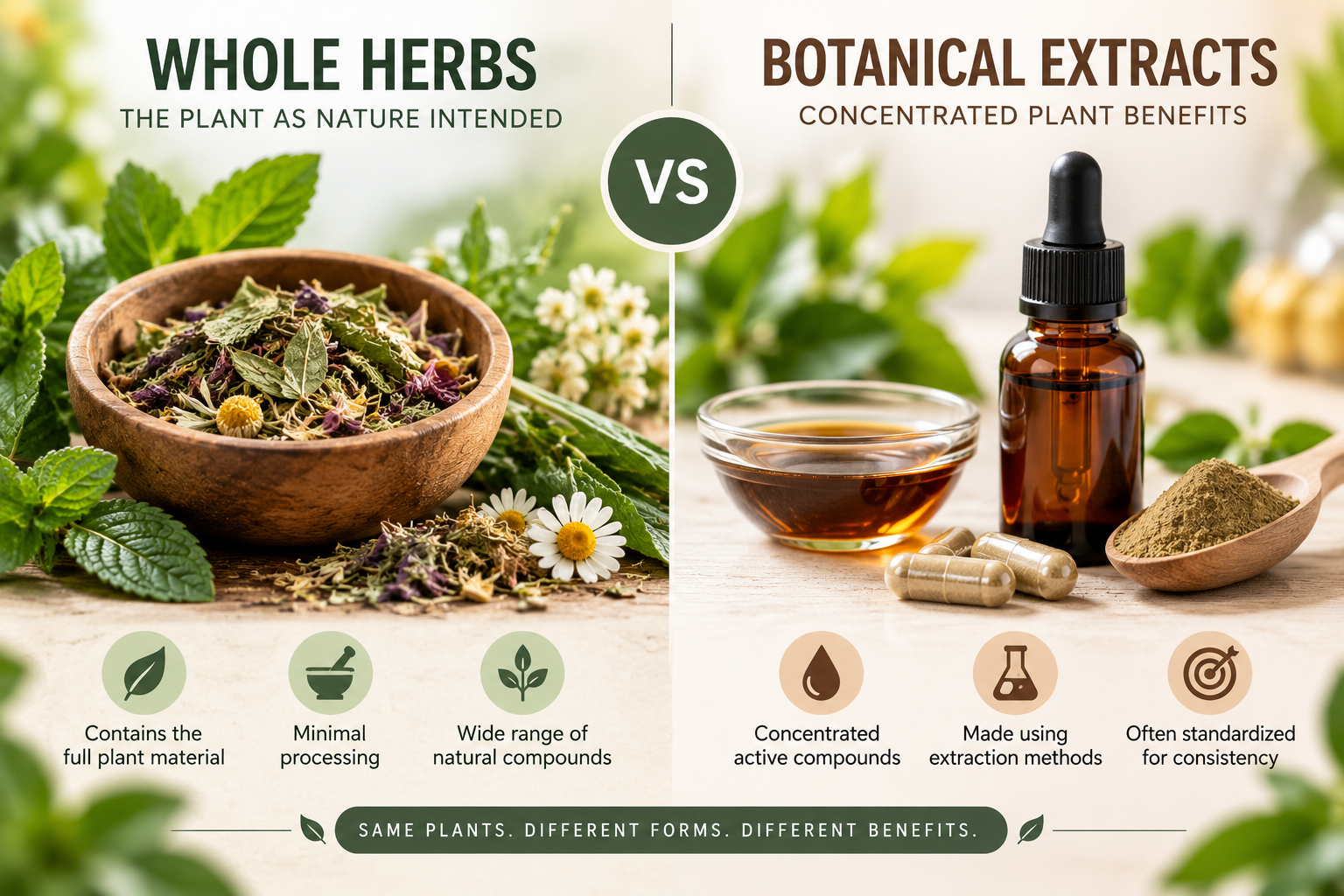
How Botanical Extracts Differ From Whole Herbs
Understanding how extracts differ from whole herbs can make it easier to interpret supplement labels, compare products, and evaluate claims about herbal ingredients.
Read article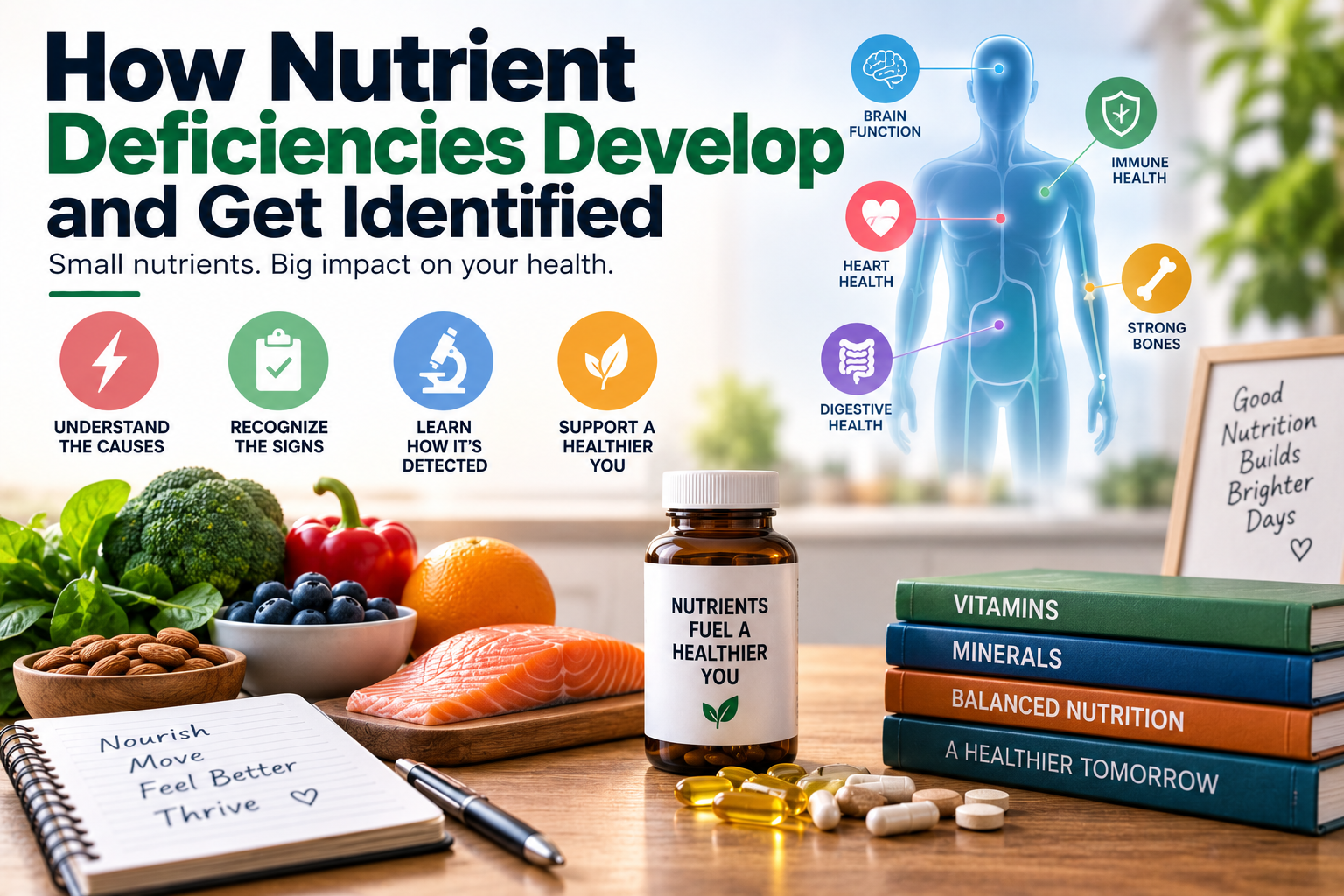
How Nutrient Deficiencies Develop and Get Identified
Understanding how nutrient deficiencies develop—and how healthcare professionals identify them—can make it easier to recognize potential problems before they become more serious.
Read article
What Is the Difference Between Water-Soluble and Fat-Soluble Vitamins
Understanding this basic distinction can make it easier to interpret nutrition information, evaluate supplements, and make informed decisions about dietary intake.
Read article

Join 10,000+ Readers Building Healthier Habits
Get actionable wellness tips every week plus our newest articles delivered straight to your inbox.